
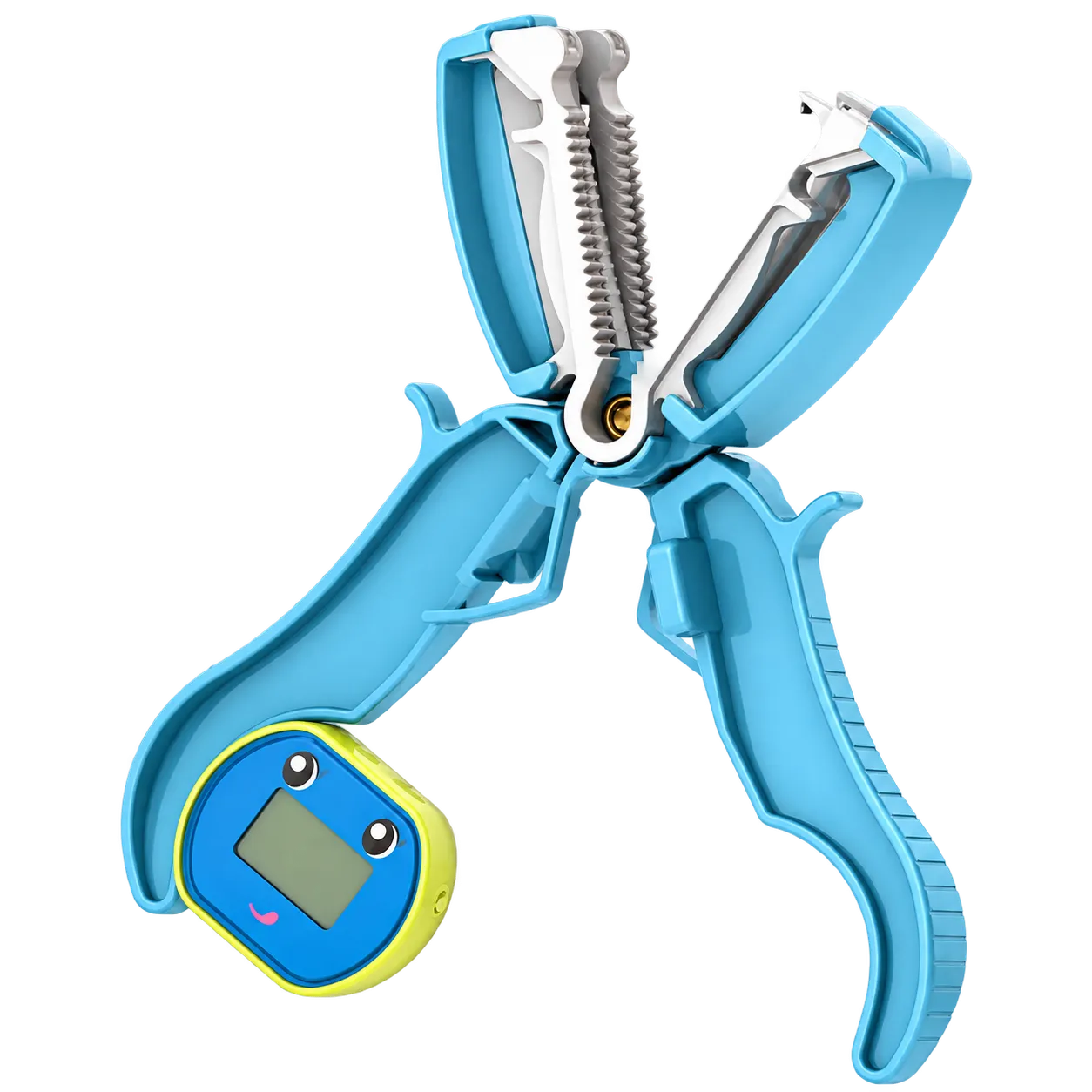

The EUCC-V is intended for the third stage of labour, when the cord is clamped and divided. That places it in obstetric-led units, alongside midwife-led units, home birth teams working from a packed bag, and theatre lists where a caesarean birth follows the same clamping step under different conditions. The working end is scaled to a newborn cord, and the action is a single squeeze, making it a short thing to teach and a short thing to check. Clinical judgment, not the instrument, sets the timing of that squeeze. NICE states that the cord should not be clamped before one minute from birth unless cord integrity is in doubt or the baby's heart rate is below 60 beats per minute and not rising, and that it should be clamped before five minutes, when controlled cord traction forms part of active management. Where a woman asks for longer, that choice is supported. The EUCC-V does not change any part of that sequence. It records where the sequence ends.
Procurement will run through one of the usual routes. NHS Supply Chain carries umbilical cord clamps under both general and sterile headings. Trusts, Integrated Care Boards and independent maternity providers each buy against their own framework and standing financial instructions. Any of those routes will ask for conformity evidence early, and for a device of this class, that evidence is a third-party certificate rather than a self-declaration.
Two settings deserve a separate look. A home birth team carries what it can fit, so the packed size and the case quantity matter more than they do on a ward. A unit with an audible-device policy during labour needs to resolve the talking-clock question before stock arrives.
The conformity documentation those procurement routes require is issued by the manufacturer and provided by the seller.