
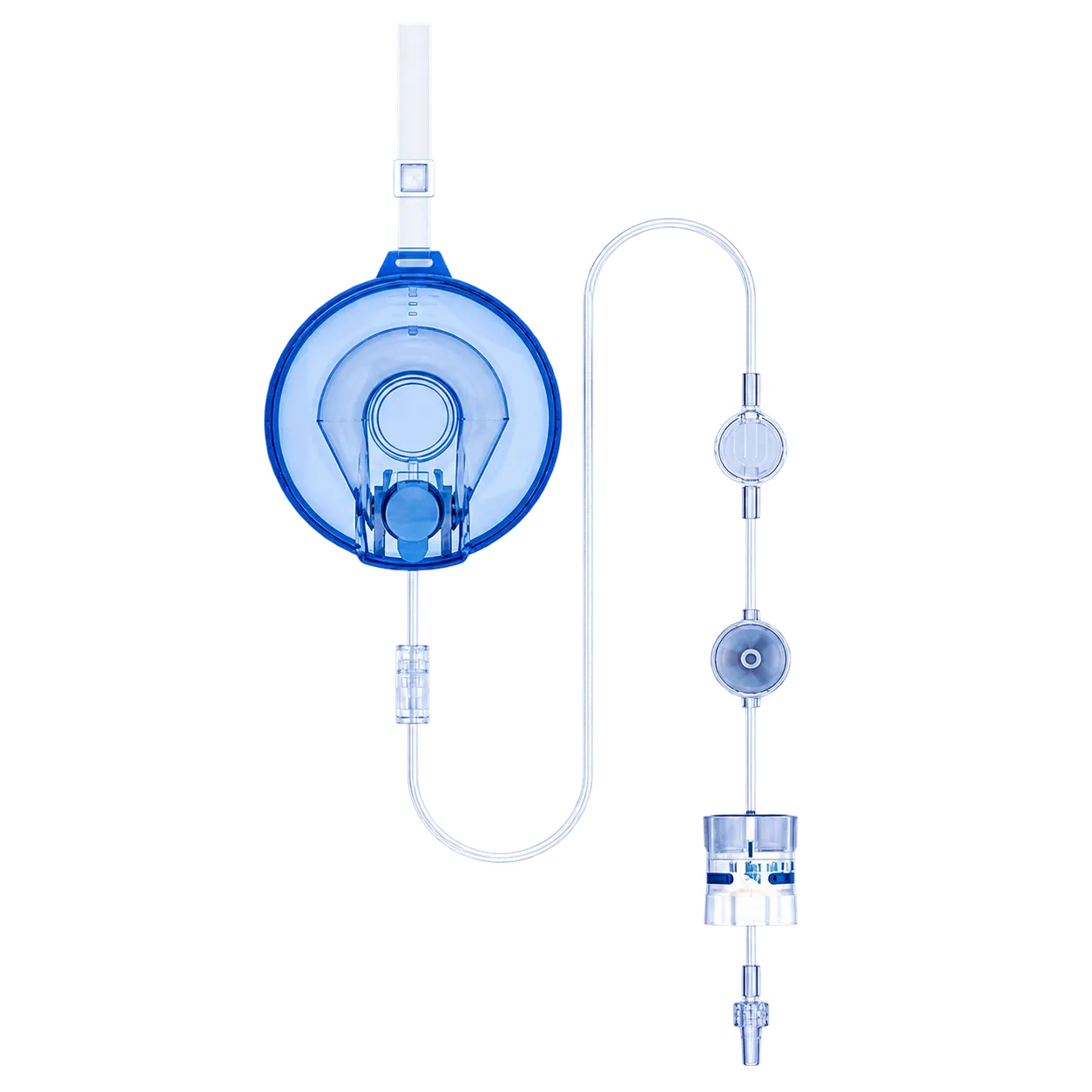
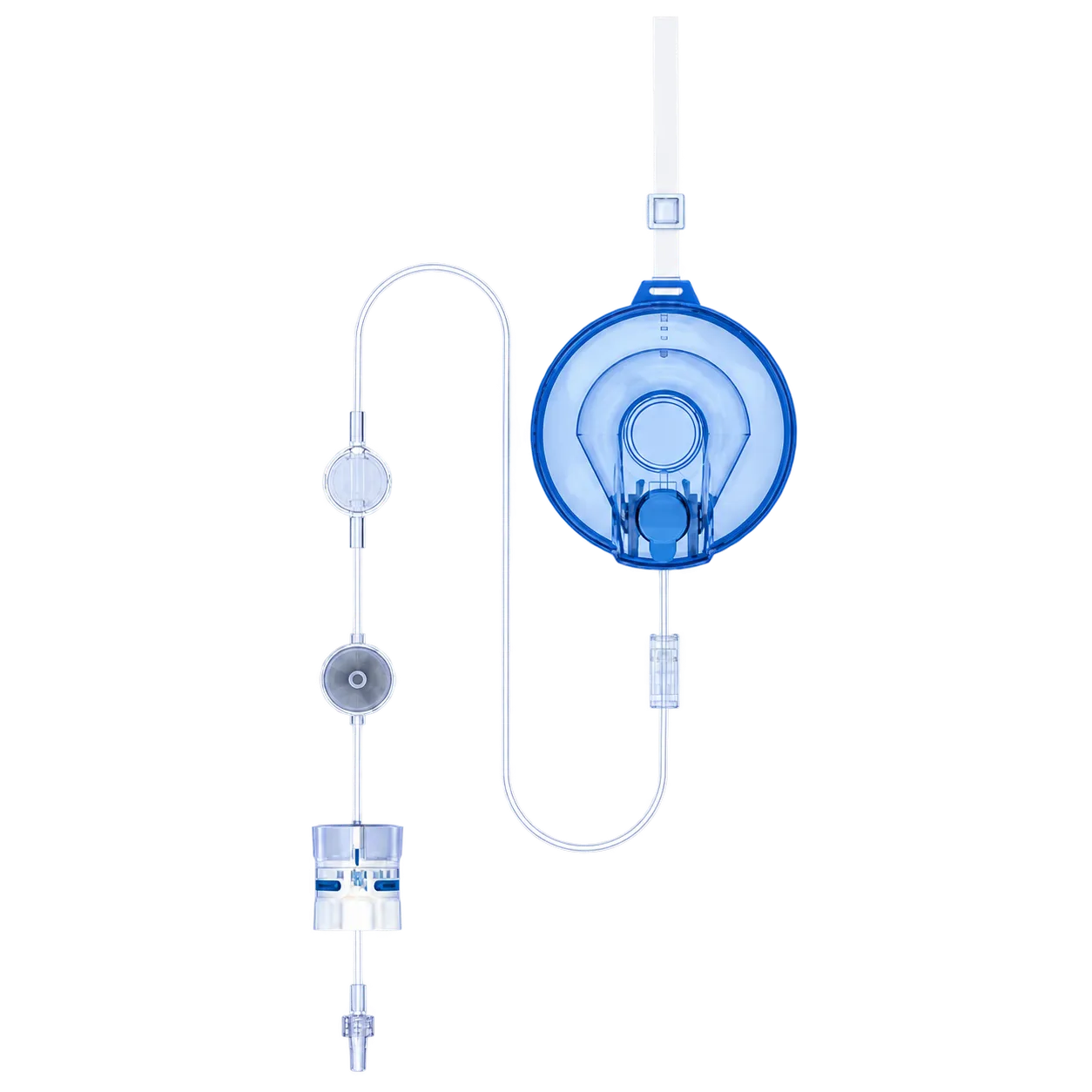
Some infusions don't require a patient to be in bed. A course of intravenous antibiotics may run for weeks, and keeping someone in hospital for it costs a bed, exposes them to hospital organisms and takes them away from ordinary life. Outpatient parenteral therapy exists to avoid that, and it needs a delivery device the patient can live with.
An electronic pump can do the job, but it brings a body to carry, batteries to manage, alarms that sound at inconvenient times, and a device that has to be returned and serviced. An elastomeric pump brings none of that. It is filled, connected, and worn, and when it is empty, it is discarded. There is nothing to program and nothing to go wrong electrically.
What it trades away is precision, and knowing where that trade sits is the point. Delivery depends on the balloon, the restrictor and the resistance of the line, and all three vary. Balloon pressure falls as the reservoir empties unless something holds it, which is what a stabilising valve is for. Restrictor behaviour changes with temperature, and a pump worn against the skin sits warmer than one on a table. Viscosity matters, so a thicker solution runs slower than water at the same setting. None of this makes the approach unsuitable, since most of what is given this way tolerates a margin comfortably.
It does mean the accuracy figure is the specification a buyer should ask for first. Medigear.uk supplies the instructions for use with every order.