
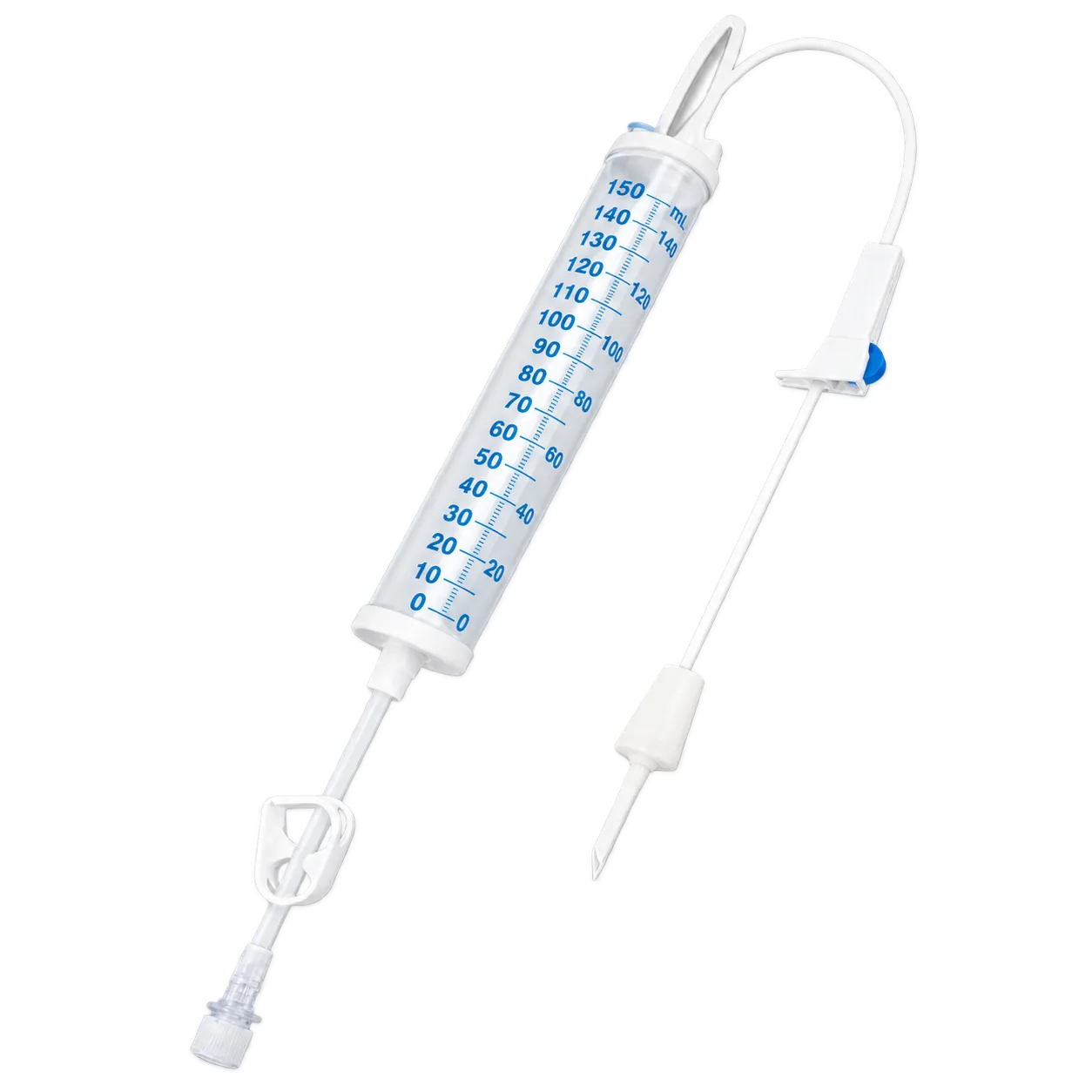
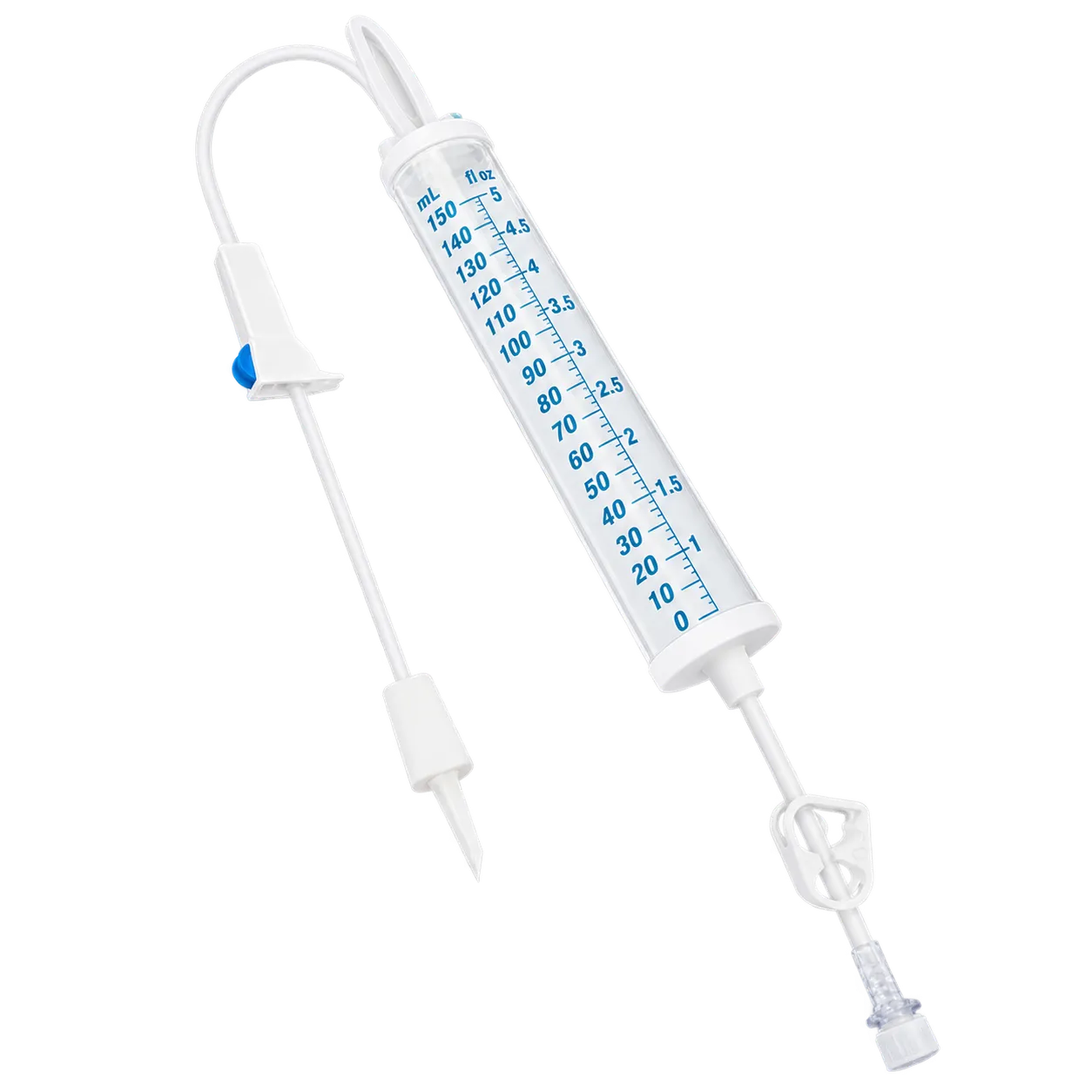
Fluid given to a child is calculated, not estimated. Daily requirements are worked out by weight. The totals are small. An error that would pass unnoticed in an adult becomes clinically important quickly. A five-kilogram infant may need less fluid in a day than an adult receives in two hours.
That mismatch is what a burette addresses. Running from a full container leaves only the rate control between the patient and the whole bag. On a gravity line, that means a clamp which can drift, and someone noticing if it does. Decanting a measured volume into a chamber changes the failure mode. If everything else goes wrong, the chamber empties. What the patient received is the amount deliberately put there.
The same logic applies to drug administration. A dose diluted into a burette can be given in a known volume and flushed through, with the graduations confirming what has actually run. That is why the injection site matters as much as the chamber. Placing it in the top cover rather than the line below is deliberate. Drug added there mixes into the measured volume, rather than passing straight down the tubing. Repeated access to that port over a shift is also why removing the needle from it is worth doing, on a ward where the same site may be used many times a day.
Volumes are recorded against the chamber reading rather than estimated from the bag, which is what makes fluid balance auditable on a paediatric ward. Medigear.uk supplies the instructions for use with every order.