
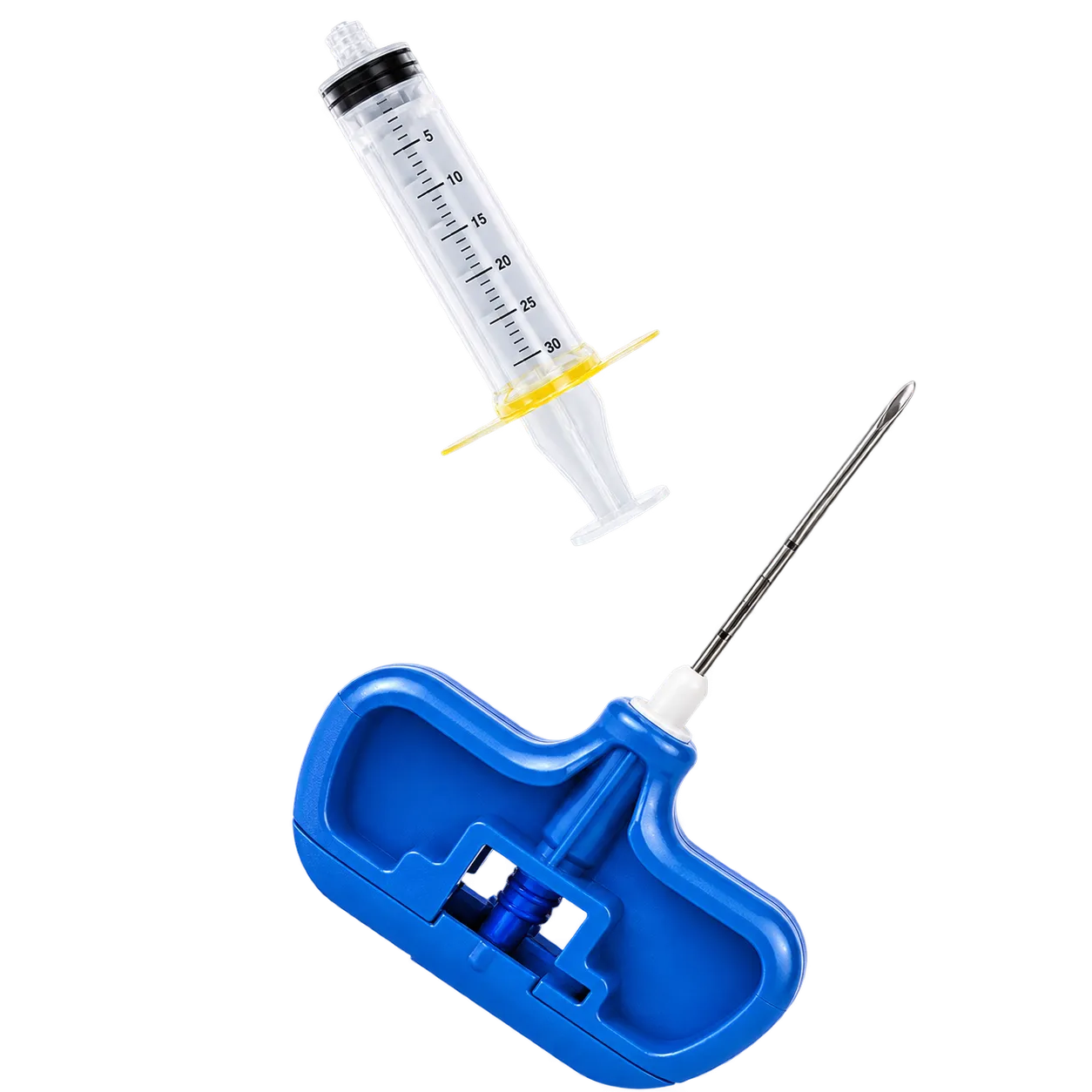
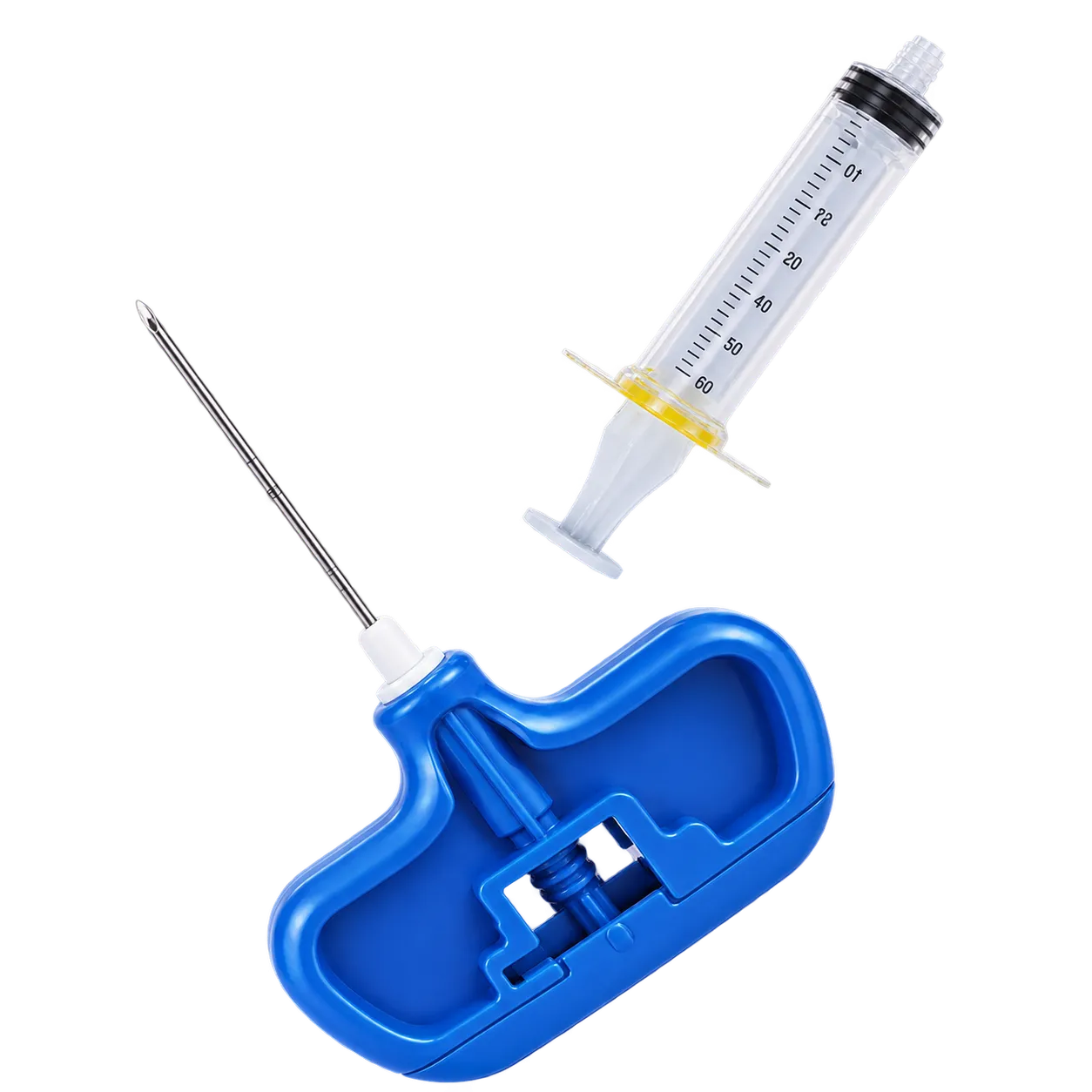
Bone marrow is aspirated for two quite different reasons. One is diagnosis, where a small sample is examined for haematological disease or infection. The other is harvest, where marrow is taken in quantity, concentrated, and put back into a joint or a bone to encourage healing. The instruments overlap, but the technique does not, and syringe size is one place they diverge.
For harvest, a 30 mL syringe is the recognised working size, and published technique describes taking around 60 mL from each site. Set against that is a well-documented trade-off. Marrow drawn in large continuous volumes becomes diluted with peripheral blood, and progenitor cell concentration falls accordingly. Studies comparing syringe sizes have found substantially higher progenitor concentrations from small syringes and small volumes than from large ones. The practical answer is technique, not equipment. Operators rotate the needle every few millilitres, re-angulate it periodically, and pre-flush the syringe with anticoagulant to keep drawing from fresh bone rather than an emptied pocket.
That context is what makes the locking mechanism useful, not merely convenient. Repeated repositioning of the needle during a harvest is difficult if one hand is committed to holding a plunger back. A syringe that holds its own vacuum frees that hand for the needle, which is exactly what the technique requires. For diagnostic sampling, the same mechanism helps differently, by keeping suction steady while the operator concentrates on the sample.
Medigear.uk supplies the instructions for use with every order.