
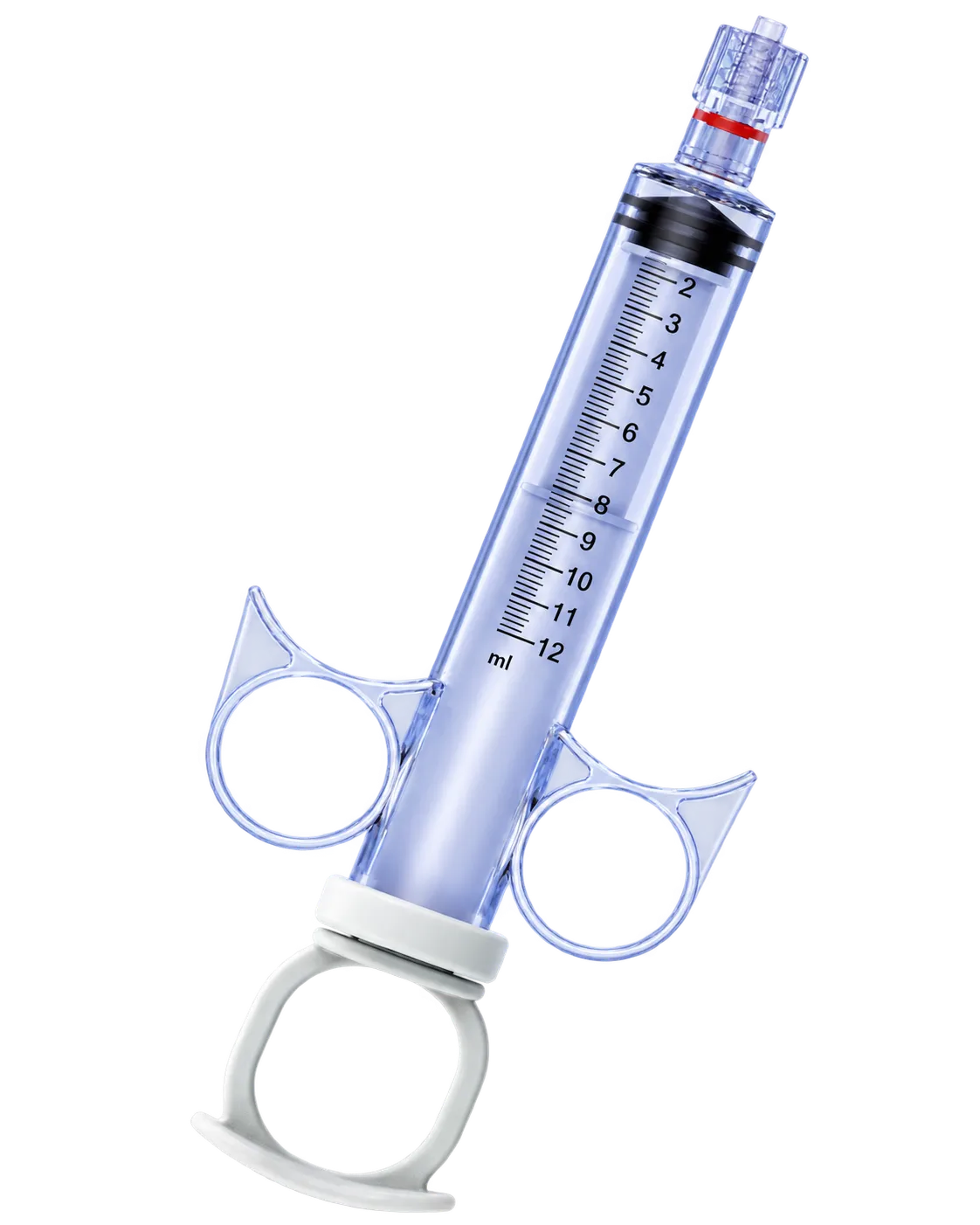
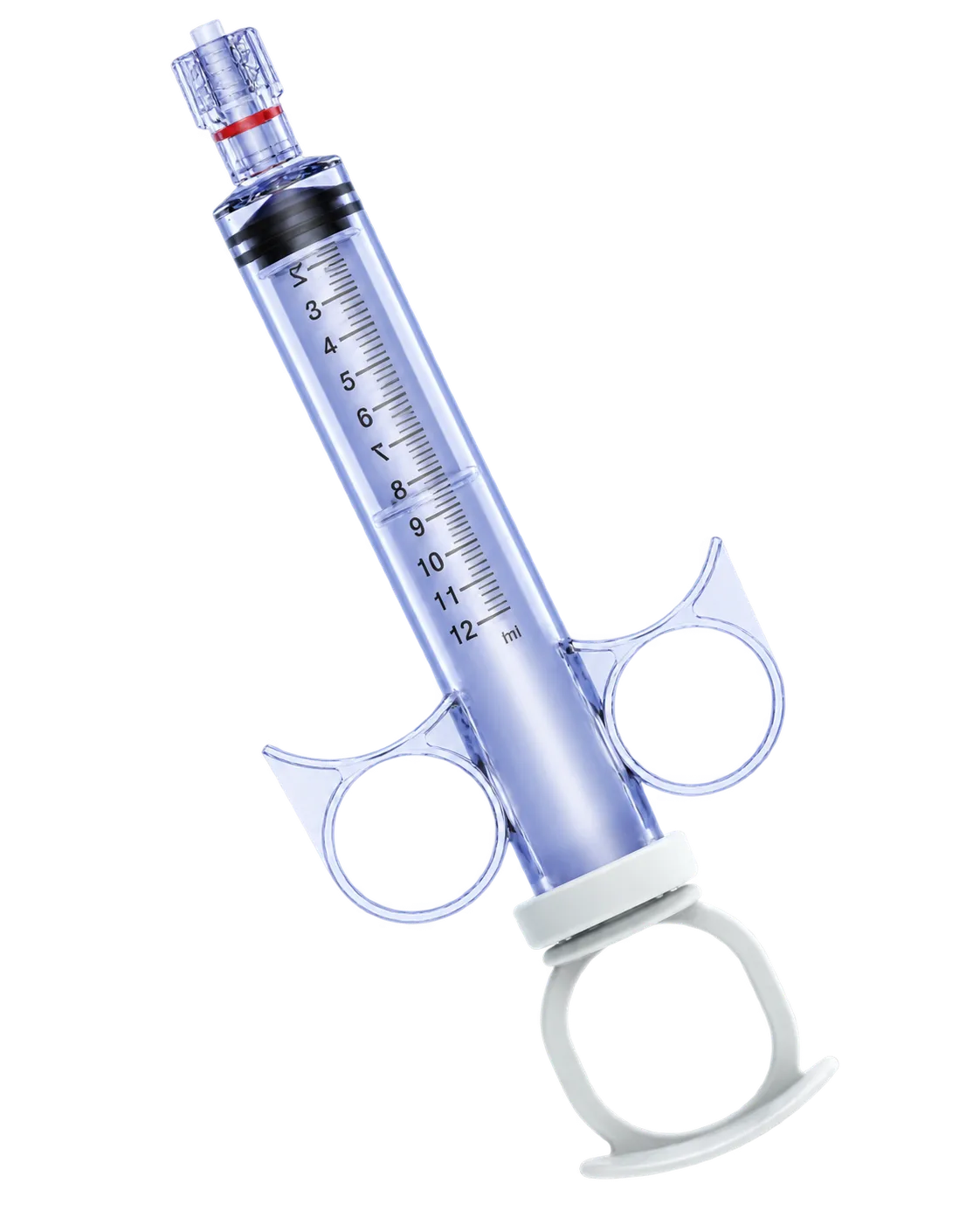
Diagnostic coronary angiography and percutaneous coronary intervention are the main settings. Contrast media is injected into a coronary artery through a catheter, and imaging captures how it flows. The operator controls that injection by hand. Volume and force are judged against what appears on screen. Contrast media is viscous, so pushing it through a fine catheter takes real force. A control syringe exists so this can be done accurately with one hand.
The syringe usually sits on a manifold rather than connecting straight to the catheter. A manifold switches between the contrast reservoir, saline flush, and a pressure transducer. That arrangement lets the operator inject, flush, and read pressure without breaking any connection. The rotating adapter suits this setup. The syringe can be released and reattached without twisting the manifold line. Contrast volume matters clinically. The total dose across a case affects kidney function. Reading the graduated barrel during injection helps keep that total down.
Air management is the critical safety step. Air injected into a coronary artery can cause ischaemia. The syringe is aspirated and purged before every injection. The ring plunger supports this by allowing controlled pull-back as well as push. Peripheral interventional radiology uses the same syringe class. Arterial and venous contrast studies both apply. Volume choice follows vessel size and the injection required. INT states the range is latex-free. That removes one consideration for patients with a known latex allergy.
Medigear.uk supplies the instructions for use with every order so clinical teams can confirm handling before a case.