
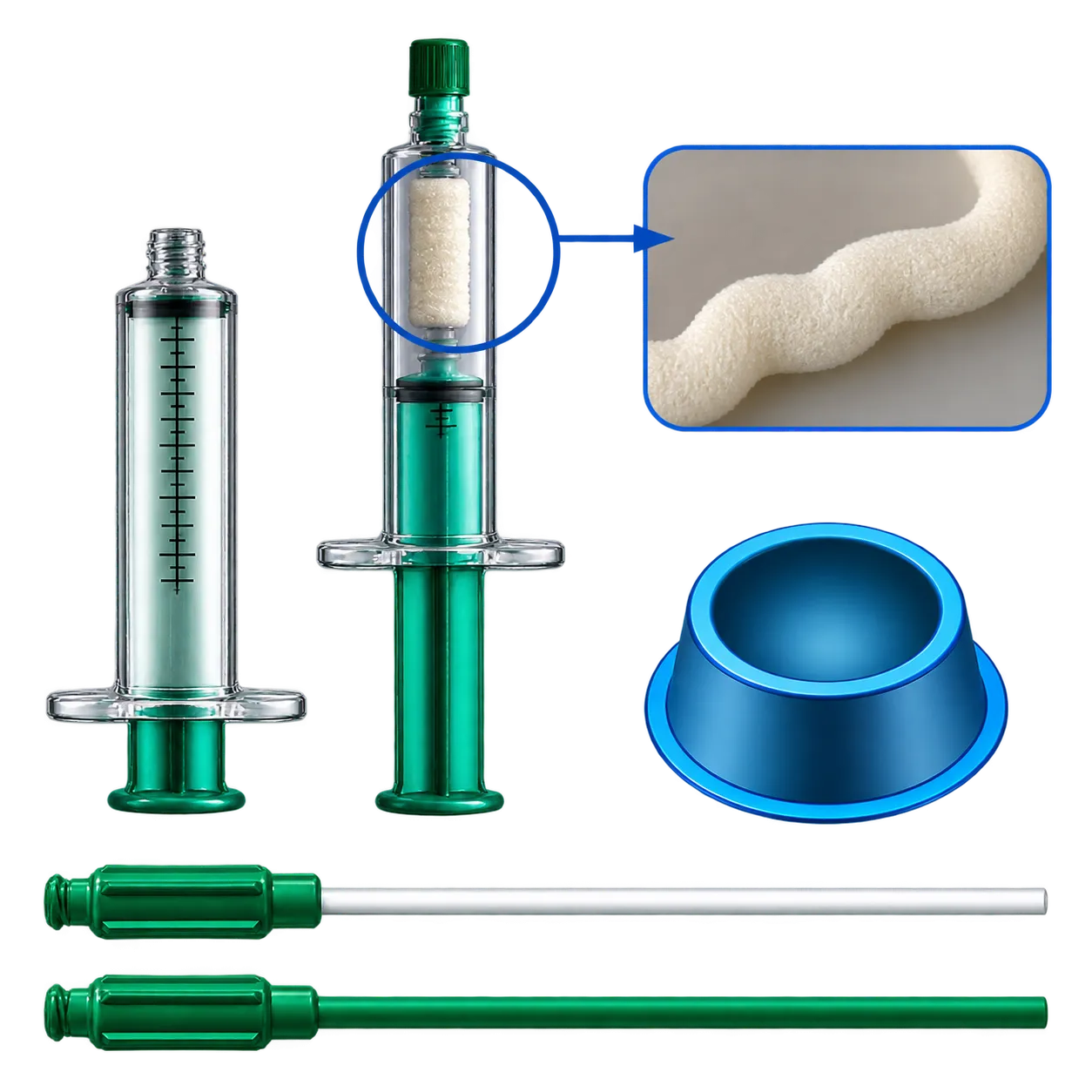
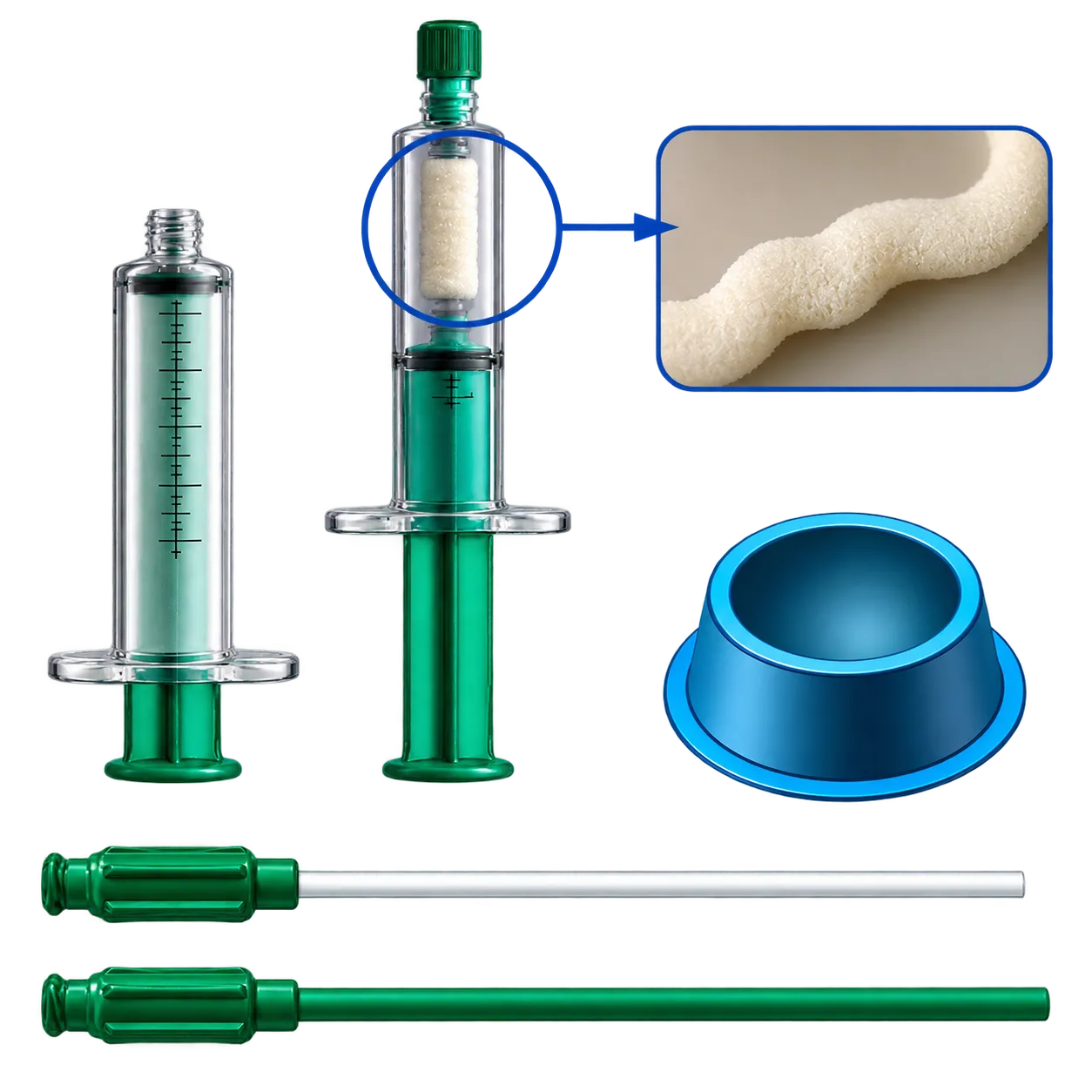
Surgical bleeding is usually controlled by tying a vessel or sealing it with heat. Some bleeding doesn't respond to either. Oozing from a broad raw surface has no single vessel to tie. Bleeding deep in a cavity may be hard to reach with an instrument. Tissue that is friable or inflamed simply tears when a suture is placed. Topical haemostats exist for these situations.
Flowable products occupy a particular place among them. A sponge or sheet has to sit flat against the bleeding surface to work. That works well on an accessible plane, but is unhelpful in a crater or behind an organ. A paste fills the space it is put into. It stays in contact with the surface throughout. That is why these products are favoured in laparoscopic surgery and around irregular resection beds.
The mechanism combines two effects. The matrix provides a physical scaffold that slows flow and concentrates the body's own clotting factors at the site. It also swells as it takes up fluid, which produces local tamponade. That swelling is useful. It is also the reason for the main caution attached to this class. Expansion within a confined bony or neural space can compress surrounding structures.
Intravascular application is the other recognised hazard, because material entering a vessel can travel and embolise. Neither hazard is theoretical, and both appear in the labelling of established products in this category.
Established products carry explicit warnings on both counts, and INT's sheet carries none. Medigear.uk will supply the instructions for use once the manufacturer documentation is complete.