
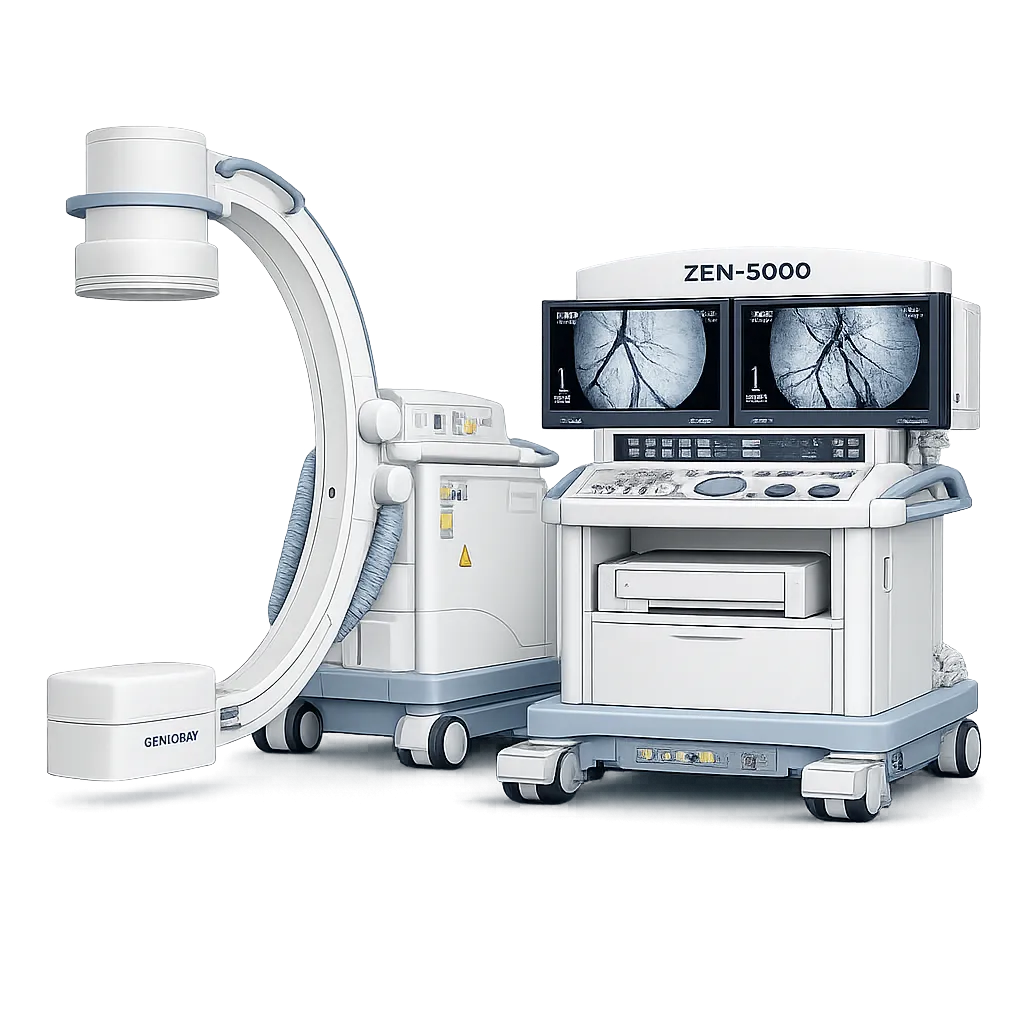
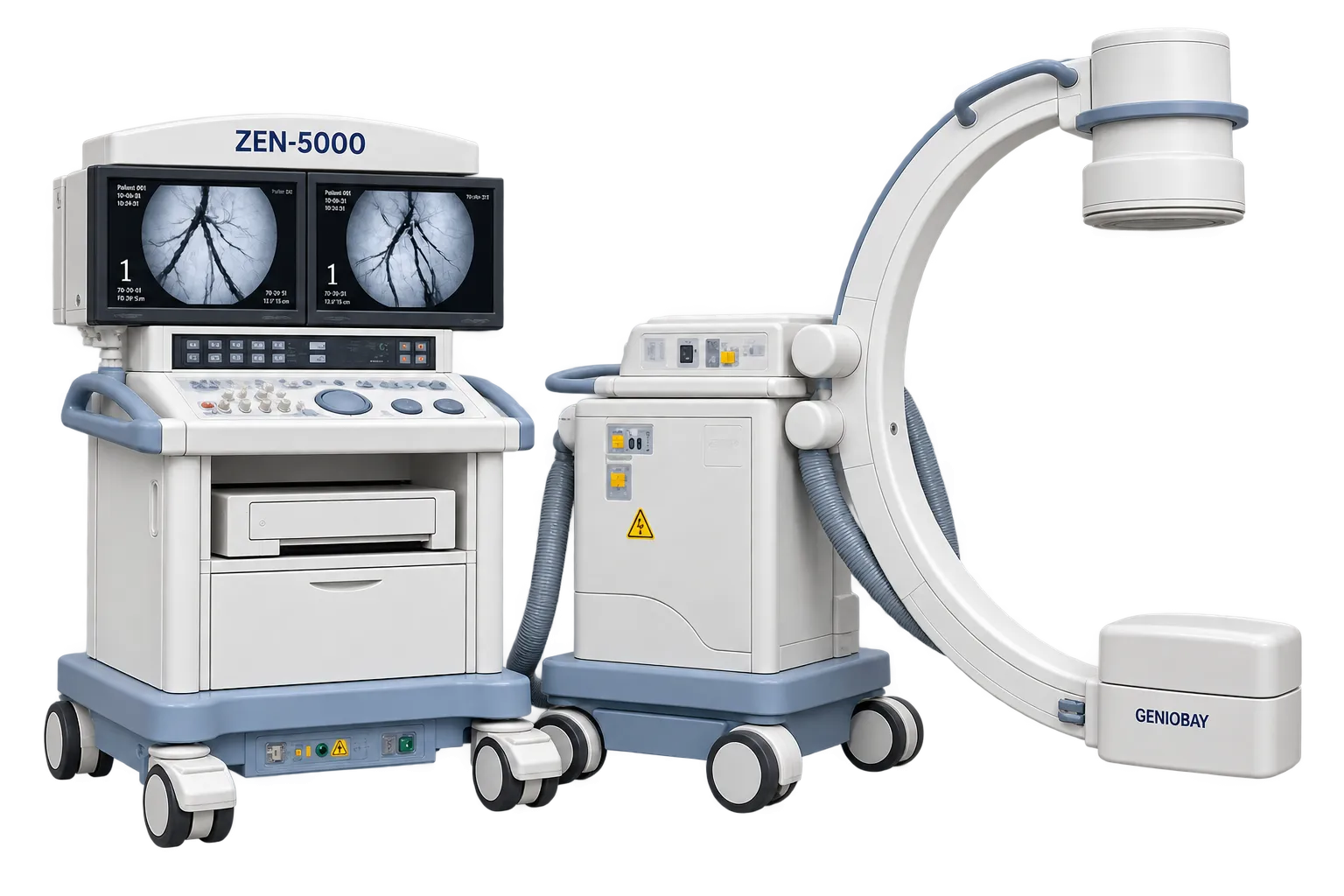
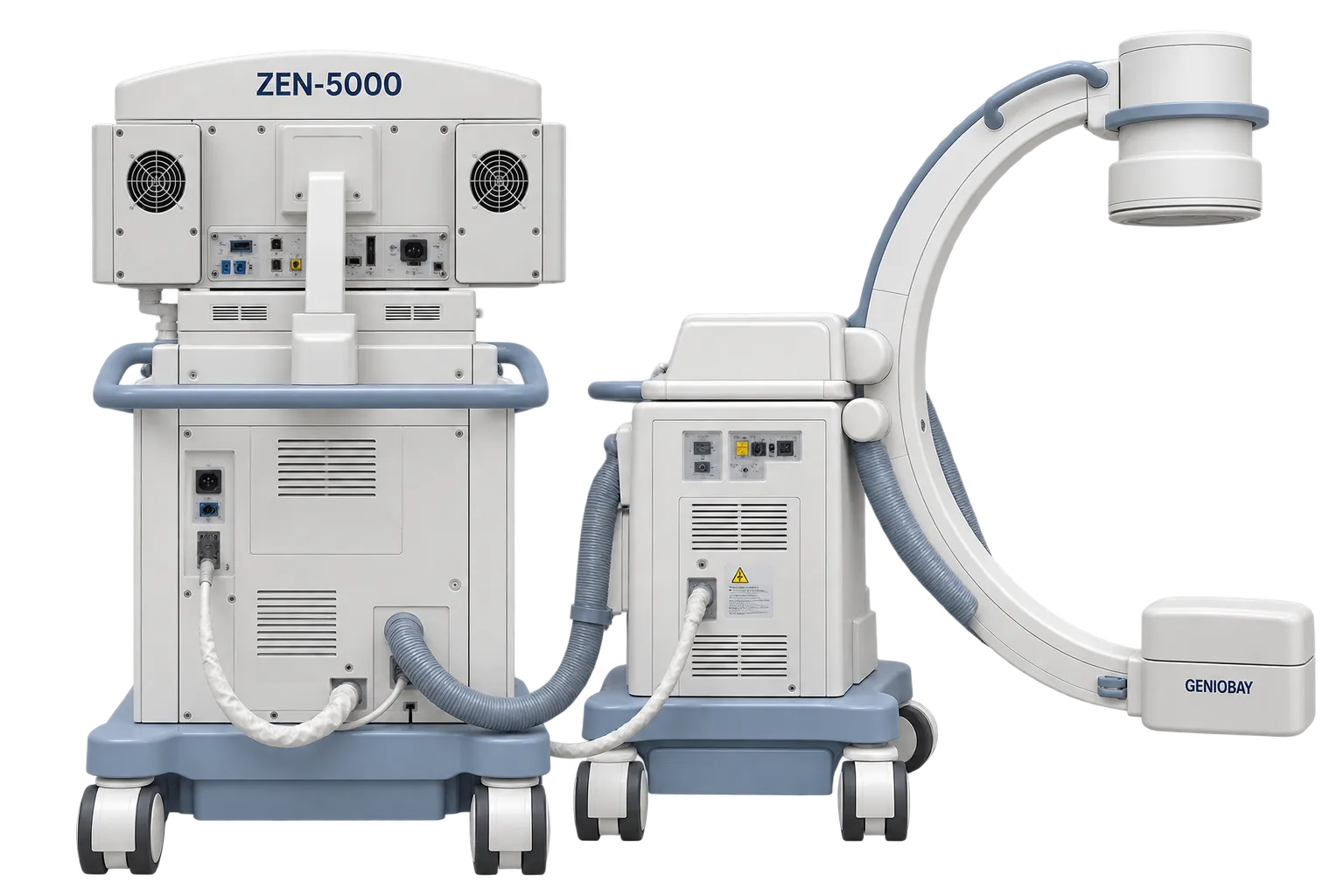
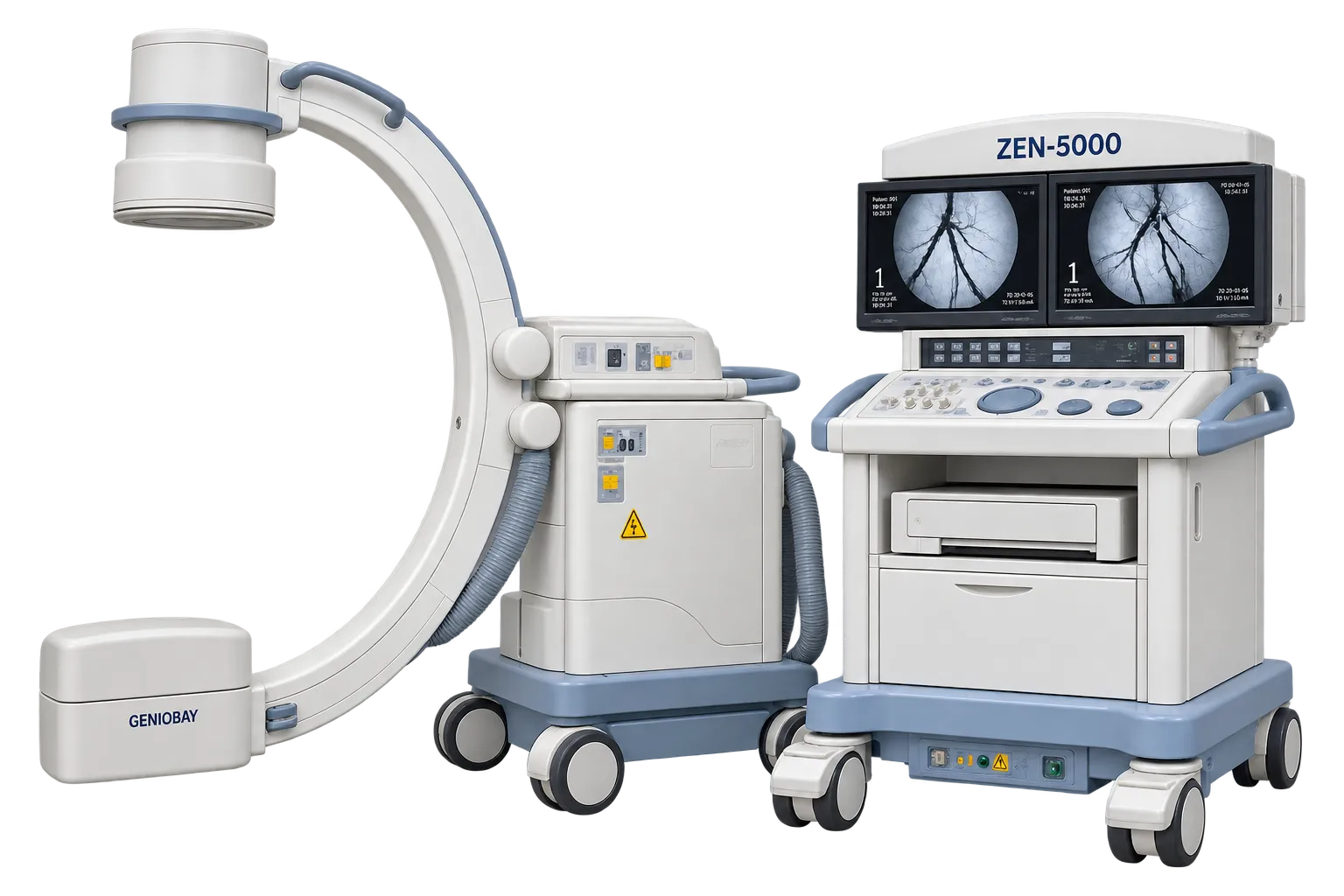
Extremity and hand surgery is where a generator of this class works comfortably. Hands, feet, wrists and ankles present little tissue to penetrate, so a modest generator produces clean images with dose in reserve rather than working at its limit. Screening for reduction, fixation and implant position is well within what the system does. Medigear.uk confirms intensifier size and fitted features against the specific machine, and all clinical decisions, including whether an exposure is justified, remain with the entitled practitioner.
Pain management services sit in the same territory for typical patients, with injection guidance requiring repeated short screening runs rather than sustained high output. Where a low dose mode and virtual collimation are fitted, both bear directly on the cumulative dose an interventional pain list delivers.
General surgical and urological work is listed among the imaging options recorded on units of this model, and both are generally within reach of this power class on patients of average habitus. Where a service runs a mixed list, the question is what proportion sits at the demanding end rather than whether the machine can manage the occasional case.
Services doing lateral lumbar spine routinely, or imaging larger patients regularly, should be looking at a substantially higher-powered machine. An underpowered generator in that setting produces noisy images while driving brightness control to its limit, delivering more dose for a poorer picture. Medigear.uk raises that before quoting rather than after delivery, because the wrong machine is an expensive lesson rather than a saving, and a C-arm bought against the wrong caseload rarely resells for what it cost.