
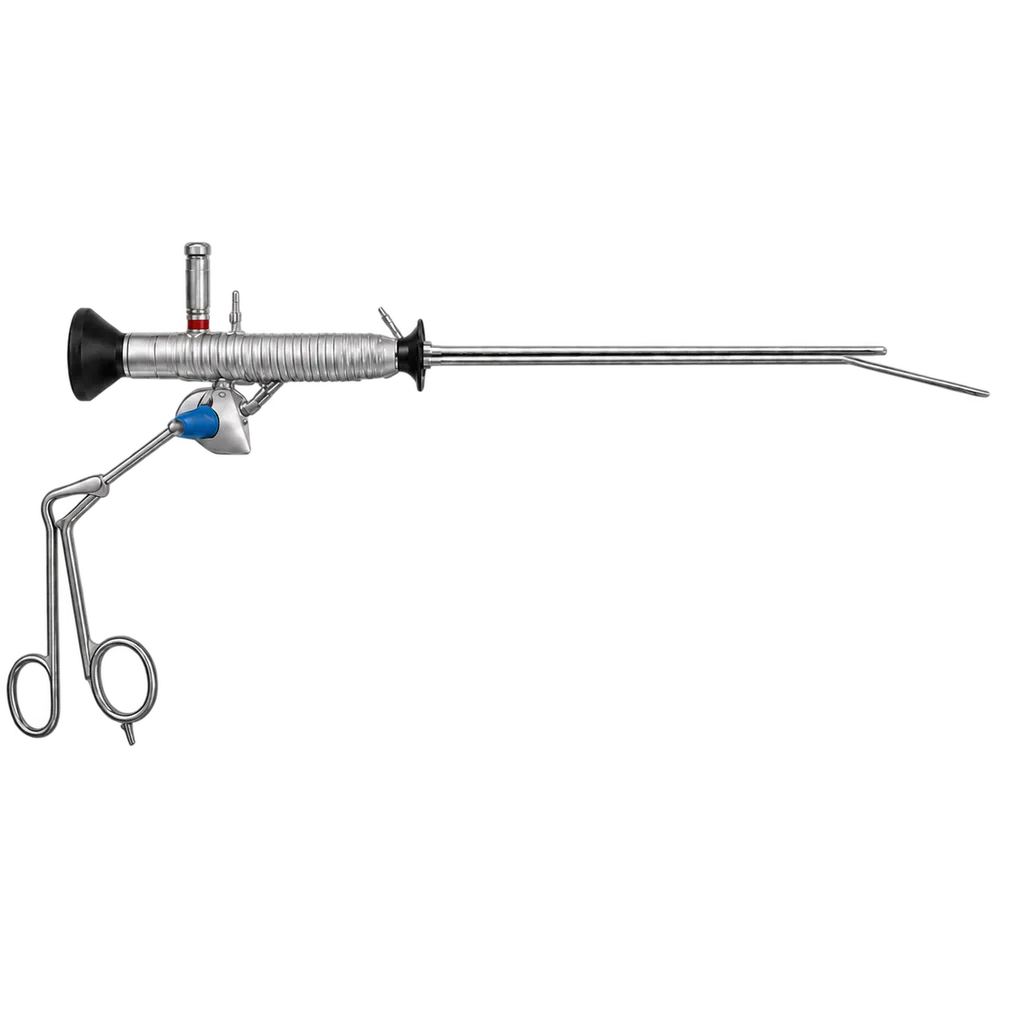

The 233 Medical UHD Cystoscope serves UK NHS urology departments, day-case urology centres, urology outpatient clinics, and private urological practices performing diagnostic and interventional cystoscopy on a daily case load. The 0° forward-viewing 4 mm configuration is the workhorse choice for urethrocystoscopy across UK urological practice, supporting the bulk of routine and surveillance procedures performed under local, regional, or general anaesthetic.
In diagnostic urology, the cystoscope supports haematuria investigation — the gold-standard procedure for both visible and microscopic haematuria, where cystoscopic visualisation of the bladder mucosa is required to identify or exclude bladder cancer, identify mucosal abnormalities, and assess vascular patterns suggestive of malignancy. Bladder cancer surveillance for non-muscle-invasive bladder cancer (NMIBC) patients on active surveillance protocols depends on regular cystoscopic assessment at 3-month, 6-month, or 12-month intervals depending on risk stratification. Lower urinary tract symptom (LUTS) evaluation, recurrent urinary tract infection investigation, and urethral stricture assessment are routine outpatient indications.
In interventional urology, the 0° cystoscope is the workhorse for JJ ureteric stent placement and removal — one of the highest-volume urological procedures in UK practice, performed for stone management, obstructive uropathy, and post-ureteric reconstruction support. Foreign body retrieval from the bladder, diagnostic bladder biopsy under cystoscopic guidance, and intravesical botulinum toxin (Botox) injection for overactive bladder are routine cystoscopic procedures performed across day-case and outpatient settings.
For pre-operative assessment before transurethral resection of bladder tumour (TURBT), transurethral resection of prostate (TURP), or other transurethral procedures, the cystoscope provides the urethral anatomy assessment needed to select the appropriate resectoscope sheath size and to identify any urethral stricture requiring dilatation or visual urethrotomy before the main procedure.
For urological training and skills laboratories, the cystoscope provides cost-effective coverage of urethrocystoscopy technique training, sheath assembly practice, and basic diagnostic technique teaching. Training-use scopes typically suffer faster service-life consumption than theatre-use scopes due to higher handling rates by less-experienced users; departments running active training programmes typically budget separately for training-fleet and theatre-fleet inventory.