
The TOPAZ-32D is commonly used in:
- Bedside radiography in general wards
- Intensive Care Units (ICU)
- Emergency and trauma departments
- Post-operative imaging
- Orthopedic examinations
- Chest and abdominal X-rays
- Imaging for immobile or critical patients
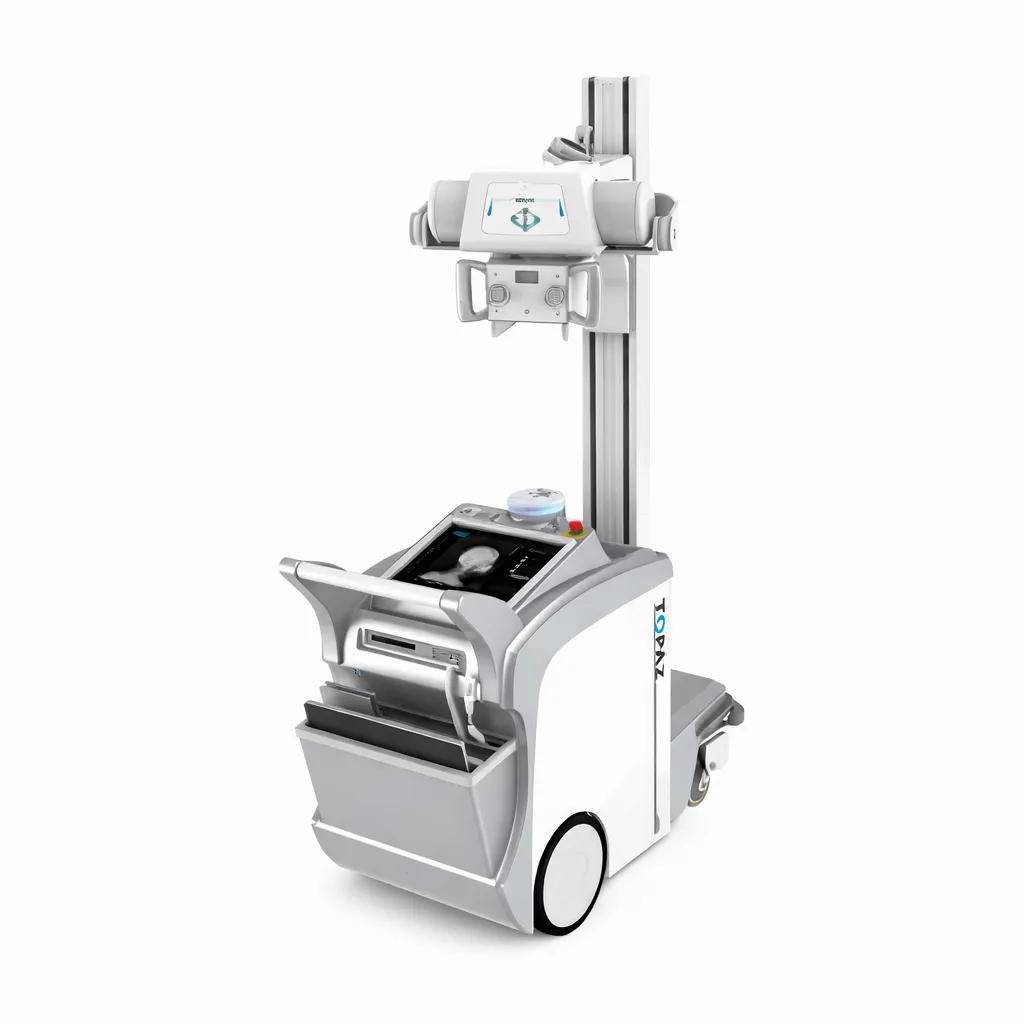
Reliable mobile imaging, right where the patient is.
The TOPAZ-32D is a compact digital mobile radiography device designed for bedside and on-the-move X-ray imaging. It delivers reliable image quality, smooth mobility, and fast workflow for hospitals, ICUs, emergency rooms, and patient wards.
A few quick details and you are done. Our projects team replies within one business day with availability, lead time and a quotation.
DrGem Digital mobile radiology device TOPAZ-32D
Product code: MDIE-MIEQ-181
The TOPAZ-32D mobile digital radiography system is built to support fast and safe imaging directly at the patient’s location. It eliminates the need to move critically ill or immobile patients to the radiology room, improving comfort and reducing risk.
The system combines a high-performance X-ray generator with digital detector compatibility, allowing quick image capture and instant review. Its compact body and motor-assisted movement make navigation easy in narrow hospital corridors and crowded clinical areas.
With user-friendly controls, stable positioning, and efficient power management, TOPAZ-32D helps radiology teams work faster while maintaining consistent image quality in daily clinical use.
Key Features
The TOPAZ-32D is commonly used in:
1. What is the TOPAZ-32D used for?
It is used for mobile digital X-ray imaging at the patient’s bedside or in emergency settings.
2. Can it be used in ICU environments?
Yes, it is ideal for ICUs where patient movement is limited or risky.
3. Does TOPAZ-32D support digital detectors?
Yes, it works with digital flat panel detectors for quick image acquisition.
4. Is the system easy to move inside hospitals?
Yes, it is designed with smooth mobility for easy movement in corridors and wards.
5. What types of examinations can be performed?
Chest, abdomen, orthopedic, and general radiographic examinations.
6. Is special training required to operate it?
Basic operator training is sufficient due to its simple and intuitive controls.
7. How does it improve hospital workflow?
It reduces patient transport, saves time, and speeds up diagnosis.
8. Is the image quality suitable for diagnosis?
Yes, it provides consistent and reliable image quality for routine clinical diagnosis.