
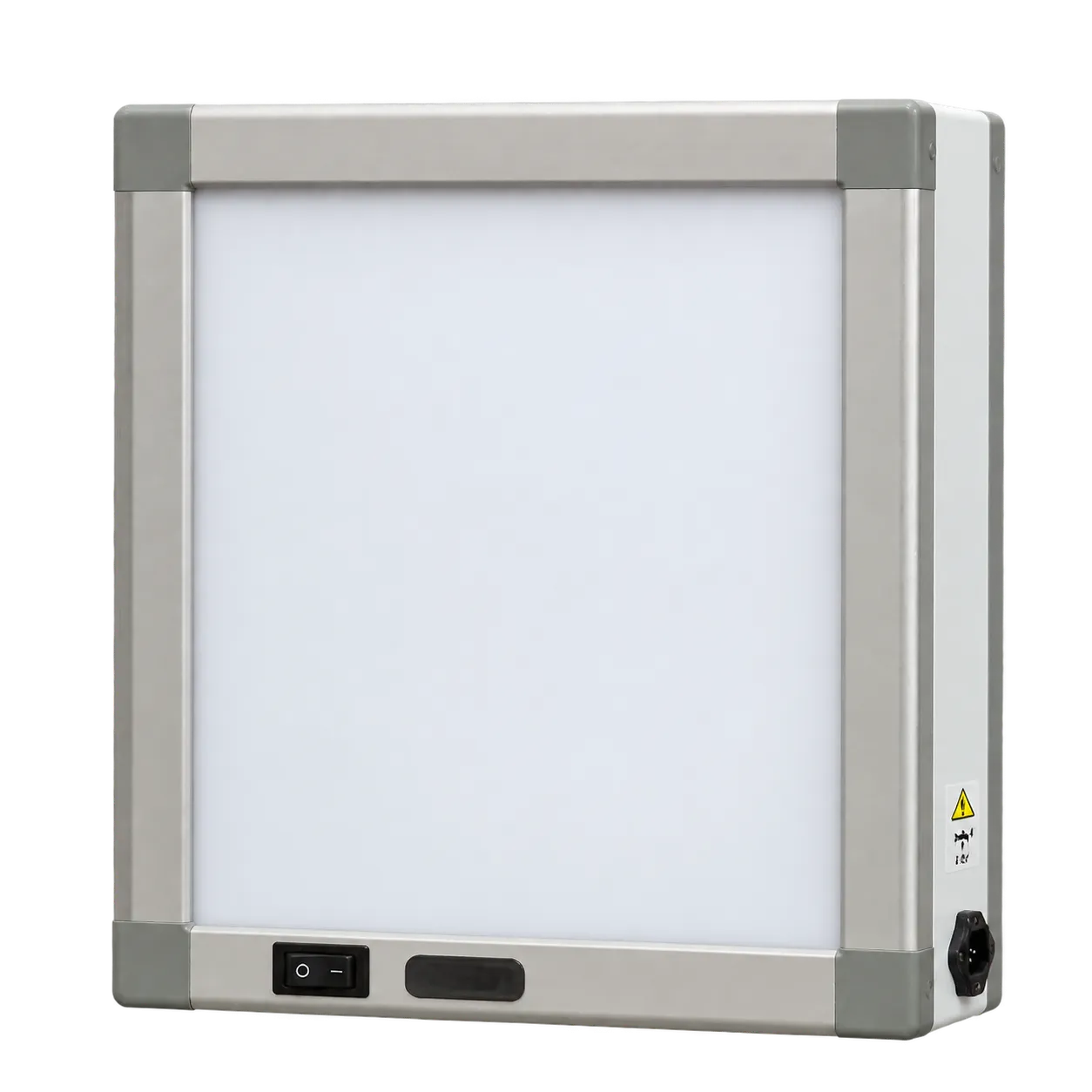
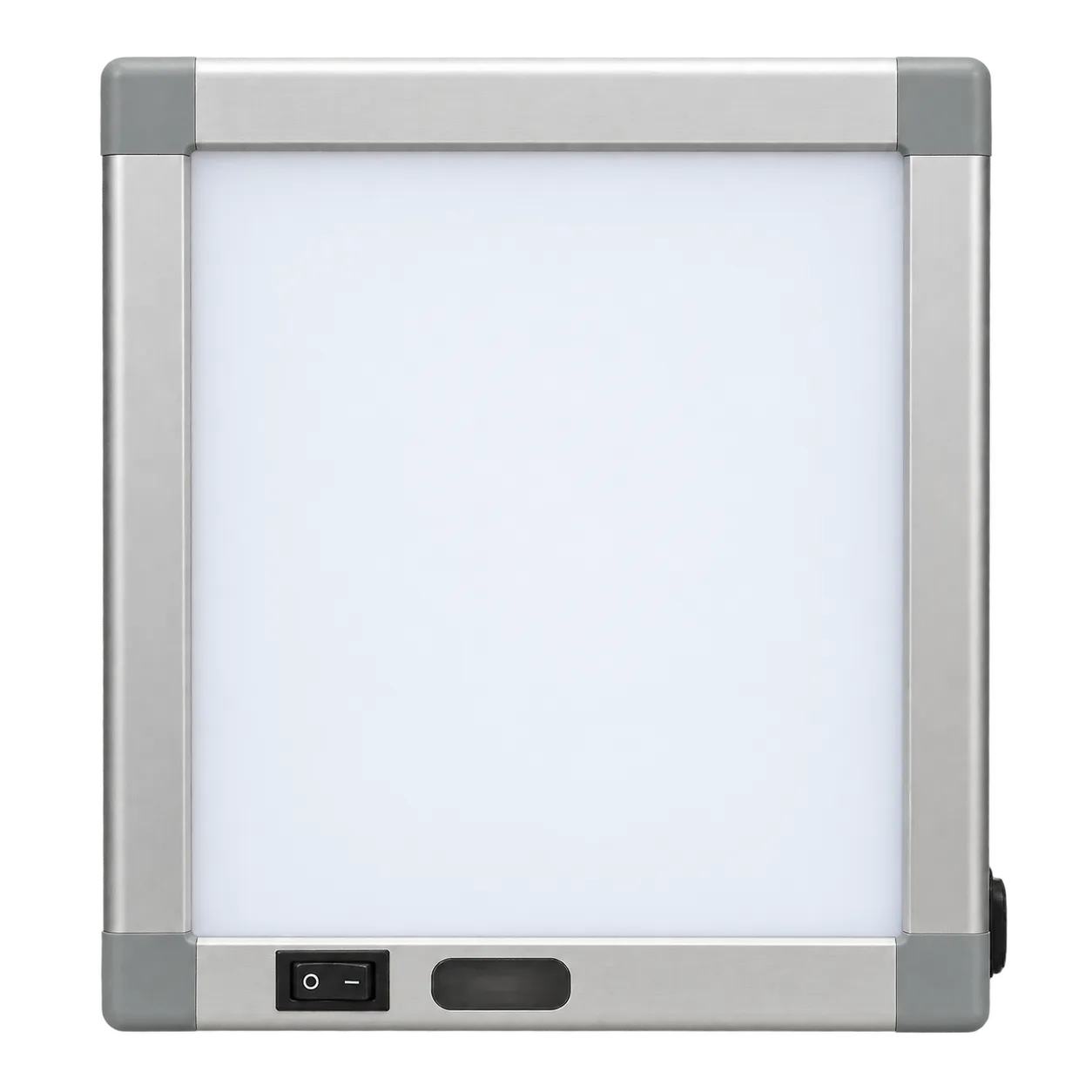
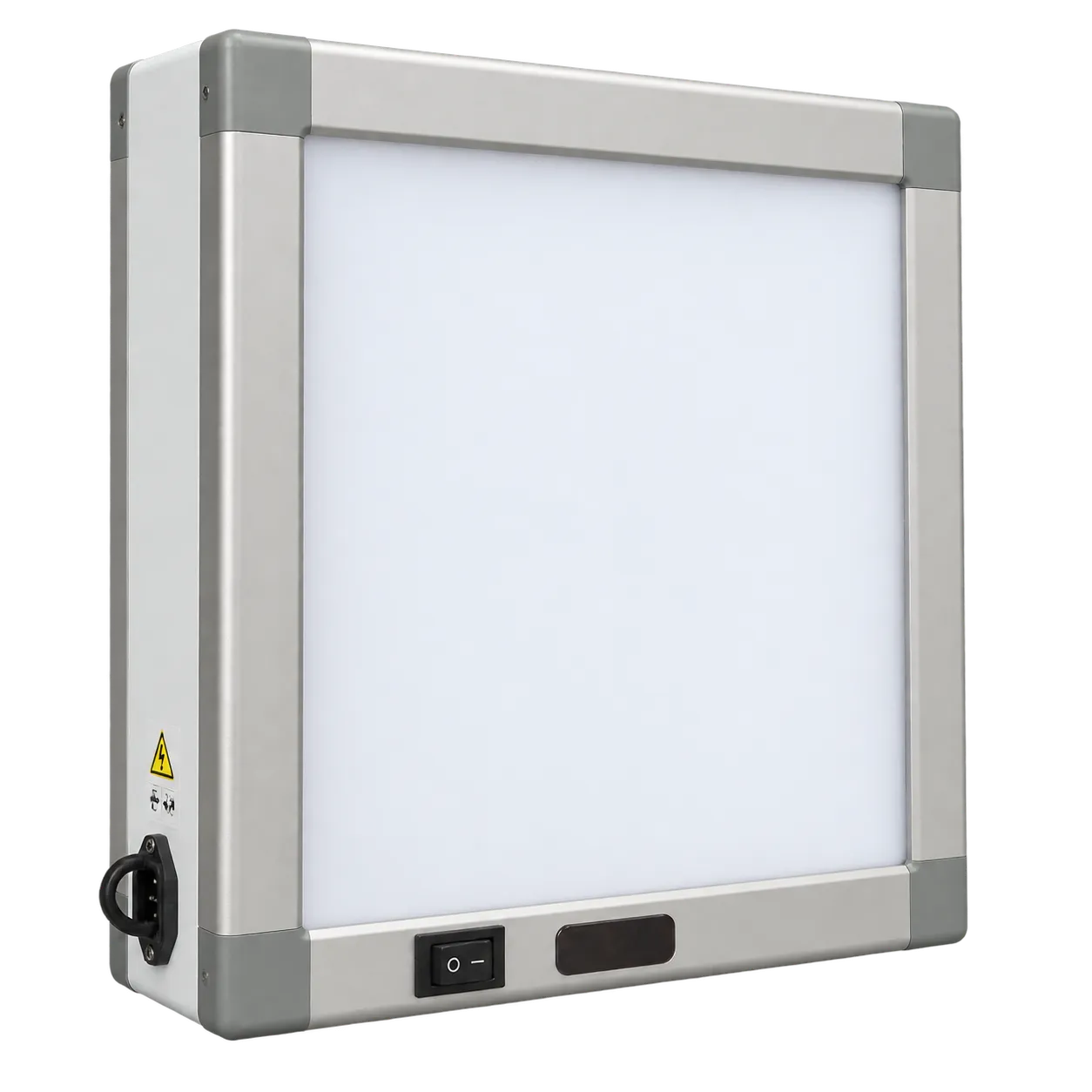
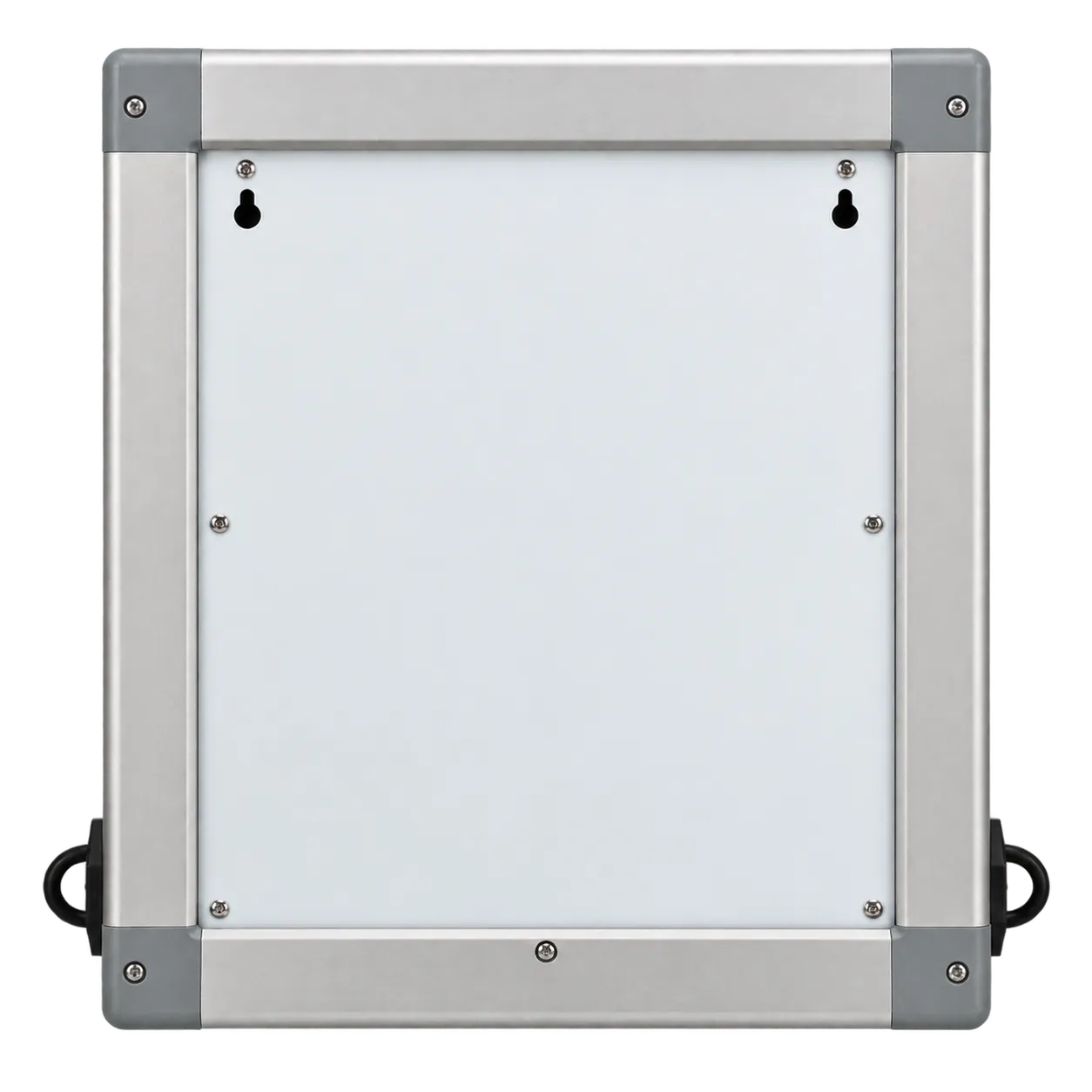
Reading film depends on light. A radiograph carries information as density differences, and only a bright, even panel behind it lets a reader separate them. That matters most in the darker areas, where lung fields and fine bone detail sit. Published guidance on film viewing sets figures for brightness and evenness, with mammography demanding a considerably brighter box than general work. Hence, a service matches the panel to the examinations rather than buying generically, and records the check.
Two habits go with the equipment. The first is masking. A large panel lit around a small film floods the reader's eye with glare, which shrinks the image's perceived contrast, so shutters or card masks earn their place. The second is the room light itself. Viewing areas are kept dim because the same film looks quite different under office lighting, and a bank of three panels makes it easier to arrange in one corner of a room than several.
In the UK, this is now heritage equipment for hospital imaging. Reporting happens on calibrated displays, as the workstation entry in this catalogue reflects, although departments still hold legacy film that occasionally needs viewing. Services abroad continue to work this way every day, and for them a viewing box is core equipment. An X-ray film illuminator therefore sells to two quite different buyers, with different expectations.
Medigear.uk collects the brightness and configuration details from Blackstone so each of them can judge whether it suits.