
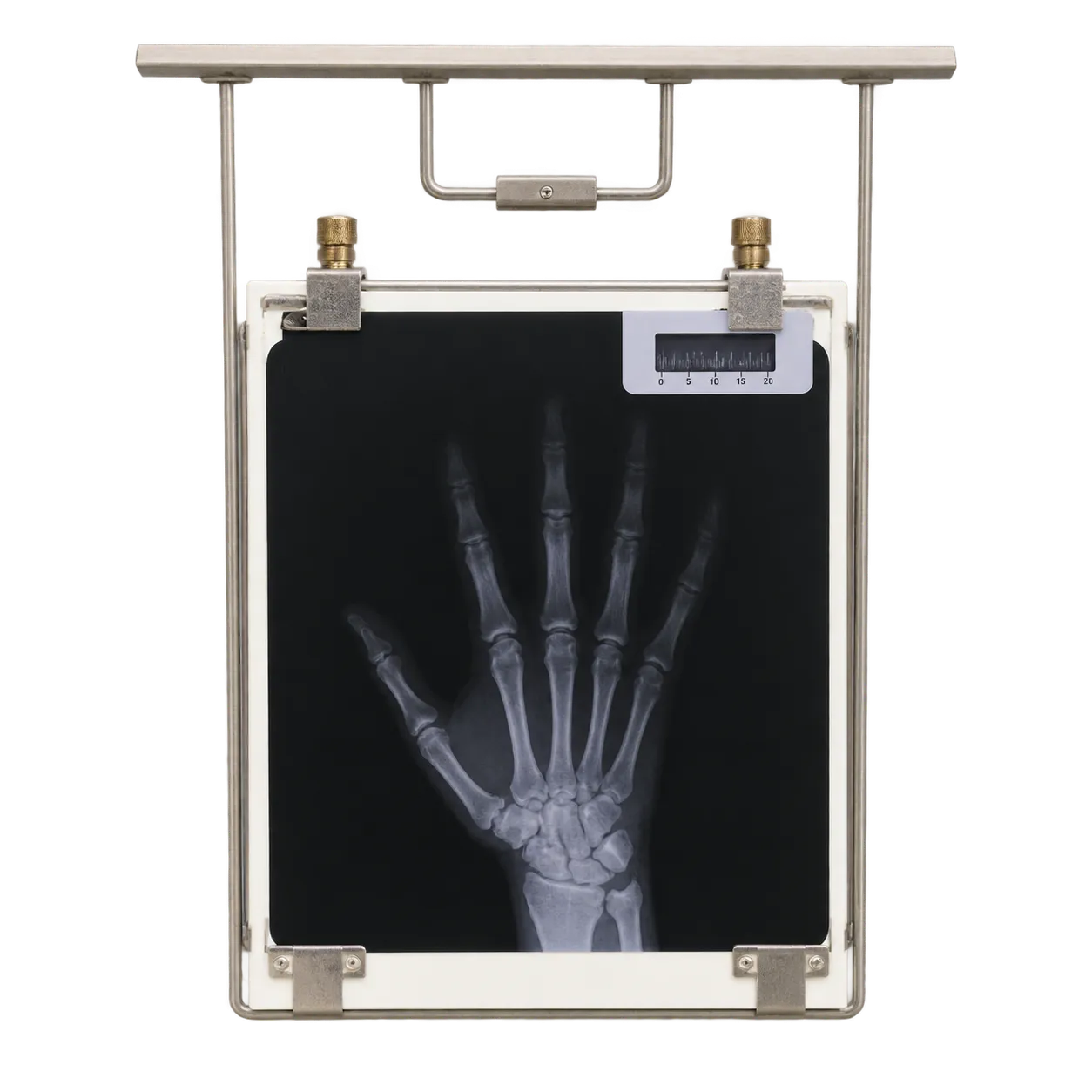
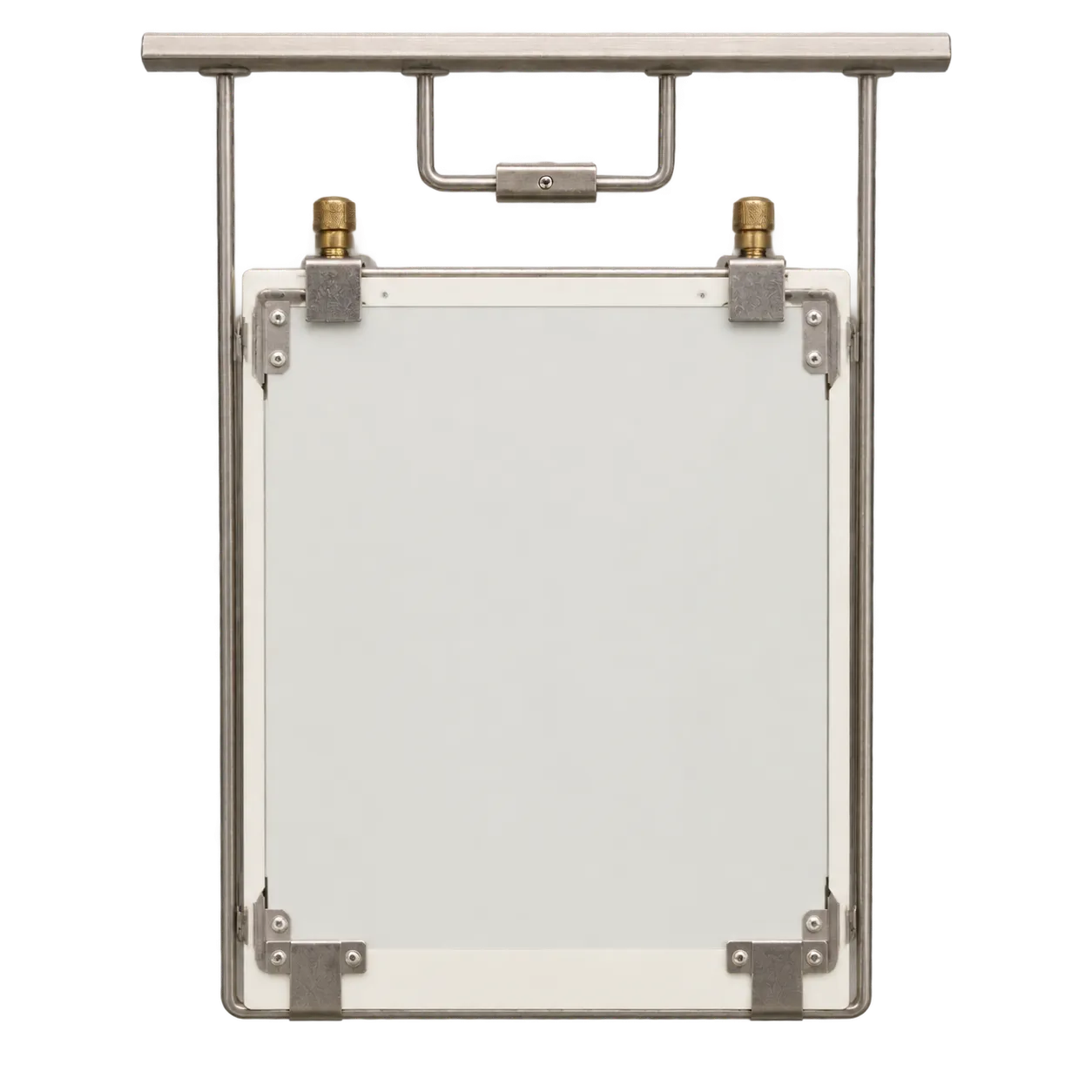
A hanger is the simplest object in a film darkroom and one of the most used. In the dark, films are clipped into the frame, lowered into the developer, agitated, lifted to drain, moved to the rinse, then the fixer, then the wash, and finally hung to dry. The frame keeps the sheet flat and separated from its neighbours throughout, so the emulsion develops evenly and nothing sticks together in the tank. Uneven development shows immediately on the finished radiograph.
Two details decide whether a hanger helps or hinders. The first is the grip. Clips that hold too loosely drop a film into the chemistry, and clips that bite too hard leave marks at the corners, which matters on a small film where the corner may carry anatomy. The second is carry-over. A frame lifted from the developer takes chemistry with it, so hangers must be drained properly and rinsed; a corroded or pitted one holds more than a smooth one does.
For UK buyers, the context matches the processor beside it. Hand processing has gone from hospital imaging, so hangers belong to services elsewhere that still work this way, or to drying films an automatic machine has already handled. Any department using them should keep the frames clean and check them regularly for corrosion, since a marked film means a repeated exposure for the patient and more work for the radiographer.
Medigear.uk obtains the sizes, materials, and pack details from Blackstone so buyers can order the right quantity the first time.