
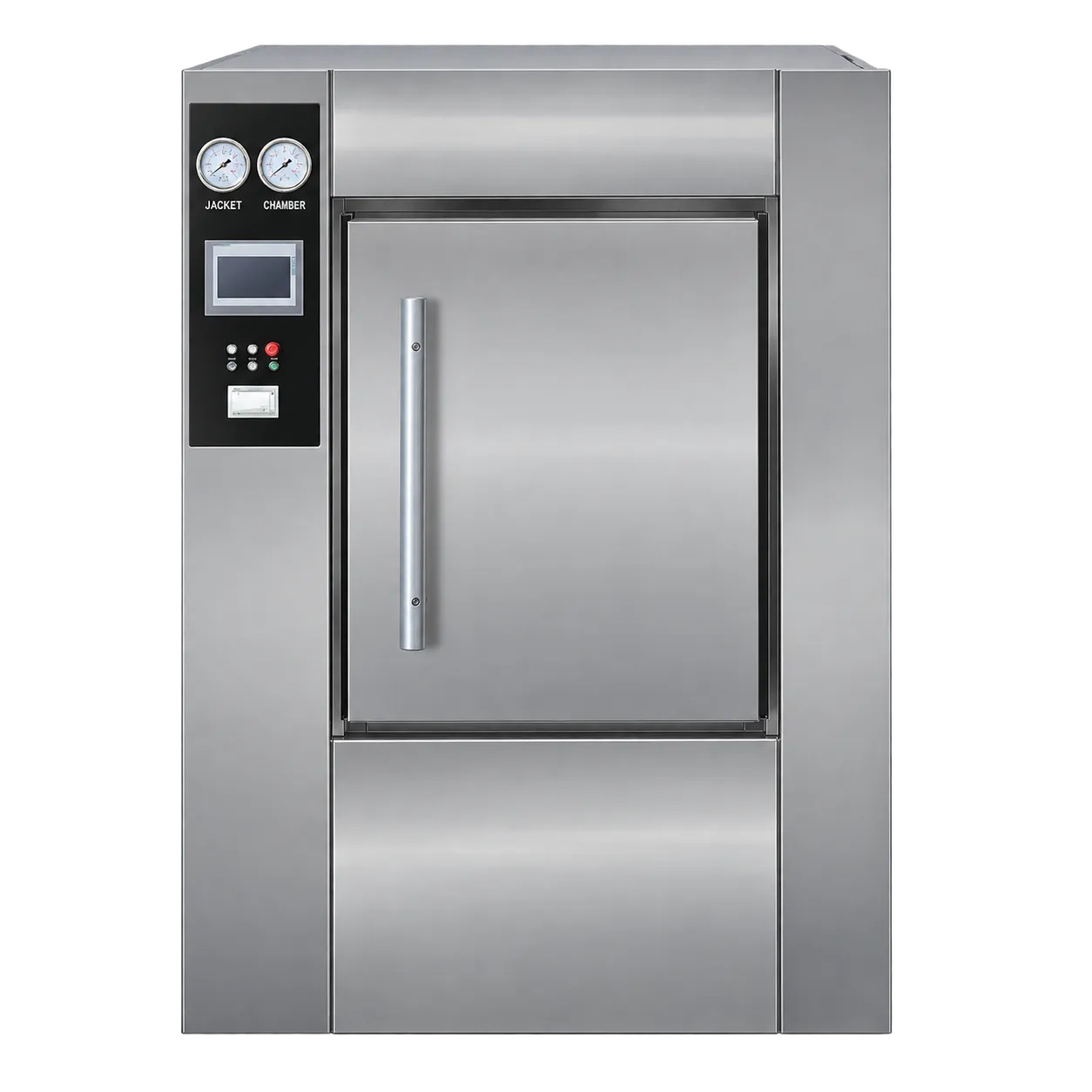
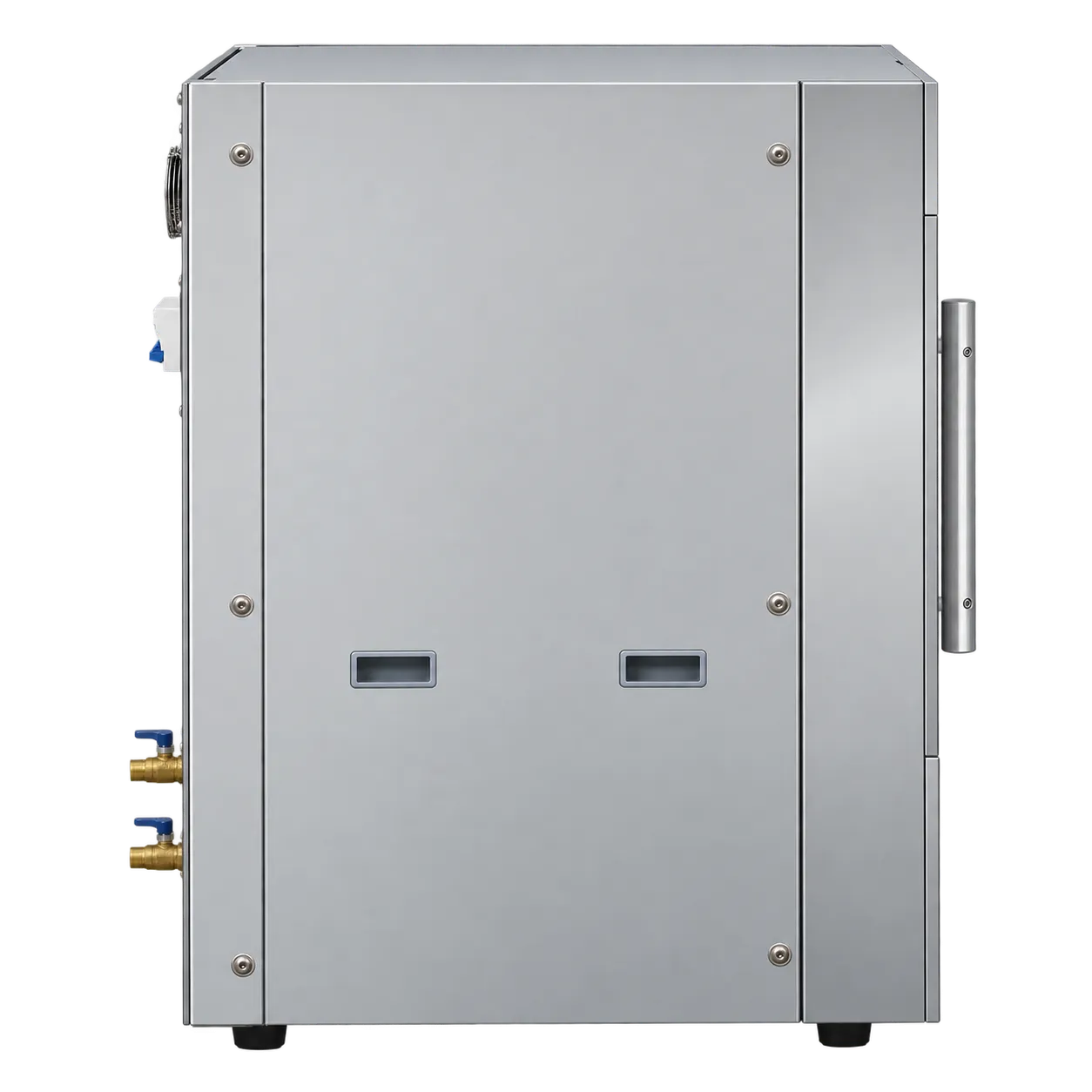
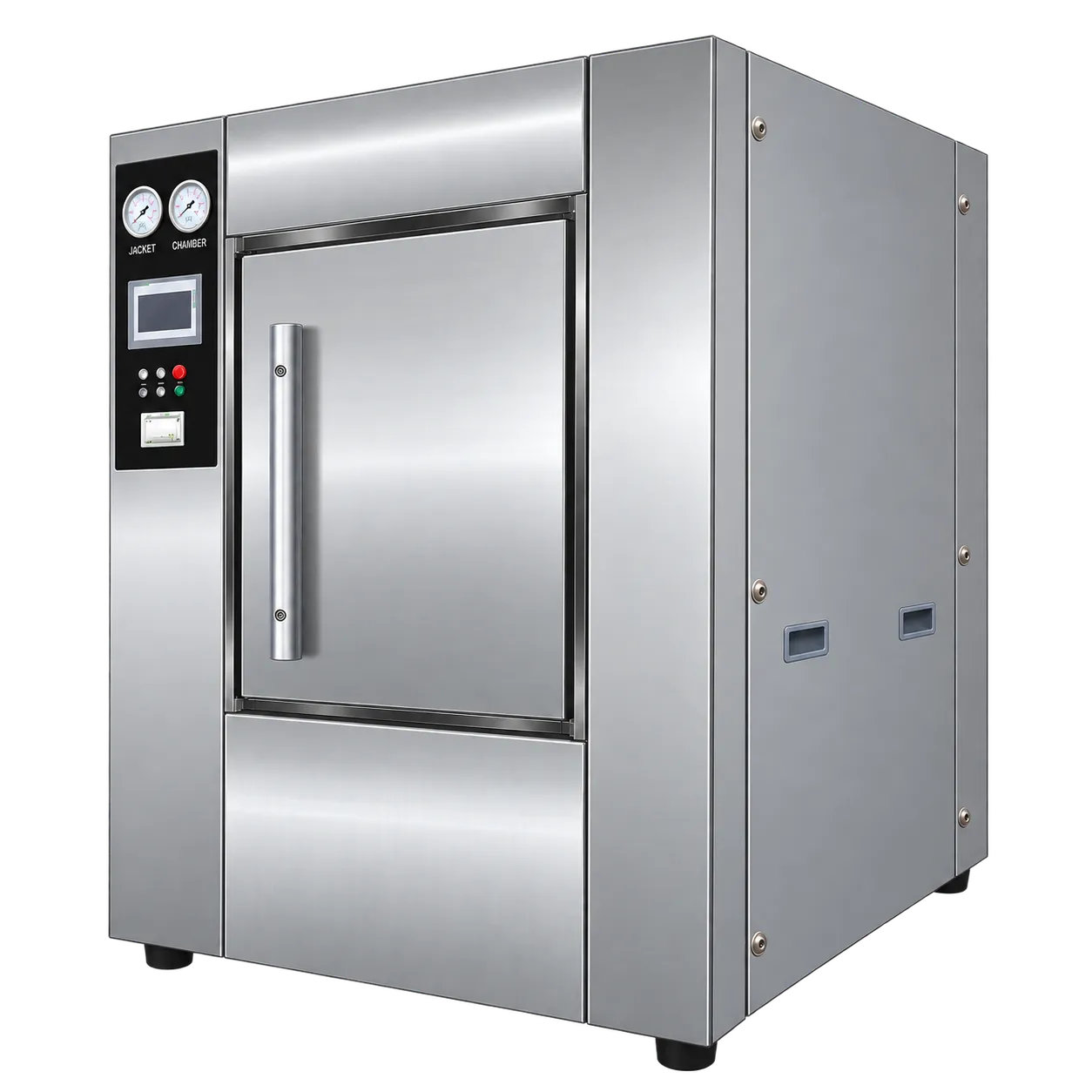
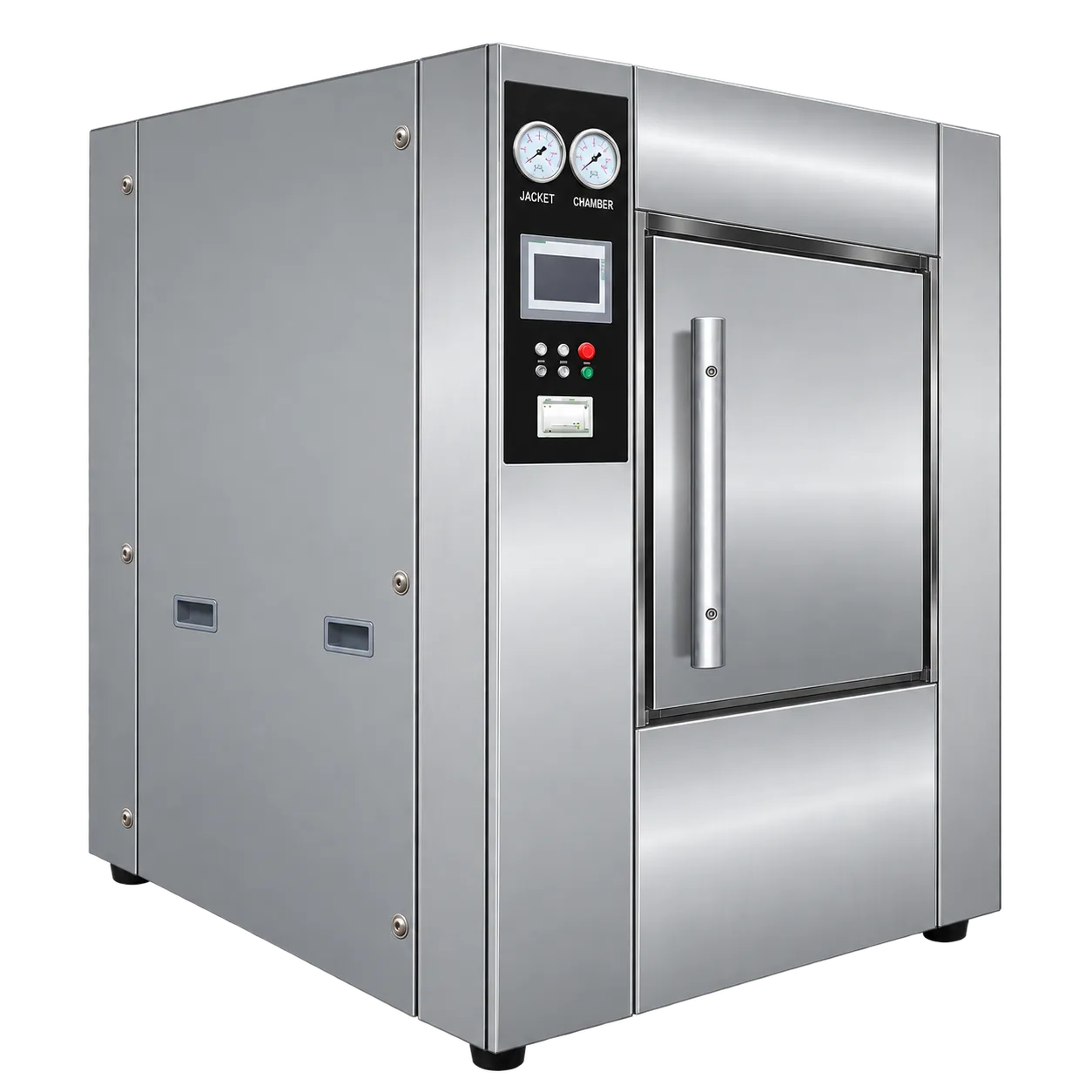
High-volume sterile services departments are the natural home for the WF-360SM, along with dental hospital decontamination units and large day surgery centres built around a segregated packing room and sterile store. Its pulsating vacuum suits wrapped instrument trays, rigid containers, surgical textiles and lumened instruments, and the metre-long chamber accommodates long orthopaedic and general sets laid flat.
The safety record of equipment like this rests on its doors. HSE guidance note PM73 classes autoclaves as high-risk equipment, describes a fatal accident in which a door opened while still under pressure, and warns that on larger autoclaves residual pressure may not register on the gauge. The same guidance expects door interlocks and nil-pressure checks to be engineered in, and periodic examination to cover them.
A pass-through unit doubles those demands, with two doors, two sets of seals and an interlock between them. In practice, the risk transfers to the owner at handover. The written scheme, interlock testing, operator training and the failed-cycle procedure are the department's to maintain, and they decide whether the barrier between packing and sterile areas holds in daily use. Staff on both sides of the wall need the same training, because either team may spot a door or seal fault.
Health services that buy through formal tenders, including the NHS, require EN 285 evidence and a validation plan for sterilisers of this size, and public buyers in other countries expect much the same. The conformity documentation those procurement routes require is issued by the manufacturer and shared by the enquiry team.