
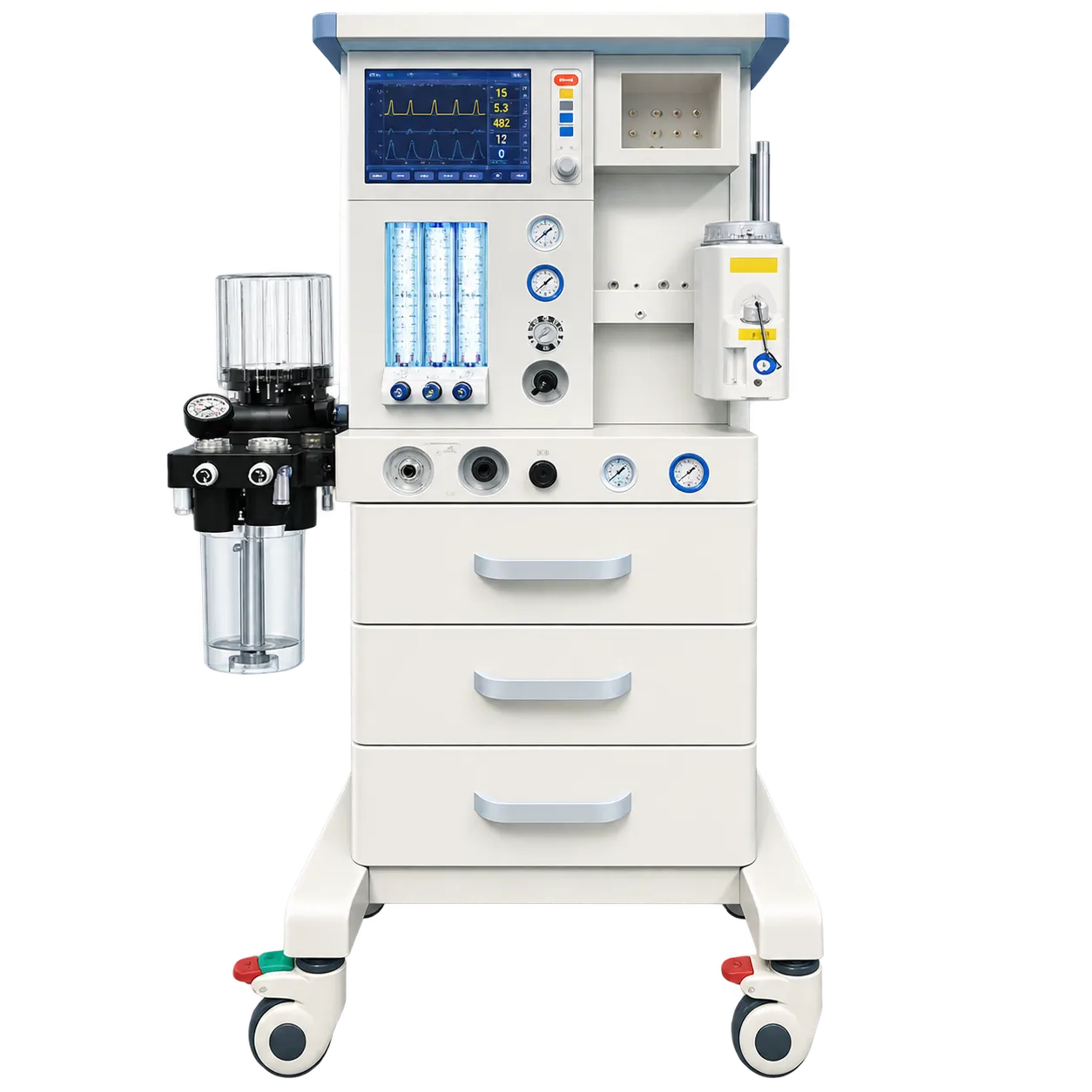
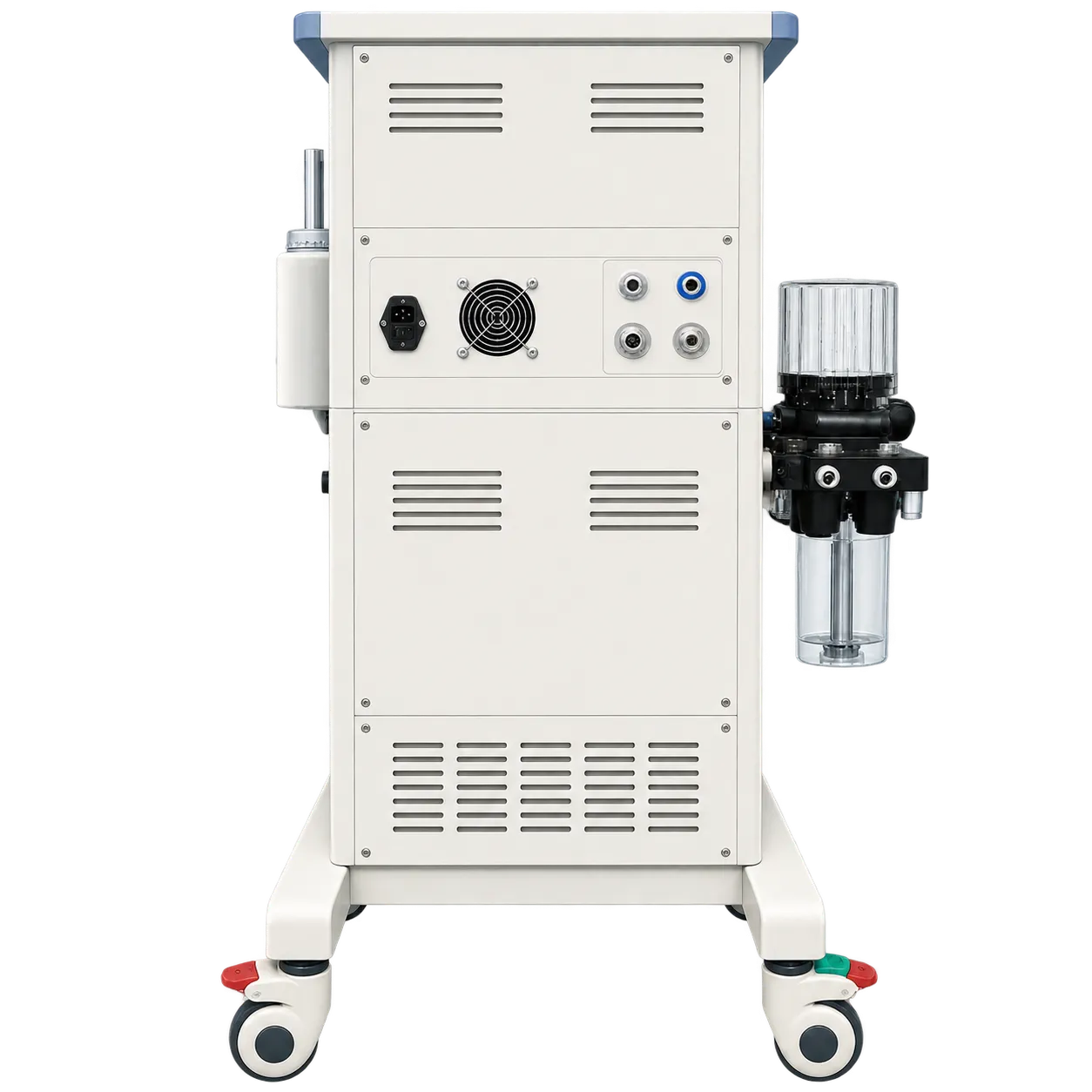
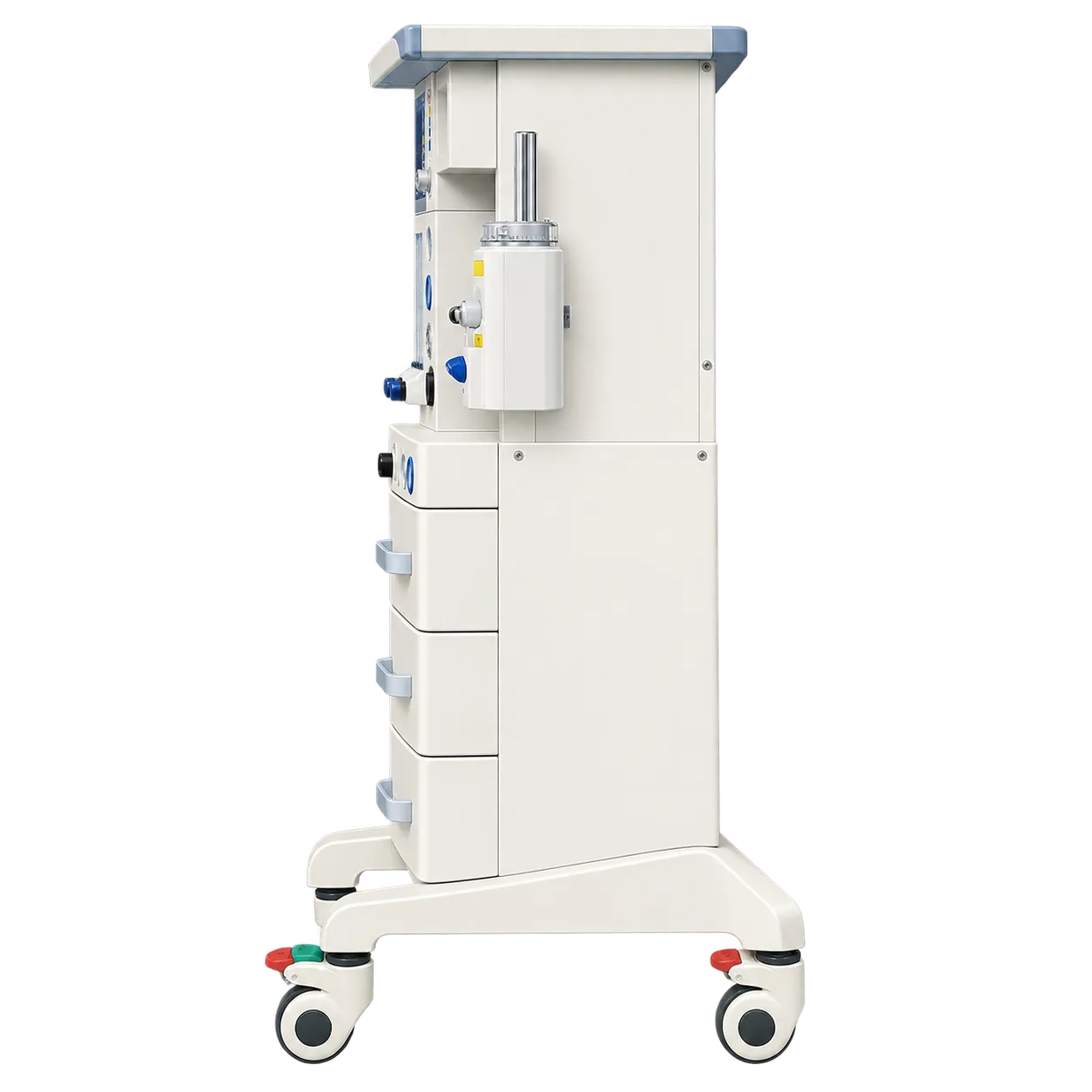
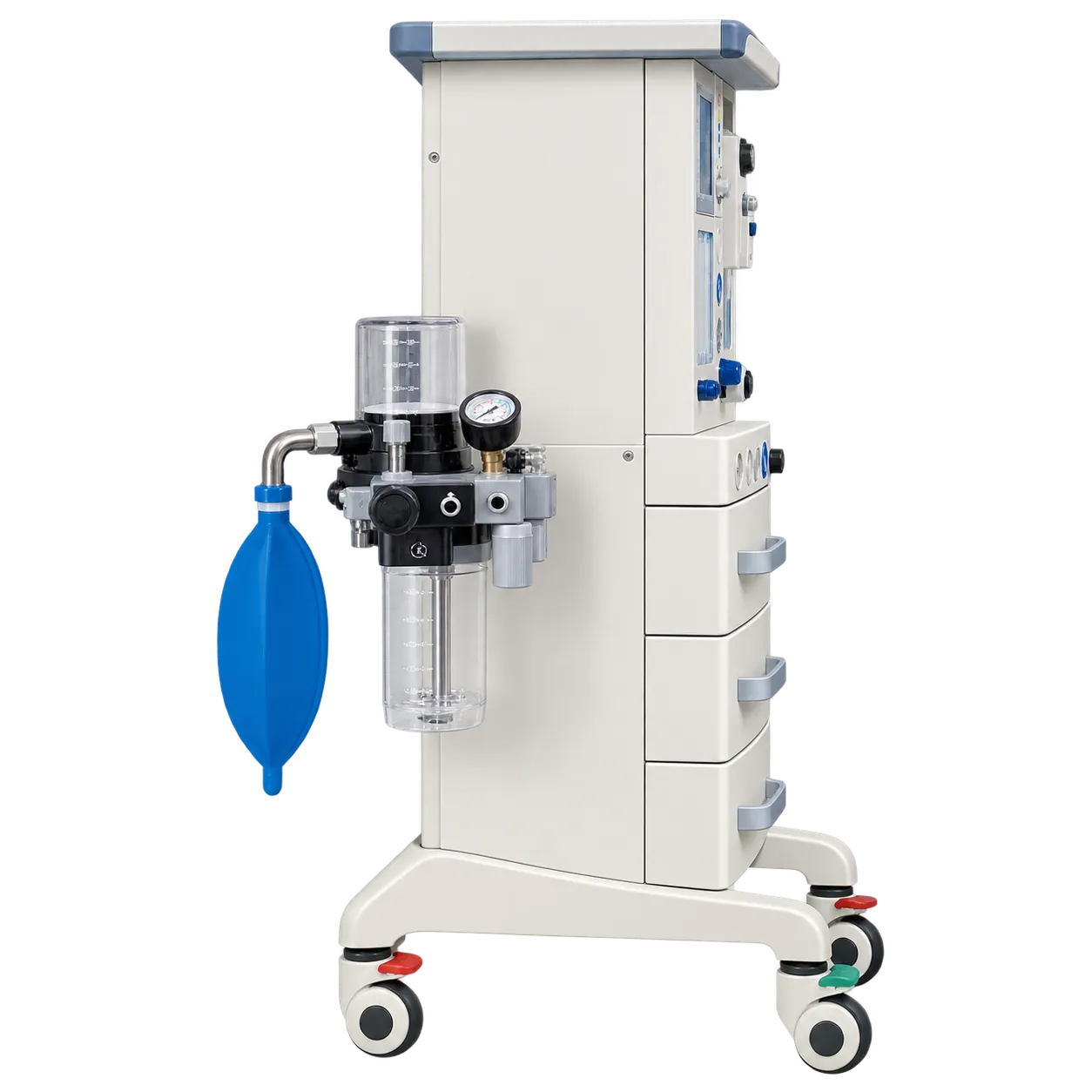
Gloved operation is the whole argument for resistive touch, and it is a sound one. An anaesthetist adjusts ventilation, alters flows, and silences alarms repeatedly through a case, always gloved, and a panel that ignores a gloved finger turns each of those into a nuisance. Resistive technology responds to pressure from anything at all, whether a glove, a knuckle,e or the end of a pen, so the interface works as intended from induction onward.
What accompanies a touch surface is a cleaning question the sheet does not address. A screen touched dozens of times through a case, by gloves in contact with a patient, becomes among the most contaminated surfaces on the machine. Resistive panels carry a flexible top layer rather than hard glass, which affects what may safely be used on them, and no cleaning guidance appears anywhere on the sheet. That is worth asking about before a decontamination lead raises it, rather than after a machine has arrived on a list.
The ventilator underneath is the familiar base arrangement and its boundaries are the familiar ones. No PEEP among the modes, despite it being routine practice. No air reaches the flowmeter block either, leaving nitrous oxide to dilute whatever is delivered. Delivery starting at 50 ml, keeping infant work beyond reach. Capnography is absent from the sheet entirely, where British anaesthesia requires it throughout every single case.
Medigear.uk establishes the PEEP position, the screen cleaning regime and the capnography arrangement before this touch screen anaesthetic unit reaches a