

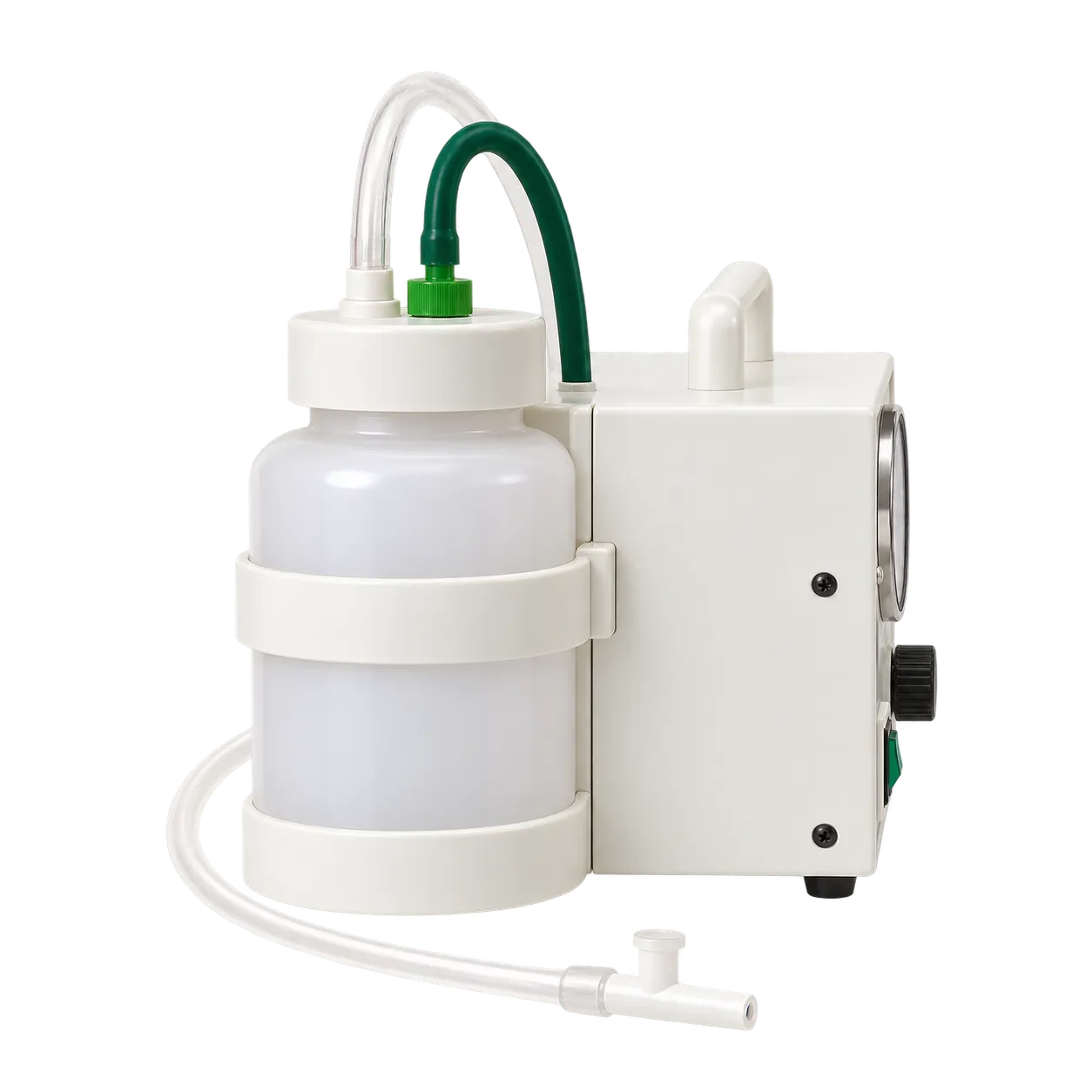
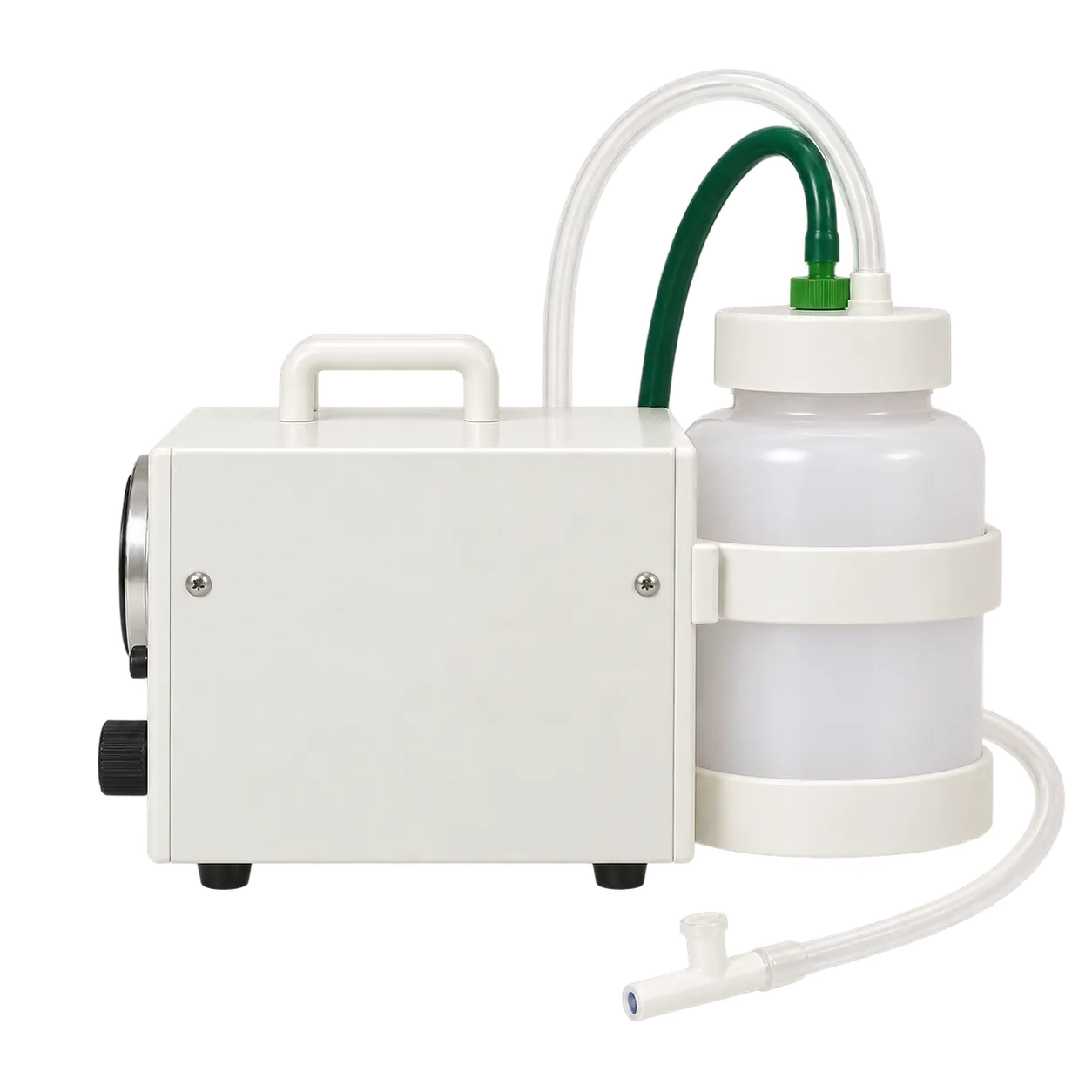
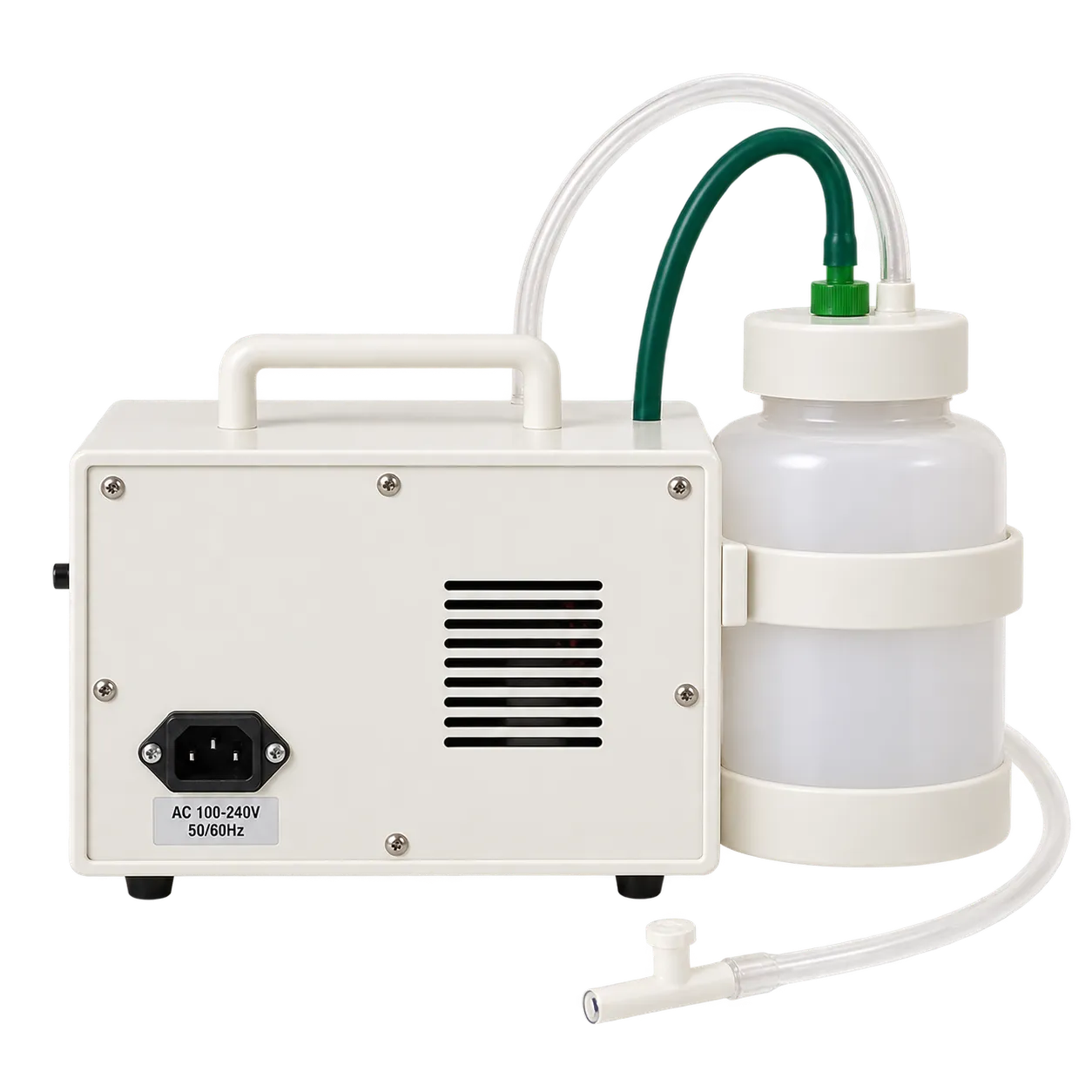
Newborns in neonatal intensive and special care have mucus and secretions cleared from the nose, mouth and airway with the Blackstone Low Pressure Aspirator. Before a pass, the team turns the regulator and blocks, checks the patient, and waits until the gauge reaches the desired level; then they insert and attach a catheter sized for the baby to the end of the tube. Each pass is brief and gentle, and the catheter is used once.
In delivery suites it stands near the resuscitation area, ready for a newborn whose airway needs clearing in the first minutes after birth. Children's wards use it for infants whose blocked noses and secretions make feeding and breathing harder, with the suction level kept within what a small airway tolerates.
The unit sits on a shelf or trolley next to the cot, and its carry handle lets staff move it between bedspaces with the collection bottle in its holder. The green switch, gauge, and regulator are all on the front, so the suction level stays in view while a nurse works at the cot.
Its low suction is the point, and it shapes how the unit is used. Thick secretions clear more slowly, so a pass may need repeating after a pause. The bottle is emptied well before it fills, keeping fluid away from the pump, and the bottle and cap are cleaned after use while tubing is renewed as it wears. Removing secretions also removes oxygen-rich gas from the airway, so passes stay short and oxygen returns promptly.
Adult airways, surgical suction and heavy bleeding call for high-vacuum suction equipment.