


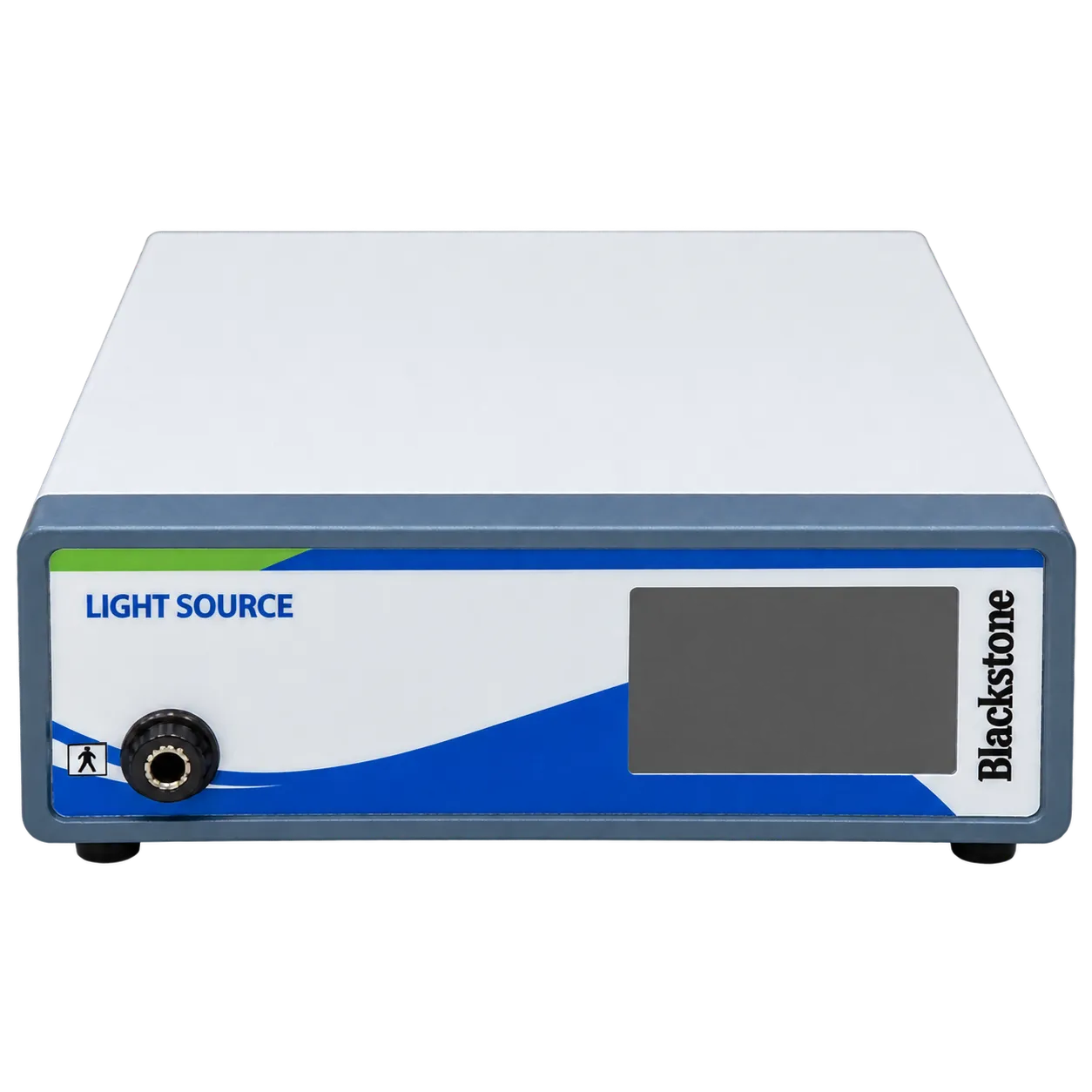

Illumination decides what a camera can do. A sensor with an excellent noise figure still produces a poor picture if the cavity is underlit, and the far wall of an abdomen is always dimmer than the tissue sitting immediately at the tip of the scope. Output therefore matters as much as resolution does. That is why a figure comparable with other sources is worth insisting on, rather than accepting whatever unit a sheet happens to use.
Colour rendering matters more for surgical work than colour temperature does, and it is the one figure not published here. Tissue has to look like tissue, so that a surgeon reads perfusion, inflammation and the boundary between structures by eye alone. Two lamps at the same colour temperature can render all of that quite differently, depending on how evenly each one covers the spectrum, so the rendering index is the figure to ask for.
Diode illumination brings two everyday advantages over older technologies. Service life runs into thousands of hours rather than hundreds. That removes the mid-life bulb change xenon sources were notorious for, and the light stays cooler at the guide post as well. Blackstone publishes no hours figure at all, which is odd given that longevity is usually the selling point of this lamp type.
The noise ceiling is a welcome inclusion all the same, since an LED light source sits in a stack beside the team for the whole of a procedure. Medigear.uk is collecting the remaining figures from the manufacturer.