
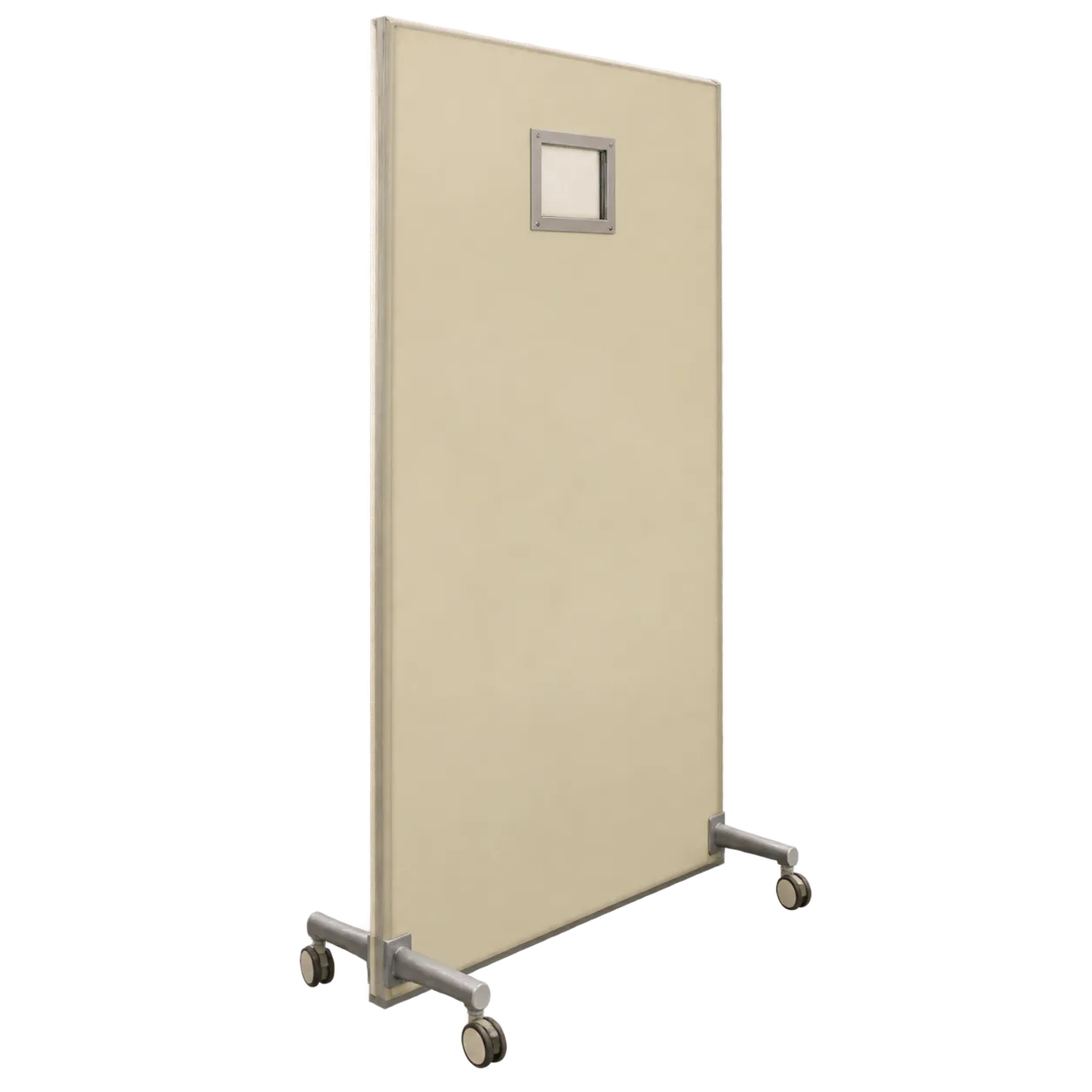
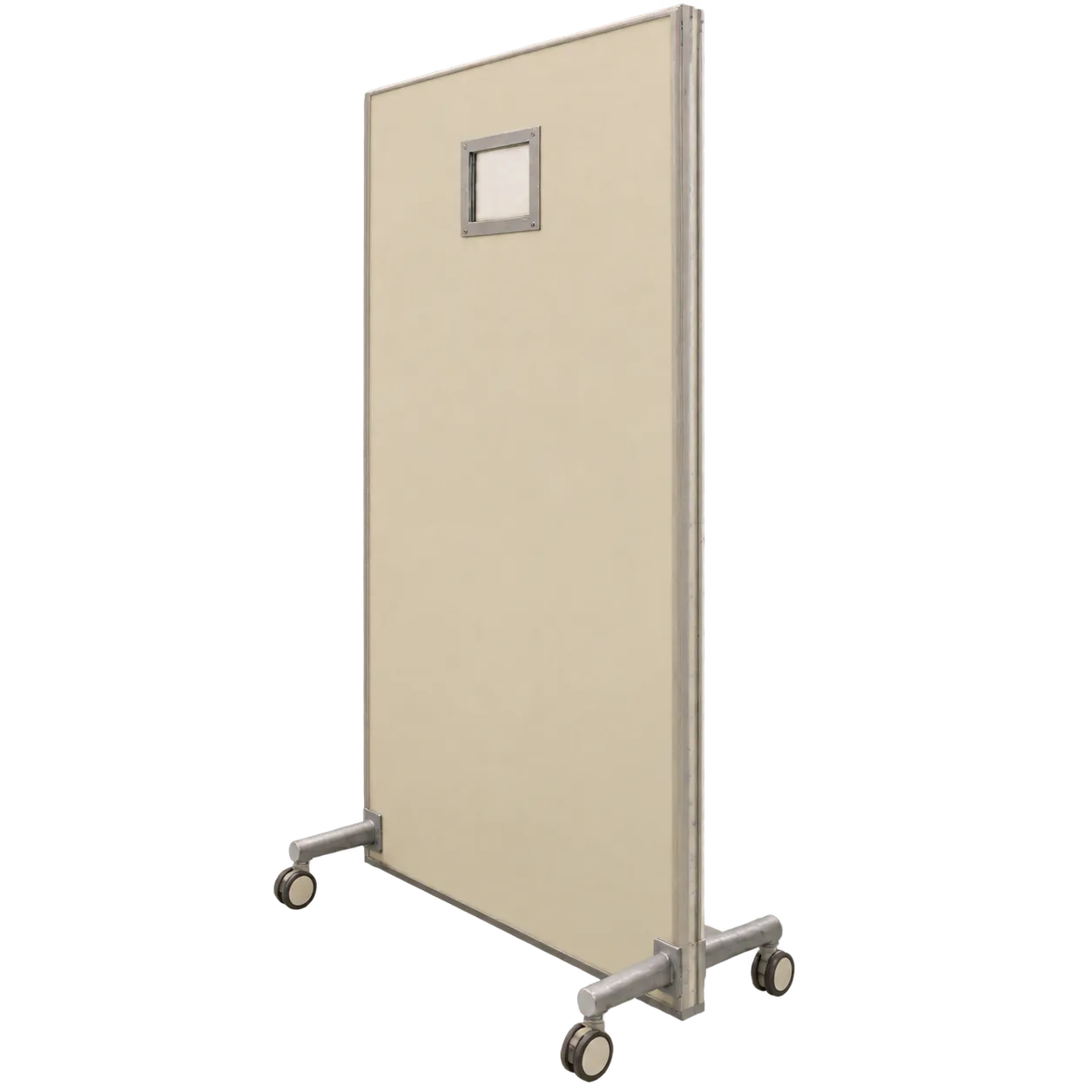
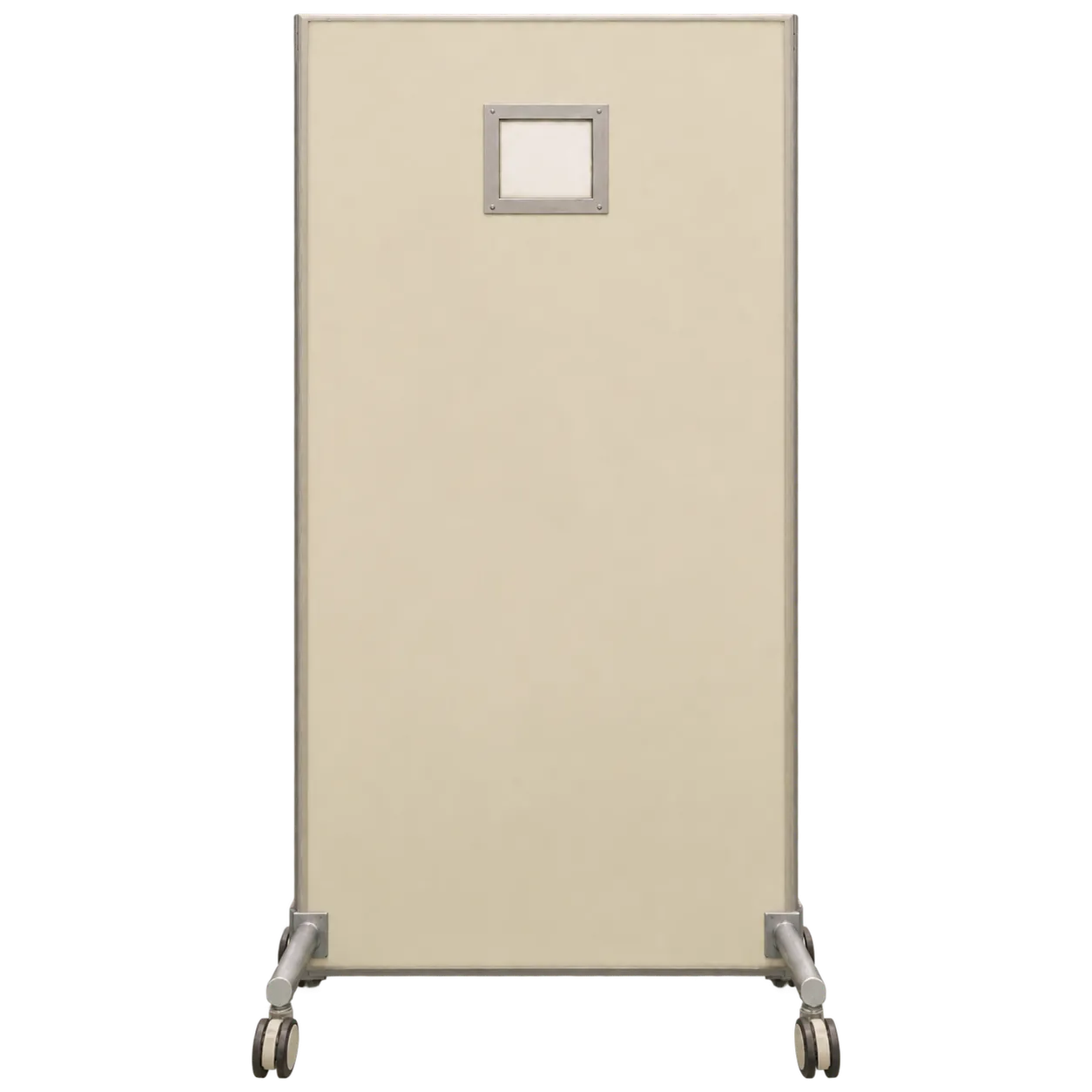
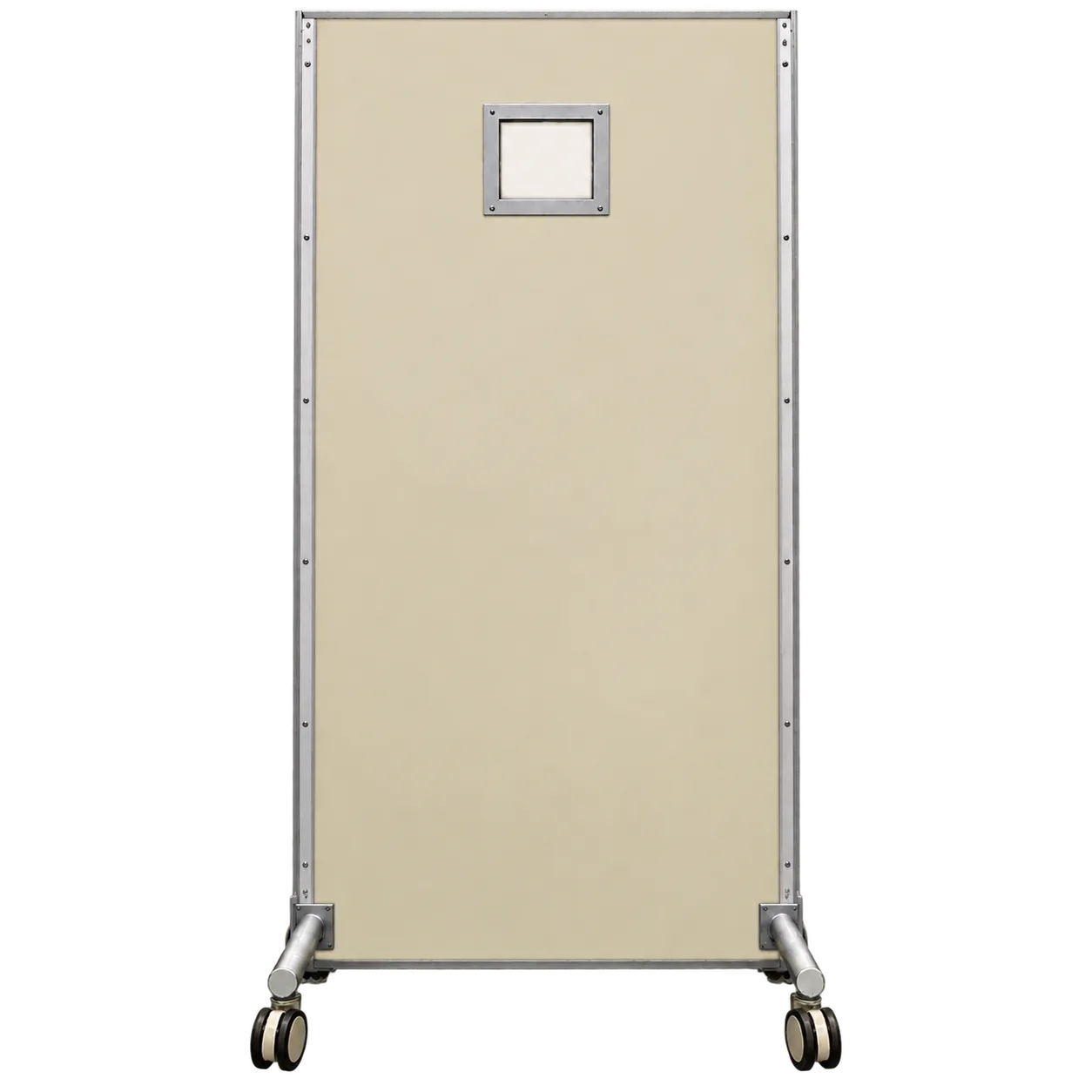
Protective screens exist for the staff who cannot leave the room. In theatres during screening, on wards when a portable unit is used, and beside a table where a radiographer steadies a nervous or confused patient, somebody stays inside the controlled area. That person needs something solid between themselves and the radiation. A wheeled barrier does that, and it stays out of the way between examinations rather than occupying floor space permanently.
Scatter, rather than the primary beam, is what these screens address. Radiation bouncing off the patient spreads in every direction and falls away with distance. That is why the first rule is to stand back, and the second is to stand behind something solid. A panel reaching above chest height protects the organs that matter most, while the window lets an operator keep watching the patient without stepping out from cover. Positioning is part of the technique, since a screen left standing against the wall protects nobody at all.
In the UK, this equipment sits inside a formal framework. A radiation protection adviser designs the shielding for a room and specifies what protective equipment it needs, so lead equivalence has to be documented rather than assumed by whoever places the order. Protective items are also examined periodically for damage, because a cracked panel or a delaminated edge weakens the protection quietly, with nothing obvious to see.
Medigear.uk obtains the figures and any test certificate from Blackstone, so a screen can be entered into a department's equipment records properly.