
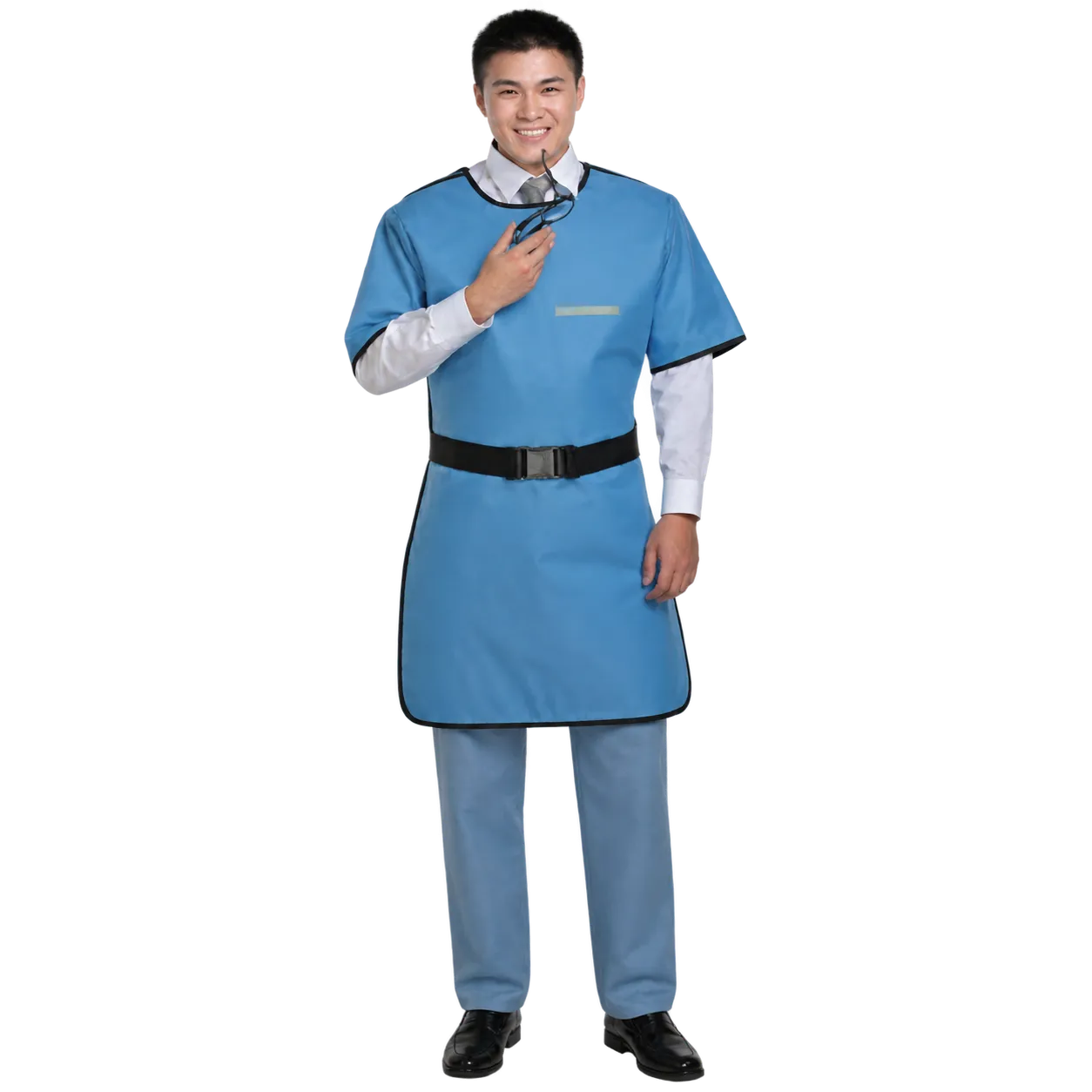
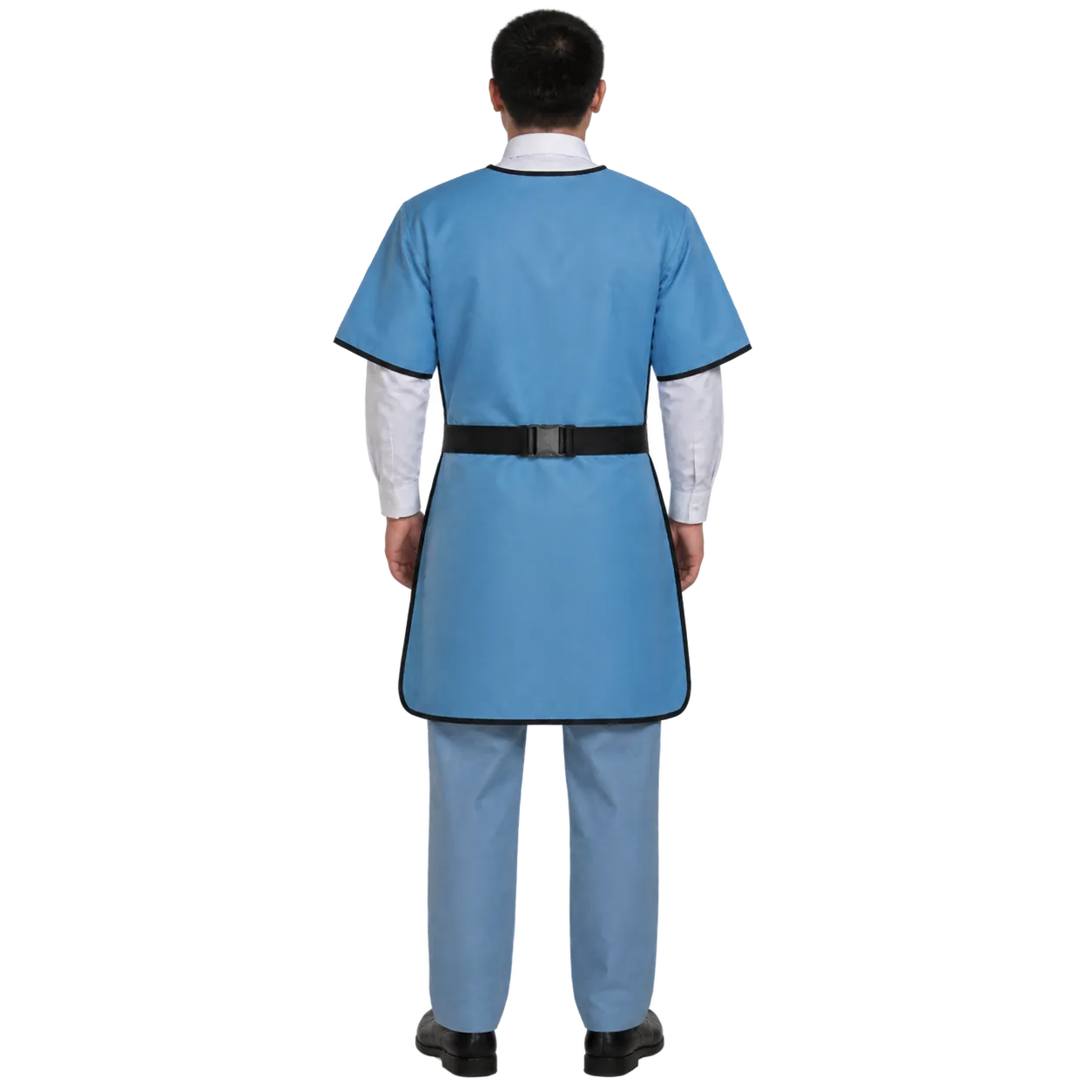
Choosing between a plain front garment and a coat comes down to how people stand. A radiographer who stands facing the patient throughout an examination is protected well enough by either pattern. An assistant who turns to pass instruments, or anyone working alongside a moving C-arm, presents shoulders and upper arms to scatter that the shorter cut does not reach. The coat closes part of that gap, without going as far as a full wrap-around garment, which is heavier again.
Comfort decides whether protection is actually worn, which is the uncomfortable truth behind every specification. Garments that drag on the neck get taken off between cases, and one hanging on a hook protects nobody at all, whatever its rating says. The belted waist here helps, as does the broader shoulder coverage, though both add material and therefore weight to carry. Departments often keep a mix of patterns and sizes so that people can find one that fits, rather than making do with whatever is left on the rail.
Thyroid protection follows the same logic. A collar weighs little, covers tissue that responds strongly to radiation, and is worn as a matter of routine wherever screening is frequent. Since one appears in this photograph, the question is simply whether it forms part of the package.
Medigear.uk is settling that question, along with the protective value, the materials and the size range, so a lead coat apron can be issued to staff with its figures recorded rather than assumed by whoever hands it over.