

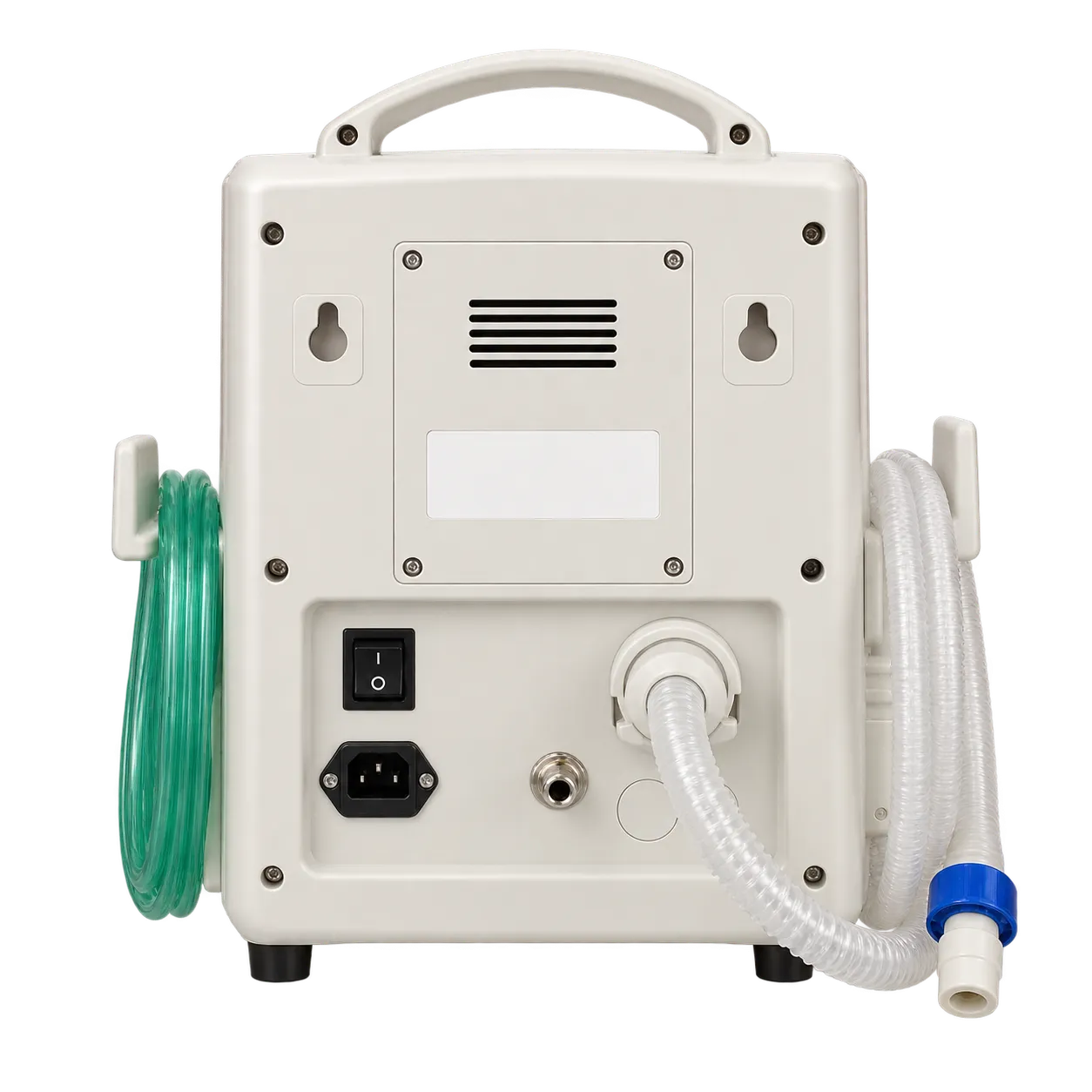
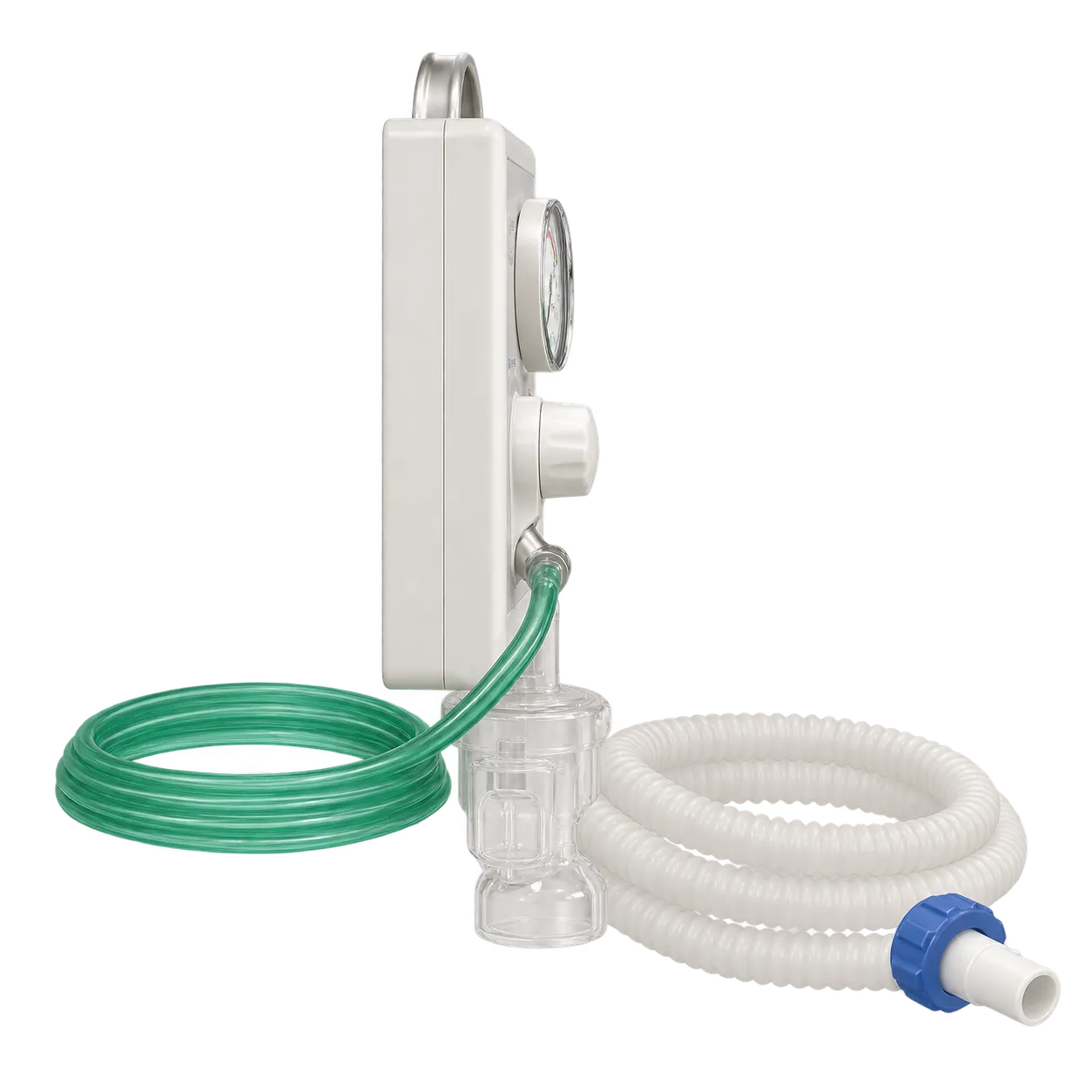
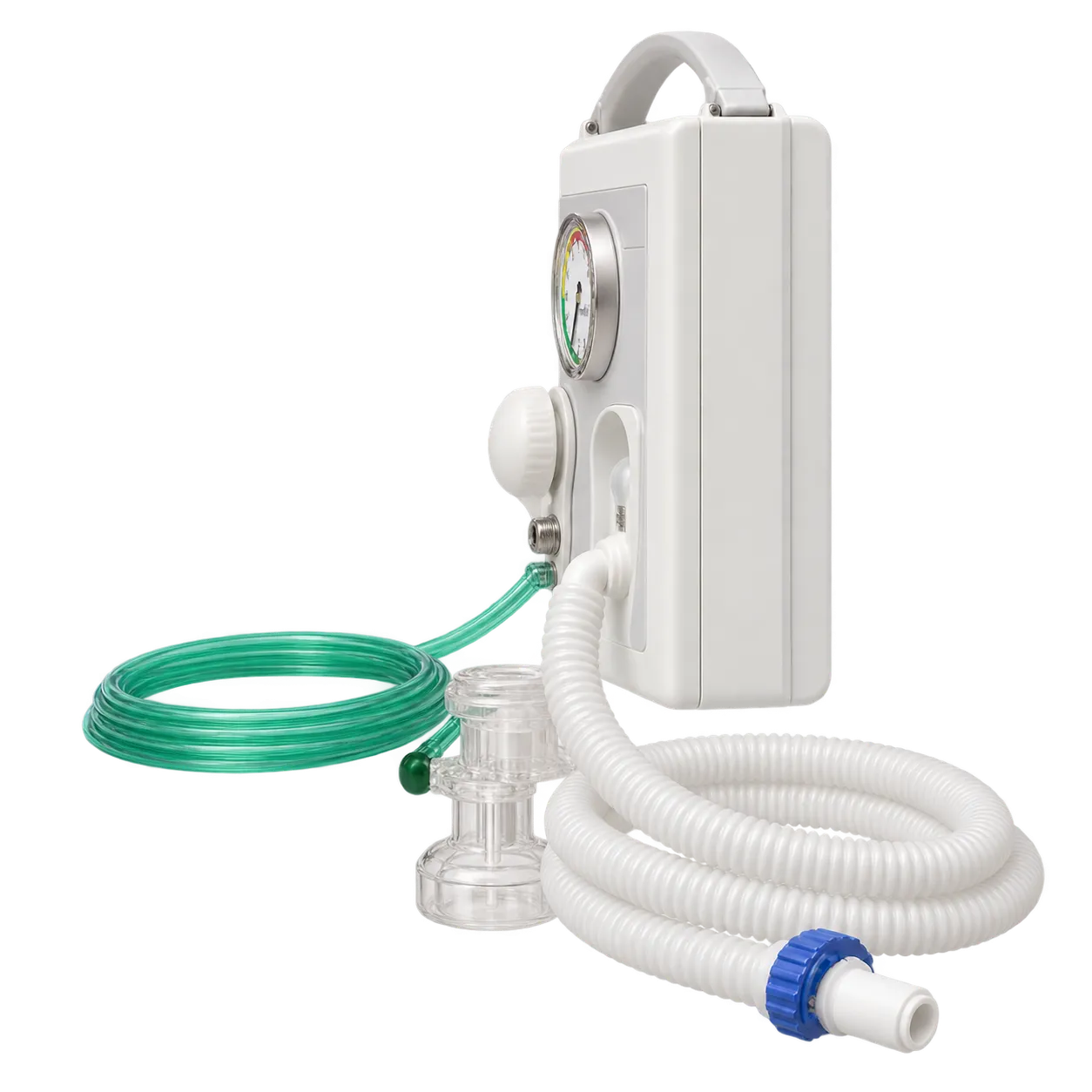
Newborns who do not breathe well on their own at birth are the reason delivery suites and maternity theatres keep the Blackstone infant T-piece resuscitator. Before delivery, the unit is connected to a flowing gas supply, the patient end is occluded, and the peak pressure is set on the front panel while the gauge is monitored. PEEP is then set by turning the cap on the T-piece, so both pressures are in place before the baby arrives.
At resuscitation, one person holds the infant face mask over the baby's nose and mouth and gives each inflation by covering the cap with a fingertip. Every inflation stops at the set peak, and PEEP holds the lungs partly open between breaths. The gauge lets the team see each pressure as it happens, and the fingertip sets the inflation rhythm, not a machine.
Neonatal intensive and special care units keep the unit for babies who need support after birth or on the unit, and emergency departments keep it for unexpected births. Its carry handle lets staff take it to a bedspace, a theatre or a delivery room, as long as a gas supply and flowmeter are there to drive it.
The oxygen concentration comes from the supply, so units that want a concentration between air and oxygen run the T-piece from a blended source. Because the unit runs on gas flow alone, it has no battery to charge and no power cable to route.
A setting without a gas supply and a baby who needs longer-term ventilation calls for other equipment.