
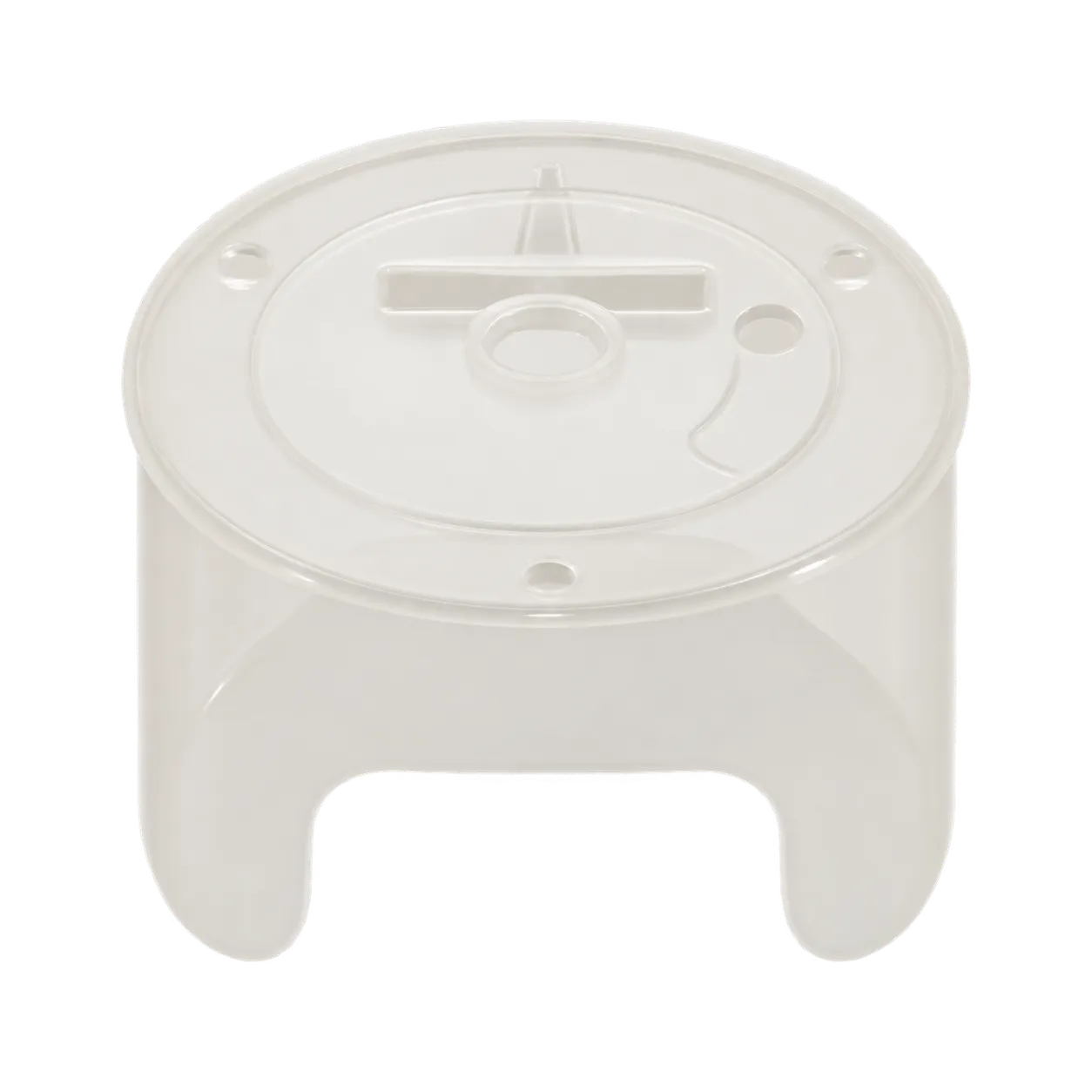
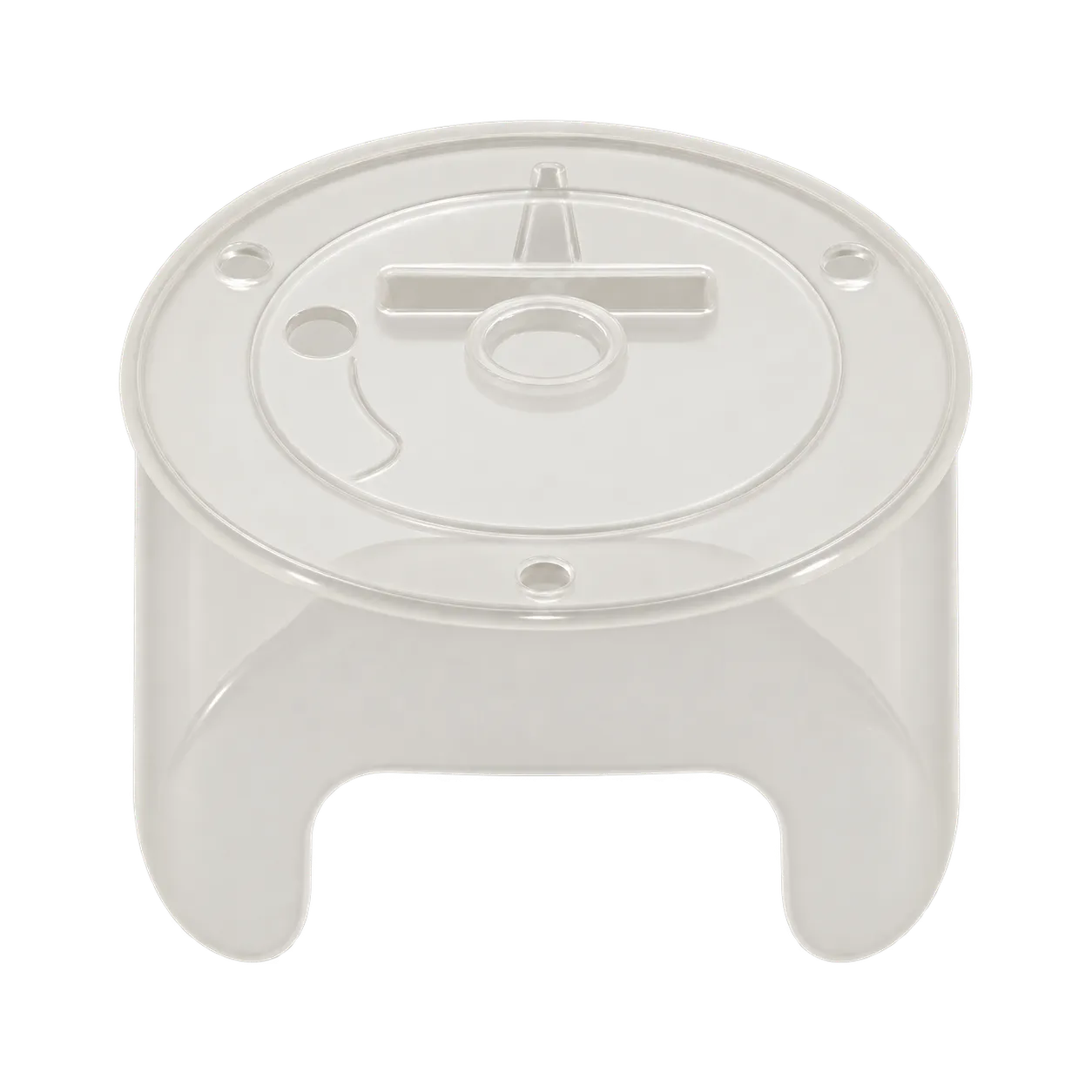
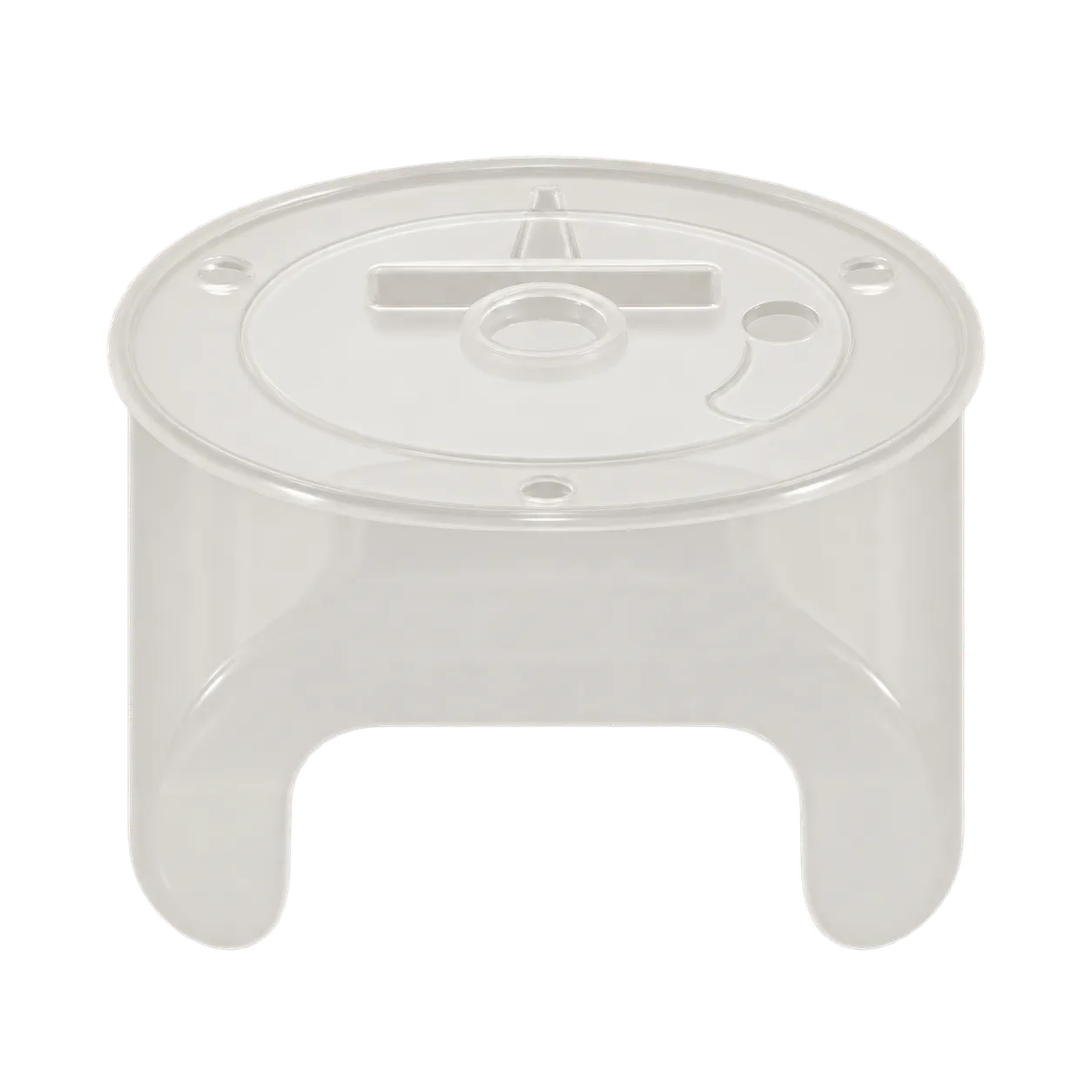
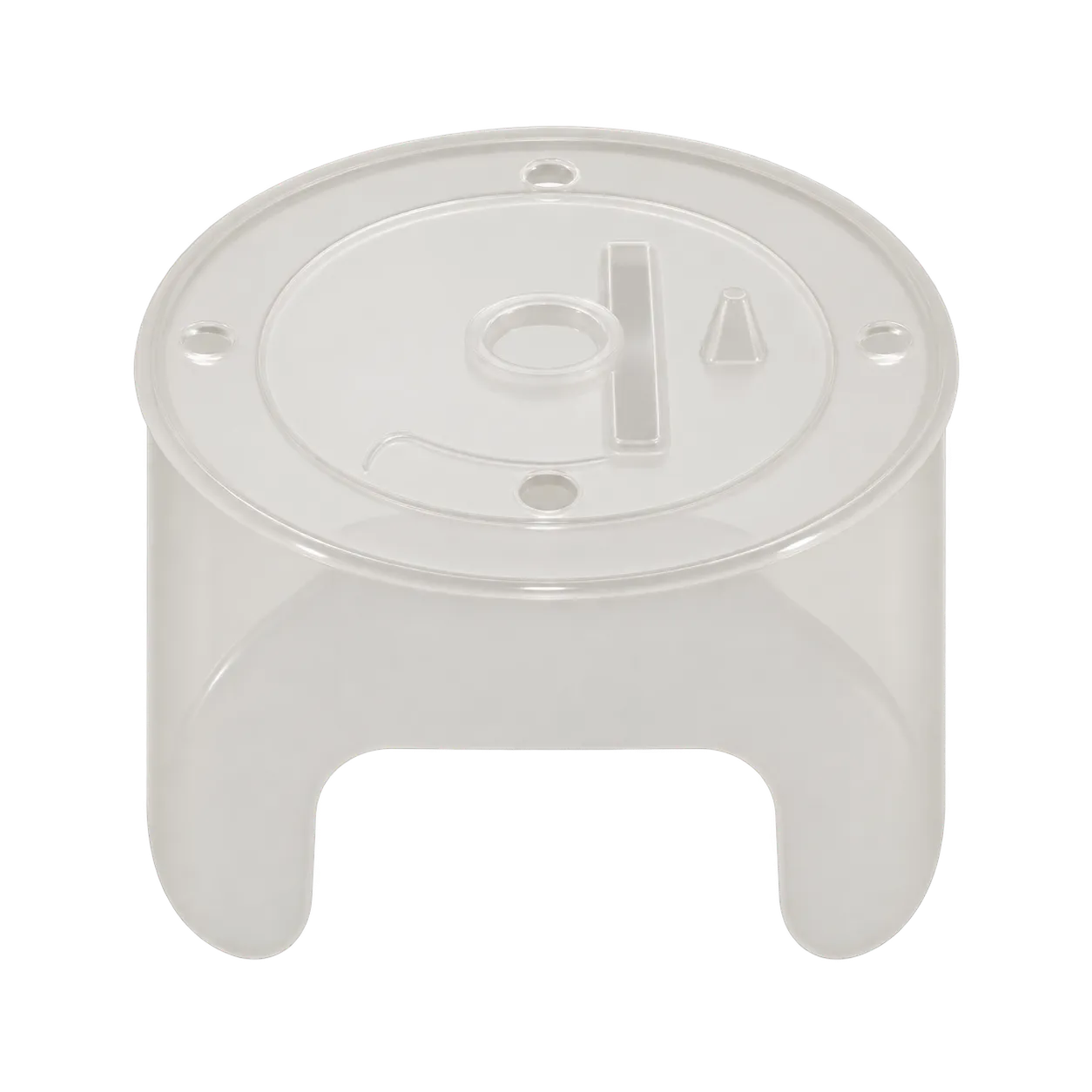
Neonatal intensive and special care units use the Blackstone infant oxygen hood for babies who breathe on their own but need more oxygen than room air provides. The gas line from a flowmeter, usually after a blender and humidifier, connects to the hood's port, and the shell goes over the baby's head with the neck through the arched opening. An oxygen analyser inside the hood shows the concentration the baby is breathing, and the team adjusts the gas supply to reach the desired level.
On postnatal and paediatric wards, the same set-up serves young babies who need extra oxygen, including those nursed in a standard cot. Because nothing sits against the nose or face, the baby can be given oxygen without a mask or fixings, and the face stays clear for observation while a parent's hand rests on the baby's body outside the hood.
Practical care follows the shell. For a feed, a procedure, or a cuddle, the hood lifts off in one movement and goes back on as soon as the care is finished, since the baby breathes room air while it is off. The clear walls let staff watch breathing effort, colour and settling from the cot side without disturbing the baby.
The hood has no electrical parts, so there is nothing to charge, test electrically or plug in at the bedspace. It does need a steady gas supply from a flowmeter, because the oxygen concentration inside depends on the gas fed in.
Babies who need pressure support or ventilation, and bedspaces without a gas supply, call for other equipment.