
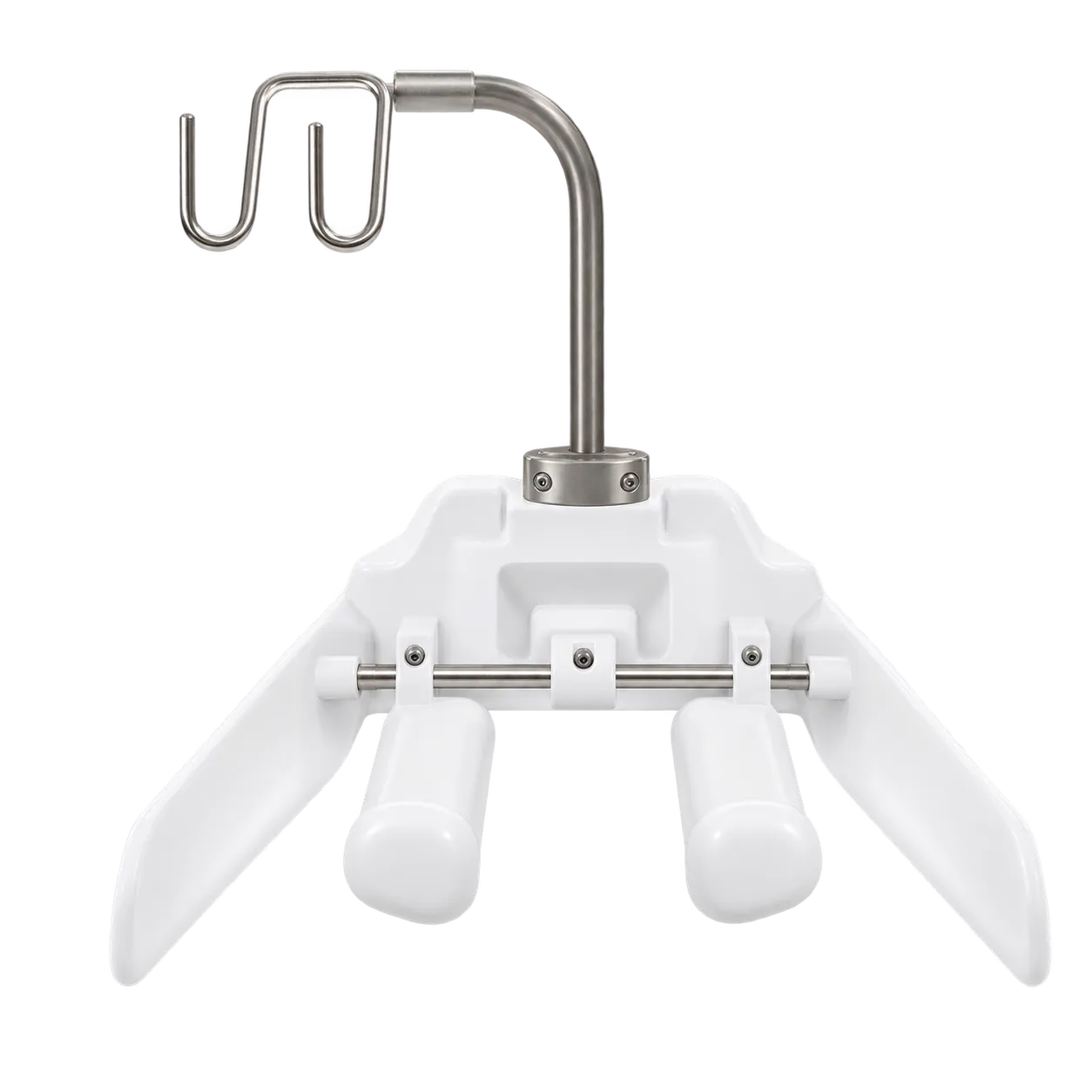
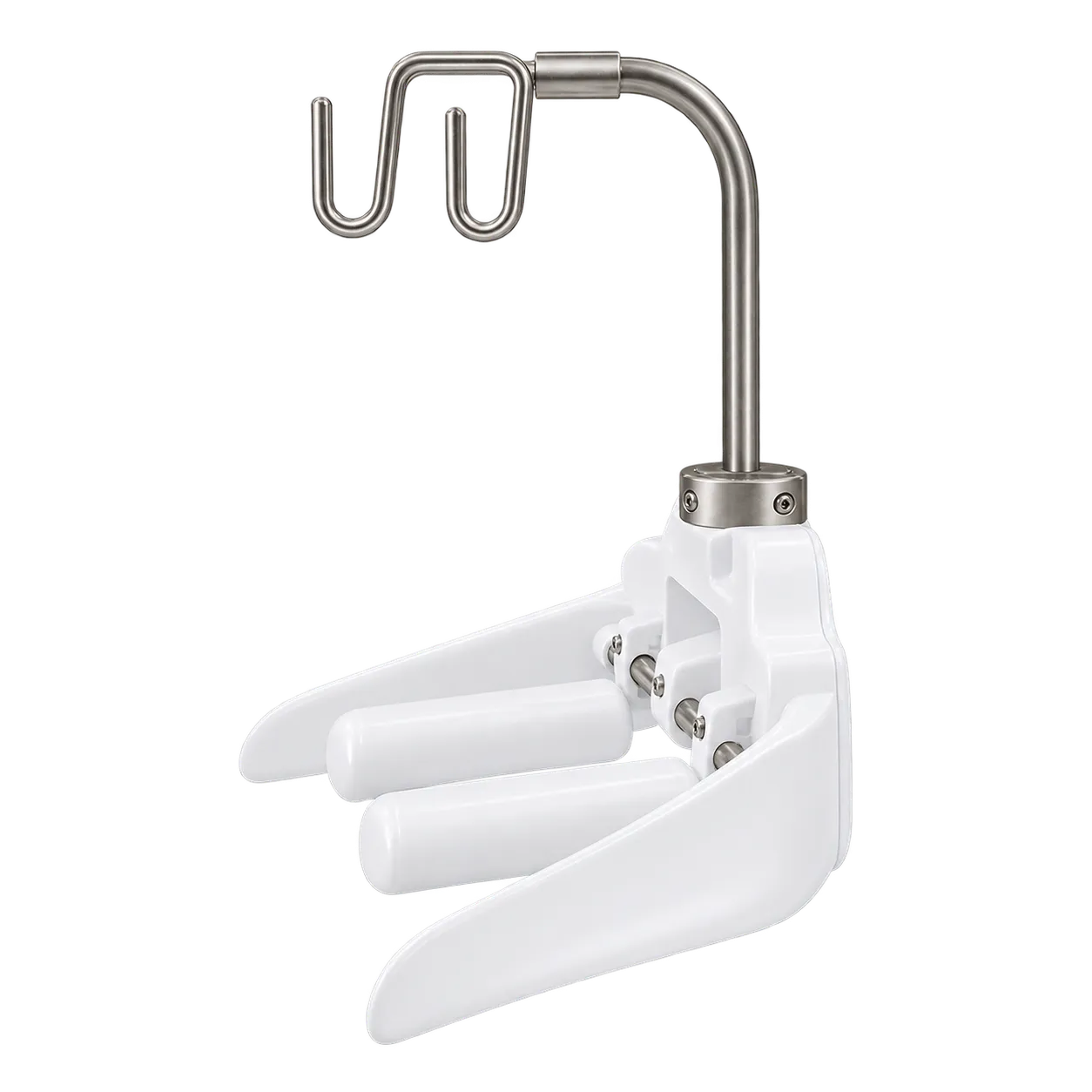
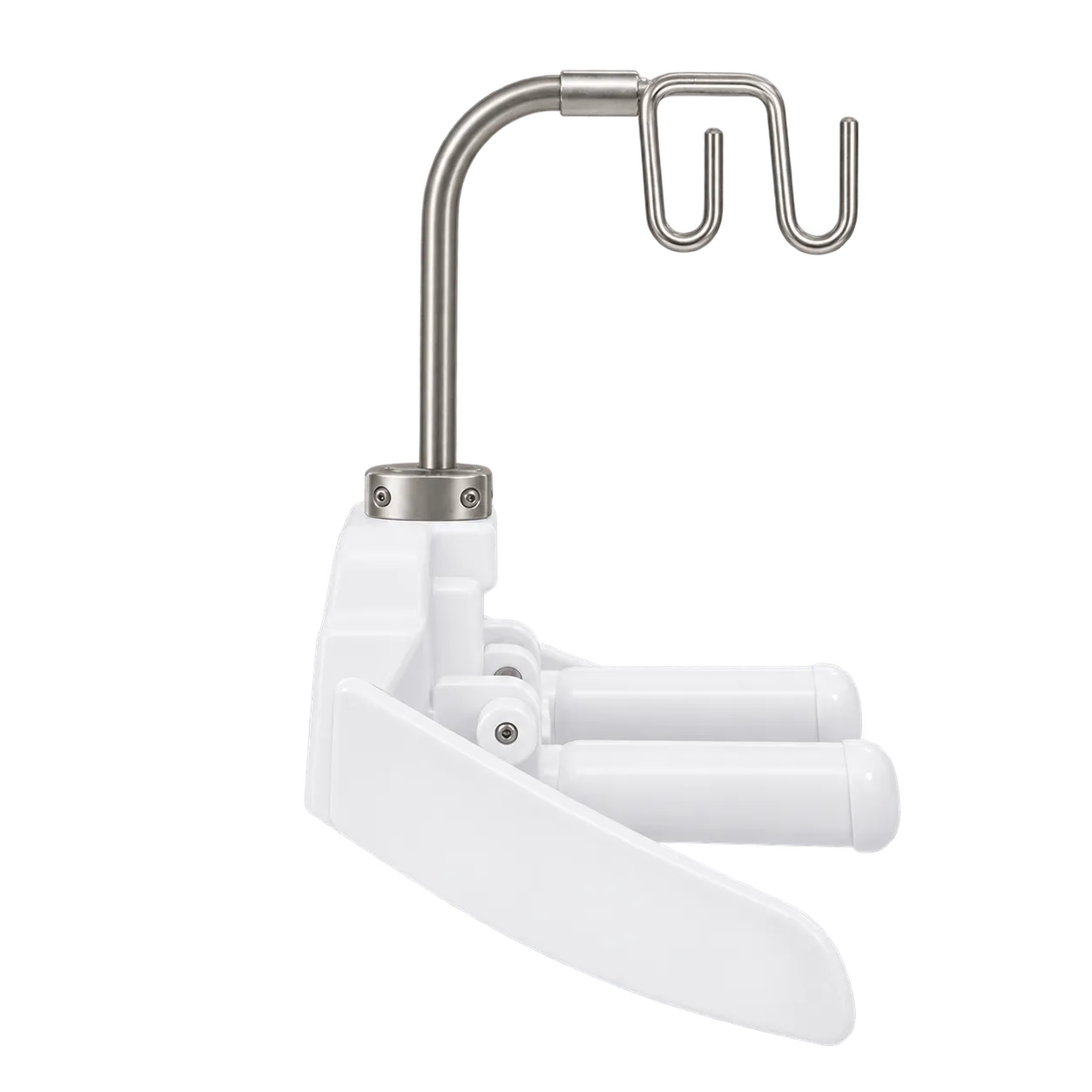
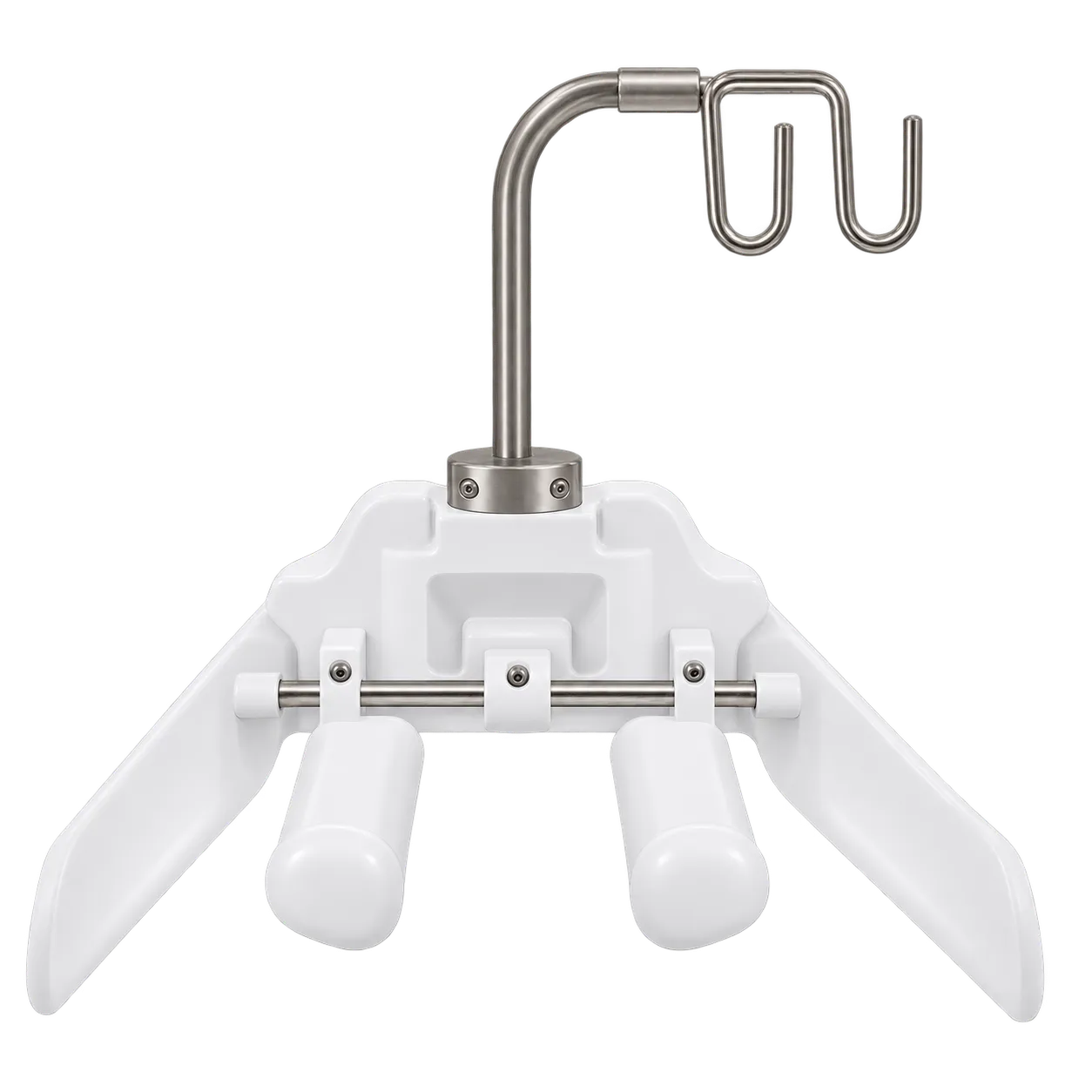
Neonatal intensive care units use the Blackstone infant head unit for babies on nasal CPAP or ventilation, whose breathing circuit runs close to the face for days at a time. The baby's head goes into the clear cradle, the gooseneck bends so the hooks sit just above where the tubing leaves the face, and the circuit lifts onto the hooks. From then on, the arm carries the tubing's weight, so less of it drags on the prongs, mask, or tube, and loops stay off the baby.
Special care units use it the same way for babies still on breathing support but stable enough for lighter nursing, where a settled head and supported circuit keep each round of cares simple.
During cares, the unit lifts away with the baby's head, the head position is changed, and the arm is bent again to suit the new angle before the tubing goes back on the hooks. The clear plastic lets staff see the ears and the skin against the wings without moving anything, and staff check the skin where the head rests each time.
The unit carries tubing and positions the head, and the airway interface stays secured by its own bonnet, tapes or holder. The cradle is sized for infants, and the arm rises from the cradle itself, so the circuit support moves wherever the baby's head goes.
Older children and units that want a circuit holder fixed to an incubator or bed rail need a different positioner or a rail-mounted holder.