
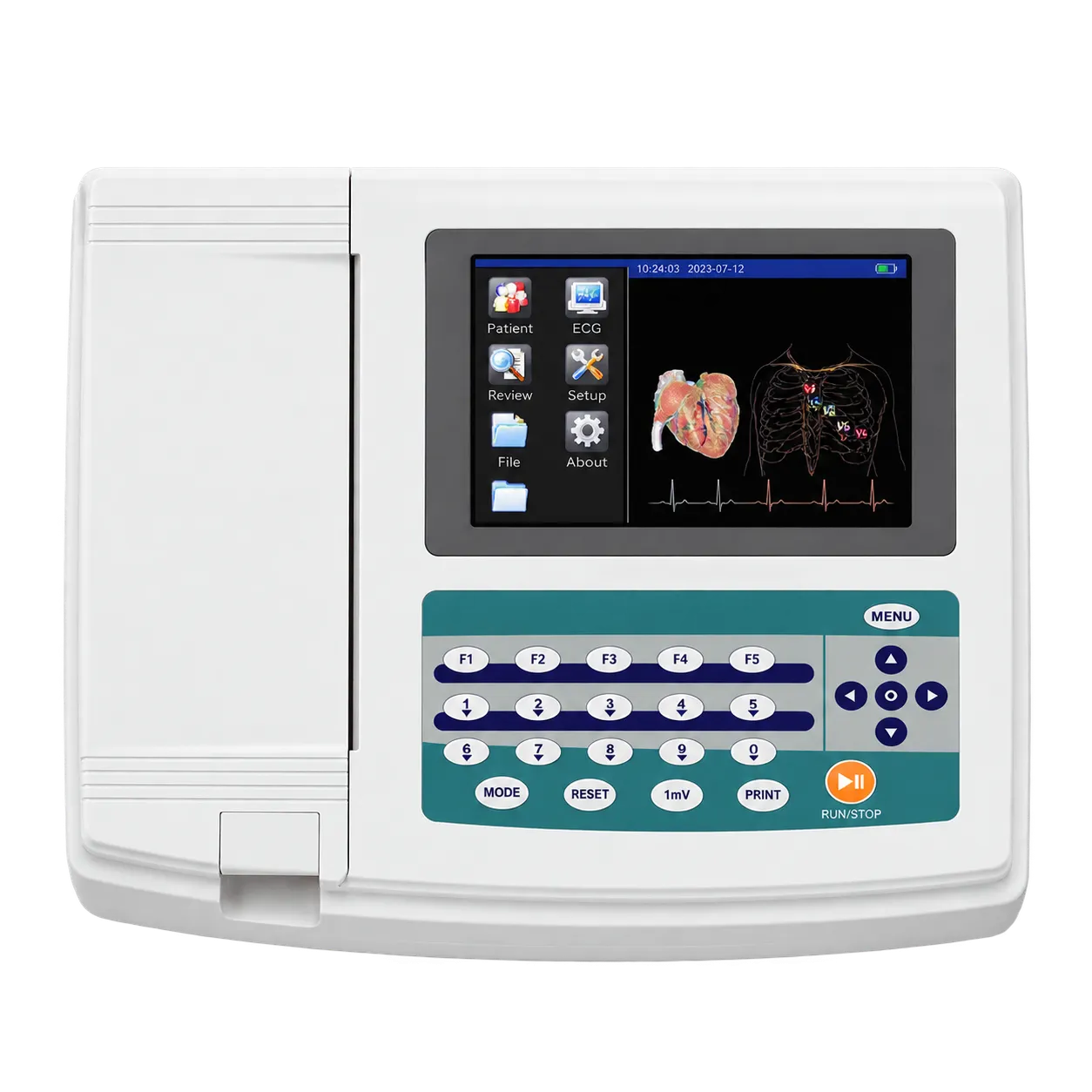
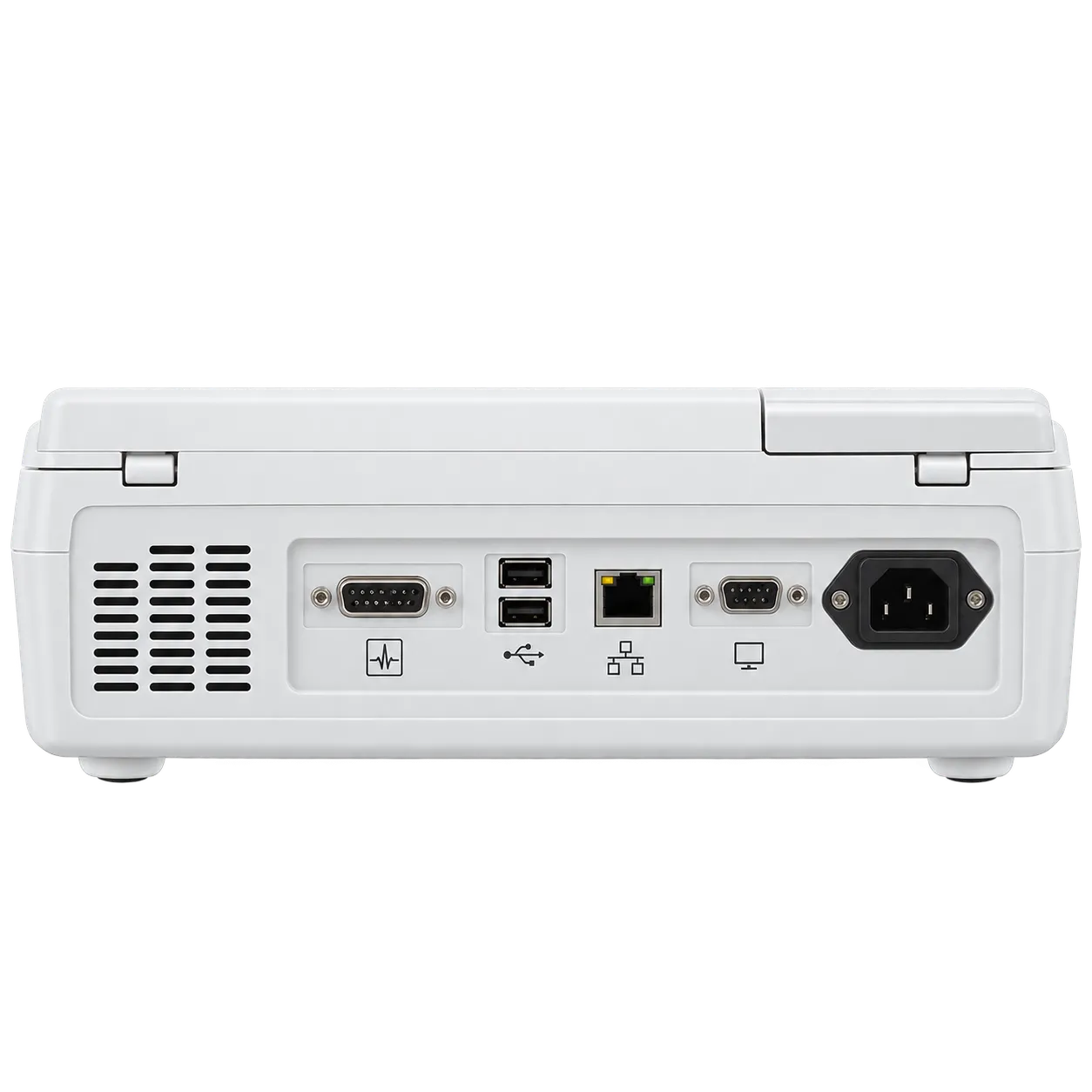
Where many recordings are reported in one session, as in cardiology outpatient clinics and hospital ECG departments, the Blackstone HSB03 earns its keep. The 12×1 layout gives the reporting clinician every lead in full on one 210 mm page, with the measured heart rate, intervals, durations, axes, and voltages beside the trace and the auto-diagnosis conclusion. The technician spends time interpreting, with the routine measurements already done.
Health screening and occupational health programmes use it for batches of check-up ECGs, often recorded one after another in a single clinic room. Staff enter patient details via the keyboard, the recordings are stored in the 1000-case memory, and the statistics function helps when a programme reviews the results. Staff and patients can set the interface and report languages to match their needs.
Community teams take it on home visits, where the battery's standby time and more than 3 hours of continuous printing under optimal conditions cover a round of patients away from mains power. The 8-inch touch screen shows 3, 6, or 12 leads before printing so that staff can identify a poor electrode at the bedside, and the case stays in memory until it is printed again or reviewed back at base.
Pre-operative assessment clinics and medical wards benefit from the same automatic measurements, especially the Q-T and Q-Tc values that medication reviews often call for, and from the trend chart and P-R interval histogram when a patient is followed over time.
The automatic conclusion is a starting point for the clinician, never a final report. Stress testing and alarmed bedside monitoring fall to other equipment.