
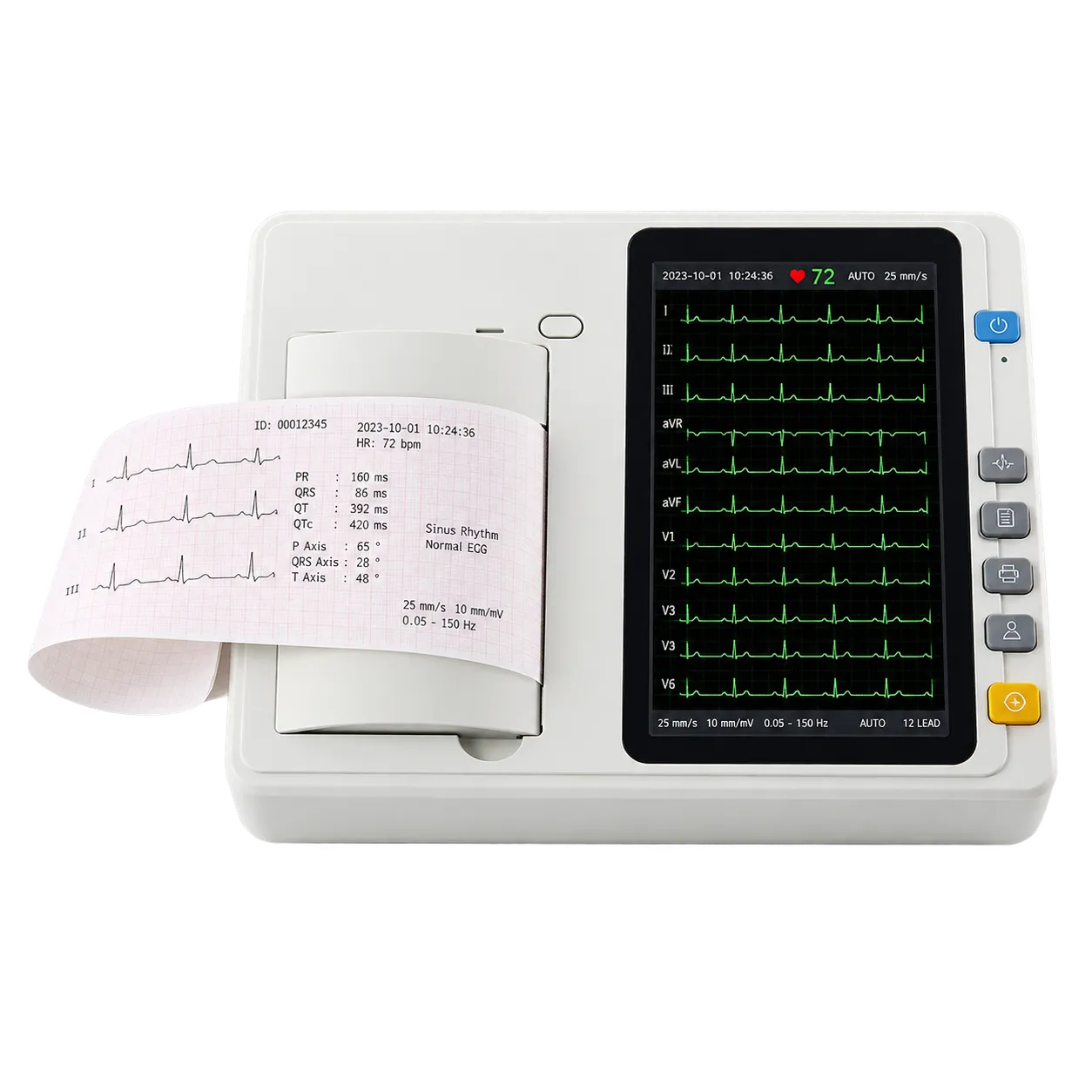
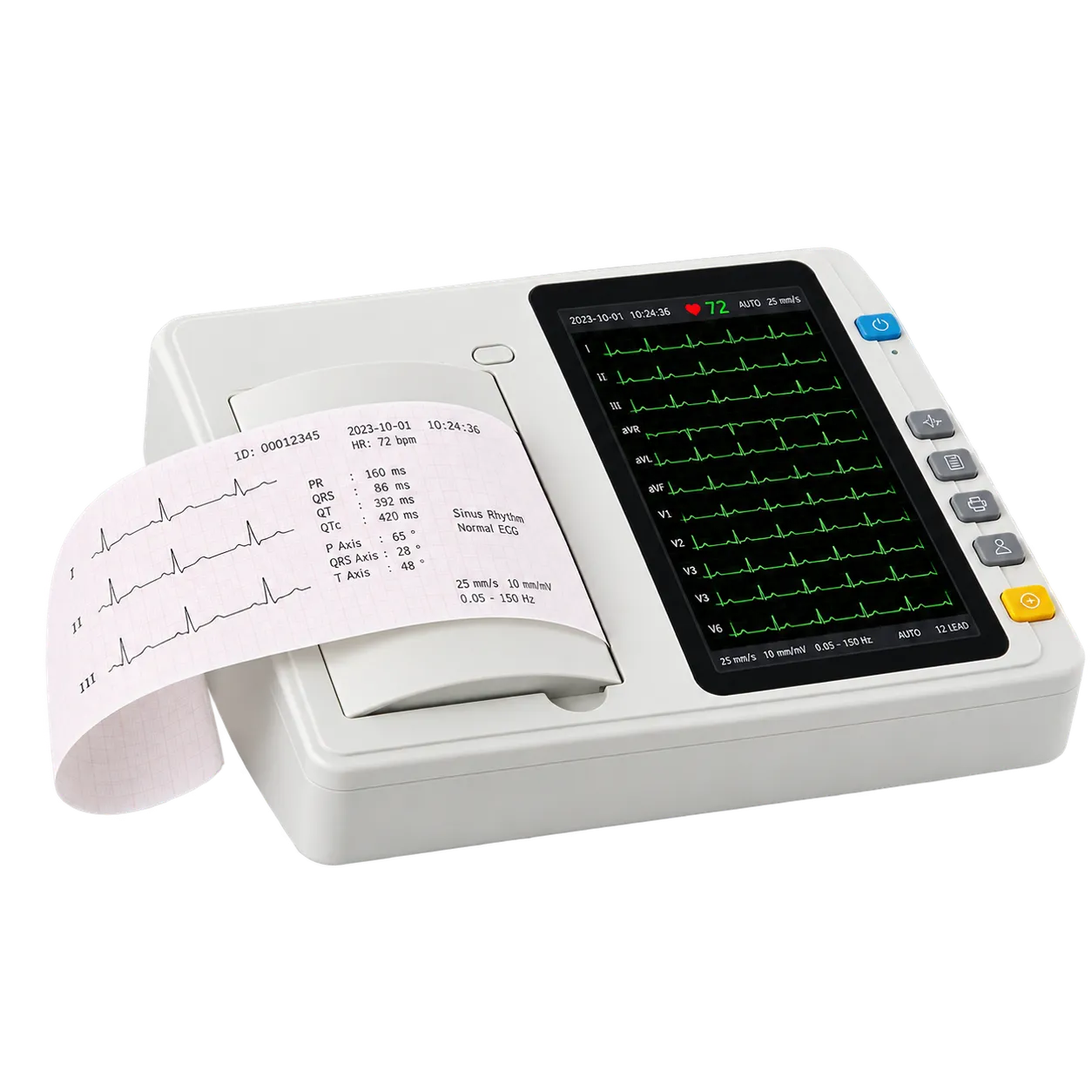
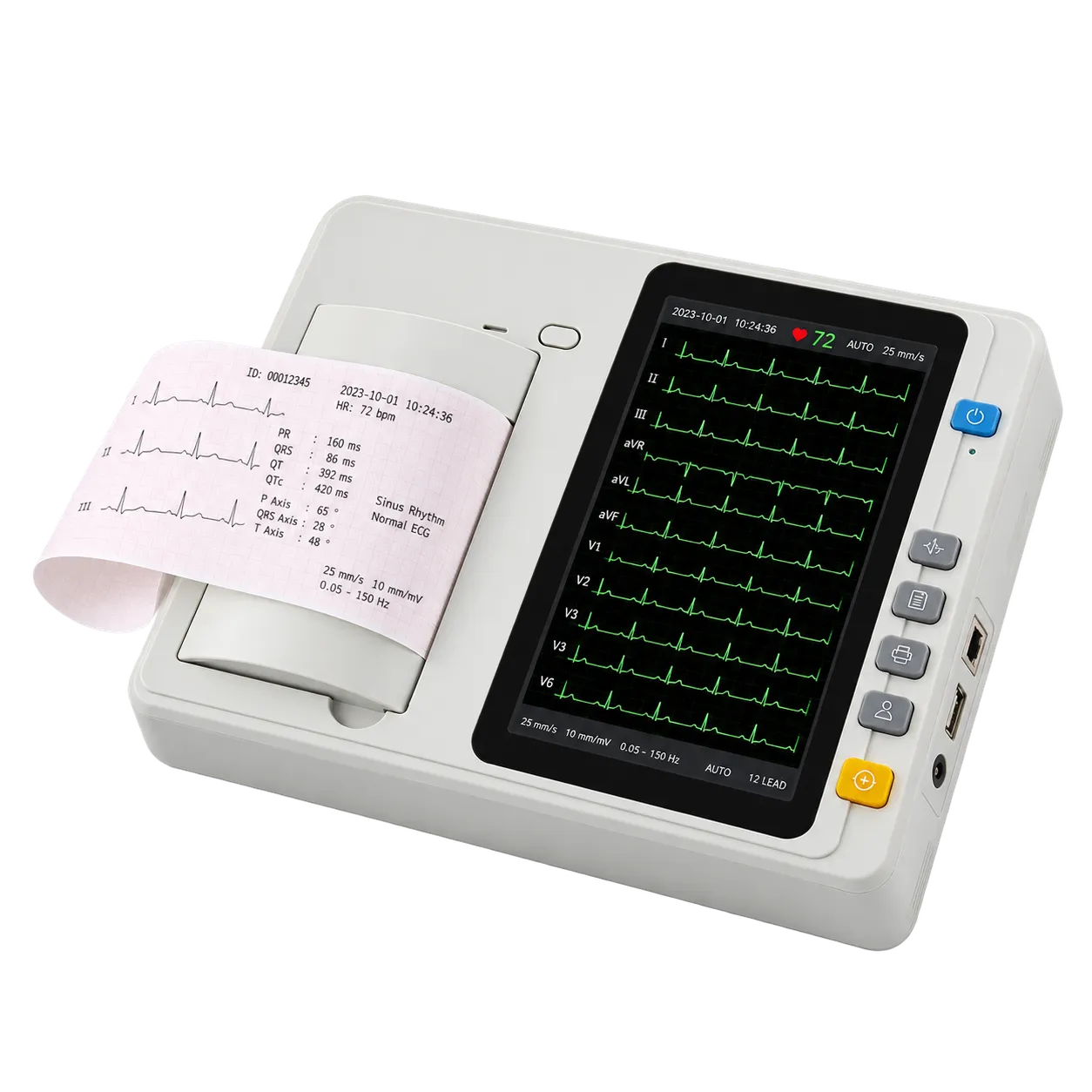
GP surgeries and outpatient clinics use the Blackstone HSB01 for routine resting ECGs, whether triggered by palpitations, a medication review, or a pre-operative check. Electrodes go on, the patient lies still for a single recording, and the automatic three-channel format prints at the couch with the interpretation statement on the same report for the clinician to read.
On hospital wards, the battery lets it move from bed to bed without a trailing cable, and the touch screen shows all twelve leads before printing so that clinicians can spot and correct a noisy lead first. Emergency and acute assessment areas use the same quick acquisition when a patient with chest pain needs a bedside ECG, adding a rhythm strip from the lead that clearly shows the arrhythmia.
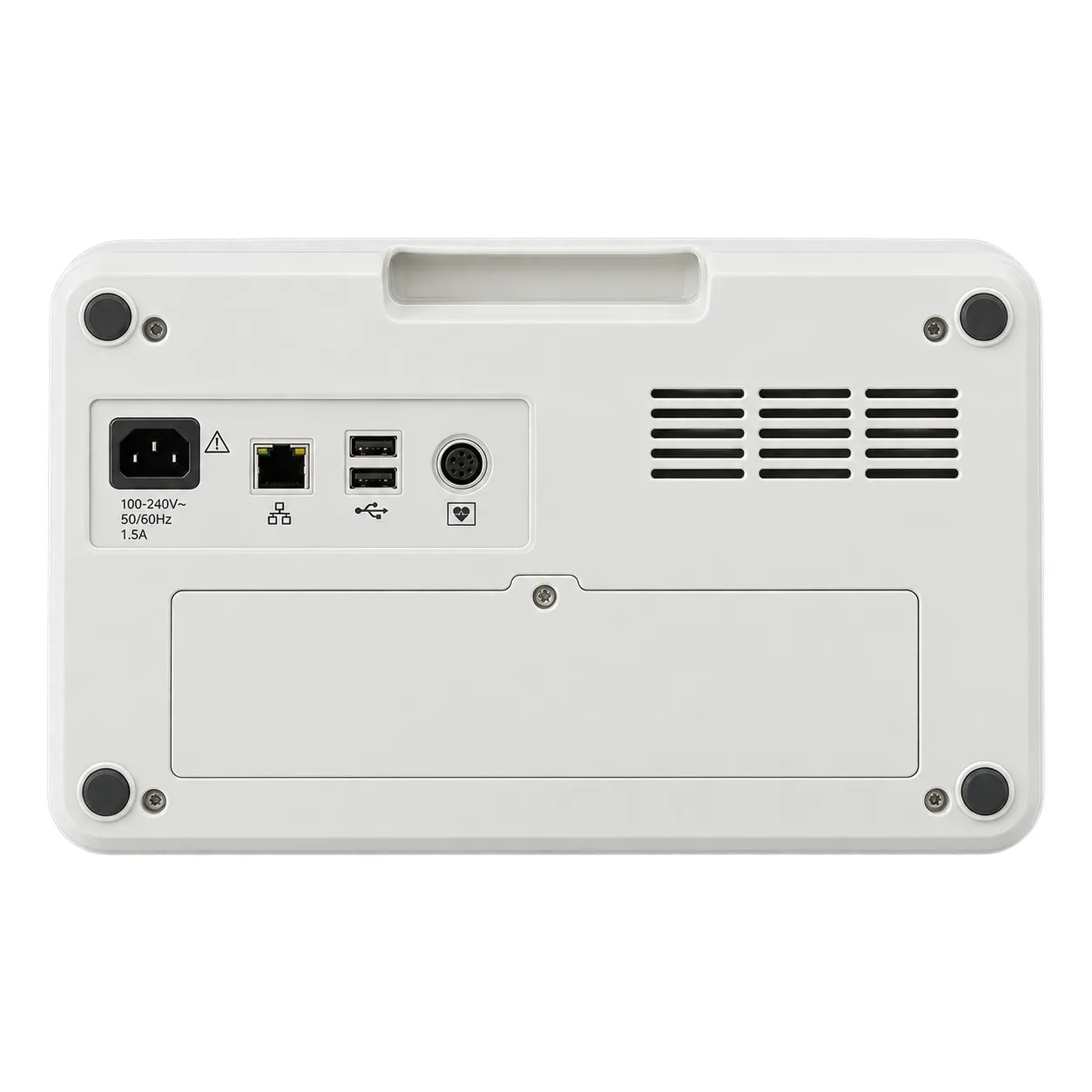
Pre-operative assessment, occupational health, and community teams take it on visits to care homes and patients' homes, where the lithium battery powers recording and printing away from a socket. The unit stores recordings in its memory, which a USB flash drive or microSD card extends for a long day of visits.
The filters do much of the work of keeping traces readable. Muscle tremor from a cold or anxious patient is taken out by the EMG filter, mains hum by the 50 or 60 Hz filter, and baseline wander by the automatic anti-drift function. The floating, defibrillator-protected input means the leads can stay on if a patient deteriorates.
Departments that need full-page 12-channel printing, stress testing, or continuous monitoring with alarms require other equipment.