
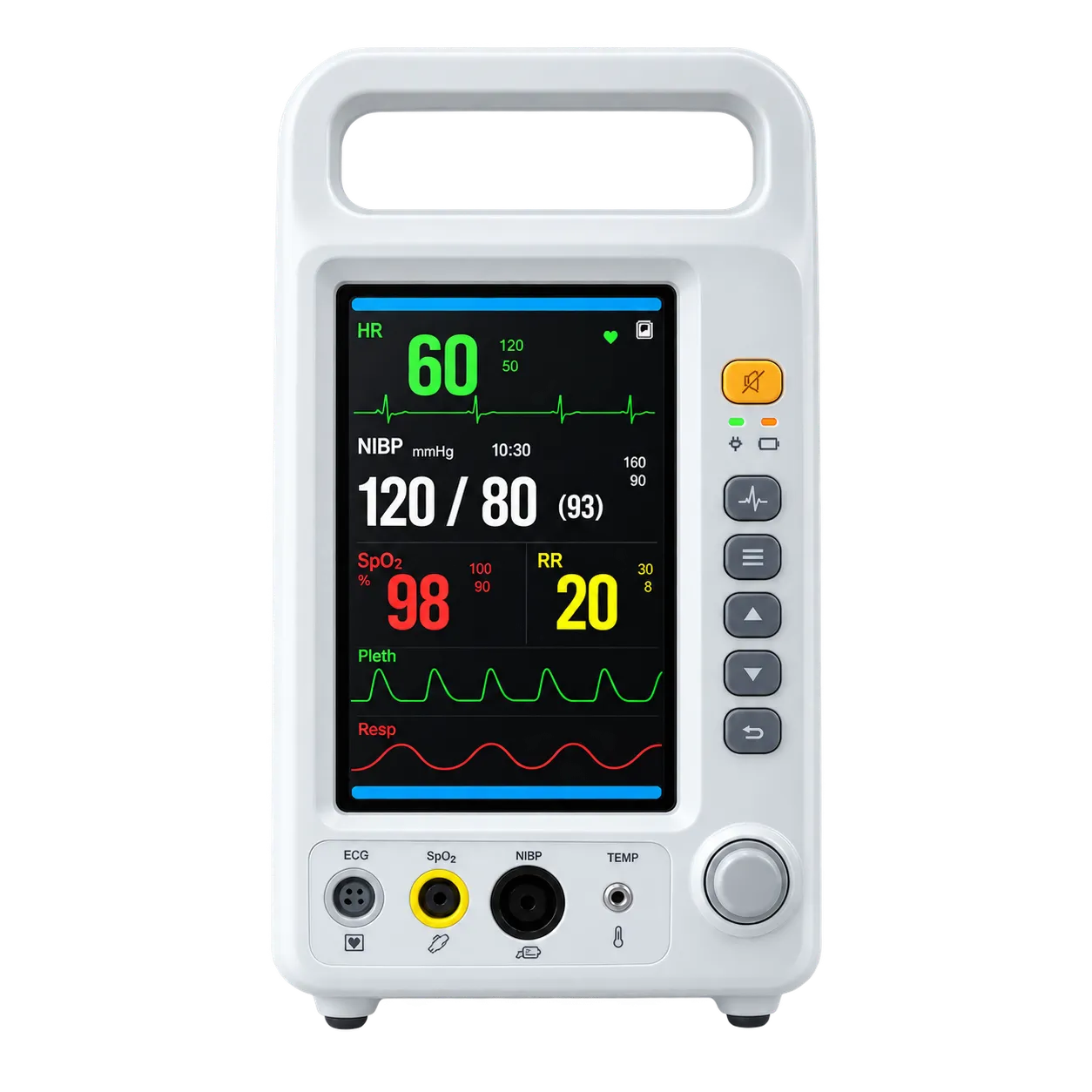
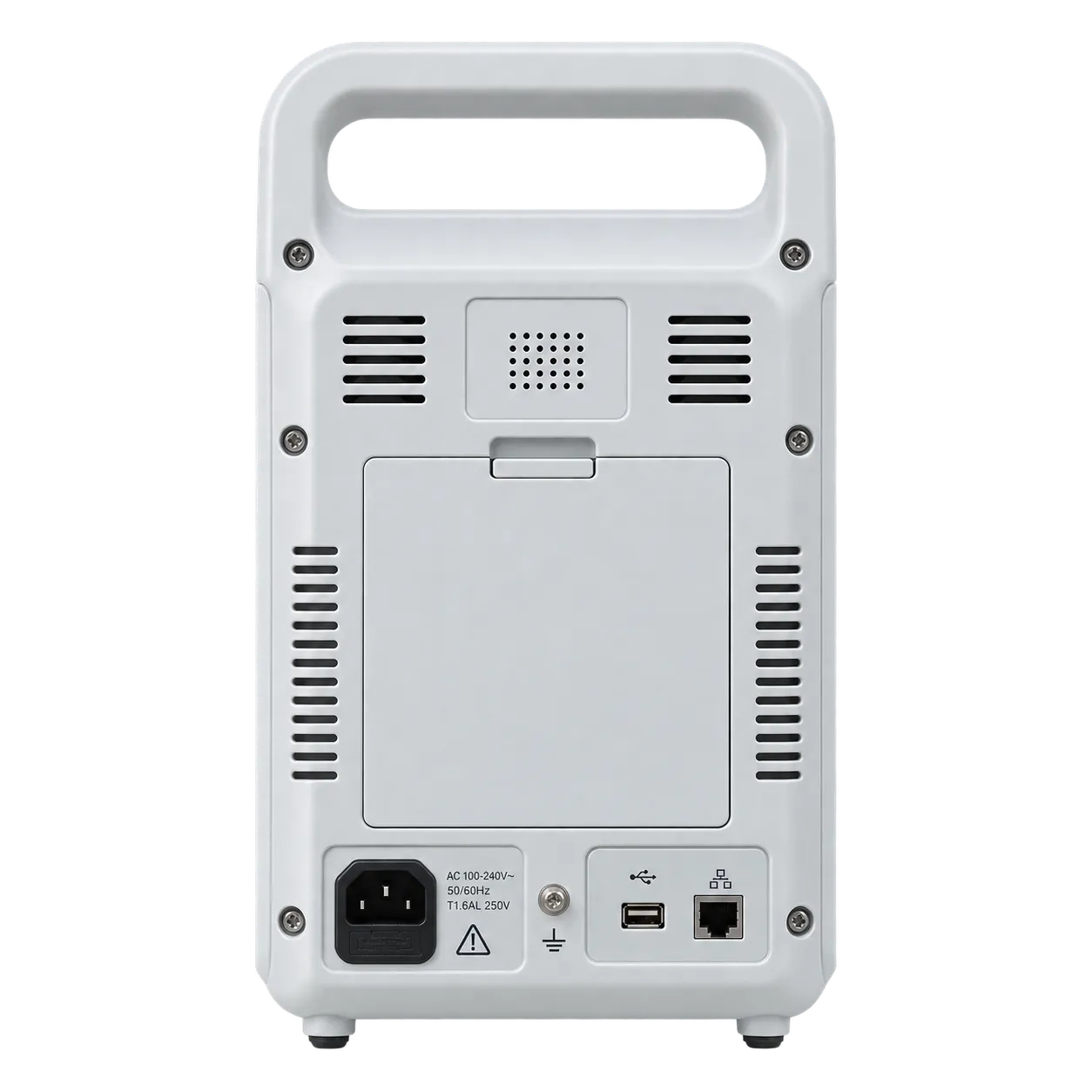
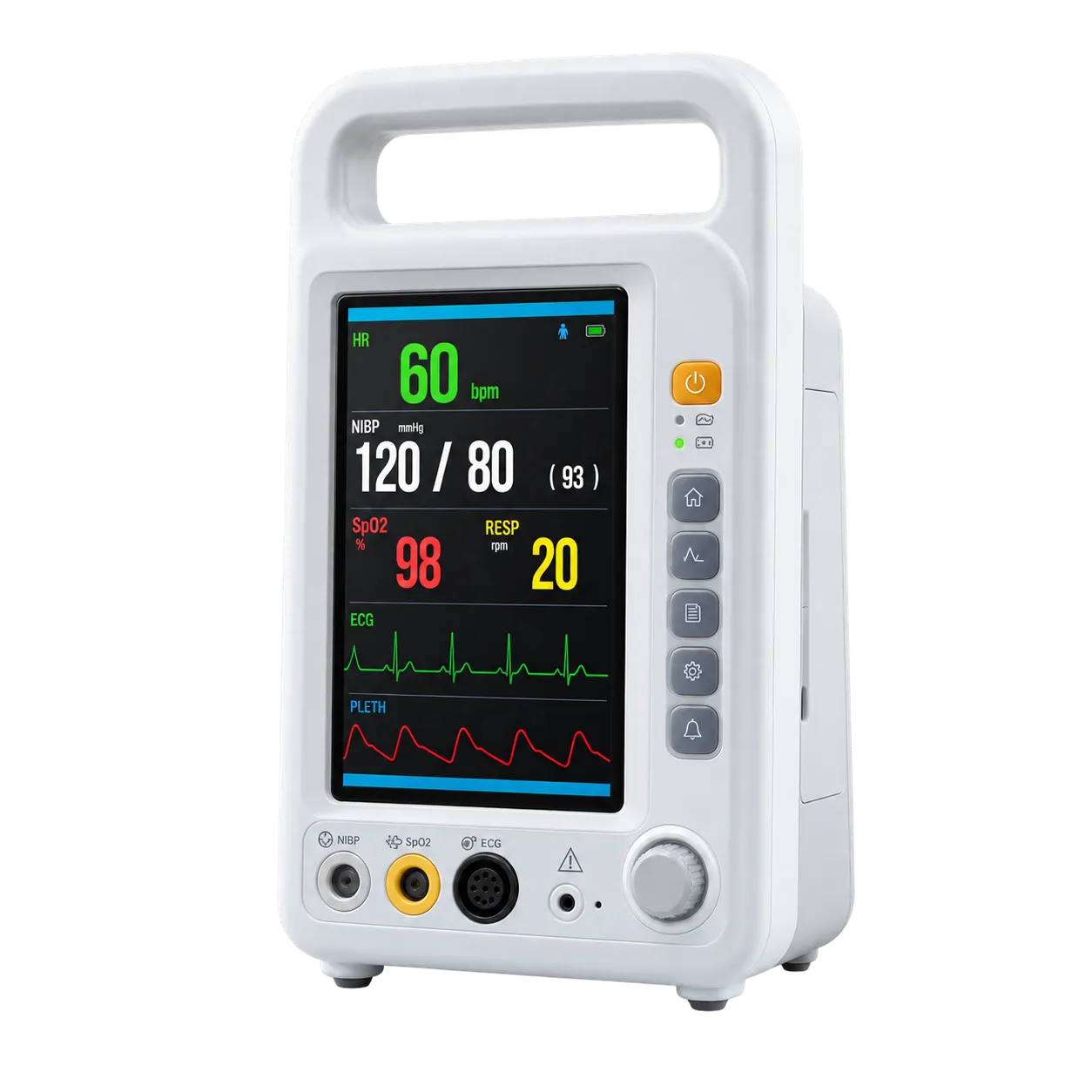
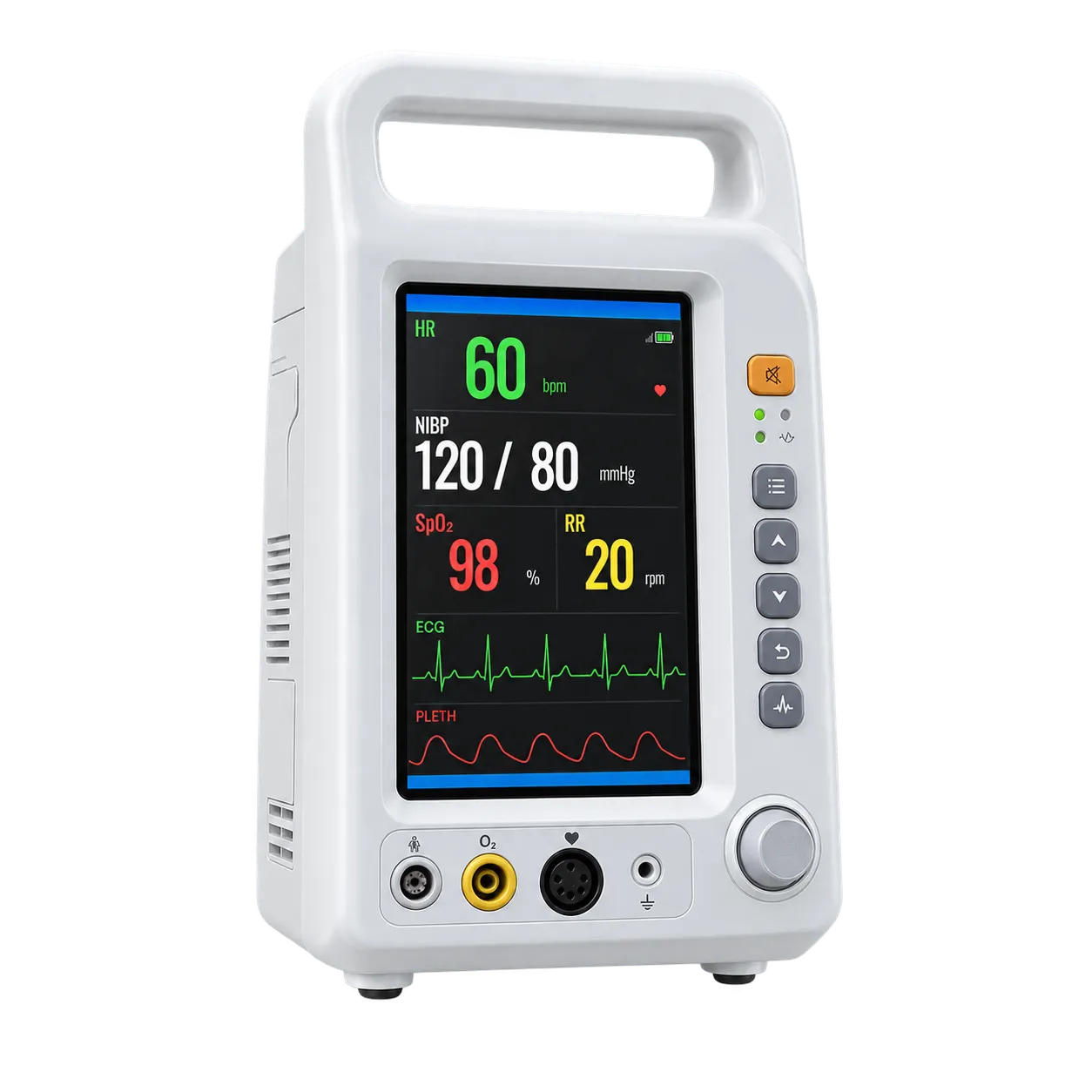
The configuration choice is a clinical decision, not a purchasing detail, and someone who knows how the monitor will be used should make it. A saturation, pressure and pulse unit belongs in triage, on a ward round or at a clinic desk, where observations are taken and written down at intervals. It does not belong at a bedside where a rhythm needs watching, for the simple reason that it cannot watch one at all. Ordering the wrong configuration produces a device that works perfectly well and is nonetheless the wrong device for the place it is going.
Central monitoring is the reason a ward would choose this over the larger unit. Several beds reporting into one station changes how a ward is staffed and watched. Wireless connection removes the cabling that otherwise decides where a monitor can sit. Against that, nothing here says what band or protocol is used, or how far the connection reaches from a station.
The neonatal claim needs its own question. Monitoring a newborn is not simply the same machine with smaller cuffs. Blood pressure measurement in neonates uses different algorithms and different pressure limits, and saturation probes must suit both the site and the skin. The sheet claims neonatal suitability without describing any of that provision, leaving the neonatal unit to establish it themselves.
Medigear.uk establishes the neonatal provision, the protection features, the wireless arrangement and the configuration supplied before this compact vital signs monitor reaches a patient.