
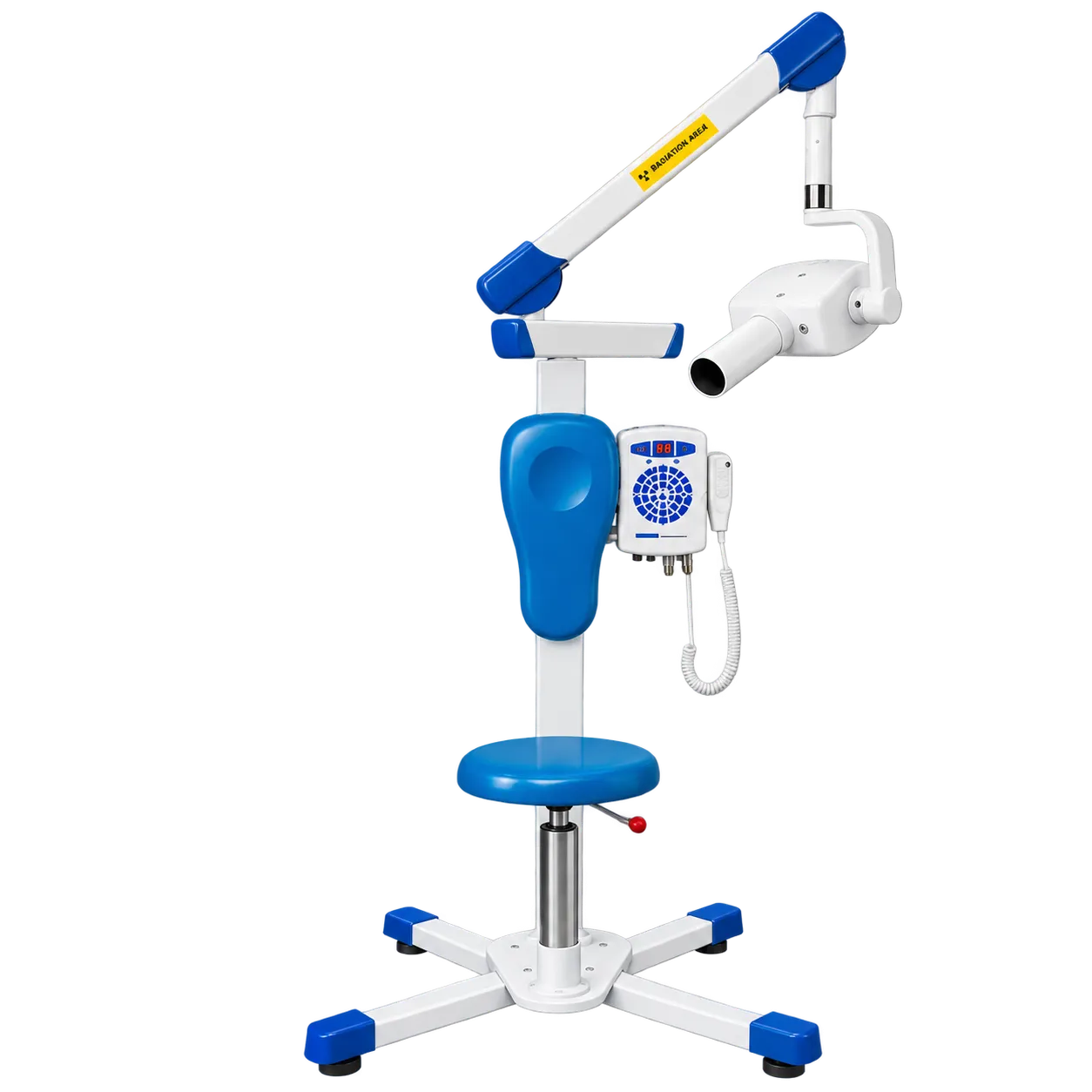
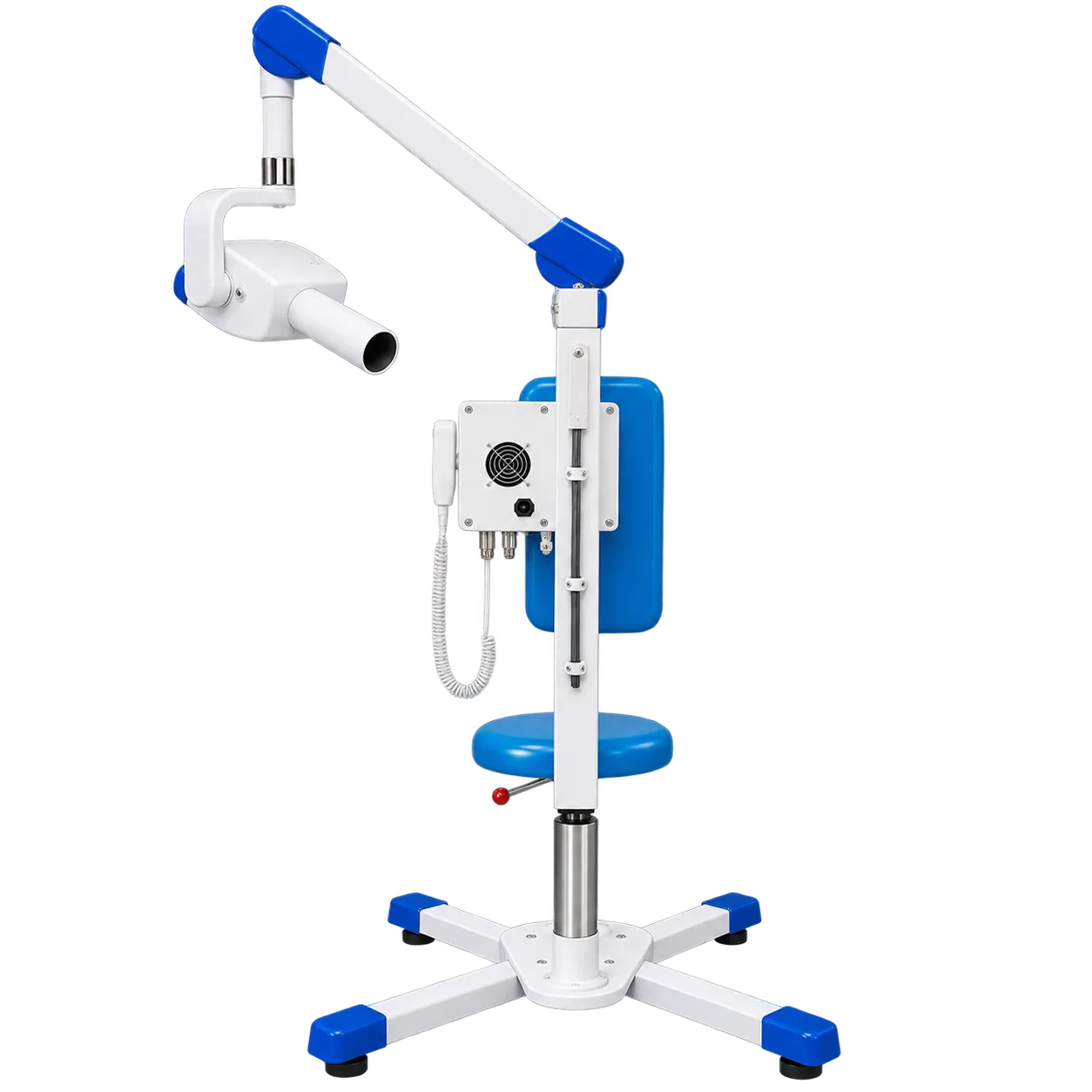
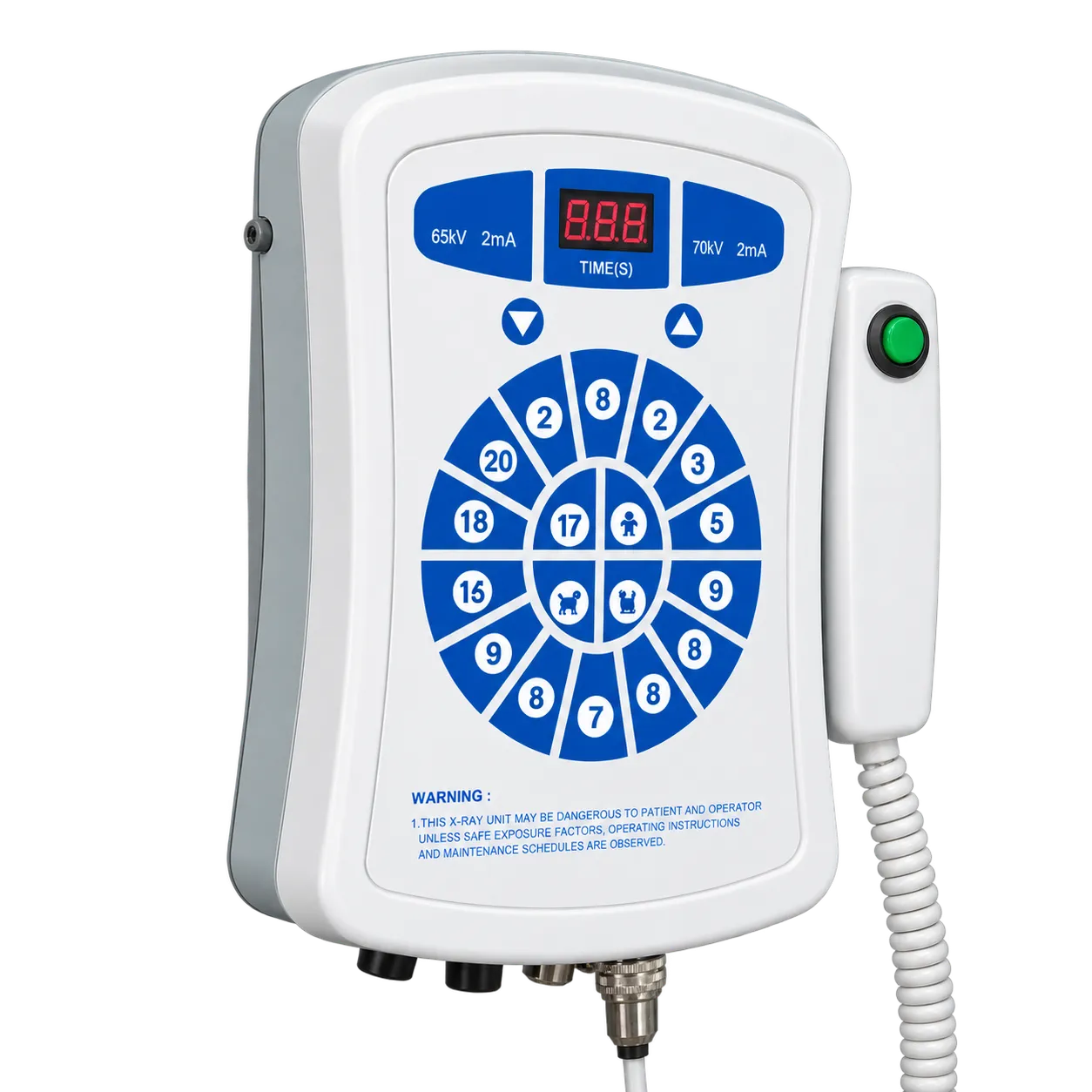
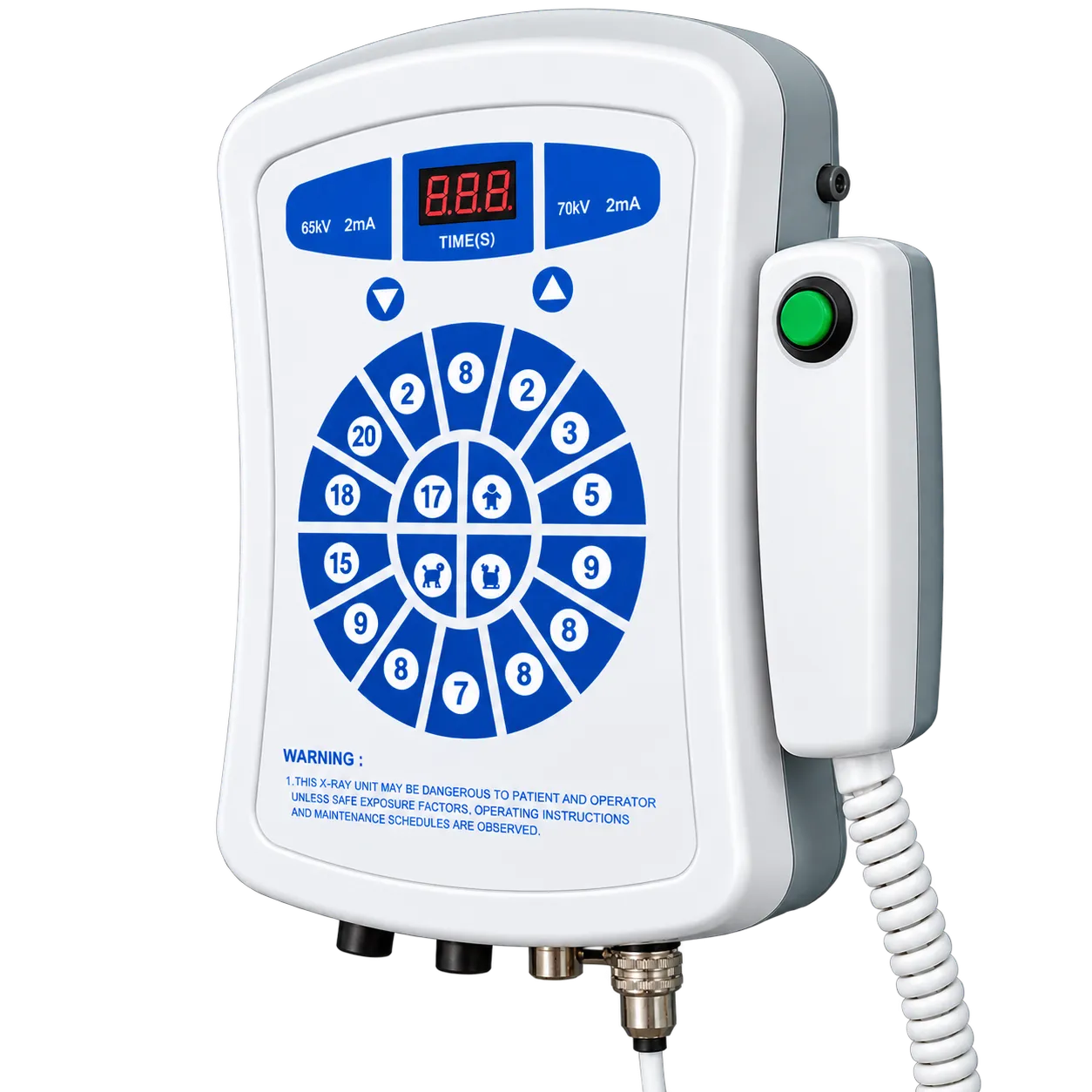
Busy imaging rooms in community dental services and hospital dental departments put the HS-X202 to work, where one operator takes many intraoral radiographs a day. Each exposure starts with the patient on the column's stool and the cone set, then the operator steps away and fires remotely, so distance from the beam becomes part of the routine.
Radiographers and dental nurses who image all sessions benefit most from that routine, because their time near the tubehead falls to positioning alone. The low-voltage alarm matters in older buildings and temporary venues, where a weak supply could otherwise go unnoticed until an image came out underexposed.
Dental schools and training clinics use the unit to teach safe technique from the first lesson. Students learn to set the cone, leave the beam area and trigger the exposure from a distance, and the touch-key panel keeps the exposure choice to a single setting.
Screening programmes move the base in mobile mode between venues and then work through a list of patients on the stool, with periapical and bitewing views for each. In a two-room clinic, one unit in mobile mode can serve each room in turn, with the same remote routine wherever it stands. Occupational dental services at large employers place it in a medical centre room that has no dental chair. Endodontic and implant teams with a separate imaging room use it for working-length and review radiographs, choosing the 0.8 mm focus where fine detail matters.
Practices that image in the dental chair, visit patients at home, or need panoramic views need a different kind of source.