
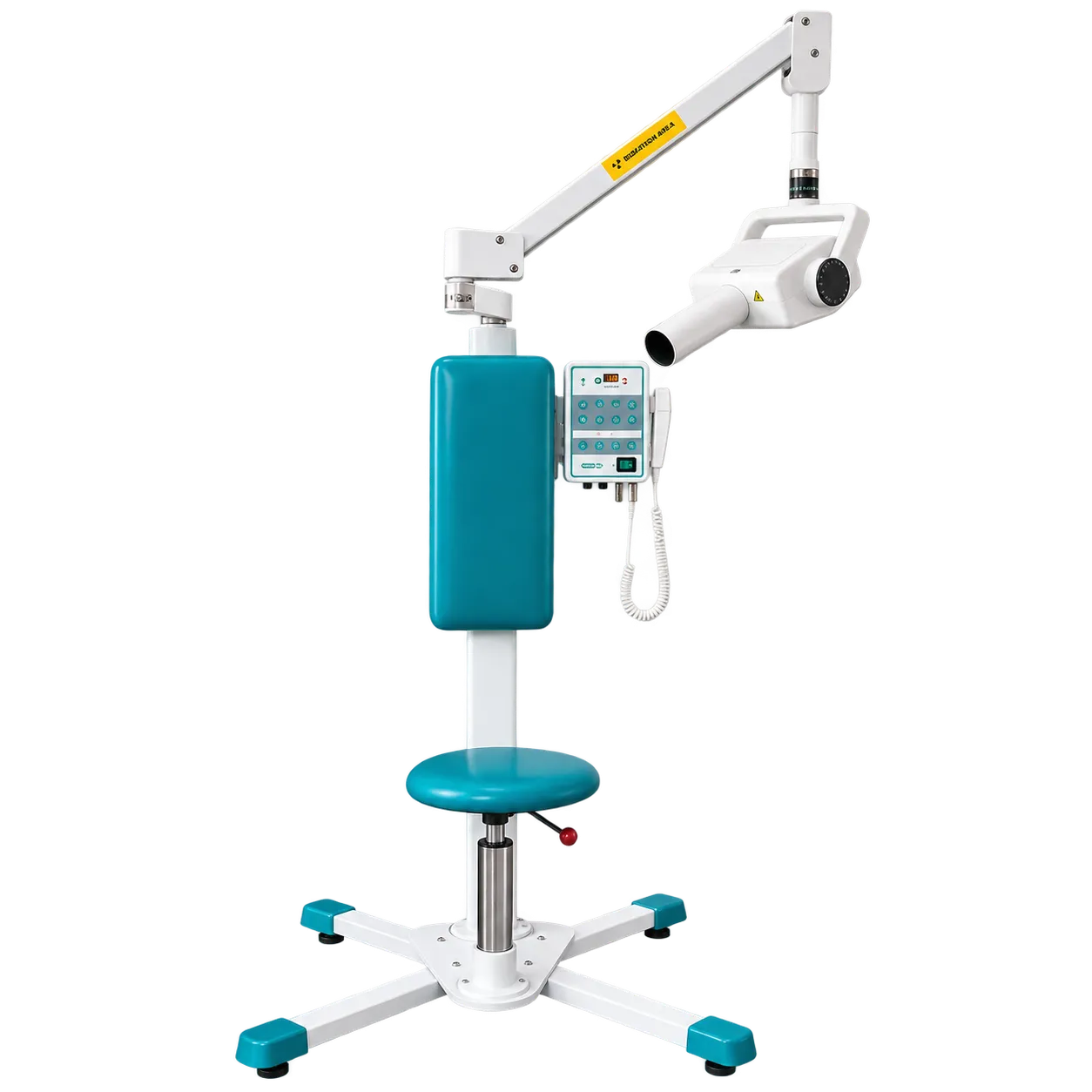
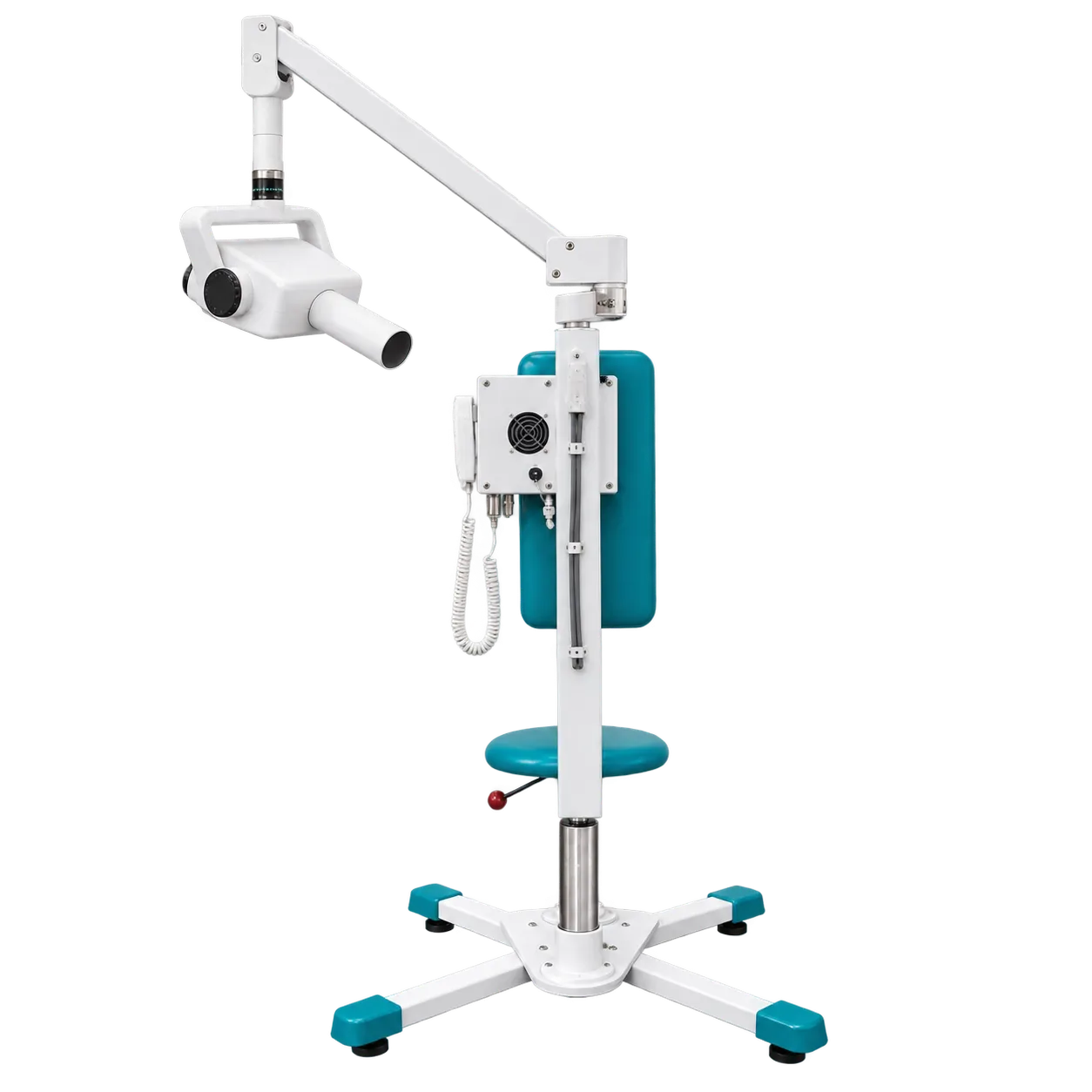
Community dental clinics and hospital outpatient departments that run a dedicated X-ray room use the HS-X201 as the entire station. The patient takes the pneumatic seat, the operator raises it until the head sits level with the cone, and the arm brings the tubehead into position for a periapical or bitewing view. Remote exposure lets the operator step back before every radiograph.
Screening programmes in schools and workplaces set the unit up in a borrowed room for the day, with the base in mobile mode, because the station needs floor space and a 220 V supply. Dental schools use a fixed station for teaching radiography, where every student practises positioning on the same seat and arm.
General practices with a separate X-ray corner use it to keep radiography out of the surgeries, freeing the dental chairs for treatment while the next patient is imaged. Endodontic working-length checks and implant review images follow the same routine on the seat. Orthodontic and paediatric clinics use the pneumatic lift to bring smaller patients up towards the cone before each bitewing.
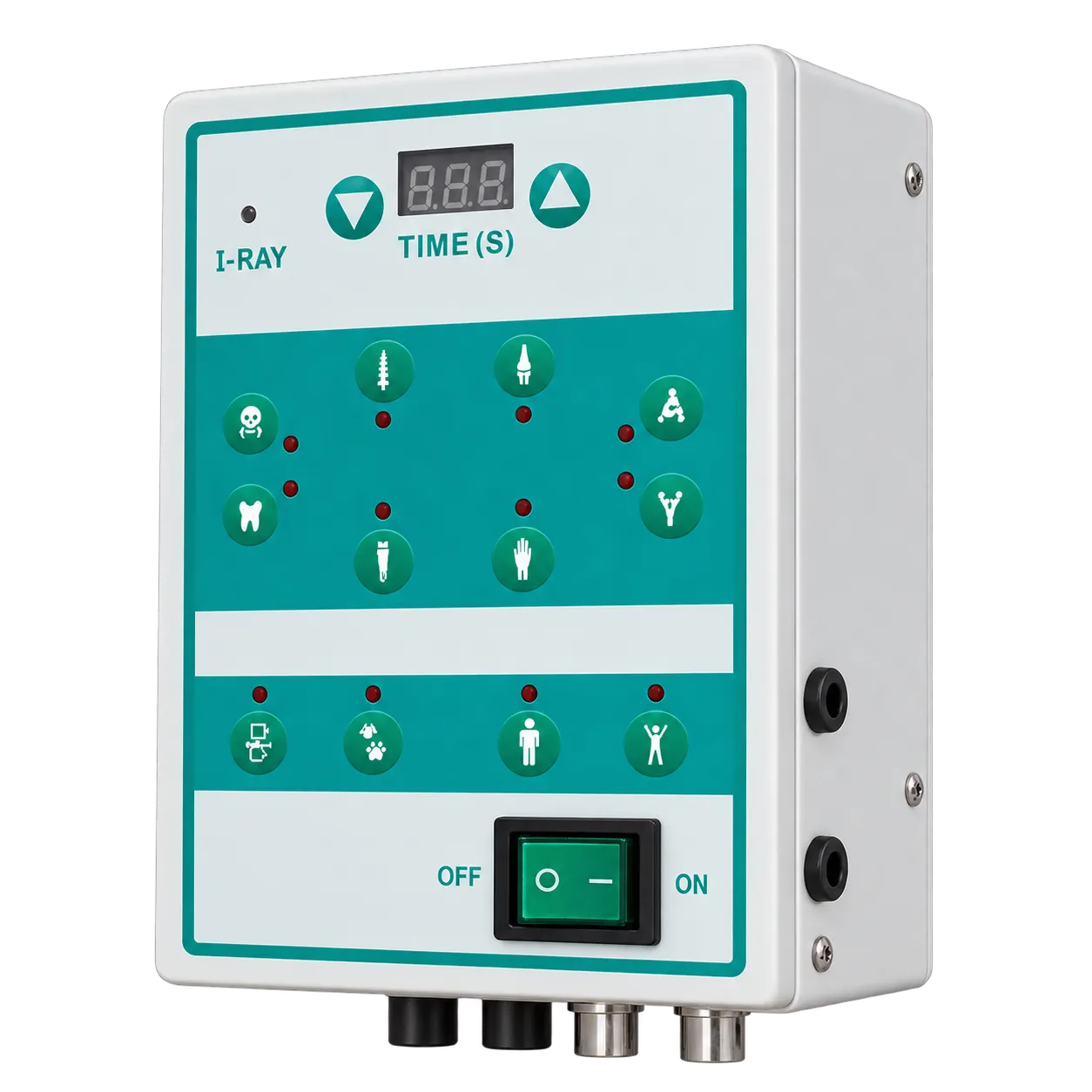
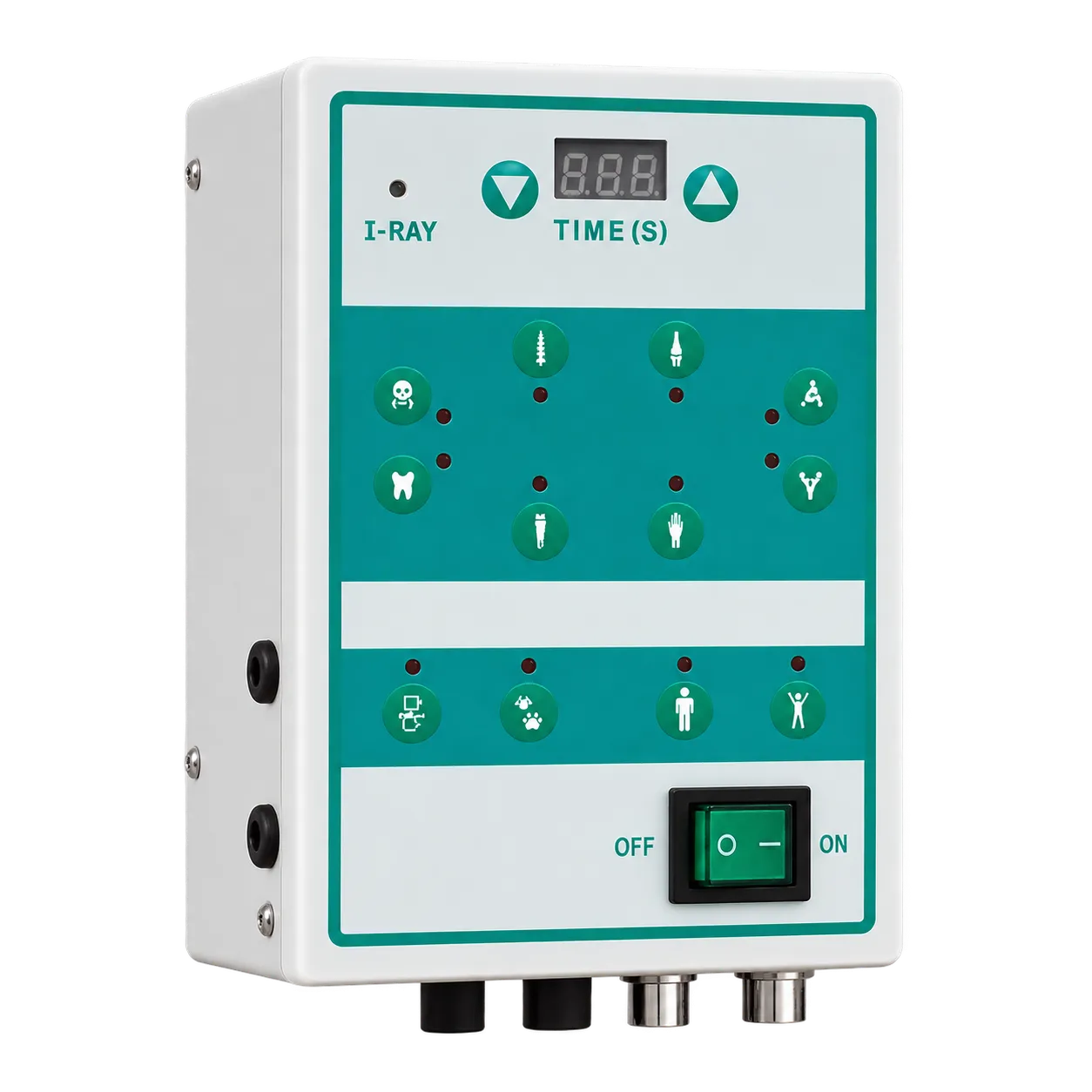
Dental nurses prepare the film or sensor and the holder, and the clinician chooses the exposure on the touch-key panel. Practices still processing film can keep doing so with daylight-developing film, and those using a digital sensor system connect it in the usual way. The 0.8 mm focal spot serves work that depends on fine detail, such as root canal files.
It is not the unit for radiographs in the dental chair, for home visits,s or for panoramic imaging, and its supply is rated at 220 V, 50 Hz.