
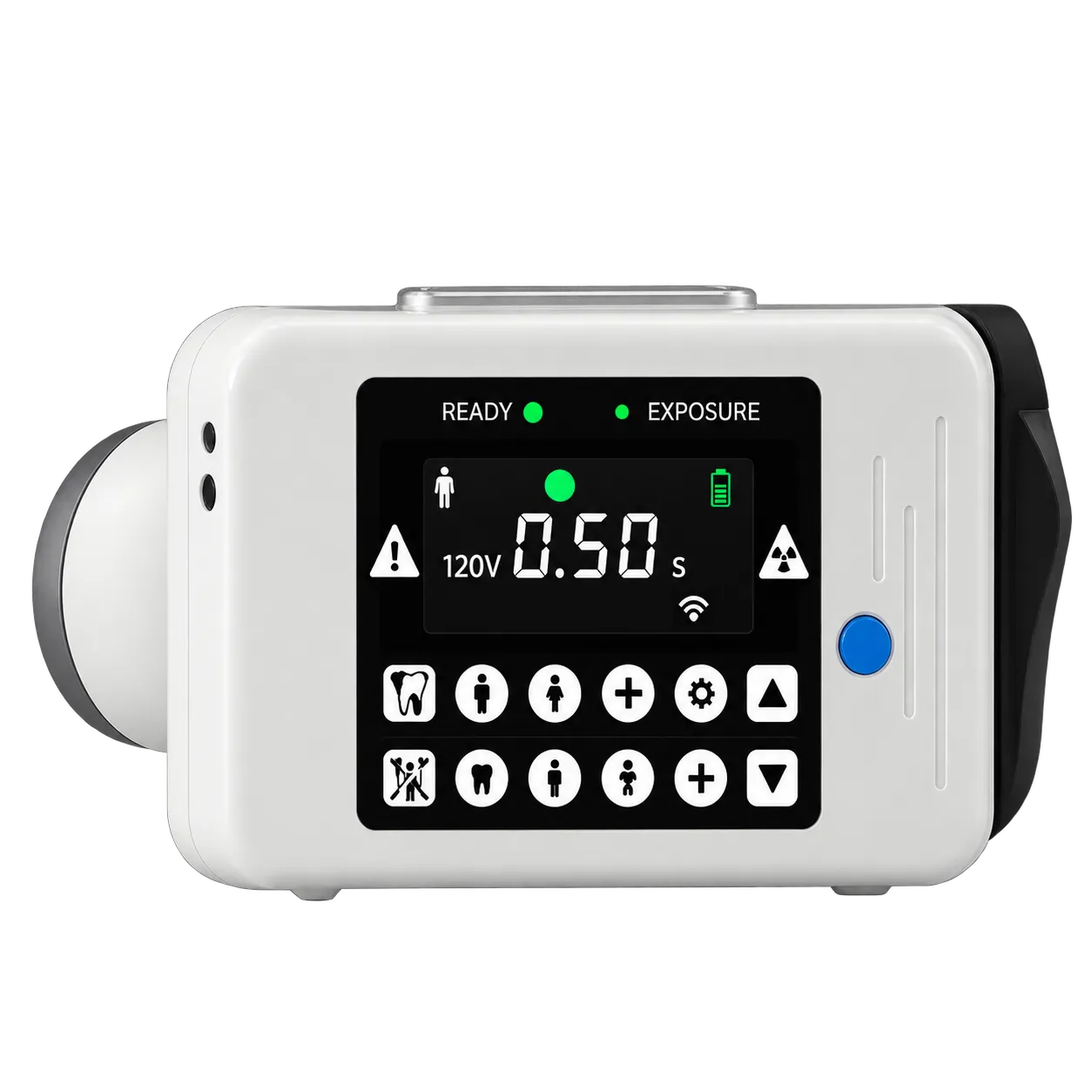
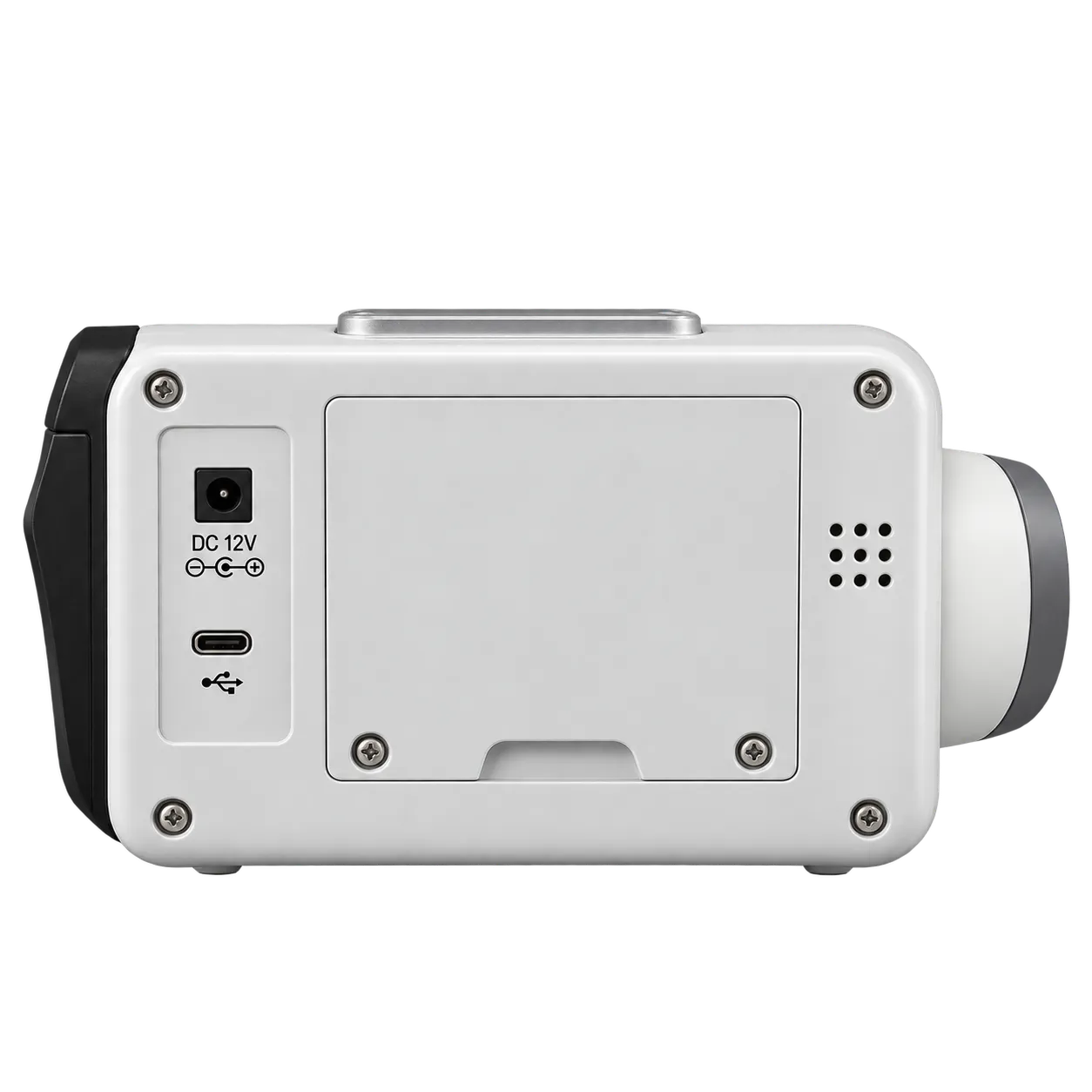
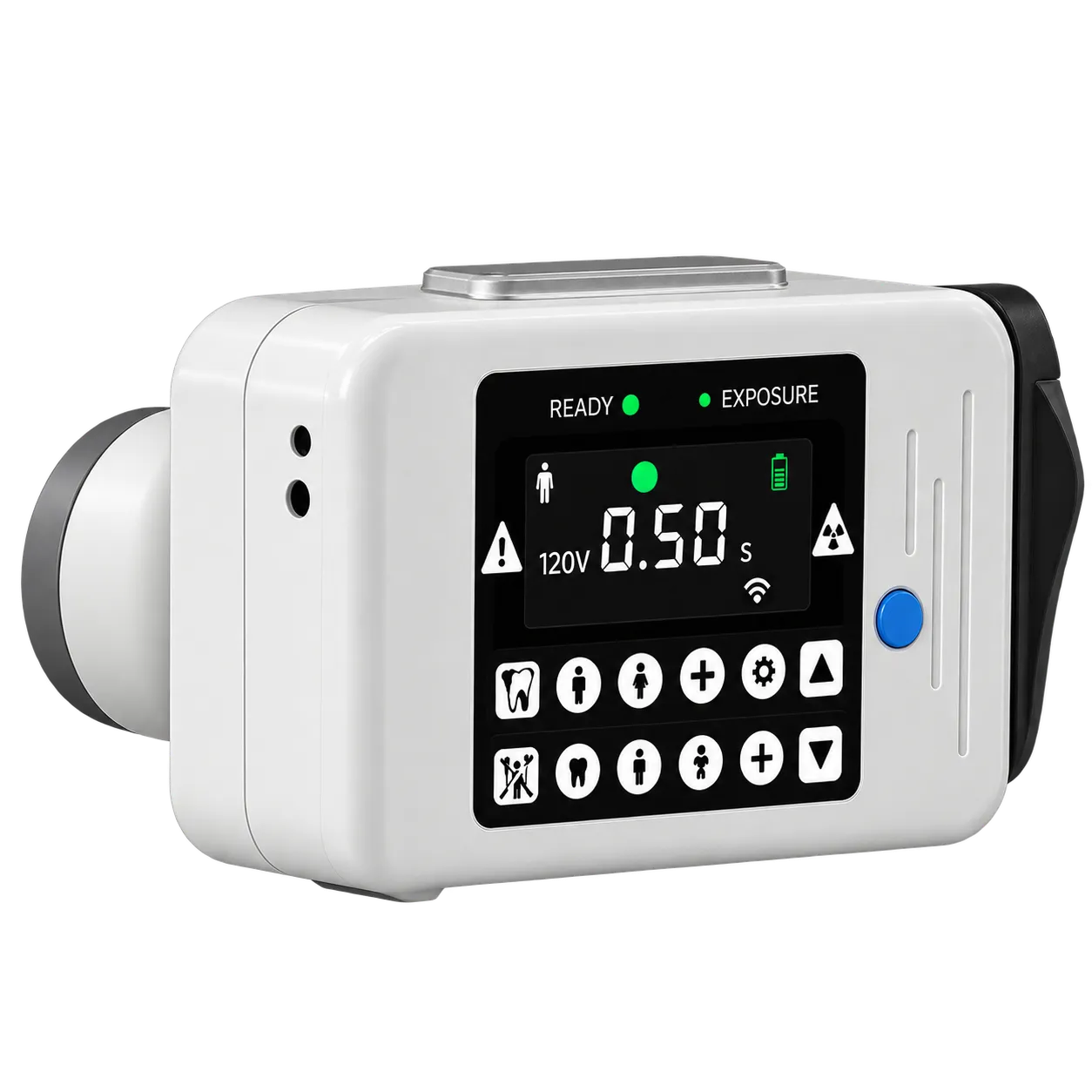
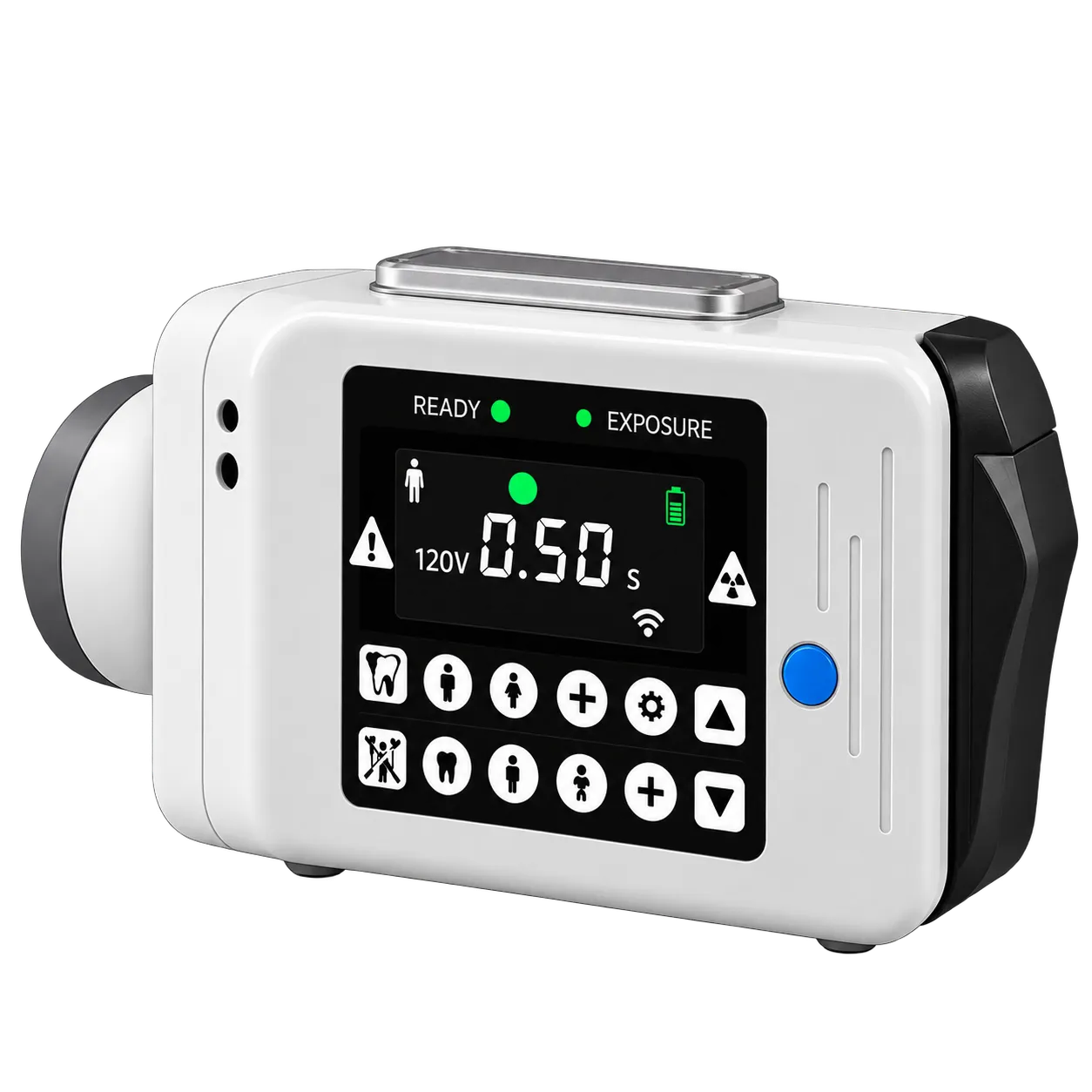
General dental practices use the HS-X001 for periapical and bitewing radiographs at the chair, and practices that have not fitted a tubehead in every surgery carry one unit from room to room. The clinician selects a preset for an adult or a child, places the sensor, film or phosphor plate, and takes the exposure without moving the patient to an X-ray room.
Endodontic appointments use it for working-length and post-treatment radiographs, and implant teams use it for check images around a placed implant. Because exposure time is the only setting that changes, a team can quickly build a consistent technique across the presets.
Domiciliary dentists take it on visits to patients at home who cannot travel, and care home sessions use it at the bedside or in a lounge chair. Mobile dental clinics and outreach programmes carry it where no fixed X-ray is installed, running each session on the battery and recharging from a 100 to 240 V supply between sessions. Special-care teams use it for patients who cannot transfer to a dental chair, including wheelchair users, taking the radiograph where the patient is seated. Emergency appointments after dental trauma use it to image the injured tooth during the same visit.
Dental nurses manage the receptors, preparing sensors, films or phosphor plates for each patient, while the clinician positions the cone. The HS-X001 integrates with the receptor system a practice already owns, whether that is a digital sensor, film processing, or a phosphor plate scanner.
It is not the unit for panoramic or cephalometric work, which needs an extraoral system, and it captures no image without a receptor.