
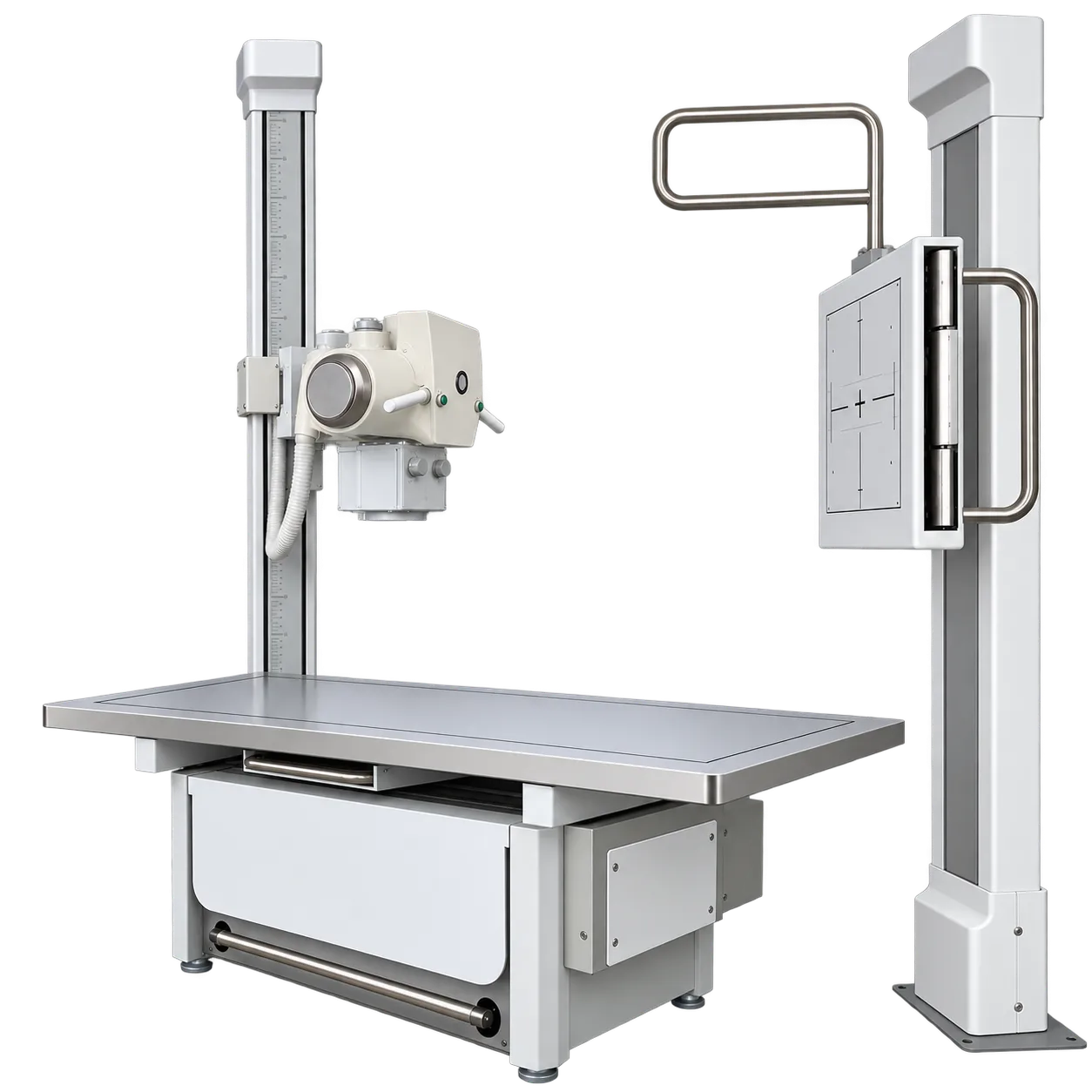
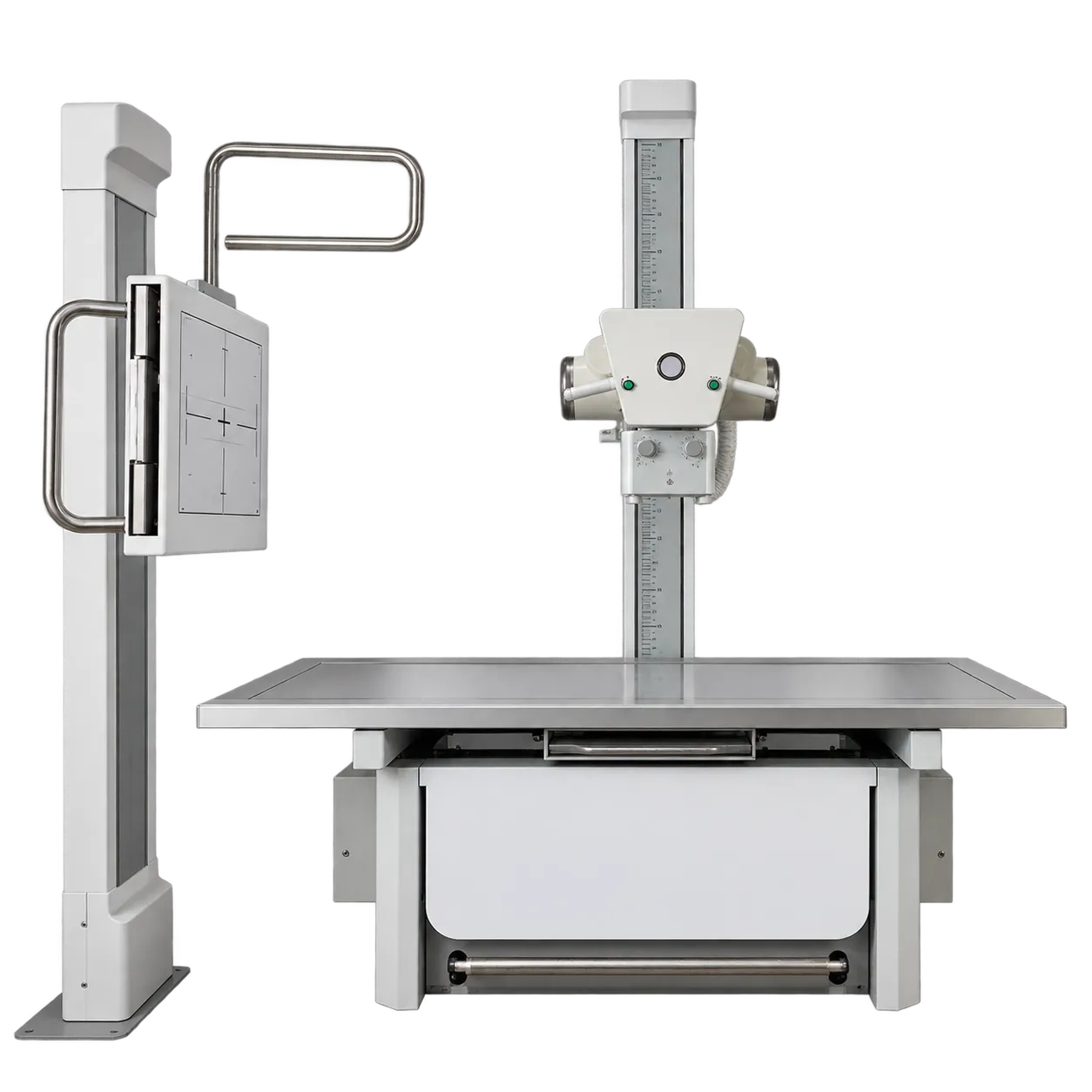
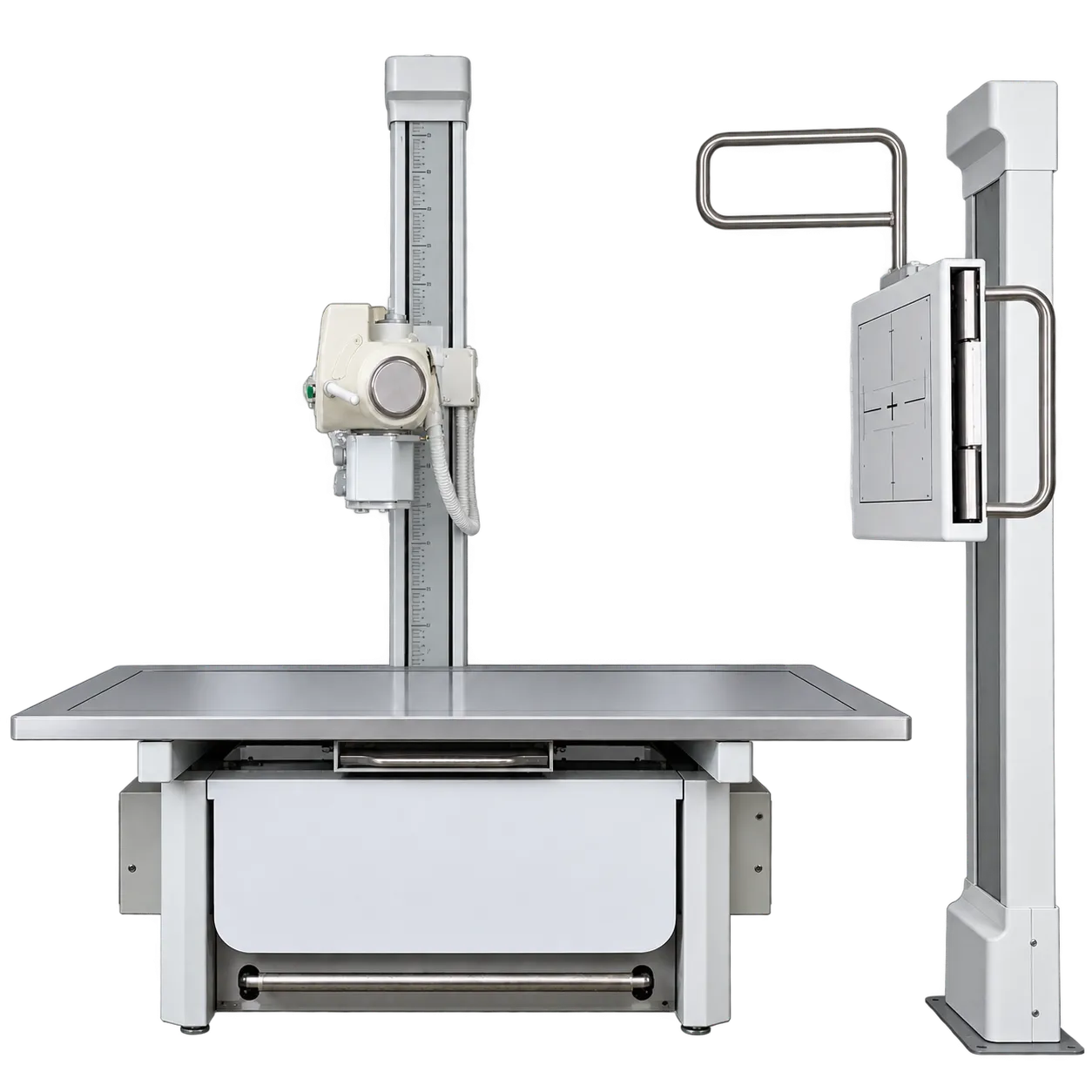
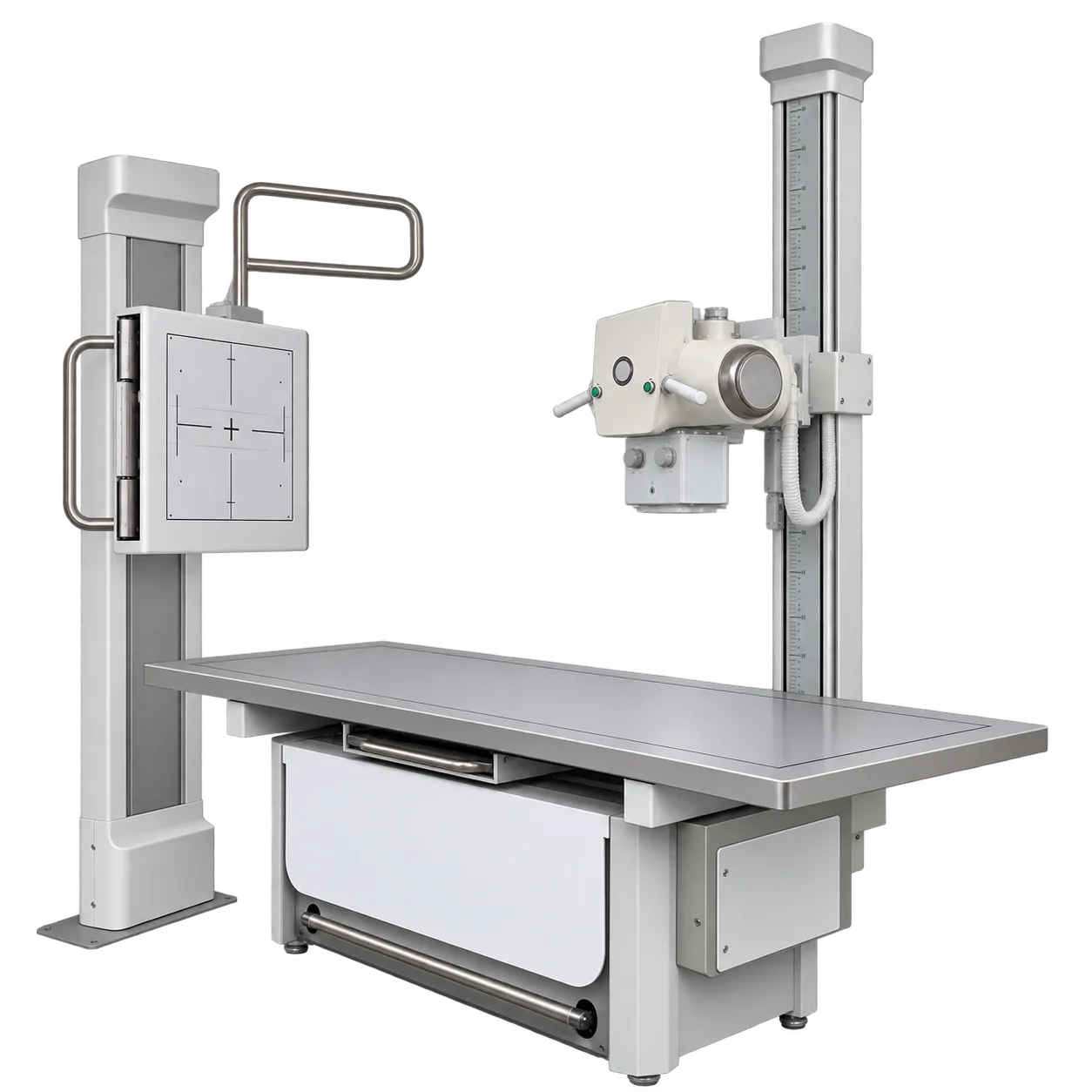
The jump from 100 to 400 mAs separates this room from the entry model. Lateral lumbar spines, large abdomens and heavy pelvises that strain a 25 kW generator become routine. The higher current also keeps exposure times shorter for patients who cannot keep still, such as frail older adults and injured children. For a clinic or small hospital that sees a broad mix of adults, this 32 kW analogue X-ray option is the more versatile of the two smaller models in this line.
As an analogue system, the room relies on cassettes. In UK practice that normally means phosphor plates and a CR reader feeding images to PACS, because wet film processing has largely disappeared from NHS departments. If a digital upgrade is planned, confirm the detector's fit in the table and chest stand before purchase. The grid arrangement matters too, because a grid chosen for cassettes may not suit a flat panel. Planning this early avoids awkward changes later. Plate readers also need space and power close to the room.
Installation follows the standard UK route for a fixed X-ray room. Shielding and controlled areas are designed with the radiation protection adviser. Warning signals are then fitted, and a critical examination takes place once the equipment is in. The 380 V or 220 V options add flexibility, though the current demand and mains impedance limit still need confirming for whichever supply is chosen.
Medigear.uk obtains the missing data from Blackstone for the radiology and estates teams before scoping the project, including any building work.