
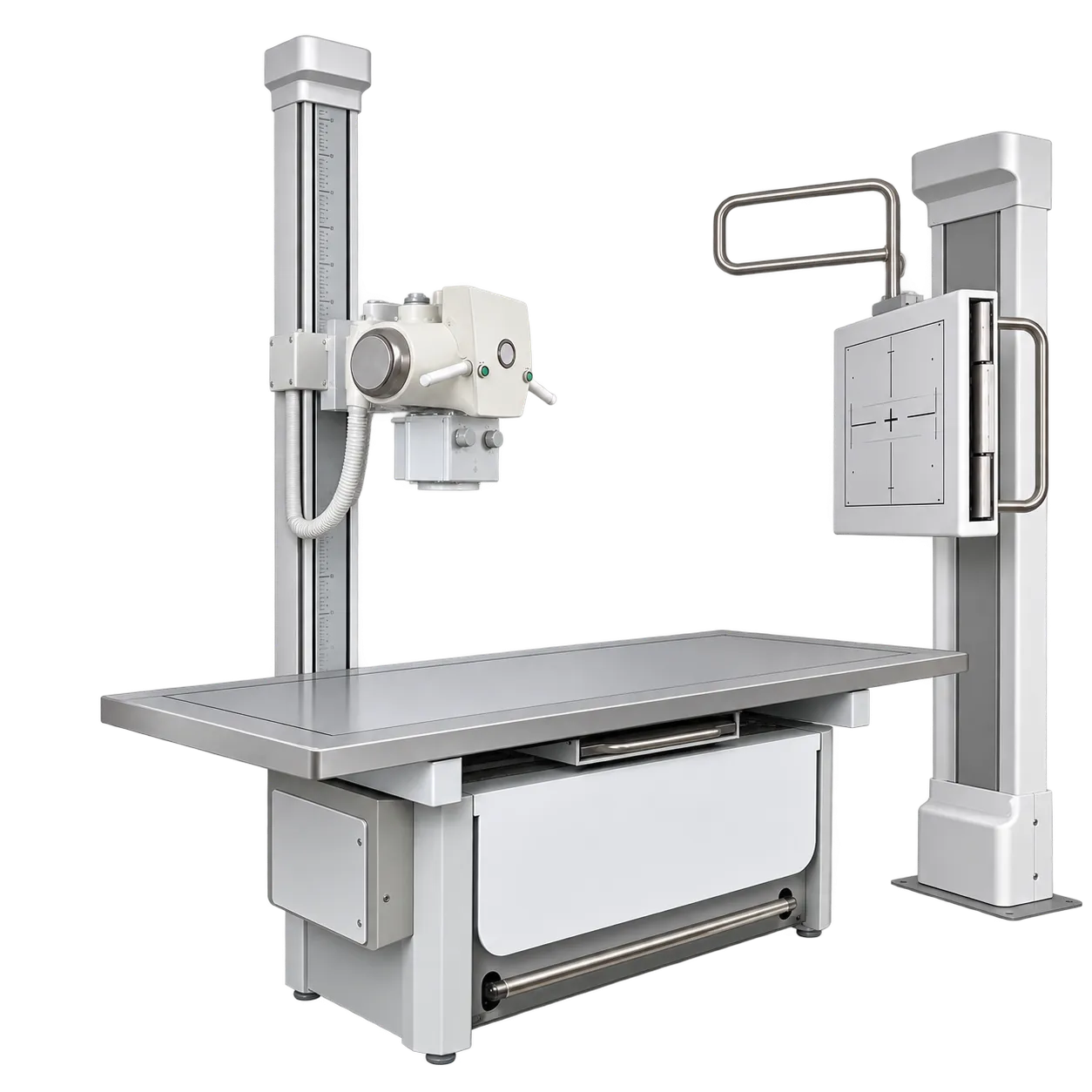

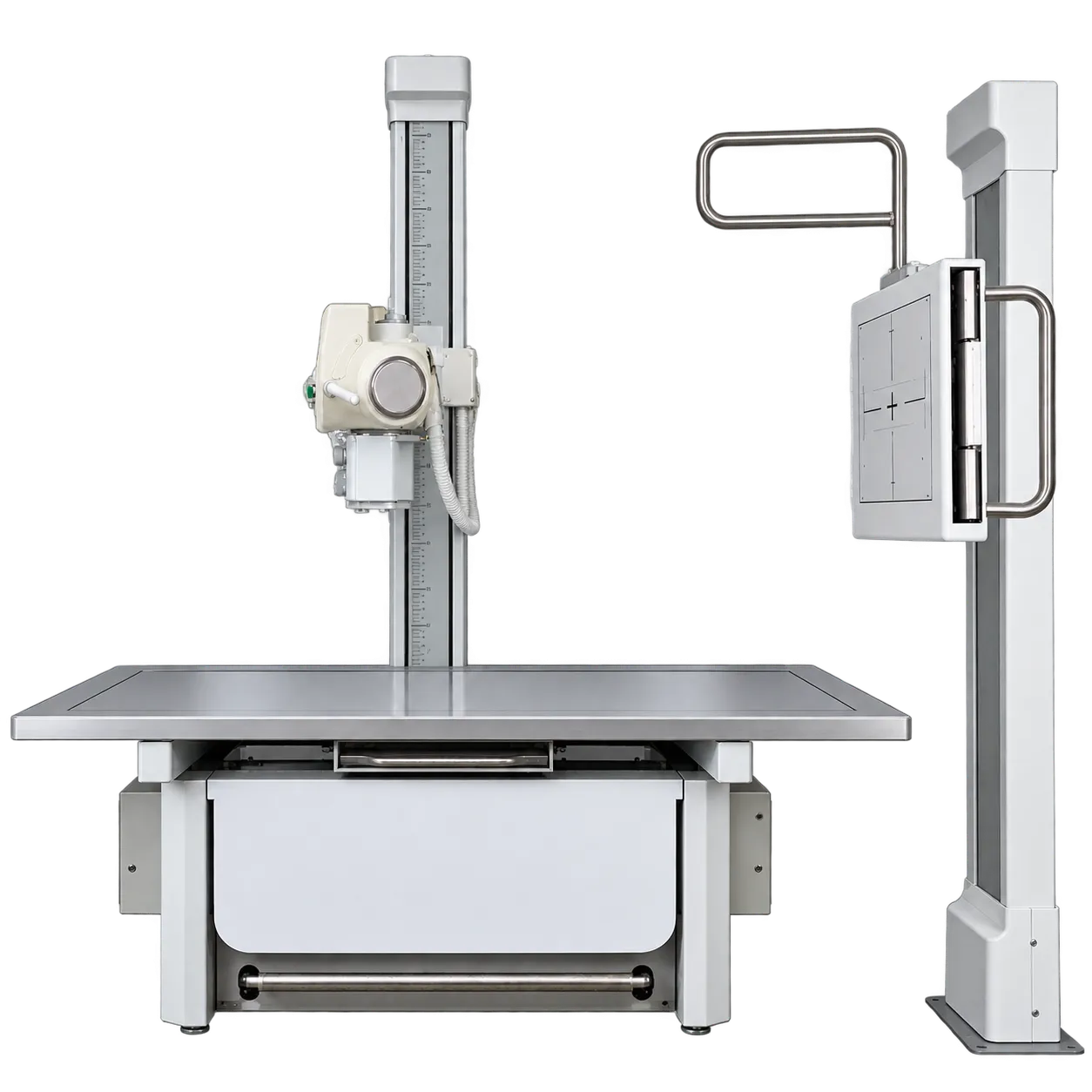
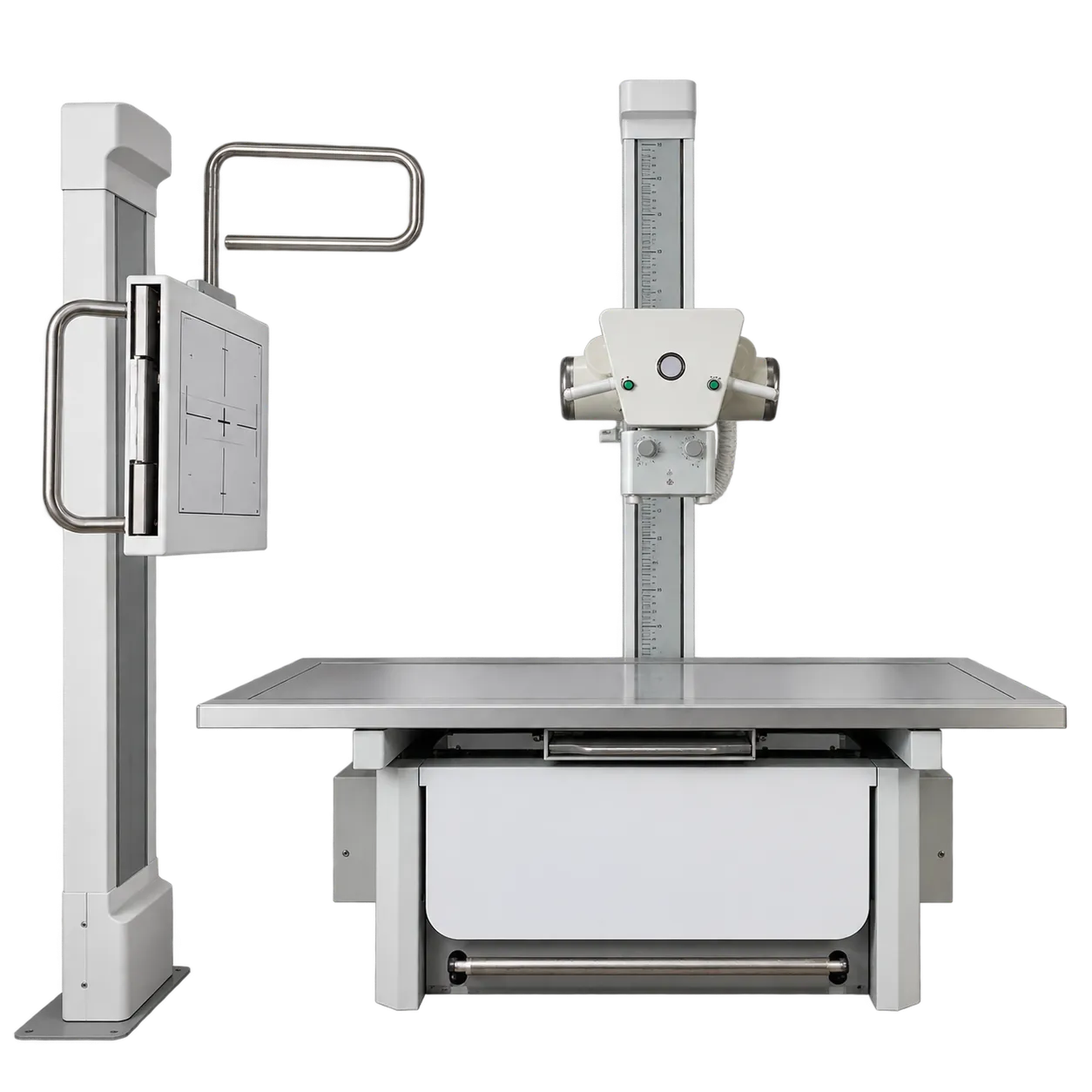
A 25 kW room suits small hospitals, clinics and private practices with modest workloads. Chests, limbs, skulls and many trunk examinations sit comfortably within its range. The 100 mAs ceiling is the main limit. Dense views in heavy adults, the lateral lumbar spine being the classic example, may call for more than the generator can give in one exposure. The fine focus helps with bony detail in the hands, feet, and wrists, and the broad focus handles heavier loads. Children's chests and limbs are well within its capabilities.
Most UK imaging now works digitally, with images stored and reported on PACS. An analogue X-ray machine is therefore usually paired with a computed radiography reader and phosphor plates. Some sites later retrofit a flat panel into the table and stand instead. Film processing is rare in the UK and brings chemical handling and disposal duties. Phosphor plates, for their part, need regular cleaning and inspection. Buyers should decide on the capture route before ordering, because it affects cassette sizes, grids, and the department's daily workflow.
As with any fixed X-ray room in the UK, installation involves shielding design and controlled areas agreed with a radiation protection adviser. Warning lights are fitted,d and a critical examination follows. The supply options of 380 V or 220 V give some flexibility, but the current demand and impedance limits still need confirming.
Medigear.uk gathers the outstanding figures and site data from Blackstone for the estates team and radiology lead so that the project can move ahead with fewer surprises during installation.