
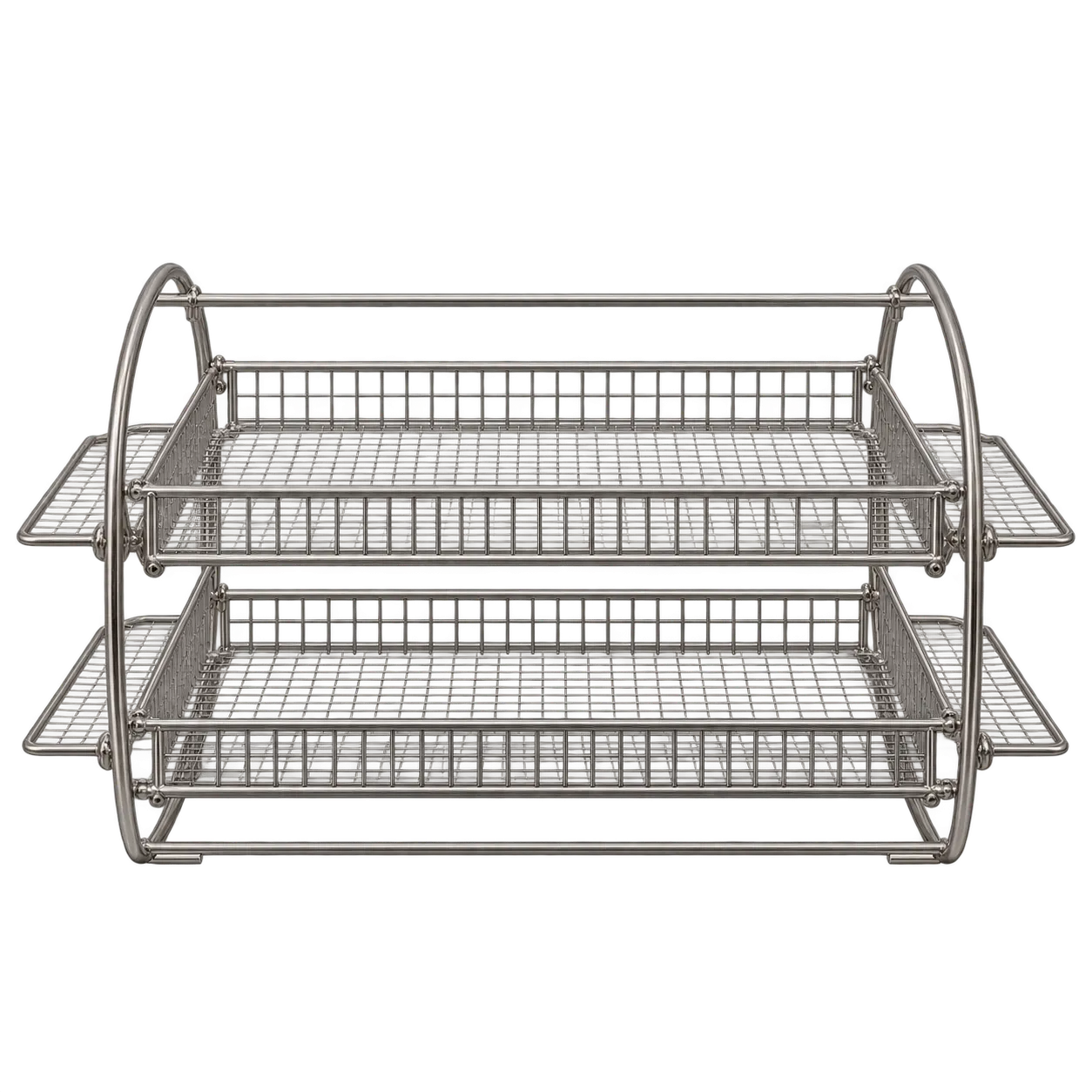
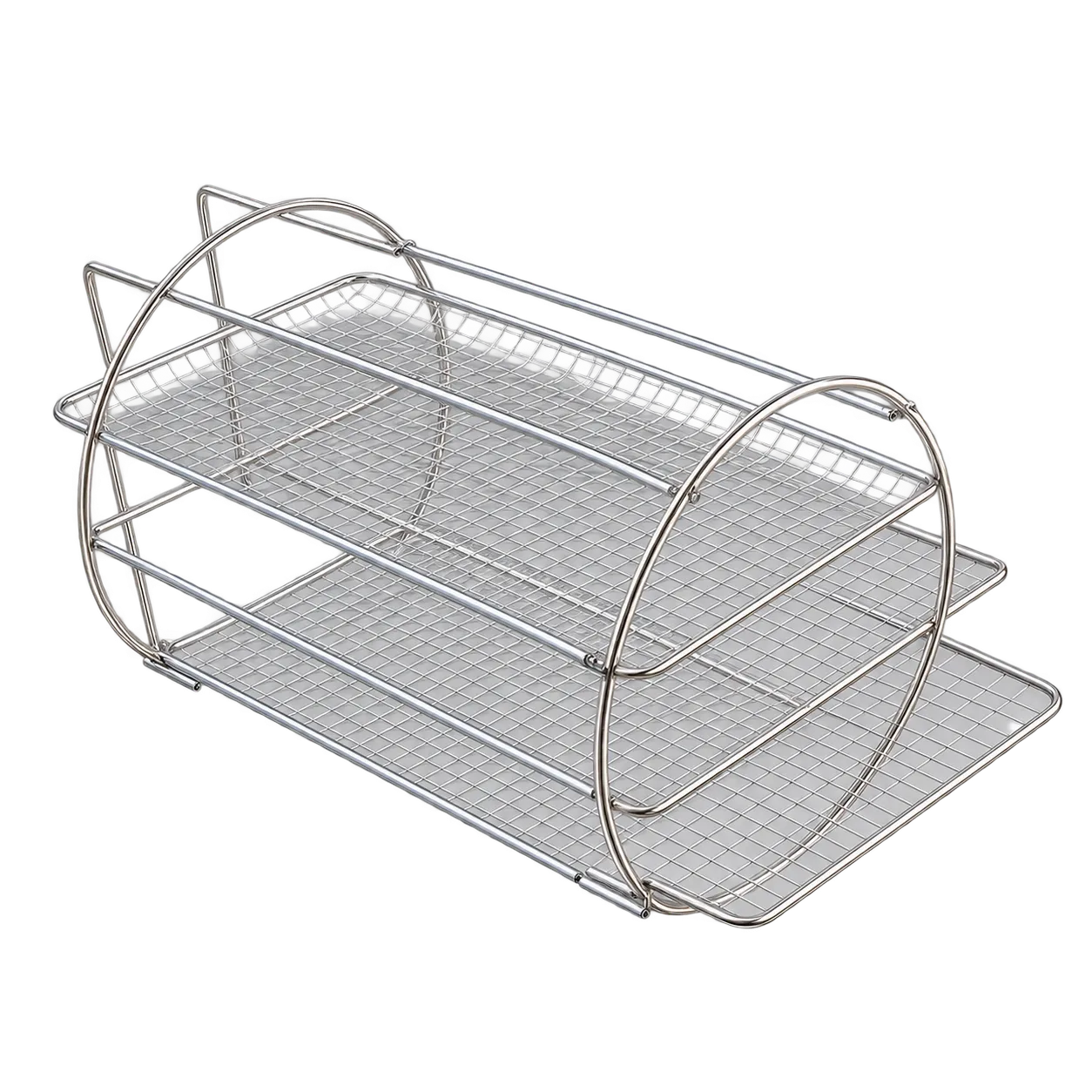
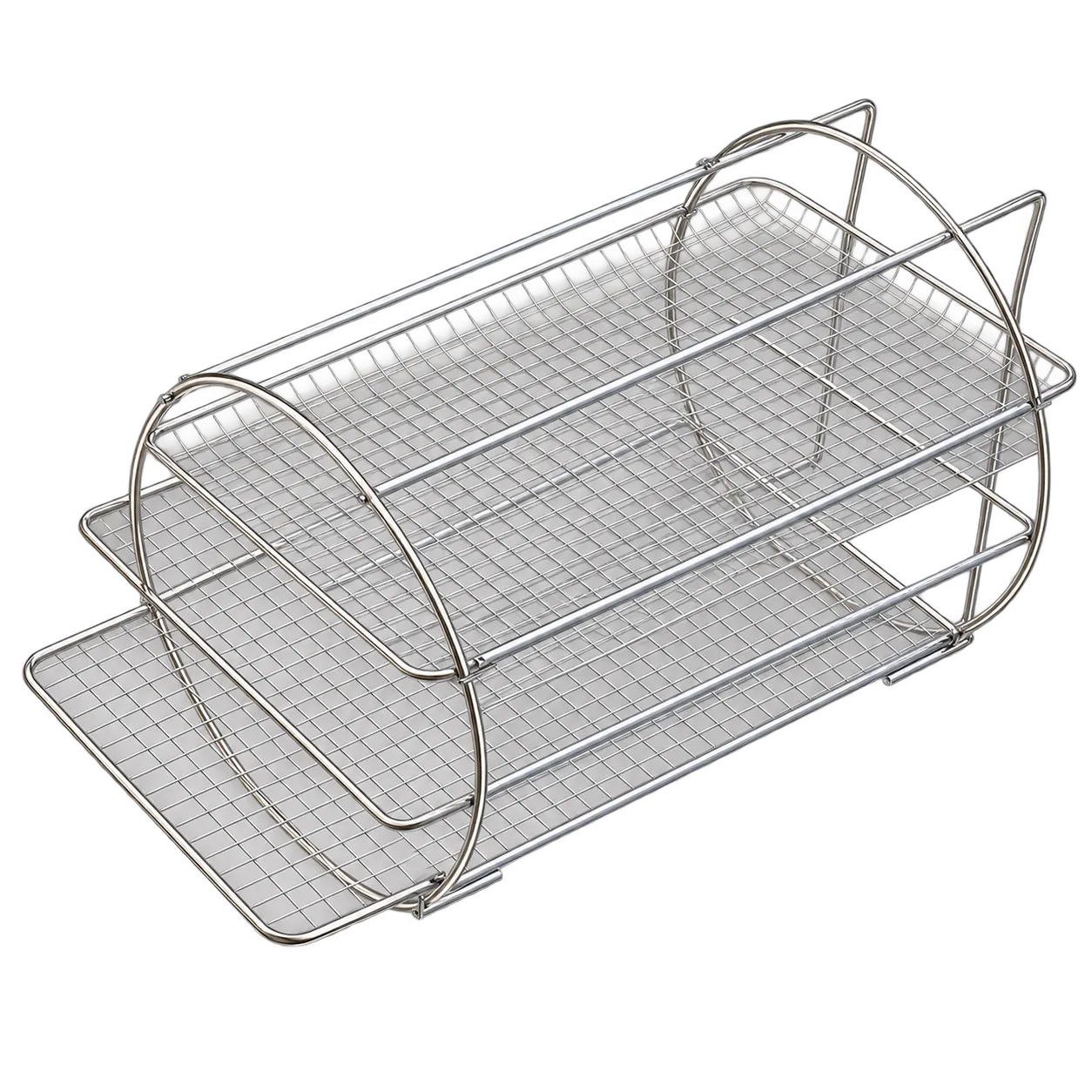
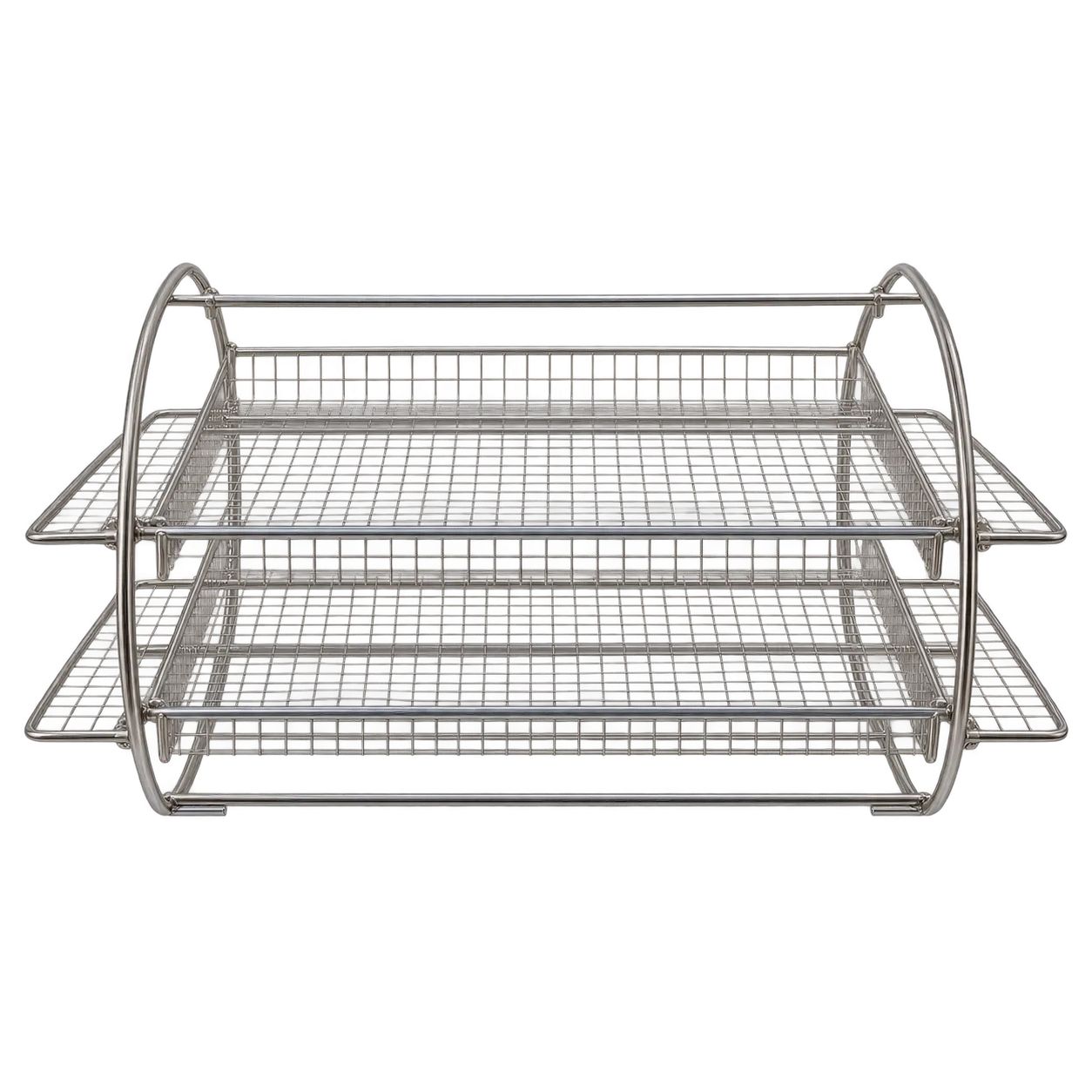
Dental practices, podiatry clinics, and GP minor surgery rooms run the HS-IC trays through their benchtop steam steriliser with every load, with each tray carrying one patient's instruments or a row of sealed pouches. Tattoo and piercing studios, beauty salons, and veterinary practices that reprocess their own instruments use them the same way, with trays going in and out of the chamber with every cycle.
The separate codes matter when a tray needs replacing. If a tray is bent out of true, worn from years of cycles, or lost somewhere between the bench and the chamber, you replace it in its own width. The steriliser then returns to its full complement without touching the other two. Identifying the right code takes only the worn tray's measurements, since each width, paired with the 295 mm depth, belongs to one code only.
Loading works the same on all three. Instruments lie in one layer with hinged ones open, and pouches lie flat with room around them, so steam reaches every surface and moisture can escape during drying. Because the trays share one depth, a layout that suits one suits the others lengthwise, and only the number of instruments side by side changes. Loads stay inside the steriliser's per-tray limit for whichever cycle is running, and hot trays come out on a tray handle.
Fit belongs to the chamber, which has to be deep enough for a 295 mm tray and wide enough at each level for the width placed there. Instruments longer than the trays, and loads meant for cassettes or lidded containers, need other equipment. Racks, tray handles and the steriliser itself are separate items.