
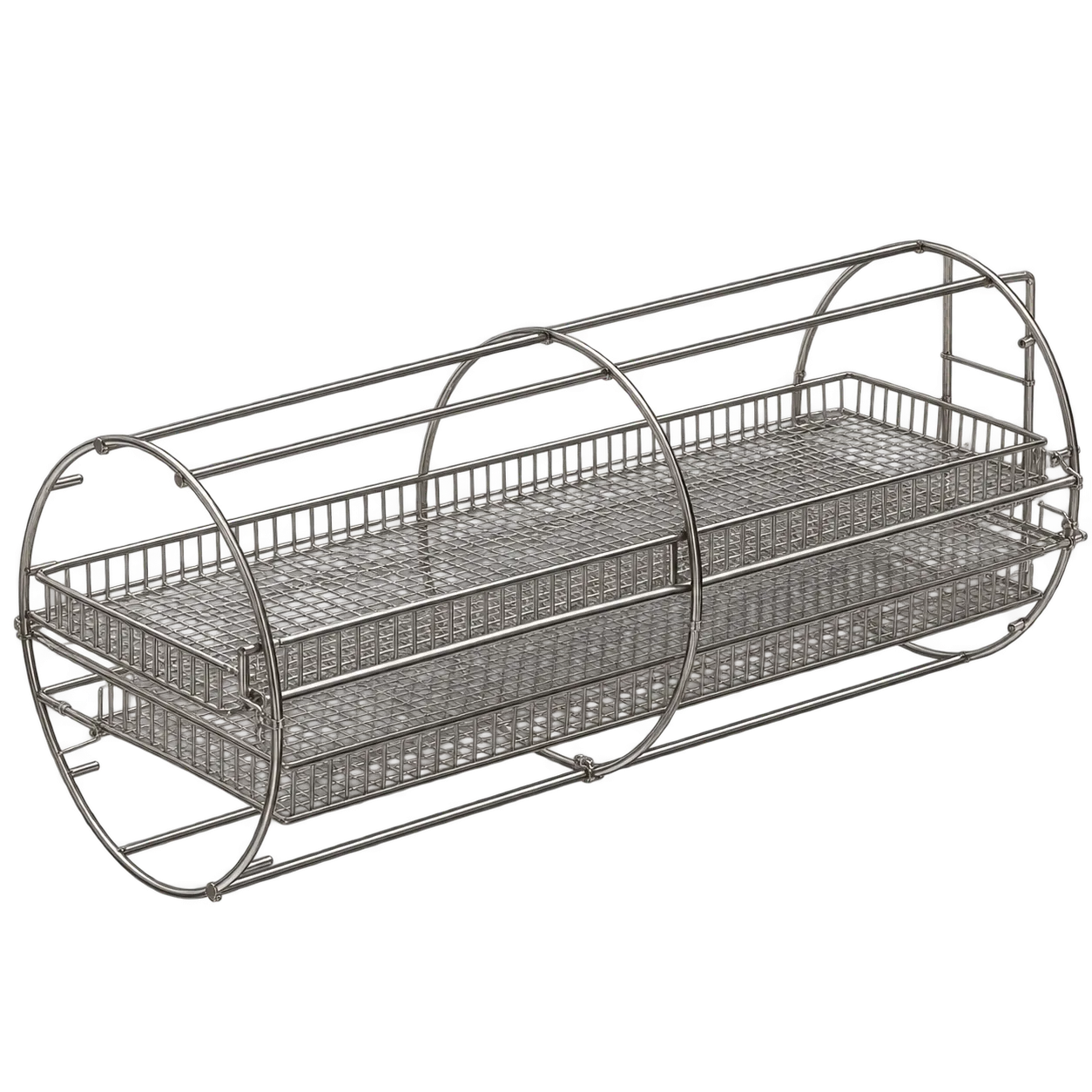
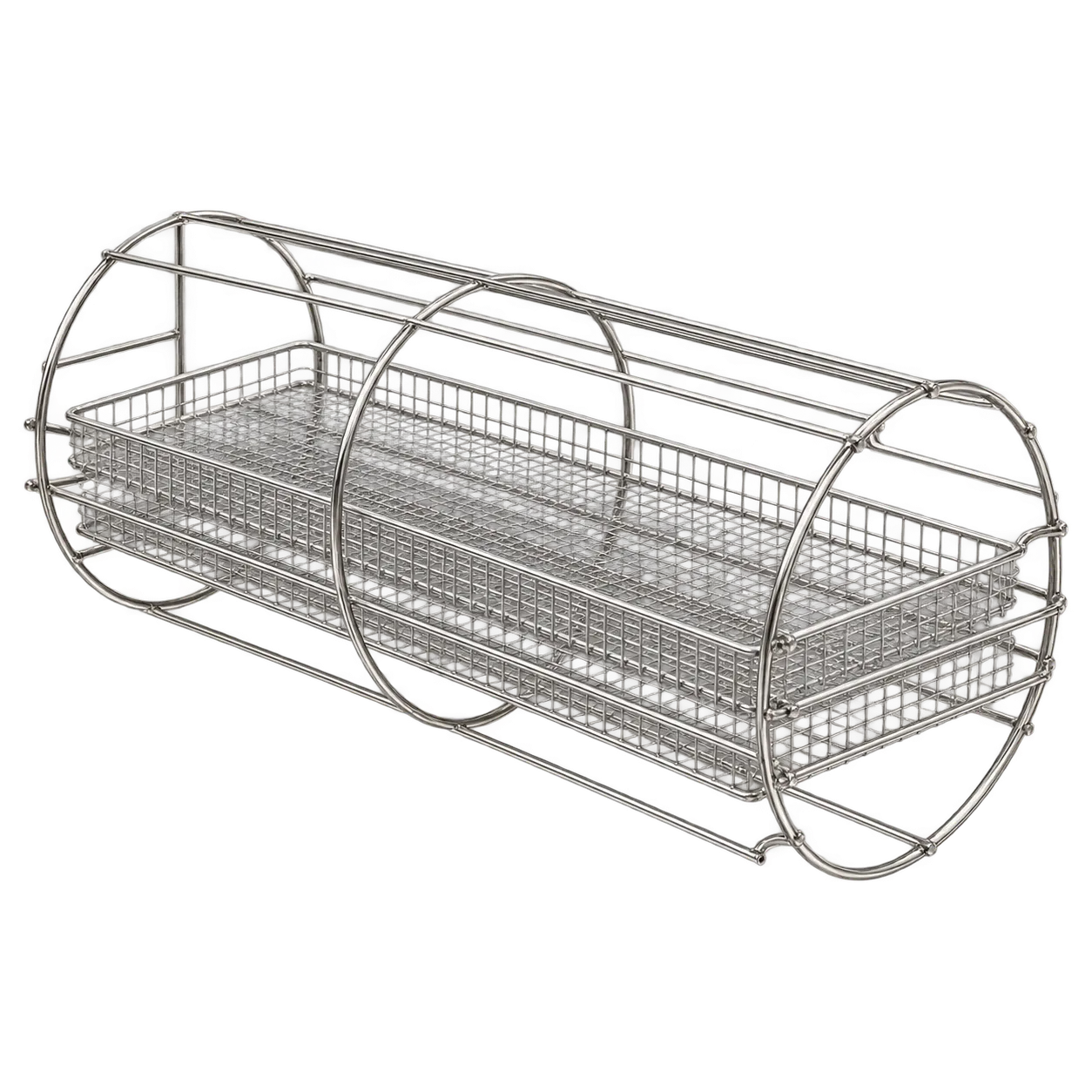
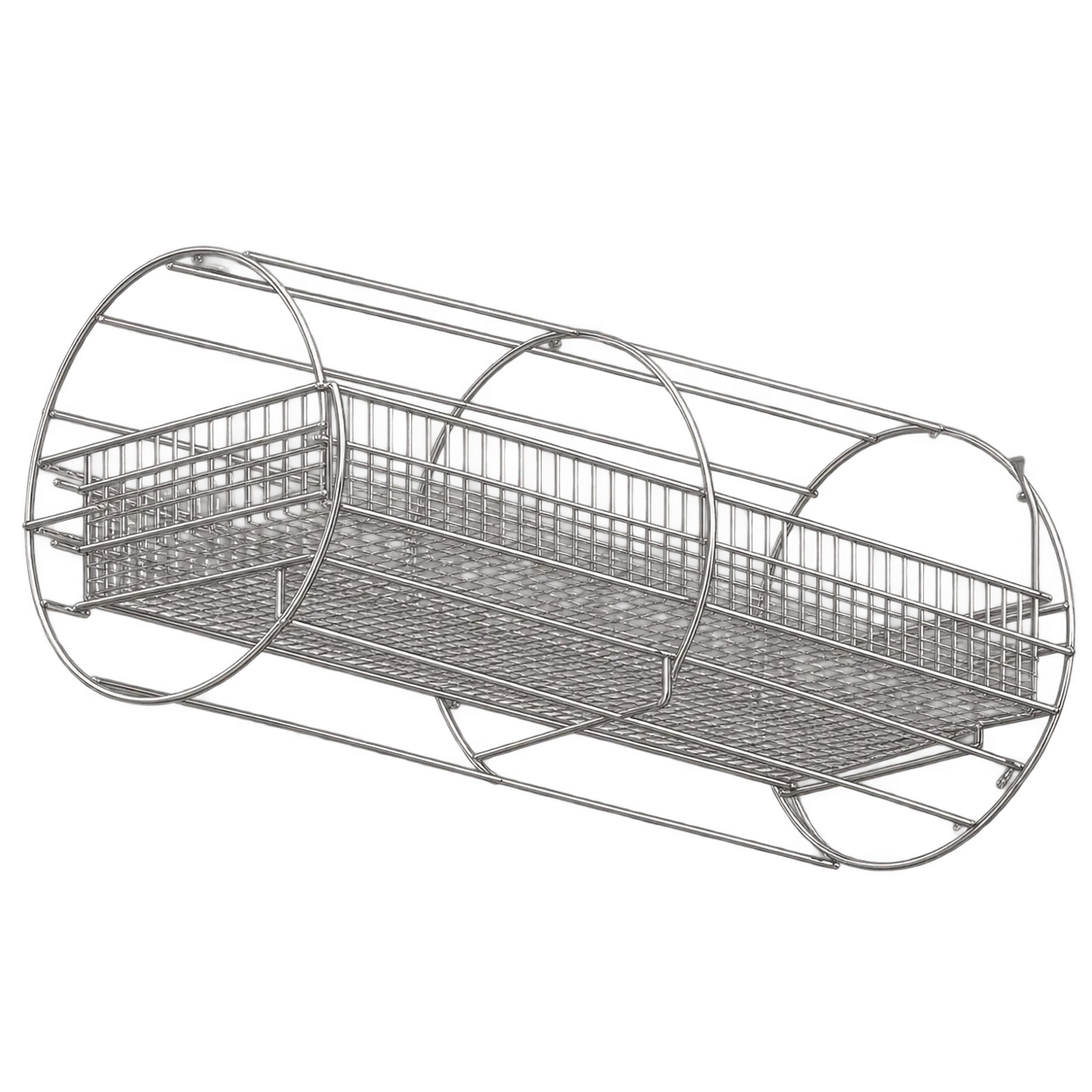
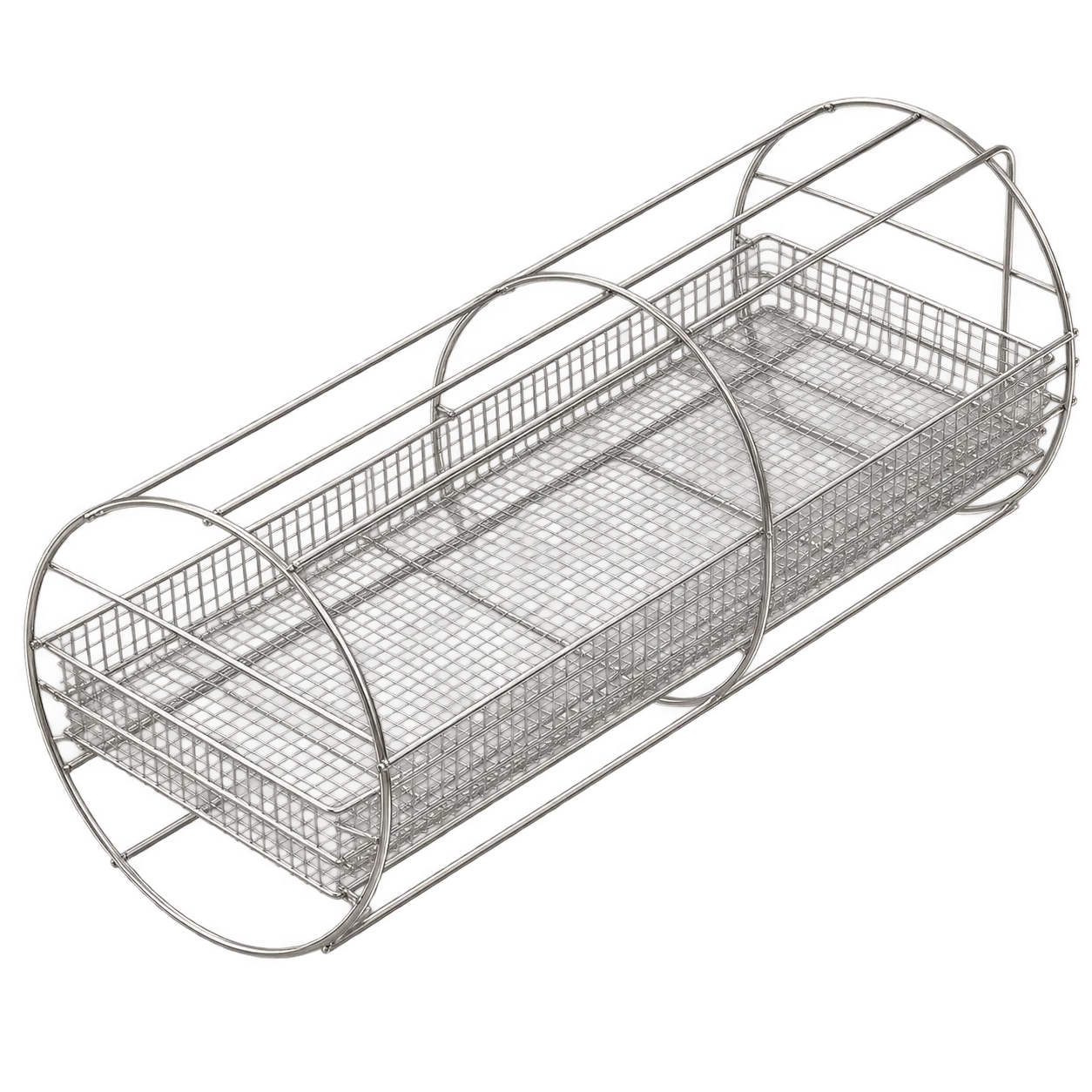
Oral surgery and dental practices, hospital outpatient clinics, and day-surgery units that run a round 29-litre benchtop steam steriliser use HS-IC trays as the chamber's working set. Each tray carries one layer of a patient's instruments, and the 570 mm depth suits longer surgical kit such as forceps, which lie straight along it. Podiatry and veterinary practices load the same chamber the same way.
Each width is made for its own level. The 227 mm tray needs the chamber's widest part, and the narrower two belong to levels farther from the middle, so each tray returns to the position its width was made for after each cycle. Their separate codes make that easy to track, and a tray that bends, wears, or goes missing is replaced by its width alone.
On each tray, unwrapped instruments lie side by side with hinges open, and pouches lie flat without overlapping, so steam reaches every surface, and the drying phase can do its work. The steriliser's per-tray load limit applies at every level, and keeping within it protects heating and drying times. A tray handle lifts each hot tray out at the end of the cycle, or the load is left in the chamber to cool first.
The trays carry and position the load, while the steriliser's cycle handles sterilising and drying. They follow one round chamber, 250 mm across, so other chamber sizes use their own trays, and loads in cassettes or lidded containers need that equipment.