
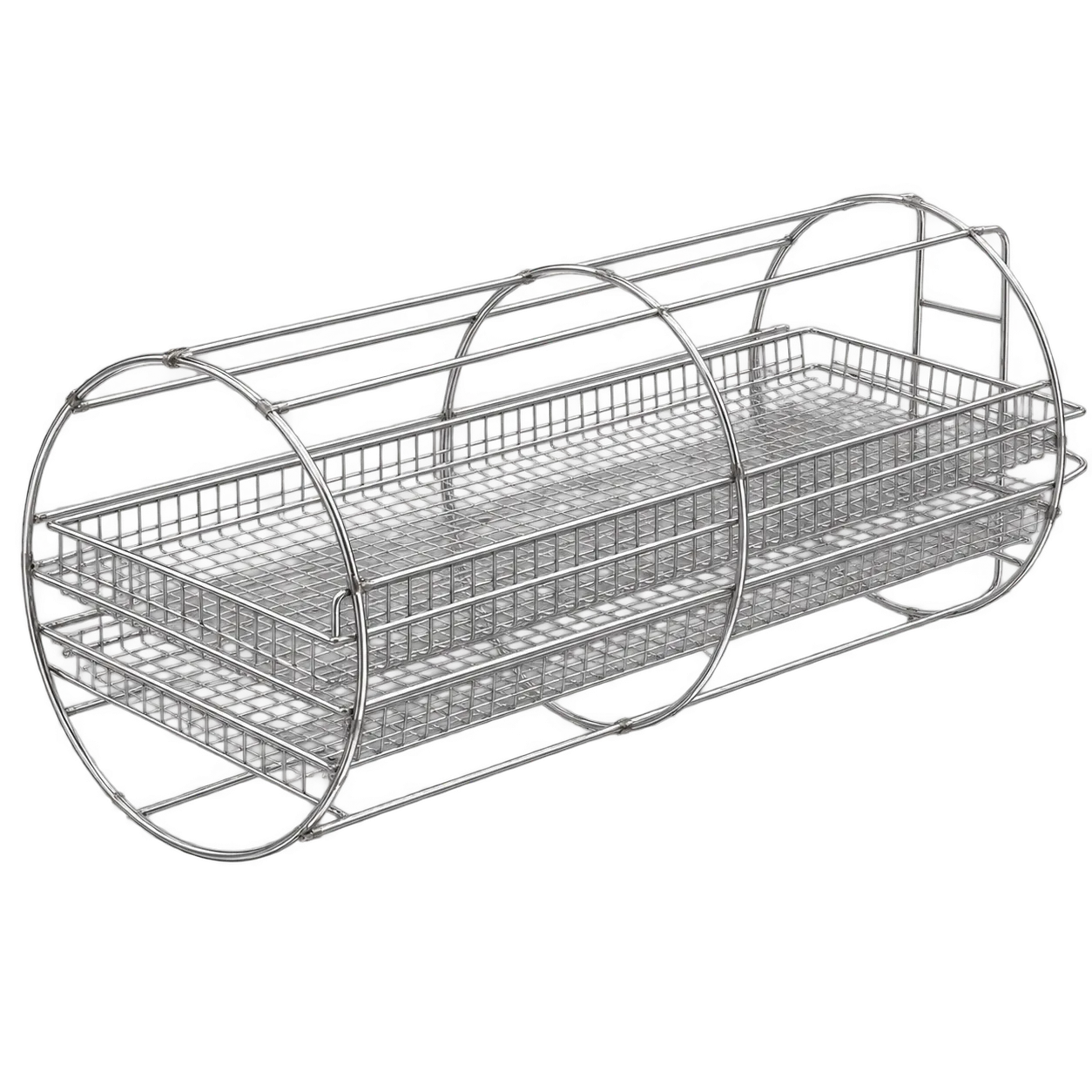
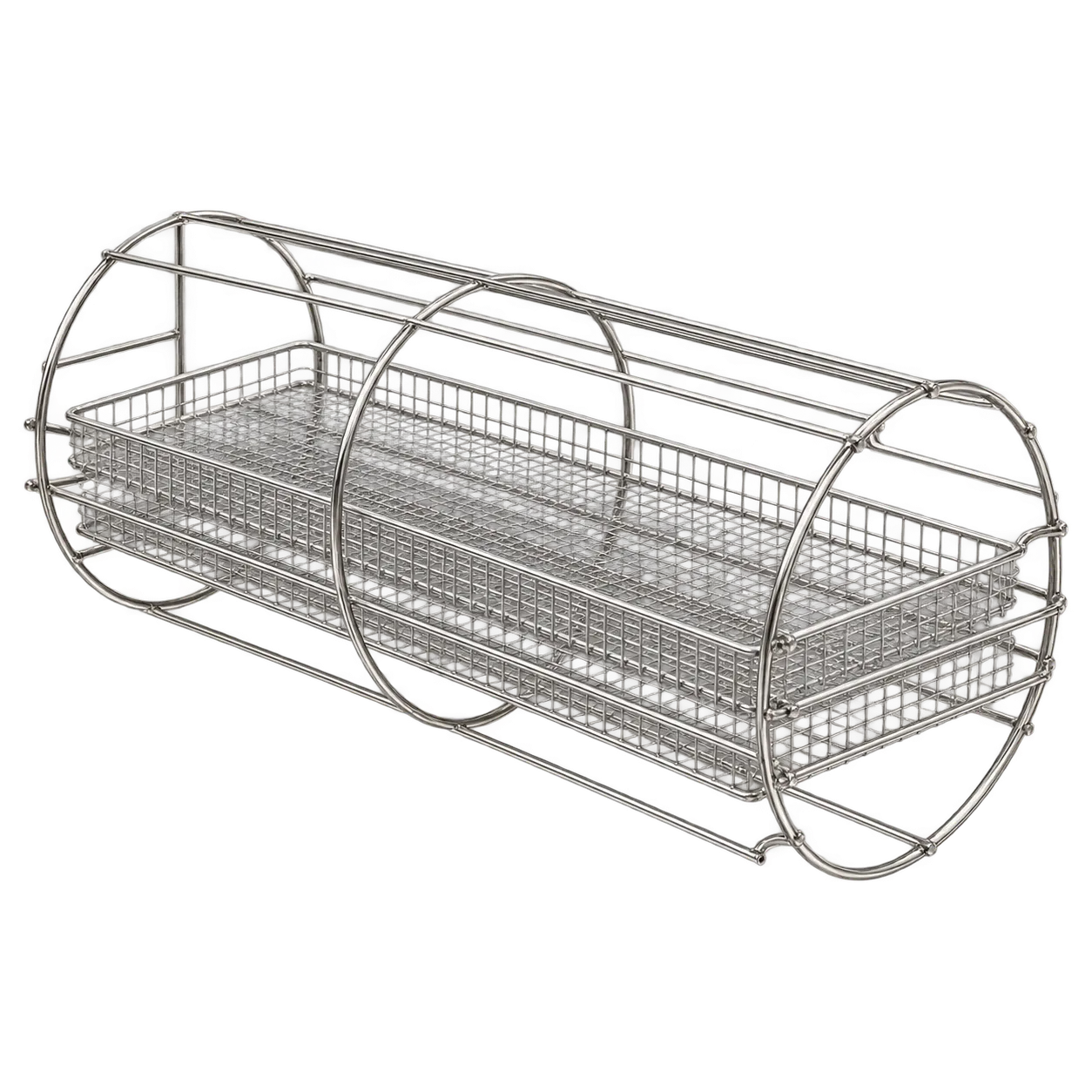
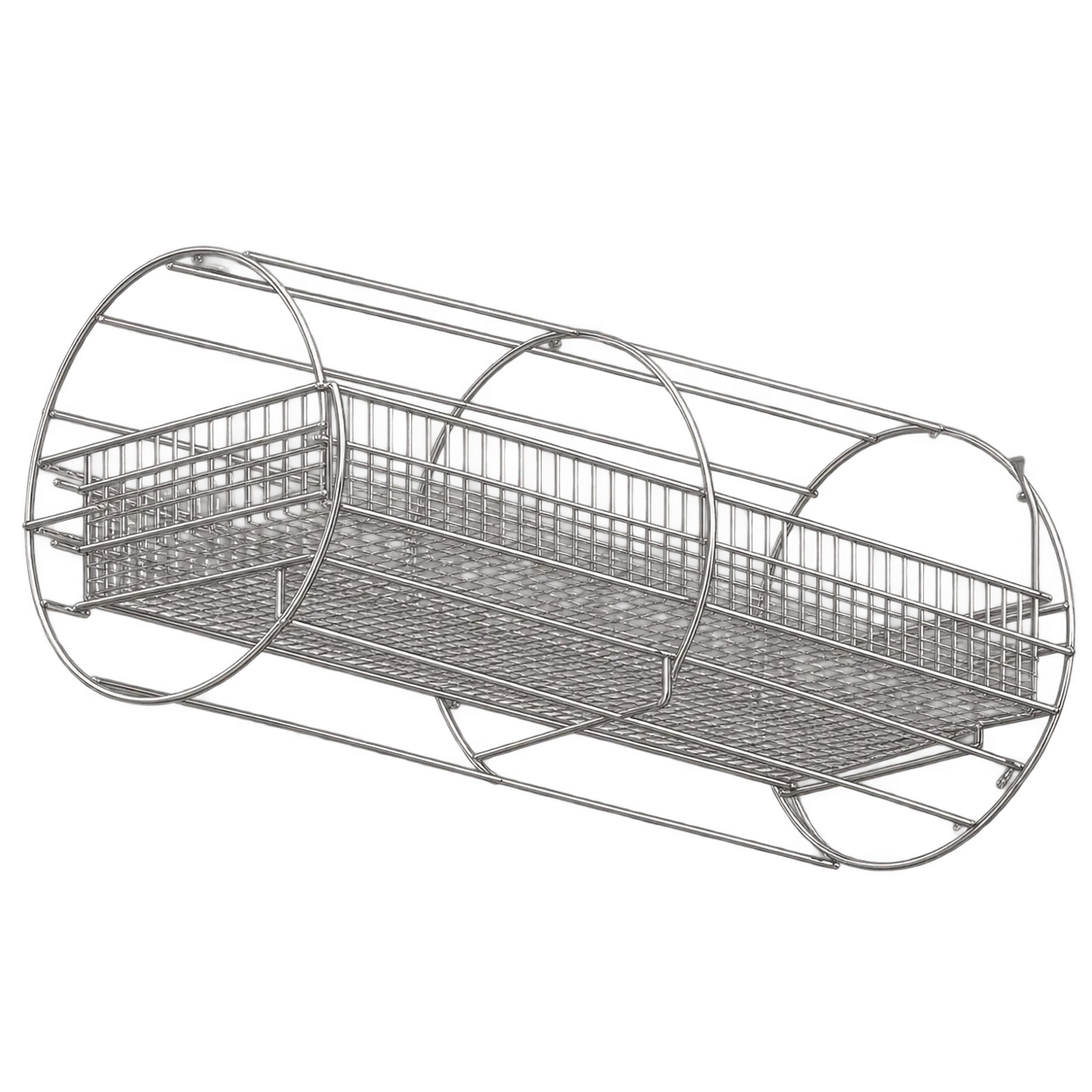
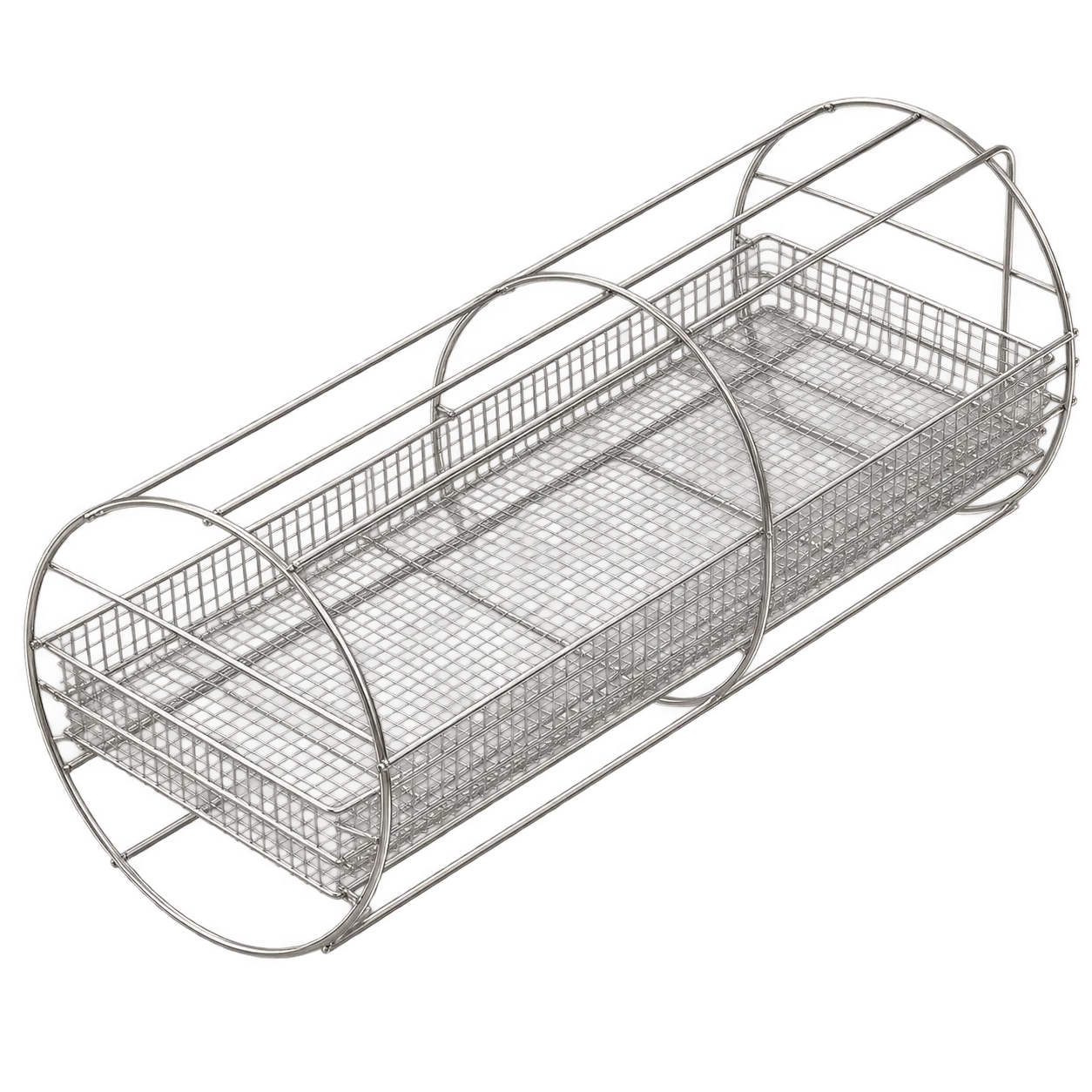
Dental surgeries keep the HS-IC rack in the chamber of a benchtop steam steriliser, where every tray sits. Trays carrying the next patient's instruments go in at their level, the cycle runs, and the trays come out again while the rack stays in place. The same arrangement serves GP minor surgery rooms, podiatry and veterinary practices, and studios offering tattoos, piercing or beauty treatments, wherever the steriliser has a round chamber that the rack is made for.
Replace a rack when it bends, loses its shape, or goes missing, because trays rely on it to sit at their levels and stay clear of the walls. Chamber cleaning is the other time it comes out: the frame lifts free in one piece, the chamber is cleaned, and the rack goes back before the next cycle. That lifting waits until the chamber has cooled, since the wire takes on the chamber's heat.
Inside the chamber, the open frame lets steam reach each tray from every side, and moisture running down the walls stays off the instruments. Loading still matters as much as positioning. Instruments laid side by side, pouches kept flat and unstacked, and trays kept within the steriliser's load limits let a cycle sterilise and dry as intended.
Sterilising and drying remain the steriliser's work, and the rack decides only where the load sits. It is shaped for one round chamber, so it serves the steriliser it is matched to, and trays are not part of its supply.
Square or rectangular chambers, and pouches that need to stand on edge, call for a different rack.