
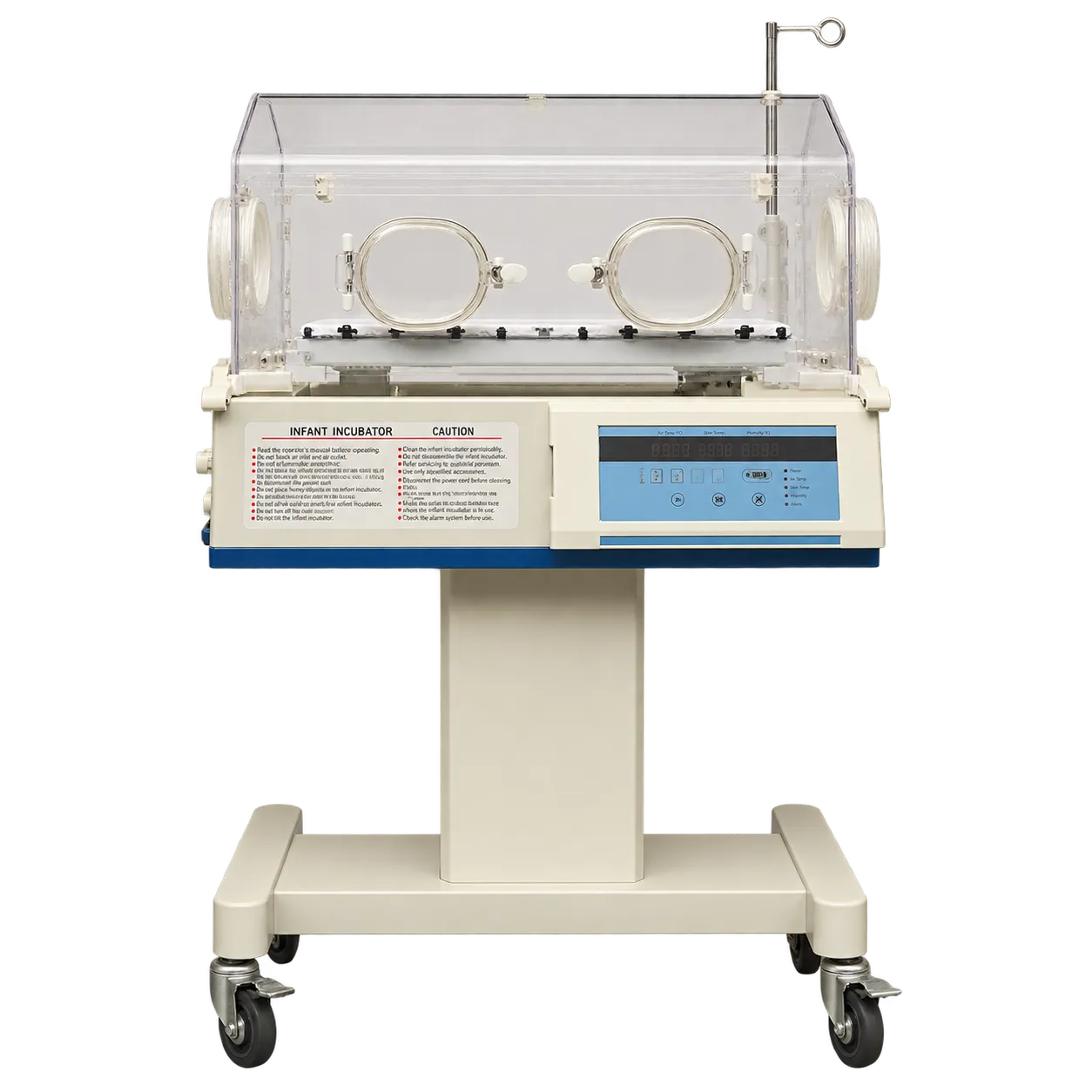
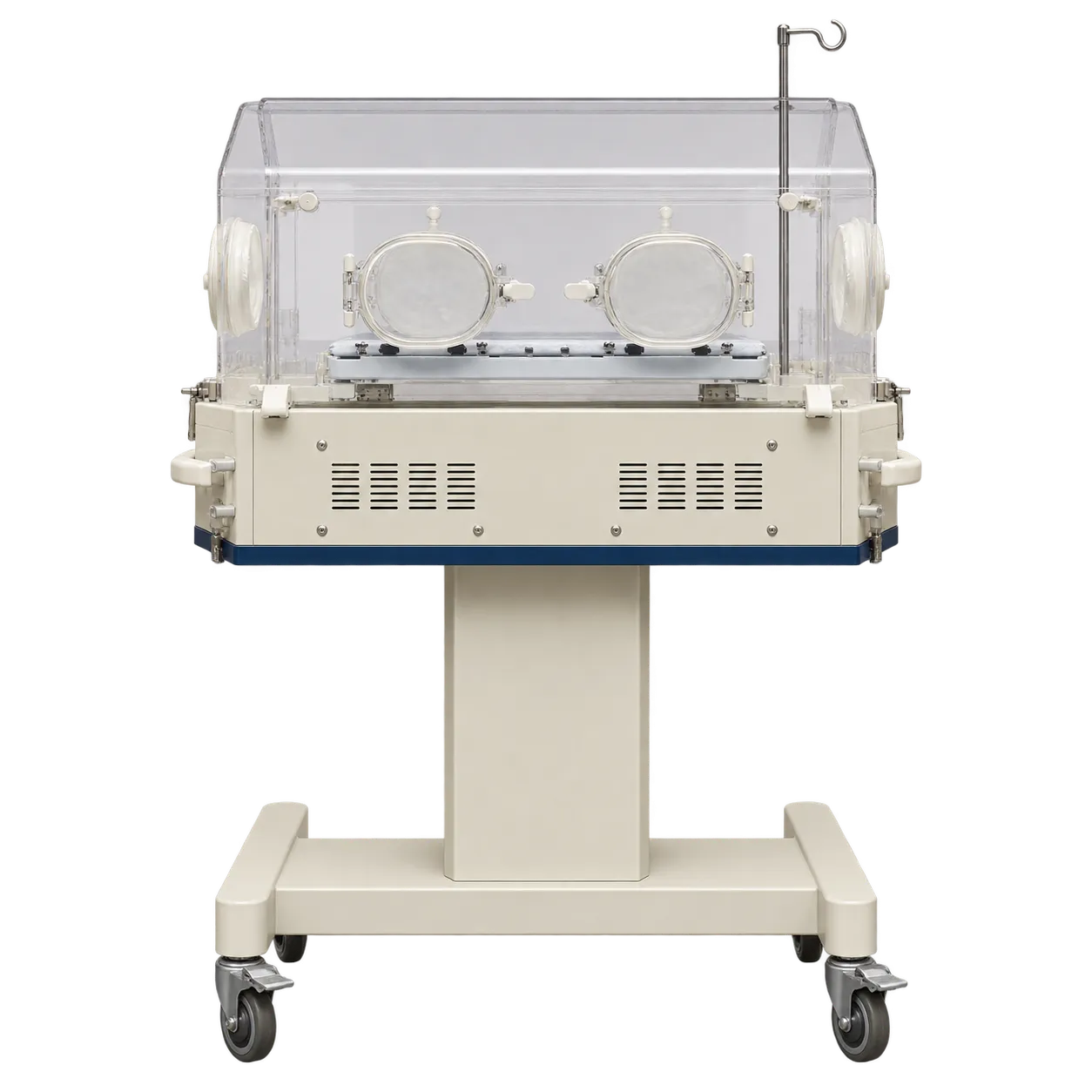
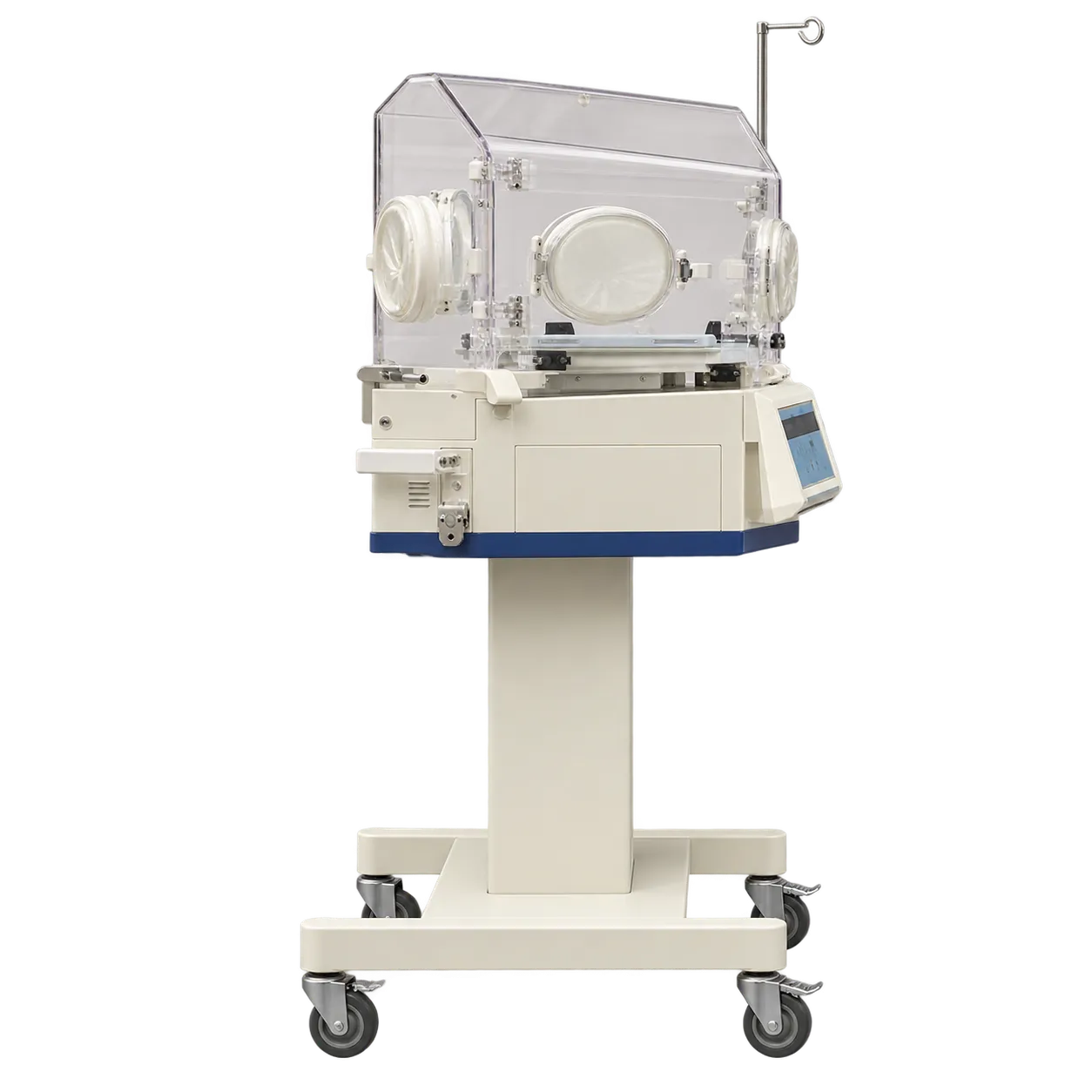
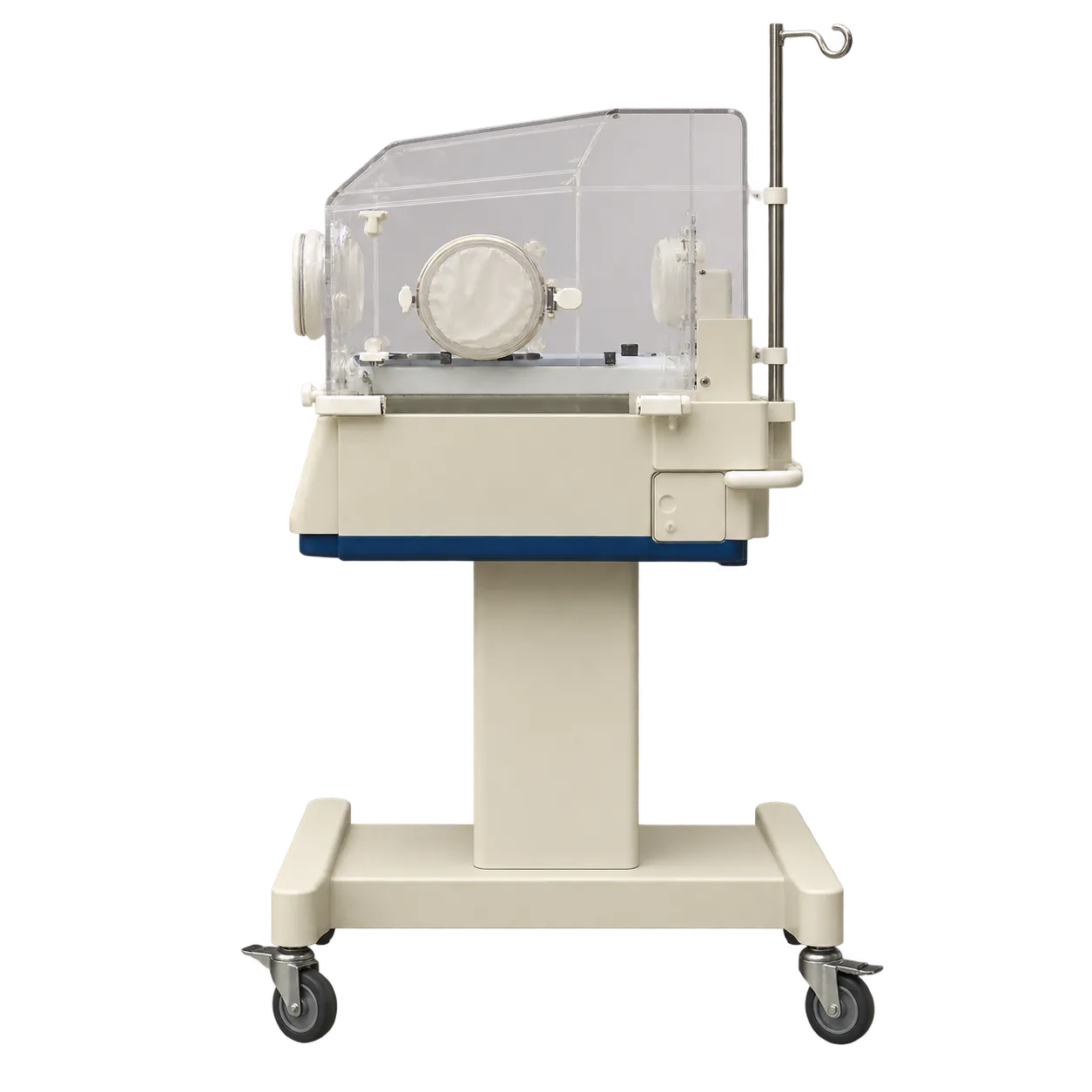
Maternity and postnatal wards use the HS-HZBM800 for newborns who need a warm, enclosed space, such as babies warming up after birth or small babies who are otherwise well. Special care baby units keep it for stable preterm and low-birthweight babies who need steady warmth while they grow.
Air mode shapes the routine. The nurse sets one air temperature, and the incubator holds it; the baby's own temperature is measured separately as part of routine observations. At handover, the incubator setting to pass on is a single air temperature. Alarms cover the air and the machine: a drift of 3.0 °C from the setting, air reaching 38.0 °C, or a fan, sensor or power failure brings staff to the incubator.
Most care happens through the ports. Iris ports let hands in for feeding and examination with the hood closed; tubing and intravenous lines pass through the two self-sealing ports, and bedding changes go through the front panel. An infusion bag of up to 2 kg hangs from the IV stand beside the baby.
District and rural hospitals, paediatric wards and clinics with a small newborn nursery use it where an air-controlled incubator fits the caseload. With one control mode and no skin probe, new staff can be trained on a single setting, and the display shows set temperature, air temperature, and heating power at a glance.
A draught-free room at 20 to 30 °C keeps the incubator inside its operating range.
Babies who need skin-servo control, humidity readings, tilt positioning, or transfers between hospitals call for equipment built with those functions.