
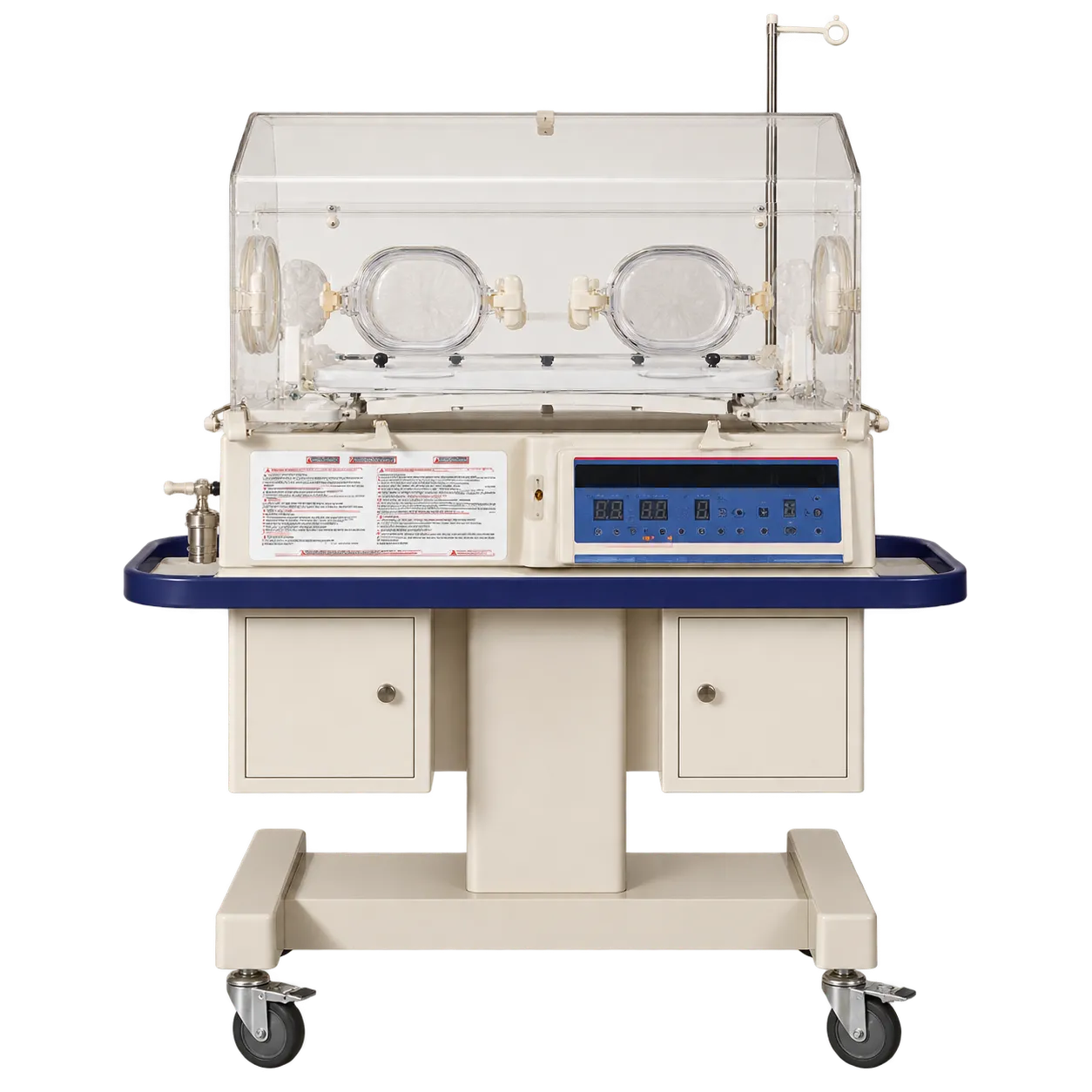
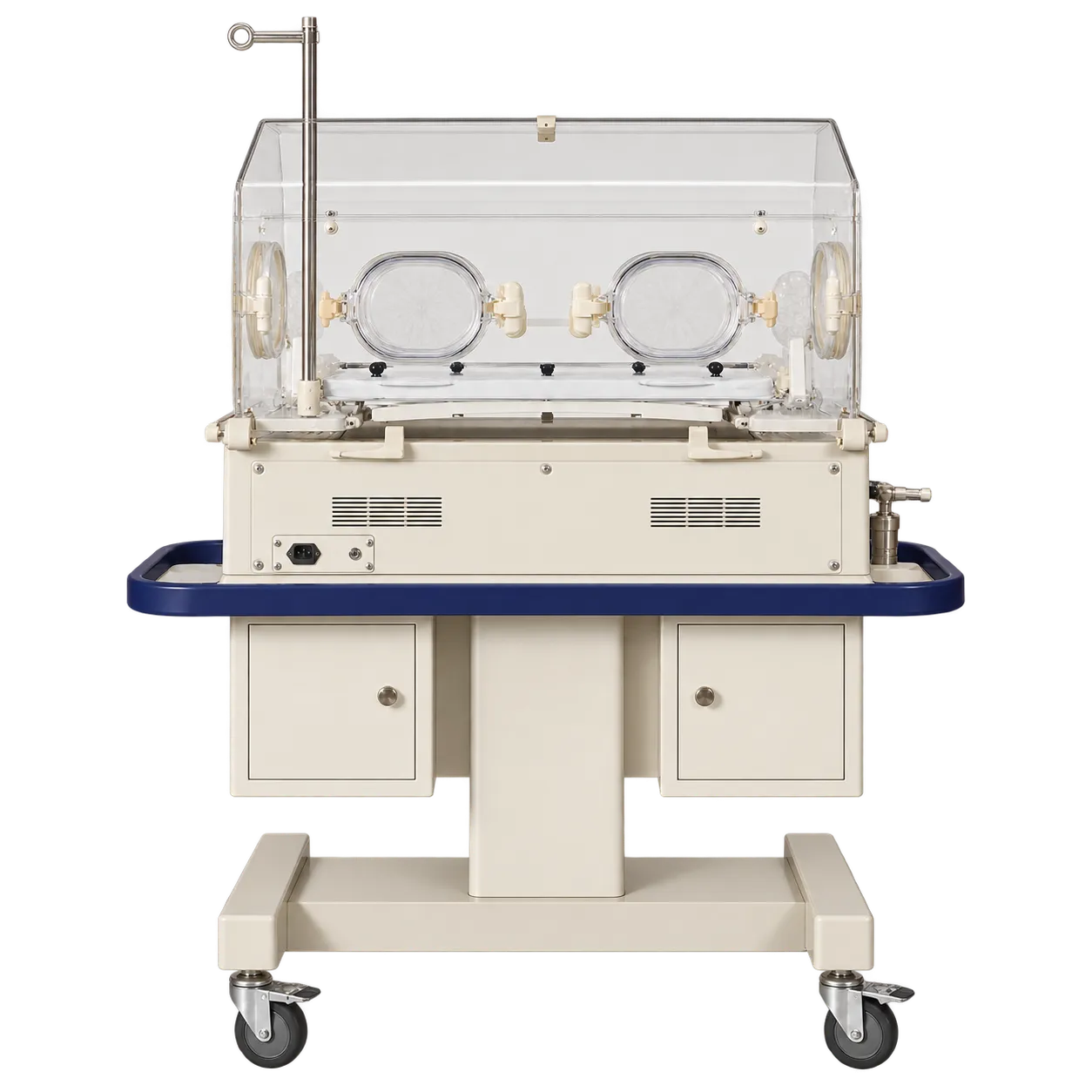
Neonatal intensive care units and special care baby units use the HS-HZBM3000 for preterm and low-birthweight infants who cannot yet hold their own temperature. Nurses choose infant mode to control warmth based on the baby's skin reading, or air mode to hold the canopy at a set temperature, and the fluctuation stays within 0.5 °C while they work.
The alarm set matters on a busy unit, where one nurse may watch several babies. A skin reading 1.0 °C away from its setting, a stopped fan, or a failed sensor triggers an alarm at the incubator, and the mute function lets the nurse silence it while addressing the cause. Over-temperature limits of no more than 38.0 °C, or higher ones in the extended ranges, warn of overheating.
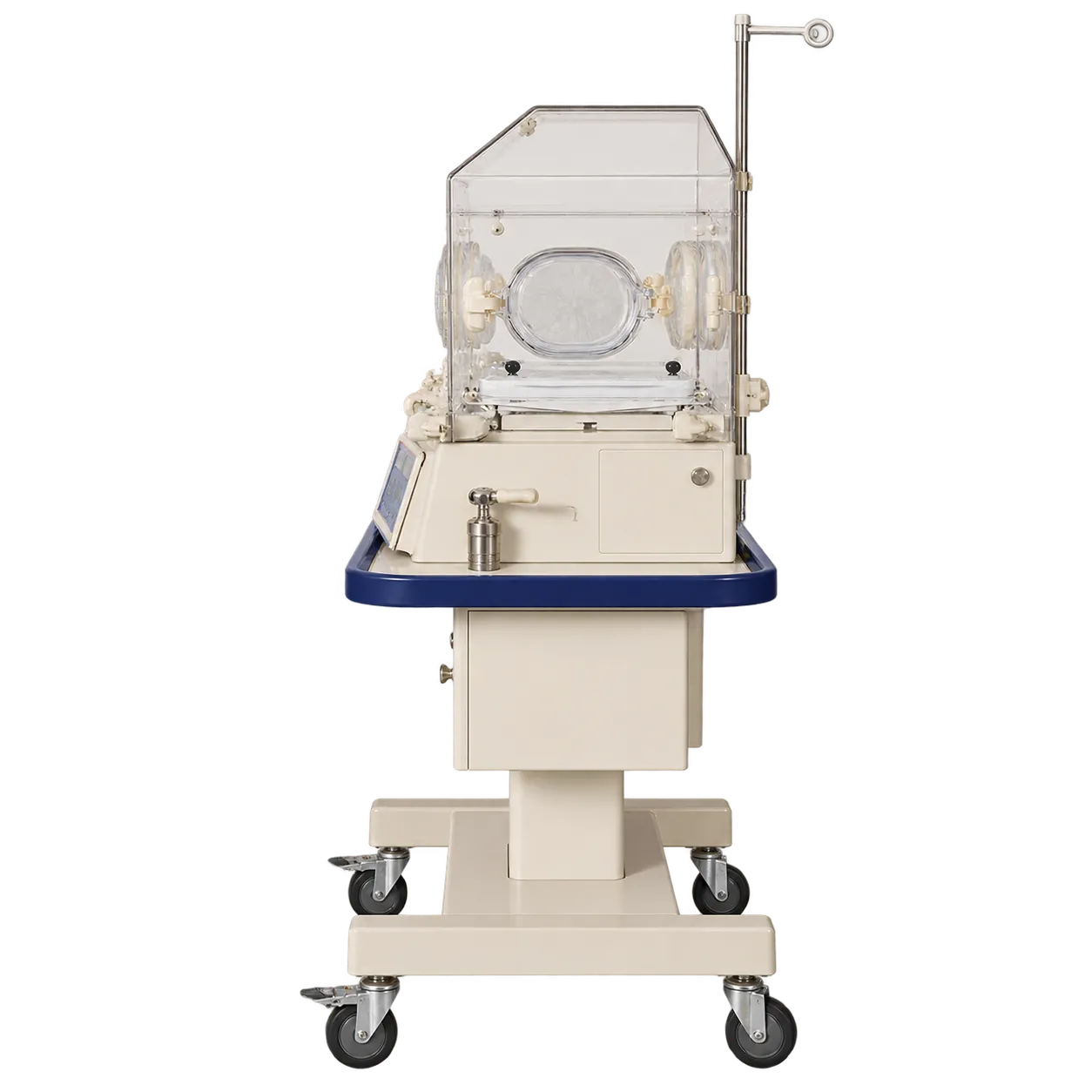
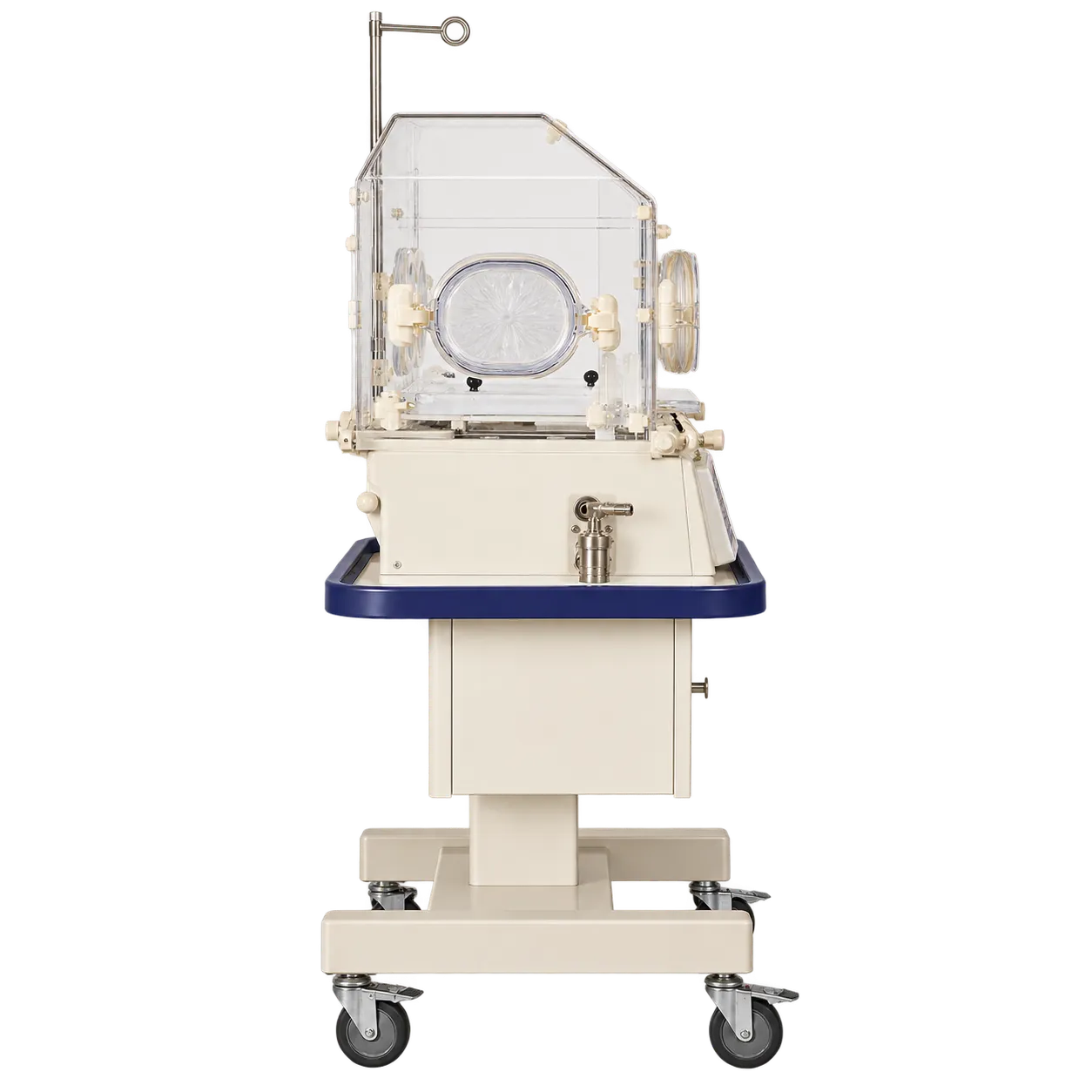
Routine care goes on through the canopy walls. Iris ports let hands in with the canopy closed, the four self-sealing ports take tubing and intravenous lines, and the front panel opens for jobs such as changing bedding. The IV stand on the unit holds infusion bags of up to 2 kg, and the tray tilts up to 10° for head-up positioning.
Maternity and postnatal wards keep the incubator for babies who need warmth after delivery, and paediatric wards use it for sick newborns admitted from the community. District hospitals without a dedicated neonatal unit use it for small babies who need thermal support.
Its operating range, 20 to 30 °C with air movement below 0.3 m/s, suits a ward kept free of draughts.
Inter-hospital transport and procedures that need open access from above fall outside what a closed ward incubator offers.