
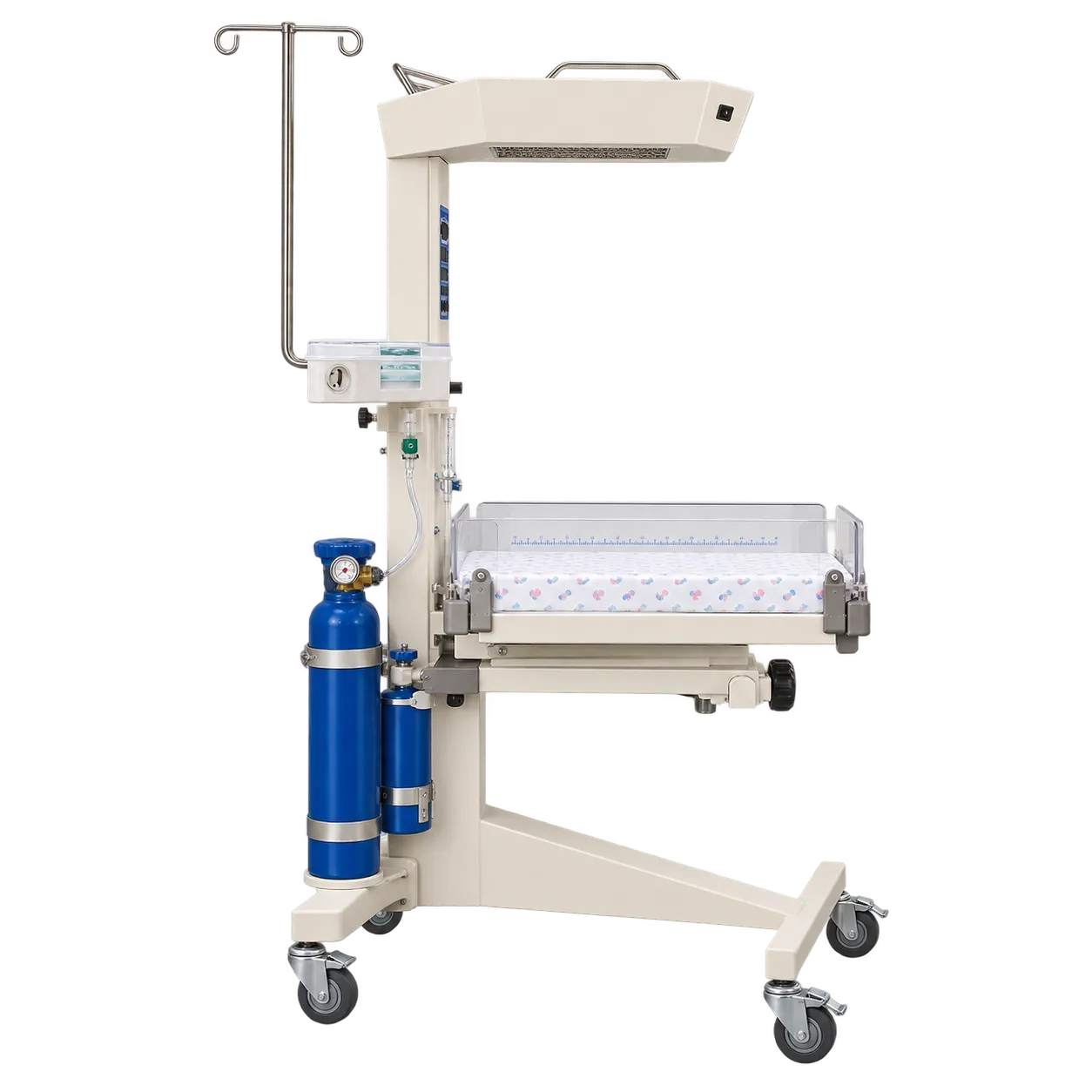
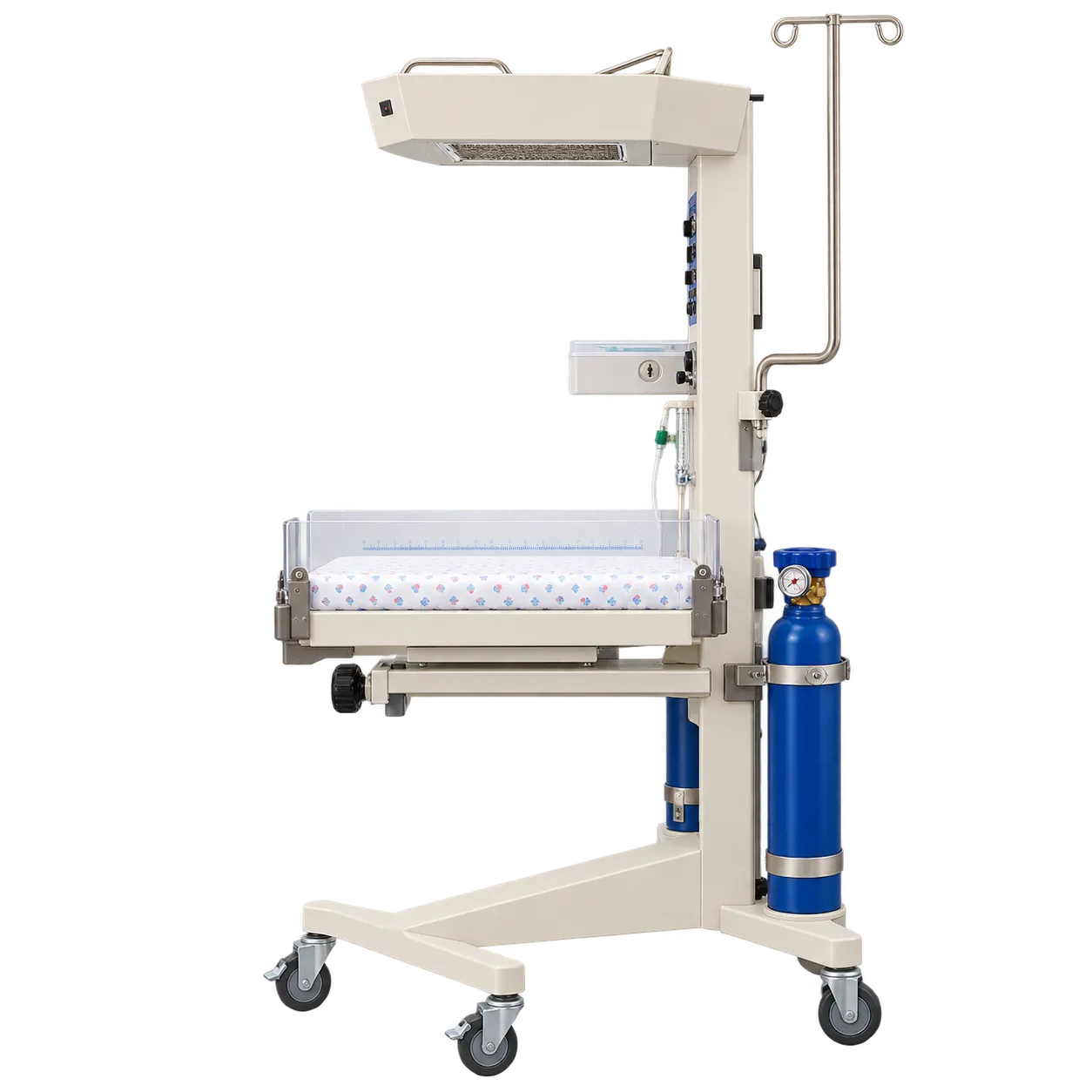
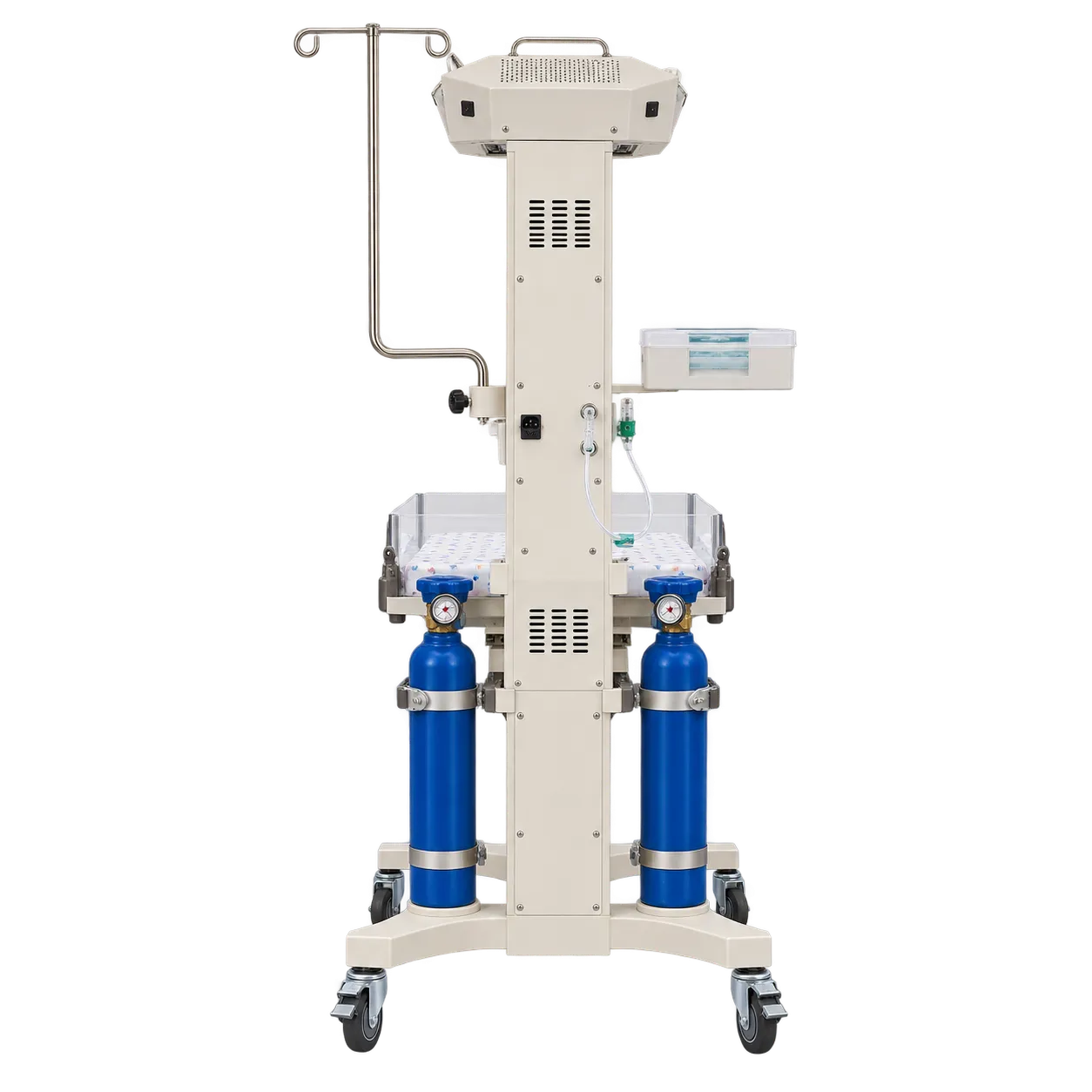
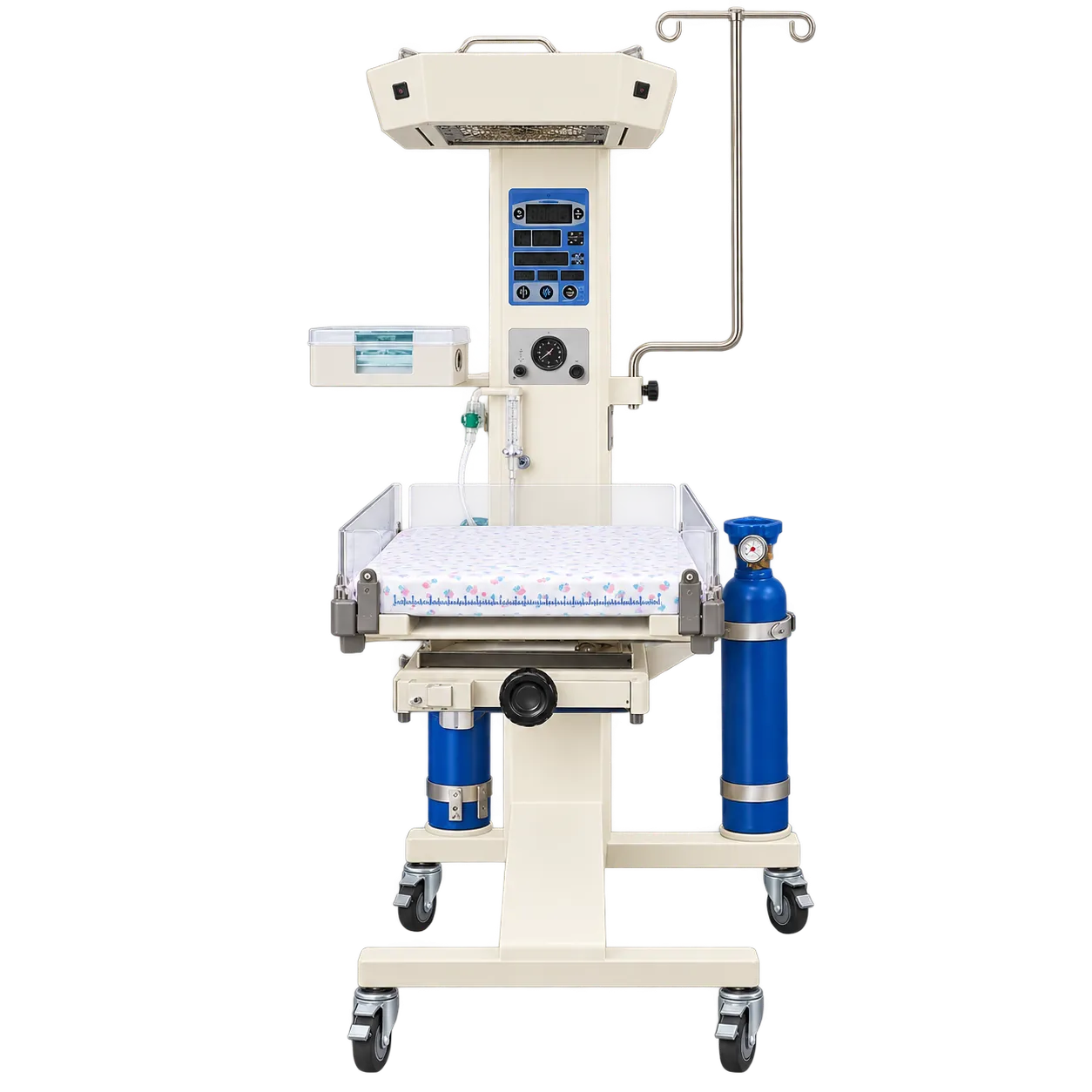
Delivery suites and labour wards use the HS-HZBM2000B as the place where a newborn is received and, if needed, resuscitated. Staff switch it on well before birth, as warm-up can take up to 45 minutes, and the manometers show how much oxygen each cylinder holds before the baby arrives. When a baby is slow to breathe, the team clears the airway with the low-pressure suction, gives oxygen through a flowmeter and supports breathing with the neonate bag, all on the heated bed.
Maternity theatres use it for caesarean births, where the baby passes from the surgical field to the neonatal team at the warmer. The APGAR timer runs while the team works, so scoring and resuscitation happen at one bedside, and the RS-232 connector sends readings to compatible equipment for the record.
Neonatal units use it for admissions and to stabilise babies whose condition changes, and override modes support a baby who needs warmth above 37 °C, up to 38 °C. With oxygen held in its own cylinders, the warmer also works in rooms without piped oxygen at every space, such as smaller maternity units and emergency departments that receive unexpected births.
Imaging and positioning stay on the warmer too. For a chest film, the cassette goes beneath the tray with the baby left in place. The head swings aside when overhead equipment needs the space, and tilting the bed by up to 10° lifts the head end or the foot end.
Empty cylinders are refilled with medical oxygen, and the room is kept between 18 and 30 °C, away from draughts.
Babies who need enclosed humidity need an incubator, and those who need sustained ventilation need a ventilator.