
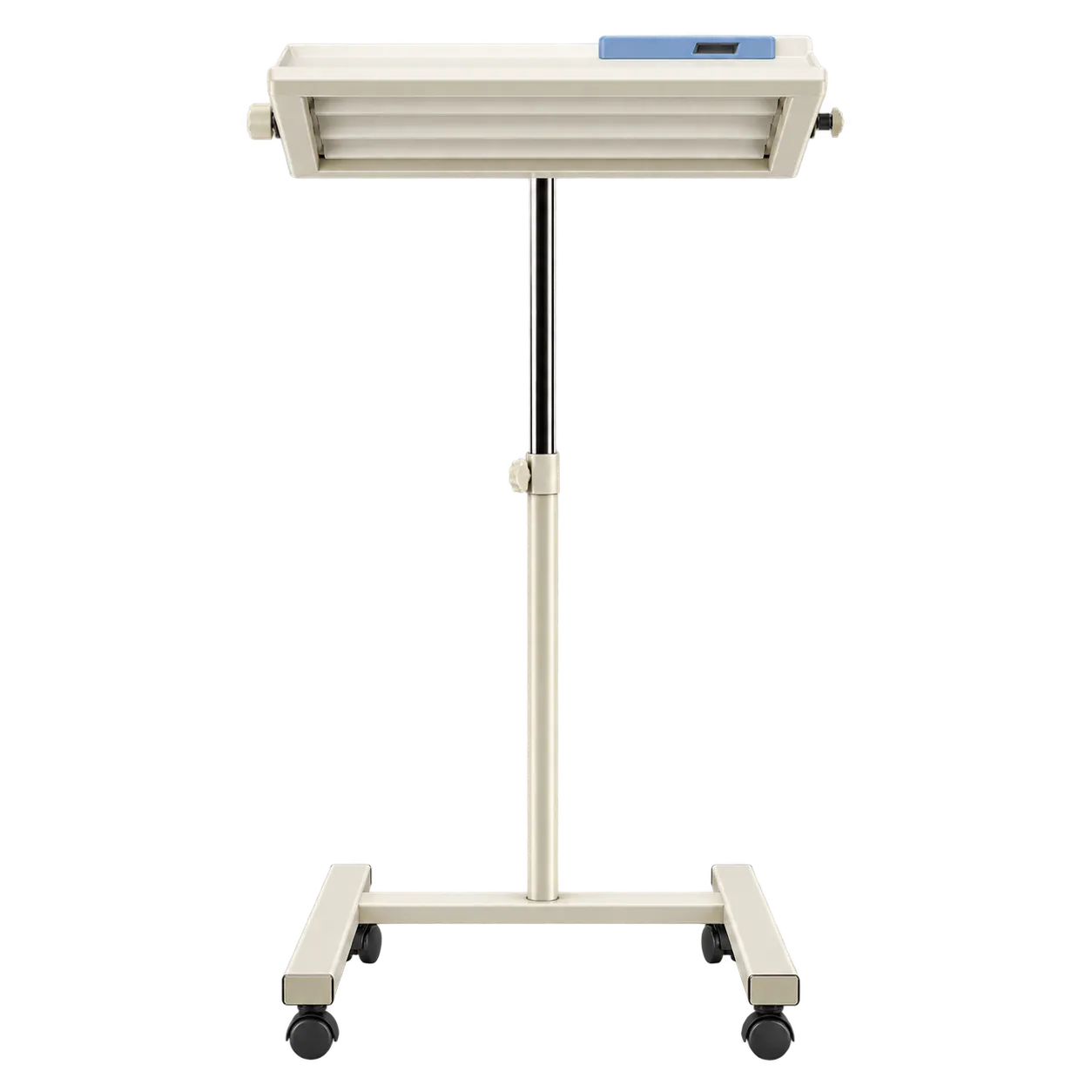
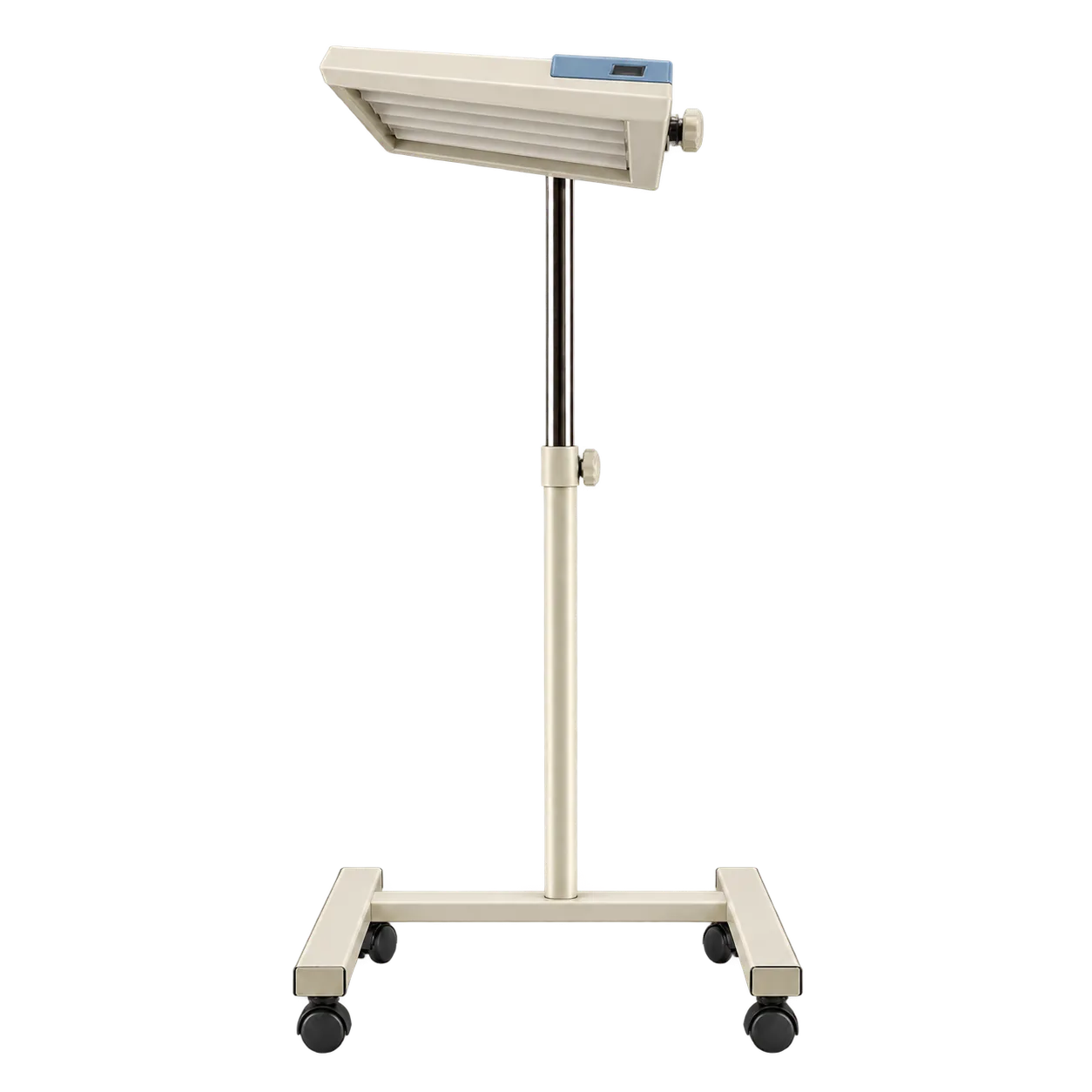
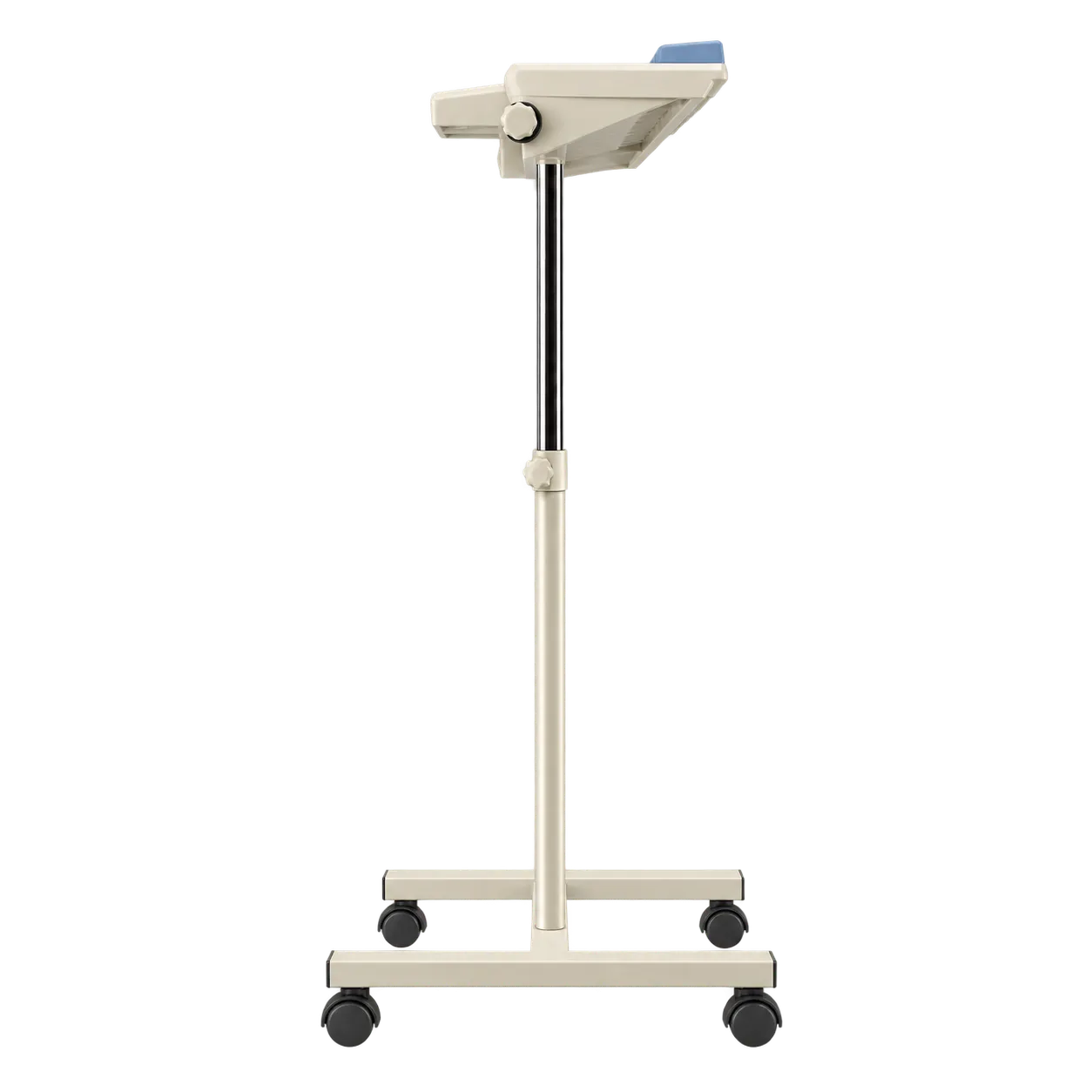
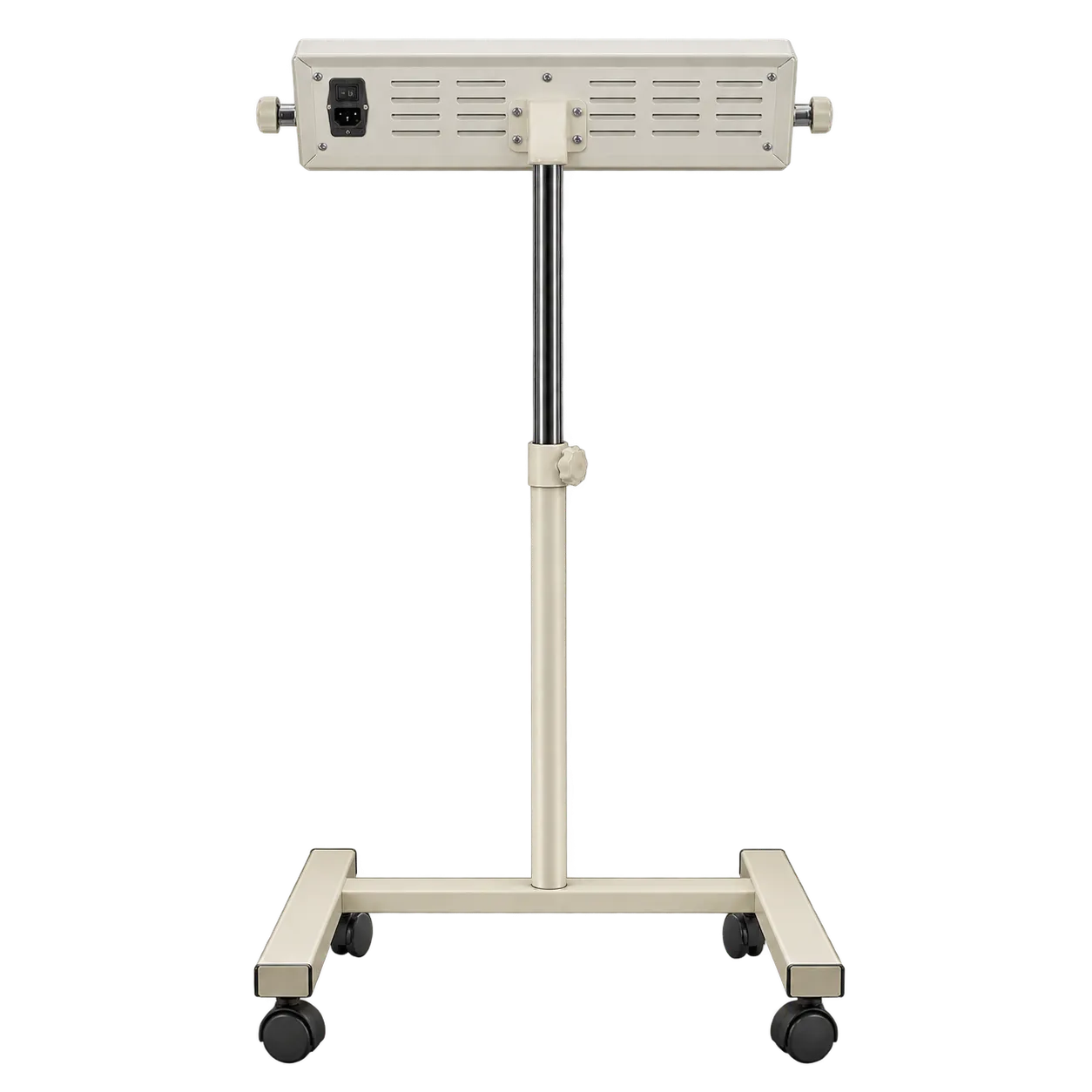
Postnatal and maternity wards use the HS-HZBM101 for term babies with jaundice who can stay beside their mothers during treatment. Staff wheel the unit to the cot and raise or lower the stand to bring the head to the 35 cm treatment distance. The head is then tilted to aim the light over the baby, whose eyes are shielded while the light is on.
Special care baby units and neonatal units set it over open cots and warmers for preterm and low-birthweight babies whose bilirubin needs treating. Paediatric wards use it for babies readmitted with jaundice in their first weeks, and district hospitals use it as a general phototherapy light.
The timer serves two people. For the nurse, therapy time shows how long the baby has been under the light, ready for the treatment record. For the engineer or ward manager, total usage time shows how many hours the lamps have run. You can then replace a set of fluorescent tubes before they reach their 2000-hour rating, and log the LED version across its 50,000-hour life.
With infrared output at or below 10 mW/cm² and ultraviolet held to 1.0 × 10⁻⁵ mW/cm², the lamp keeps its heat and ultraviolet output within set limits, and noise of 55 dB(A) or less suits long treatments on a ward.
The unit runs in rooms kept between 10 and 30 °C and needs only a nearby mains outlet.
Babies who need light from beneath as well as above, or warmth delivered by the same device, call for equipment built for that.