
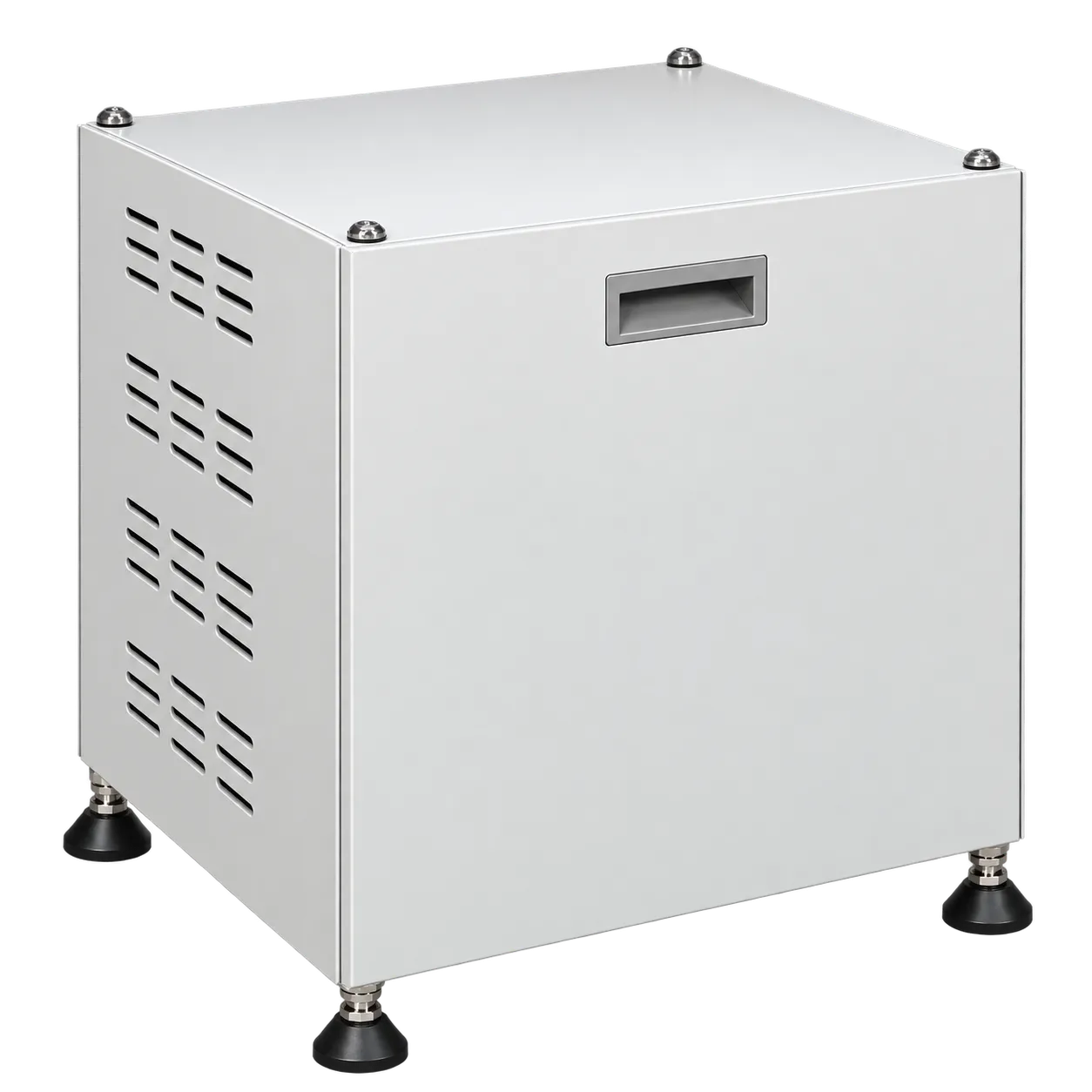
A generator sets what a radiography room can do. At 32 kW with 400 mA available, this one covers routine adult work, and single kilovolt steps let a radiographer tune technique closely rather than jumping between coarse stations. The 150 kV ceiling leaves room for high-kV chest technique—exposures down to a millisecond help with children and with patients who cannot hold still. Two thousand stored programmes should keep everyday settings a button away. Rooms with mixed workloads gain most from that flexibility.
Rotor speed deserves a thought. A high-speed starter spins the anode faster, spreading heat over the focal track more quickly and allowing a heavier instantaneous load. The low-speed listing here suggests the tube will accept less in a very short exposure than the larger machines allow. That will not matter for most general work, but it is worth checking against the technique charts a department expects to run. Tube choice and starter type usually travel together.
For UK installation, the supply line needs care. The sheet specifies three-phase 380 V with a ten per cent tolerance, which tops out around 418 V, while a UK 400 V supply can itself rise to 440 V within its own tolerance. Blackstone should confirm the acceptable input window, along with the current demand and any impedance limit.
Medigear.uk gathers that for the estates team, together with the dimensions, weight and tube compatibility the sheet leaves out. Those figures also decide how the cabinet is sited, cabled and serviced.