
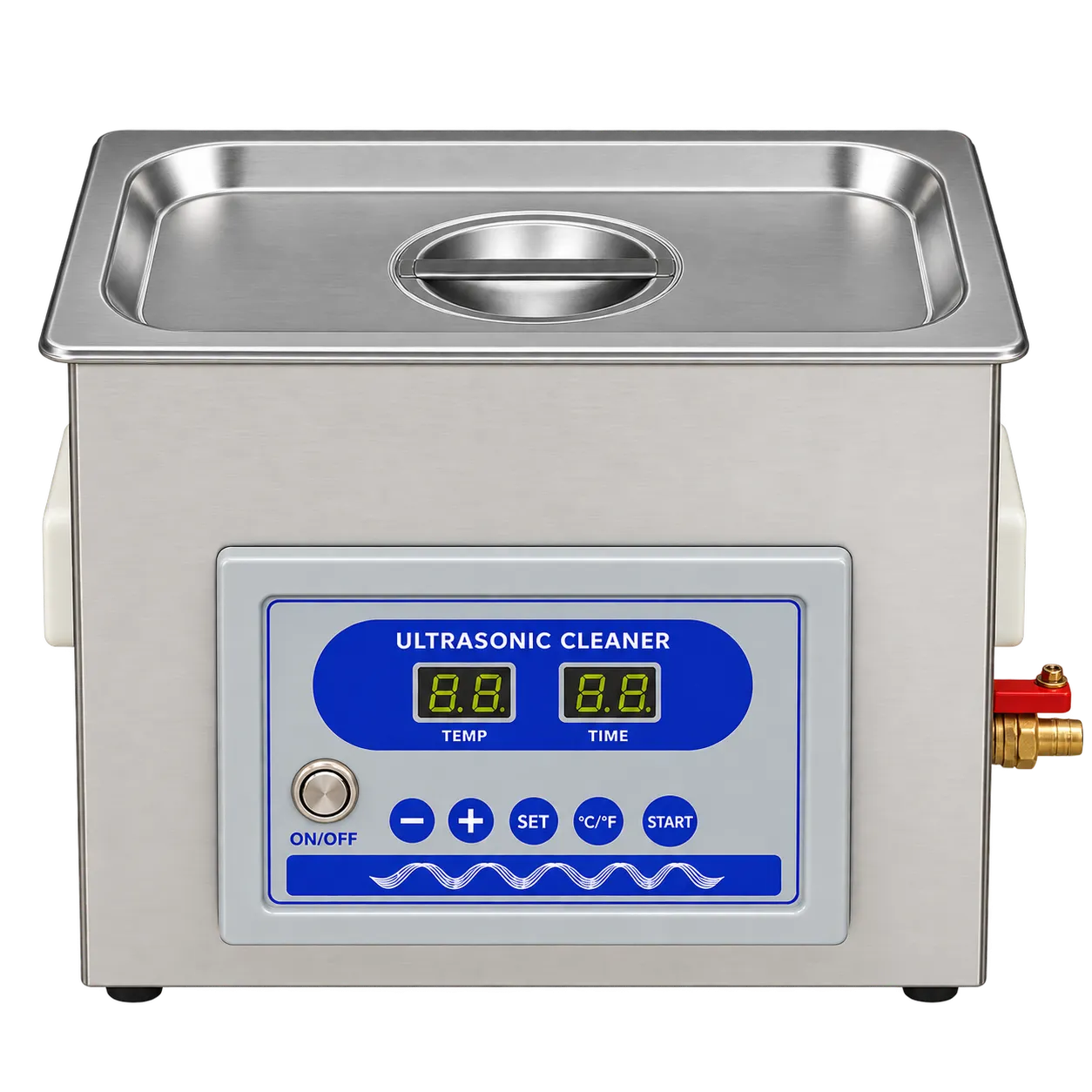
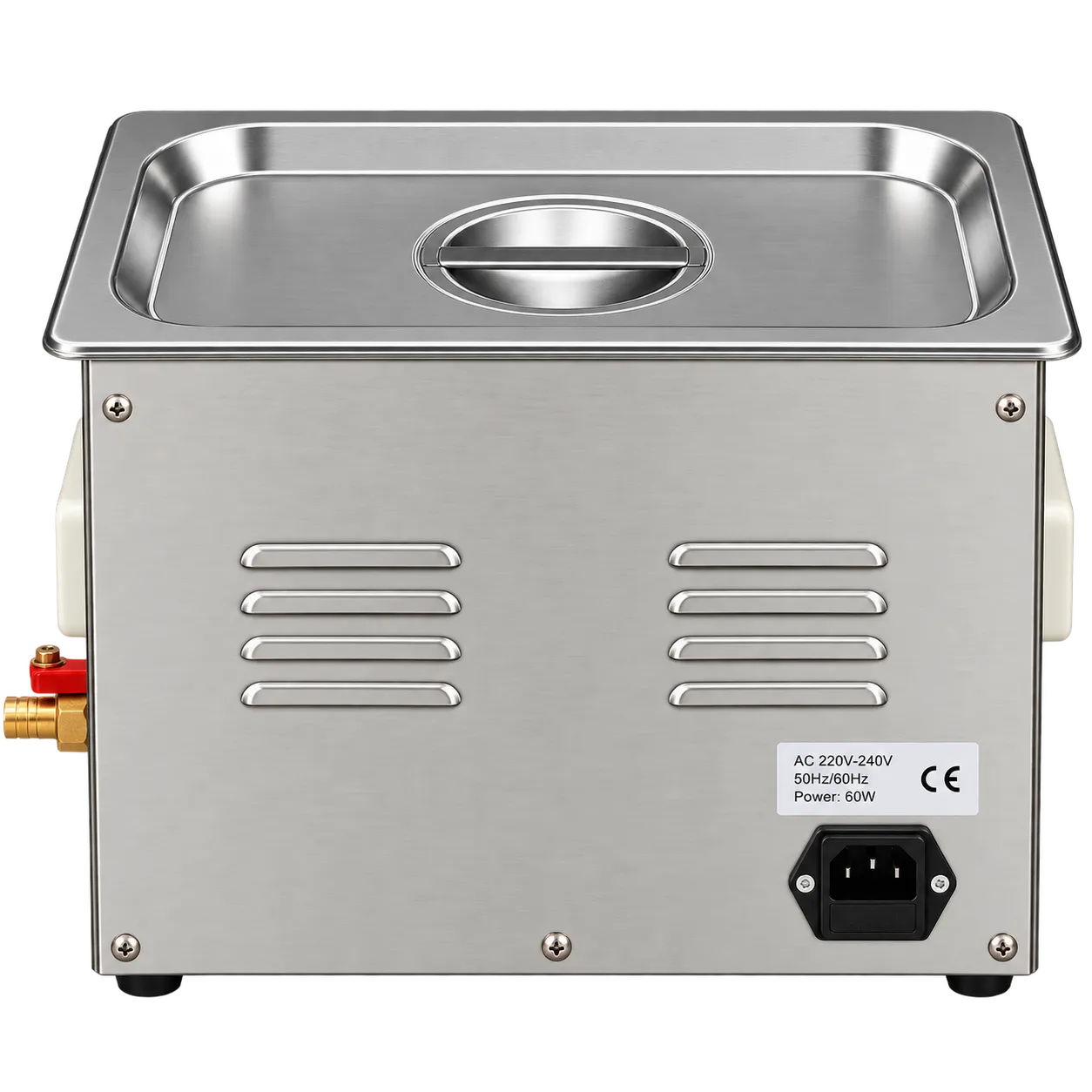
Dental laboratories are the core setting for the HS-Cleaner-50A. Technicians clean dentures returned for repair or relining, acrylic and metal-framed appliances, and impression trays, each in its own cycle, with the warmed solution softening residue before the appliance goes on to disinfection and the bench.
Orthodontic practices put retainers and aligners through the bath when patients bring them in for review, and clean orthodontic pliers and hand instruments as a separate load. The time and temperature readouts let the nurse confirm each cycle at a glance before starting the next category.
Multi-chair general practices with an in-house technician use one unit for both streams: instrument batches from the surgeries through the morning, and appliance work in the afternoon once the tank has been drained and refilled. Keeping categories apart is simple because the side valve empties the tank straight into the sink.
Hygienist clinics clean scaler tips and hand instruments between sessions, again in a cycle of their own. Clinical dental technicians seeing patients directly clean full and partial dentures during appointments. Podiatry clinics with several practitioners clean burs, nippers and blades as shared batches, and veterinary practices clean dental and surgical instruments before sterilisation. Tattoo and piercing studios, and small laboratories rinsing glassware, run the same routine of cleaning first and sterilising or disinfecting afterwards.
The 5 L tank is the reason the unit suits these mixed workloads. Practices that clean only a handful of burs, and departments that process trays by the hundred, need other equipment. Motors, handpieces, and anything not made for immersion stay out of the bath in every setting.