
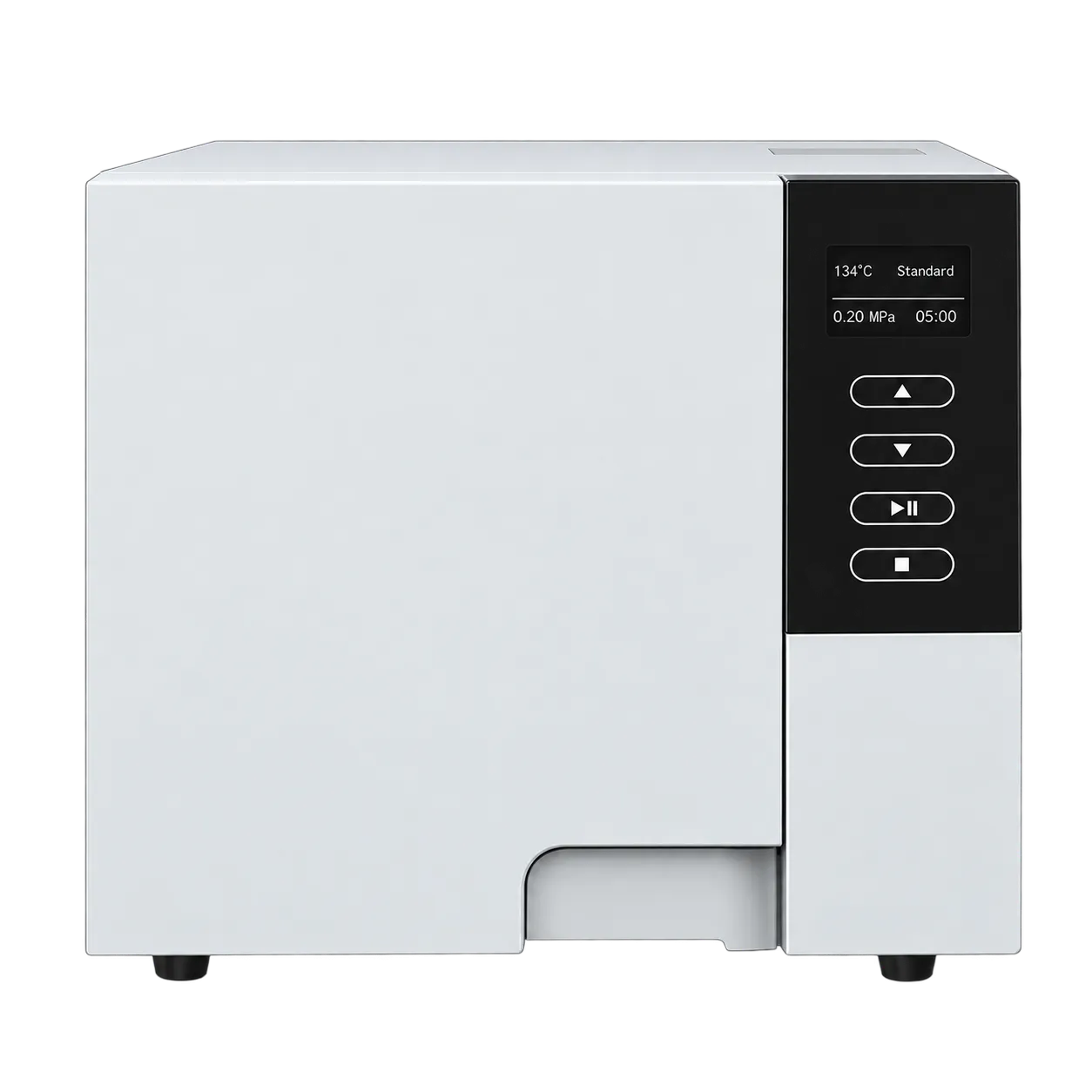
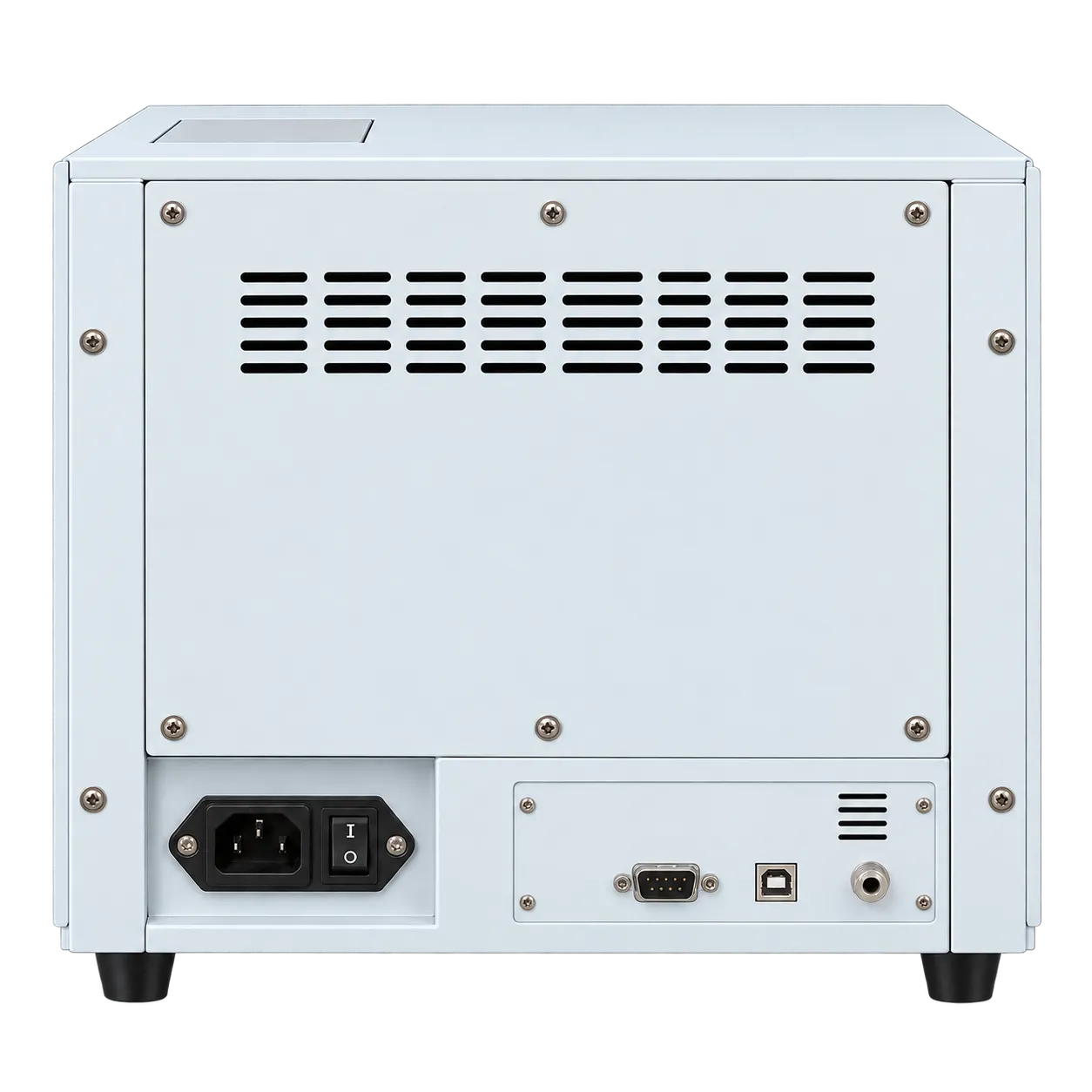
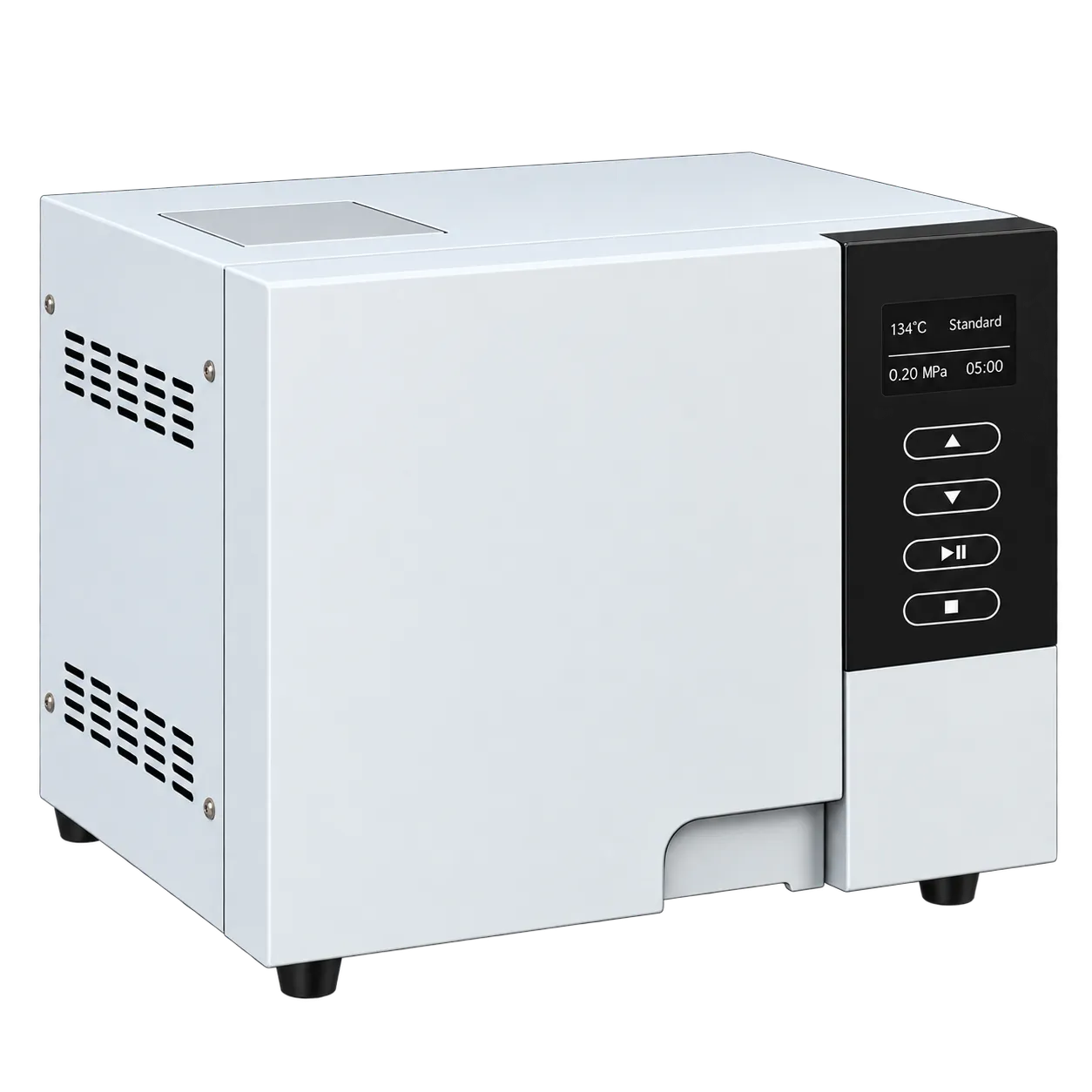
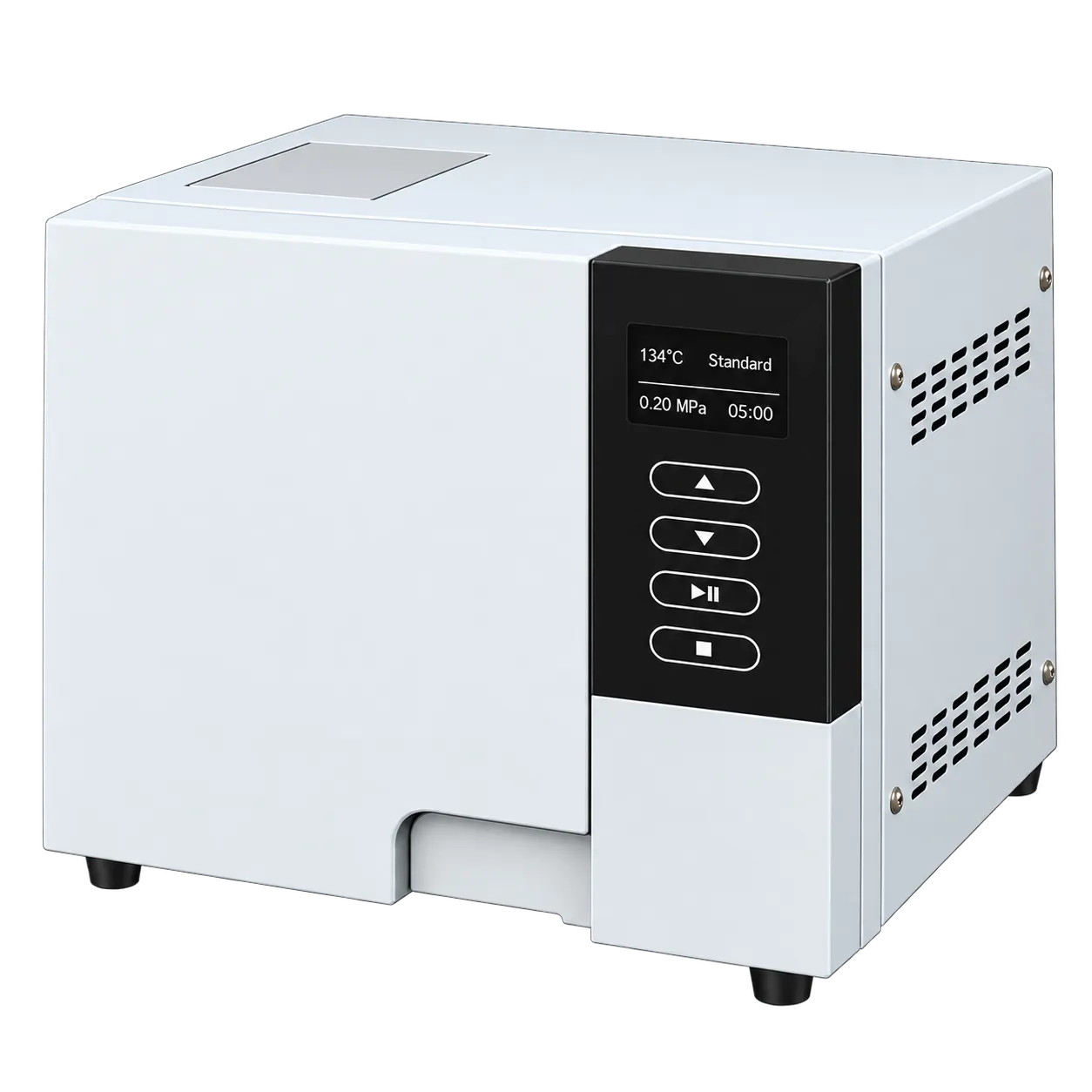
Dental practices and medical clinics sterilise pouched examination kits, extraction sets, and minor surgery packs, and choose a size based on the instruments. A single dental surgery whose longest items sit well inside 350 mm fits the 18-litre chamber. A practice processing long forceps or heavier wrapped loads moves to the 23-litre size, with its 450 mm depth and 5.0 kg solid load. Dental nurses and decontamination leads run the Bowie-Dick or Helix test first, then work through the day on the same four buttons.
In podiatry, pouched nail nippers, burrs and blade handles go through the wrapped programmes at 121 °C or 134 °C between appointments. Veterinary practices use the textile programmes for drapes and gowns alongside wrapped surgical kits, and the 23-litre chamber's 1.25 kg porous load gives linen more room.
Beauty and nail salons sterilise cuticle nippers, pushers and metal files, while tattoo and piercing studios pass steel grips, tubes and forceps between clients. For a studio, the 350 mm depth of the 18-litre chamber covers grips and tubes. Tubes and cannulated tools are hollow loads, which is where triple pre-vacuum matters, and the 134 °C prion programme with its 18-minute hold serves sites that set prion inactivation as their standard.
Clinics that reprocess on the same bench all day benefit from preheat mode, which keeps the chamber and generator warm between cycles, and the unit is ready for routine use within 15 minutes of switching on.
Central sterile departments, heat-sensitive devices and routine liquid loads all fall outside what either size is designed to handle.