
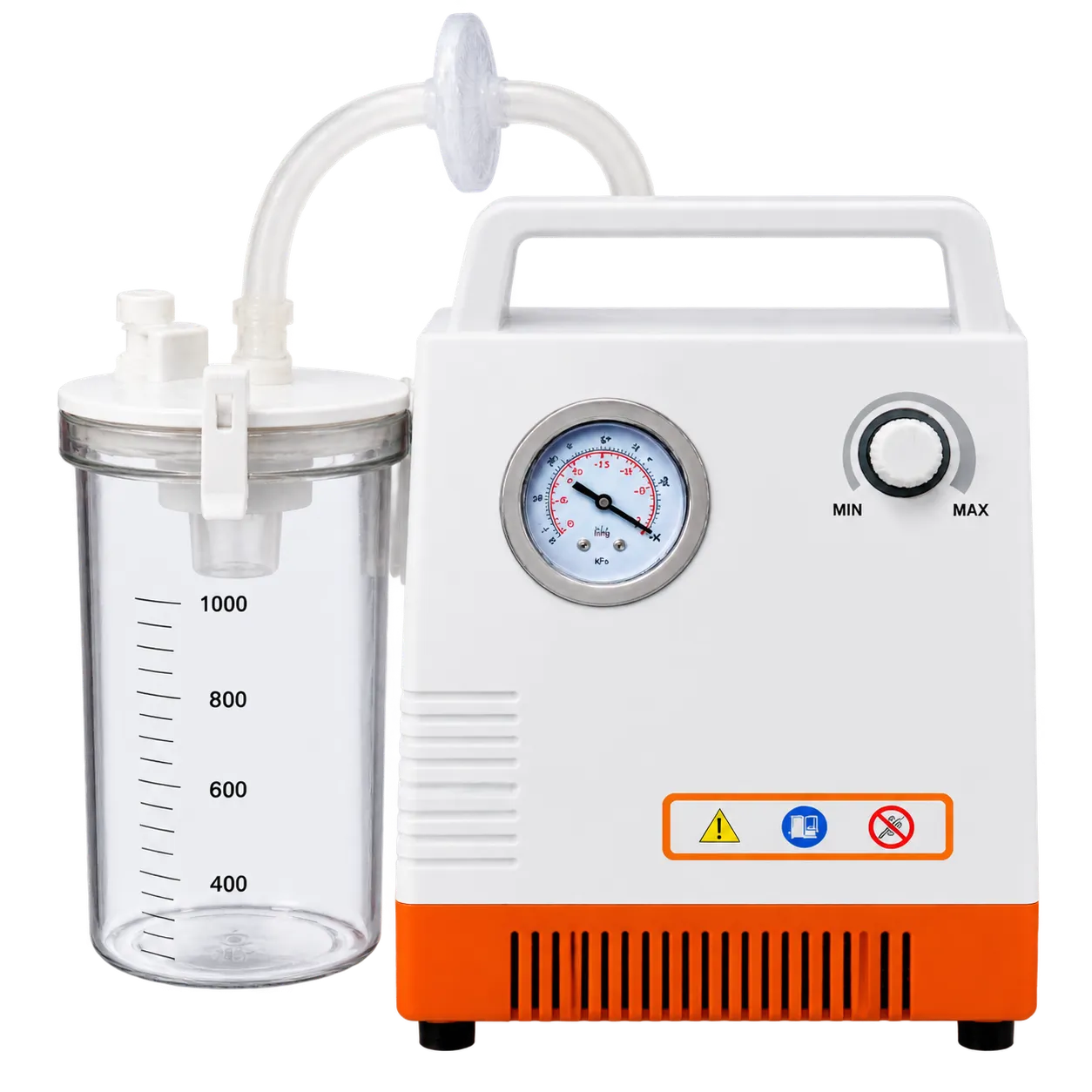
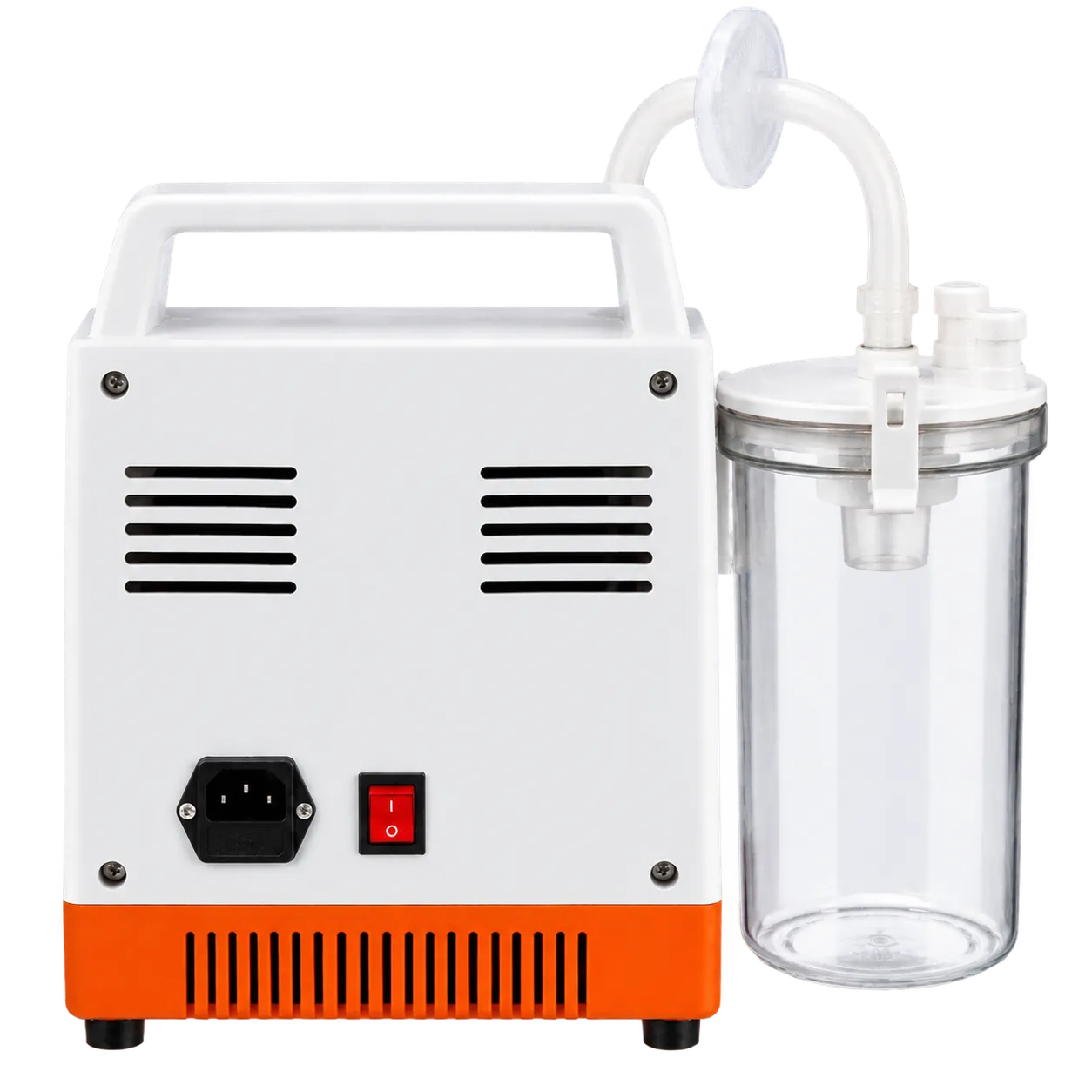
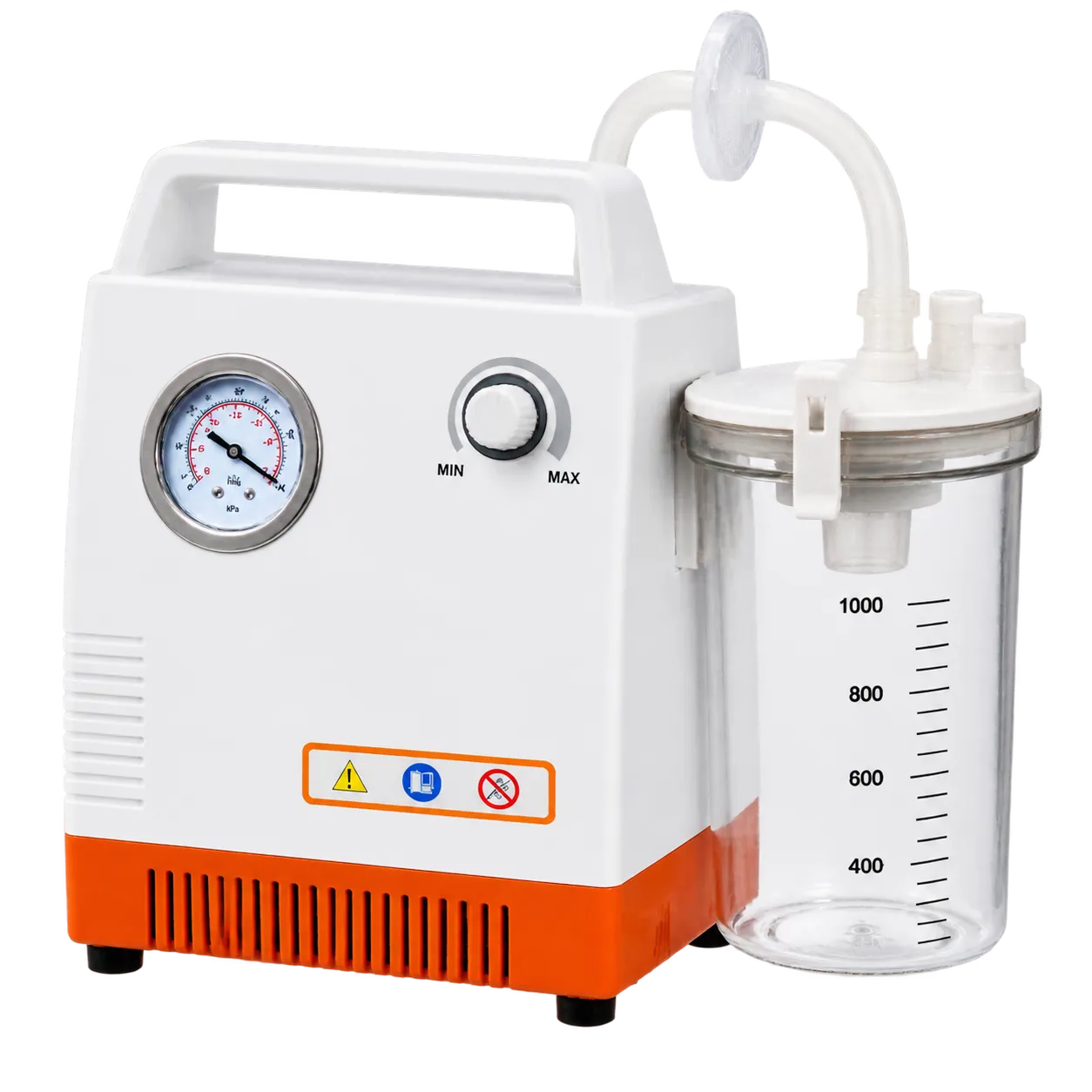
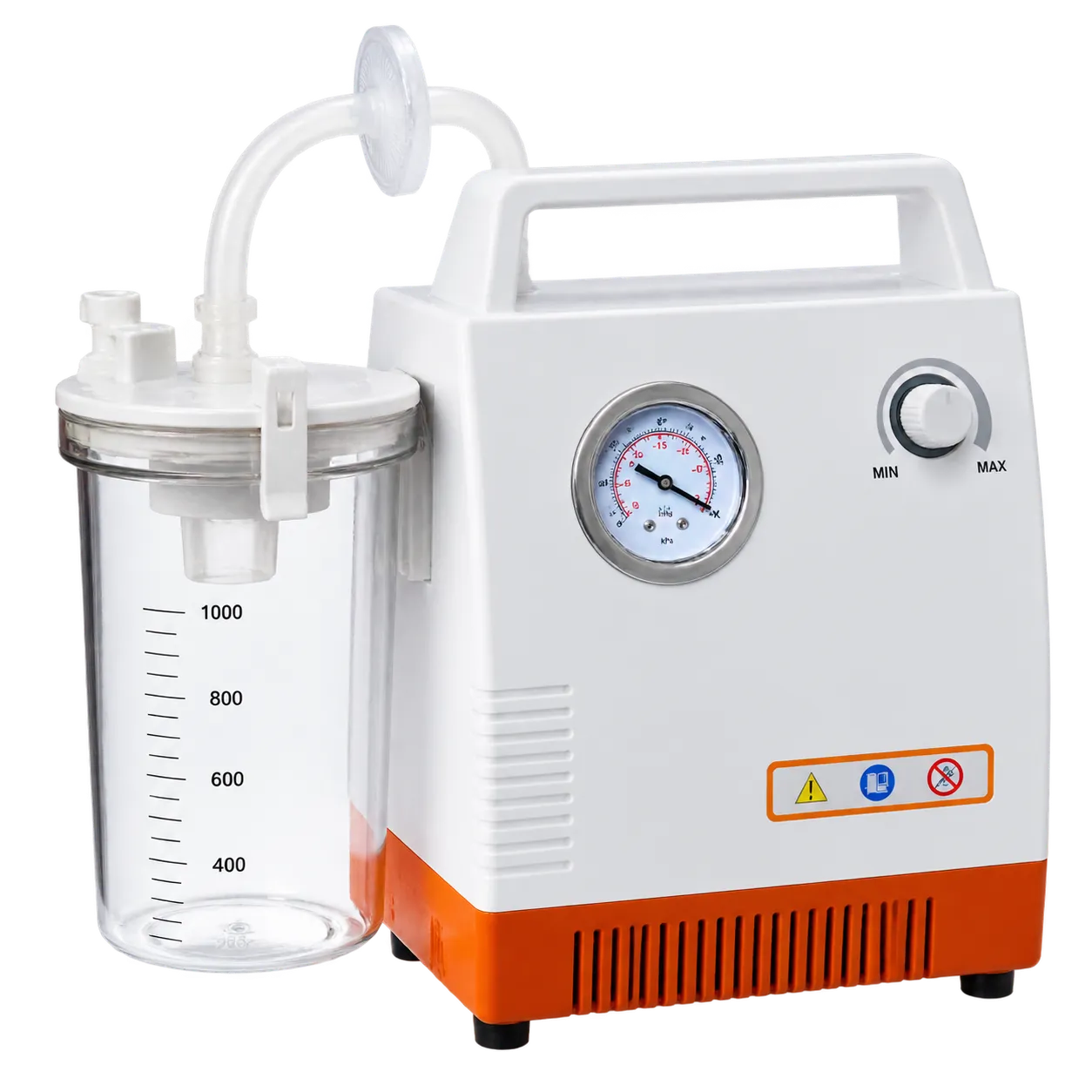
Set this battery suction unit beside the other two Blackstone machines, and each does something the others cannot. The HS-400III moves 80 litres a minute at up to 680 mmHg through twelve litres of jars, which is theatre work. The HS-S20 Plus adjusts down below 19 mmHg, which reaches a neonatal airway. This one runs on a battery and a vehicle supply, which is transport. None of the three replaces another, and a service covering all three situations buys all three machines.
The vacuum range on this machine converts to roughly 75 through 600 mmHg. The upper end is strong enough for most field and emergency work a service would meet. The floor at about 75 mmHg reaches paediatric airway suction comfortably. It sits right at the edge of the neonatal band, so a unit routinely suctioning newborns should look at the HS-S20 Plus instead rather than assuming this will turn down far enough.
The practical questions are about the battery rather than the vacuum. How long does a full charge take, because a transport machine unavailable for hours after each use changes how many a department needs. How long does the battery last in service, since lead-acid capacity falls with cycling and a unit quoted at 25 minutes when new will not hold that indefinitely. Also, does the jar have overflow protection, which is unstated here, as on both other Blackstone suction sheets?
Medigear.uk establishes all three, and the ingress rating too, before supplying this machine to anyone.