
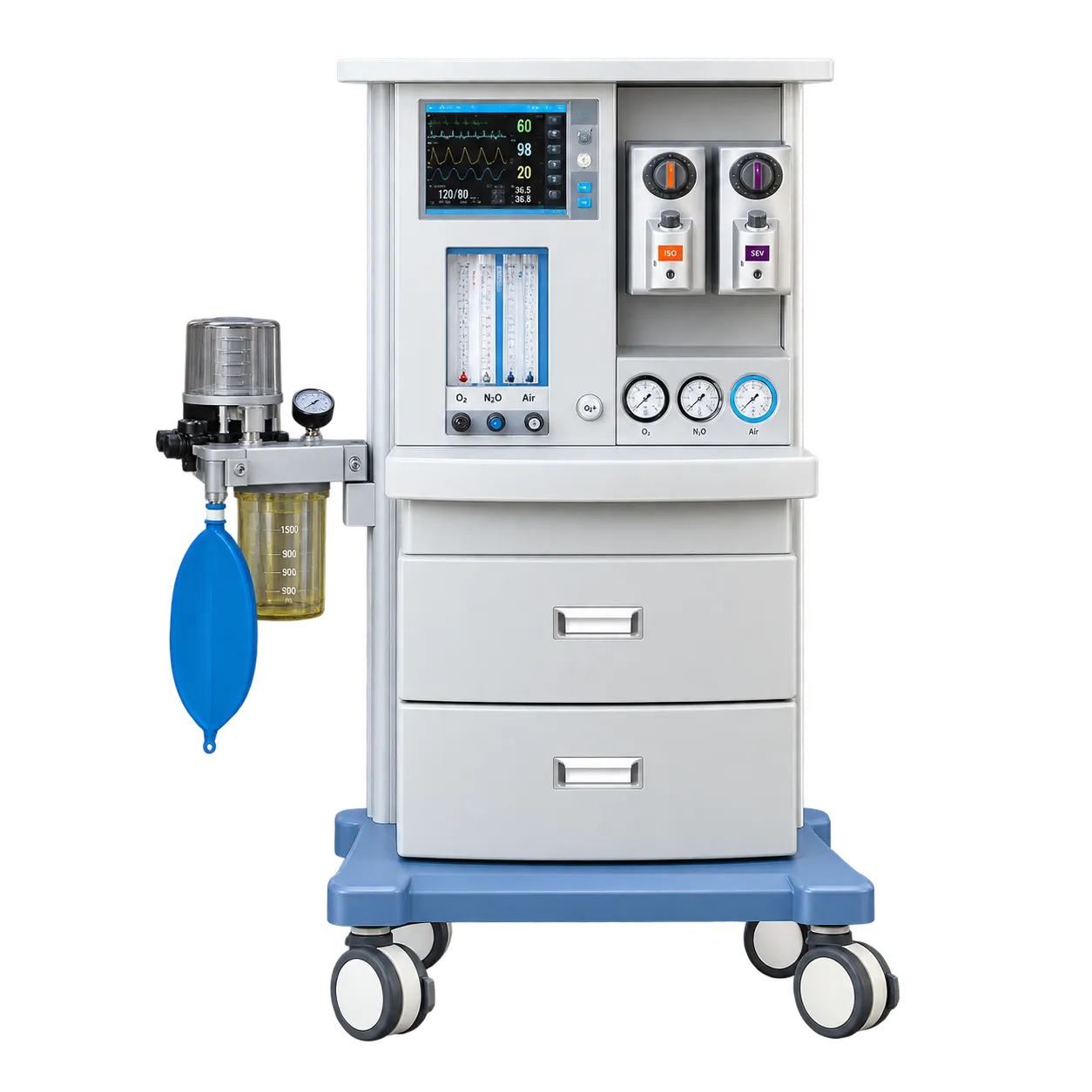
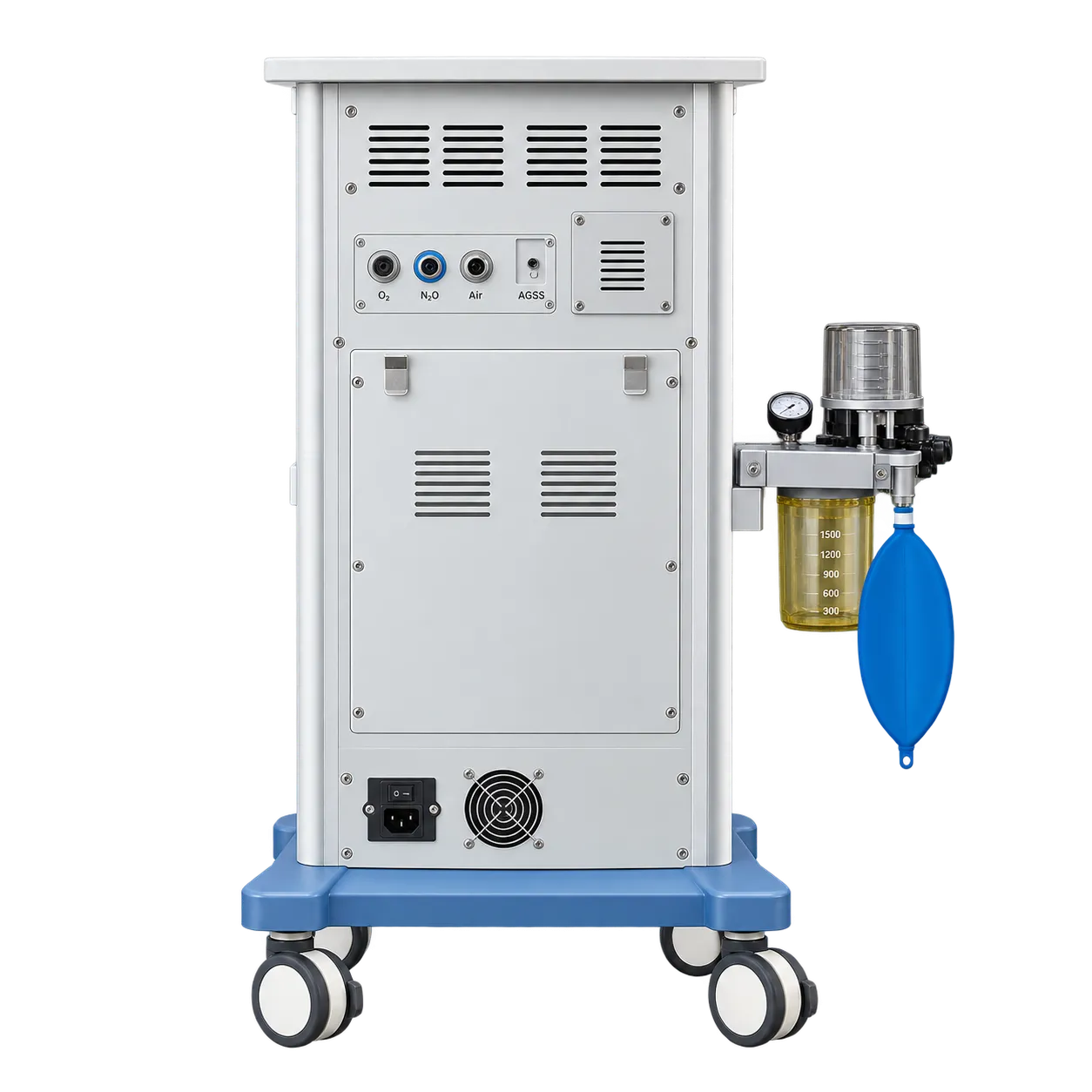
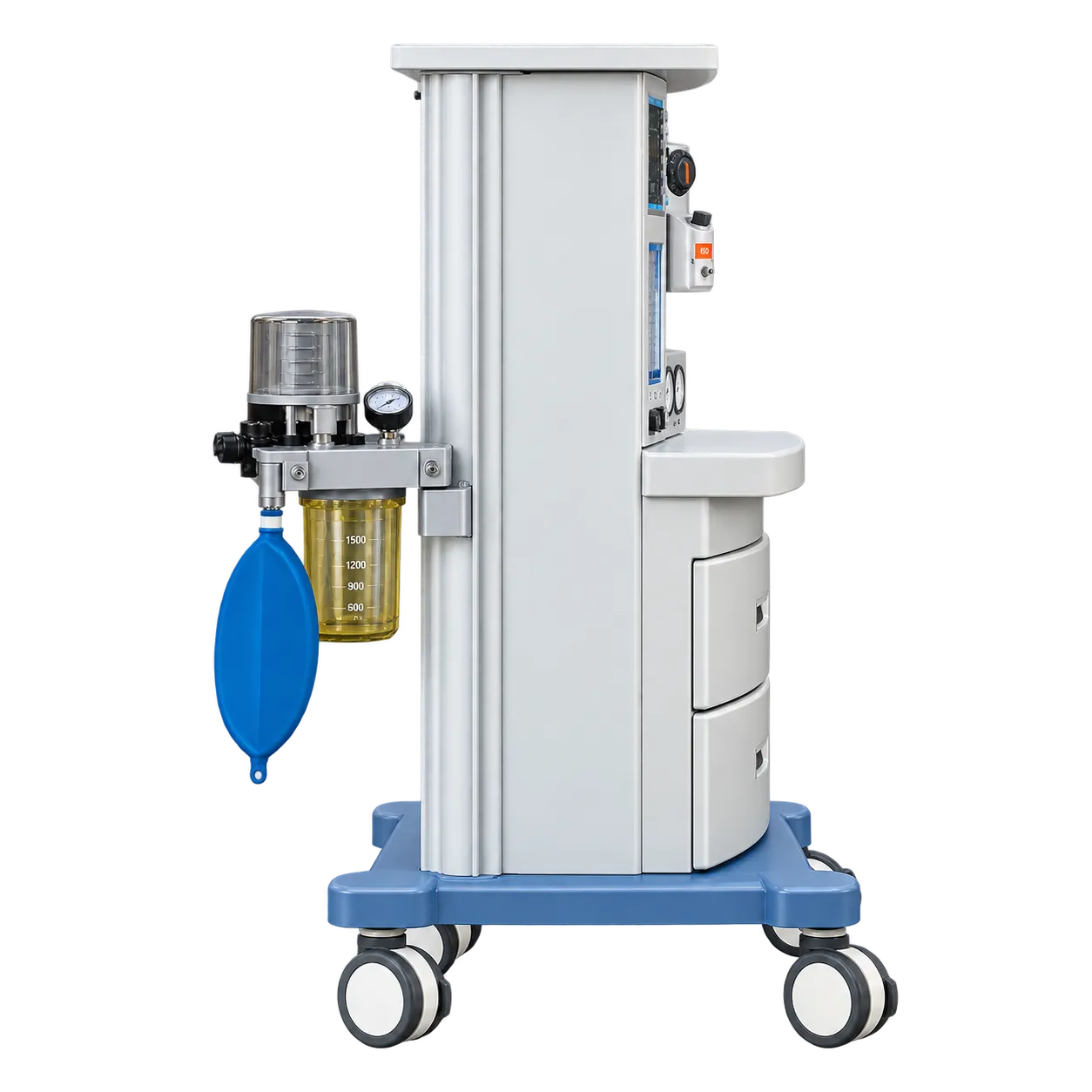
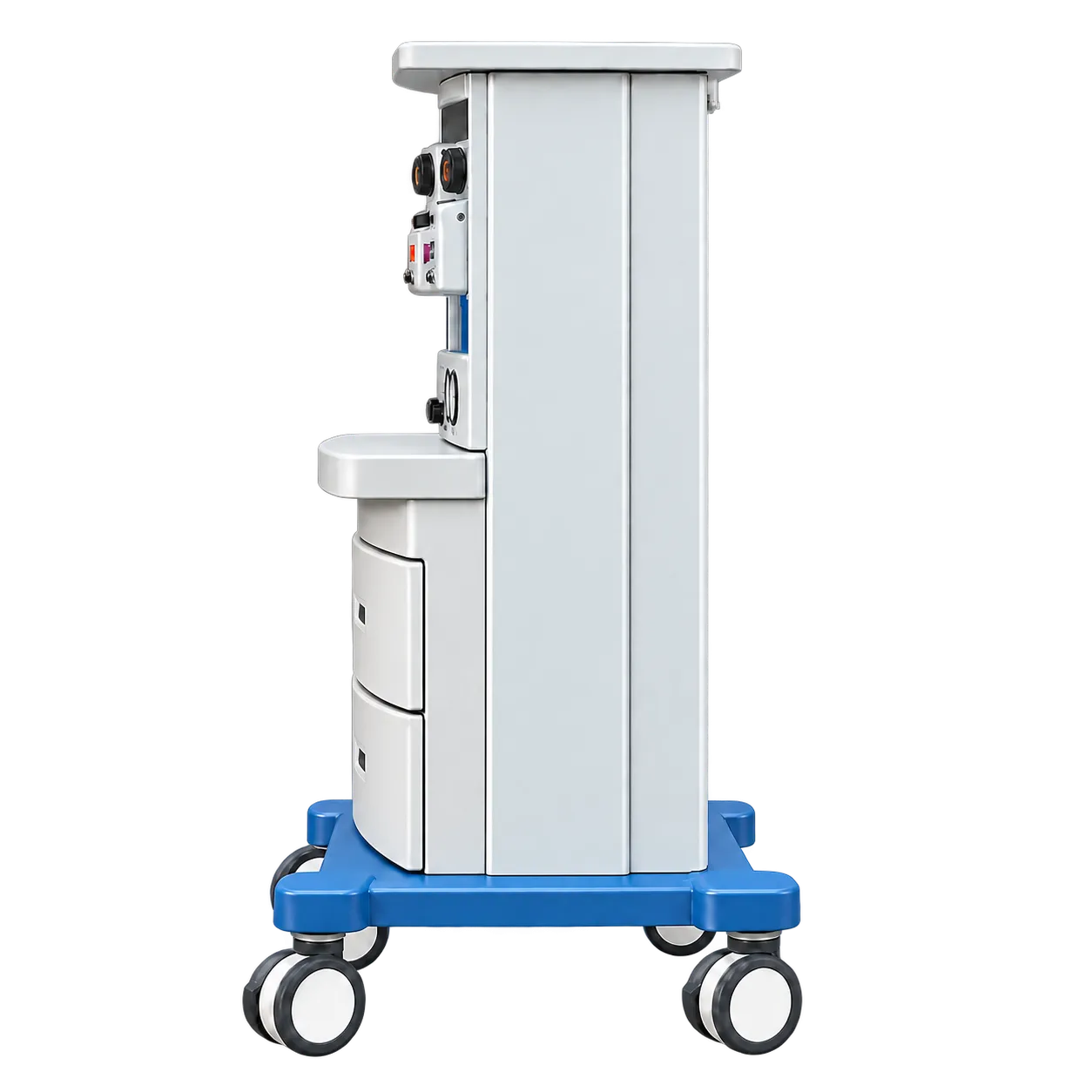
Set the two anaesthesia machine variants side by side, and the main difference is the screen. Two inches of diagonal matters where an anaesthetist reads settings from across the head of the table rather than standing at the machine, and it matters less where the machine sits within arm's reach. That is a theatre layout question and a personal one. It is not a clinical requirement, and it should not be dressed up as one when comparing the two machines.
Capnography is the requirement. It confirms tube placement, ventilation and circulation continuously, and British standards call for it from induction through to recovery. A theatre could run it from a separate monitor, and the optional patient monitor may well provide it. Still, a machine that cannot accept integrated capnography changes how a department has to equip around it. Establishing that for the standard variant comes before any comparison of outlay or screen size.
Two further points apply to both. The agent list runs isoflurane, enflurane, halothane and sevoflurane, of which the first and last remain in British use. In contrast, halothane has been withdrawn over hepatotoxicity, and enflurane has effectively followed. Desflurane appears on neither. It requires a heated pressurised vaporiser rather than the plenum type these positions take. Any department using desflurane needs to settle that with the manufacturer rather than assume it from the presence of a two-position mount.
Medigear.uk establishes vaporiser compatibility, monitoring provisions, and the regulatory position before either anaesthesia machine reaches a theatre anywhere.