
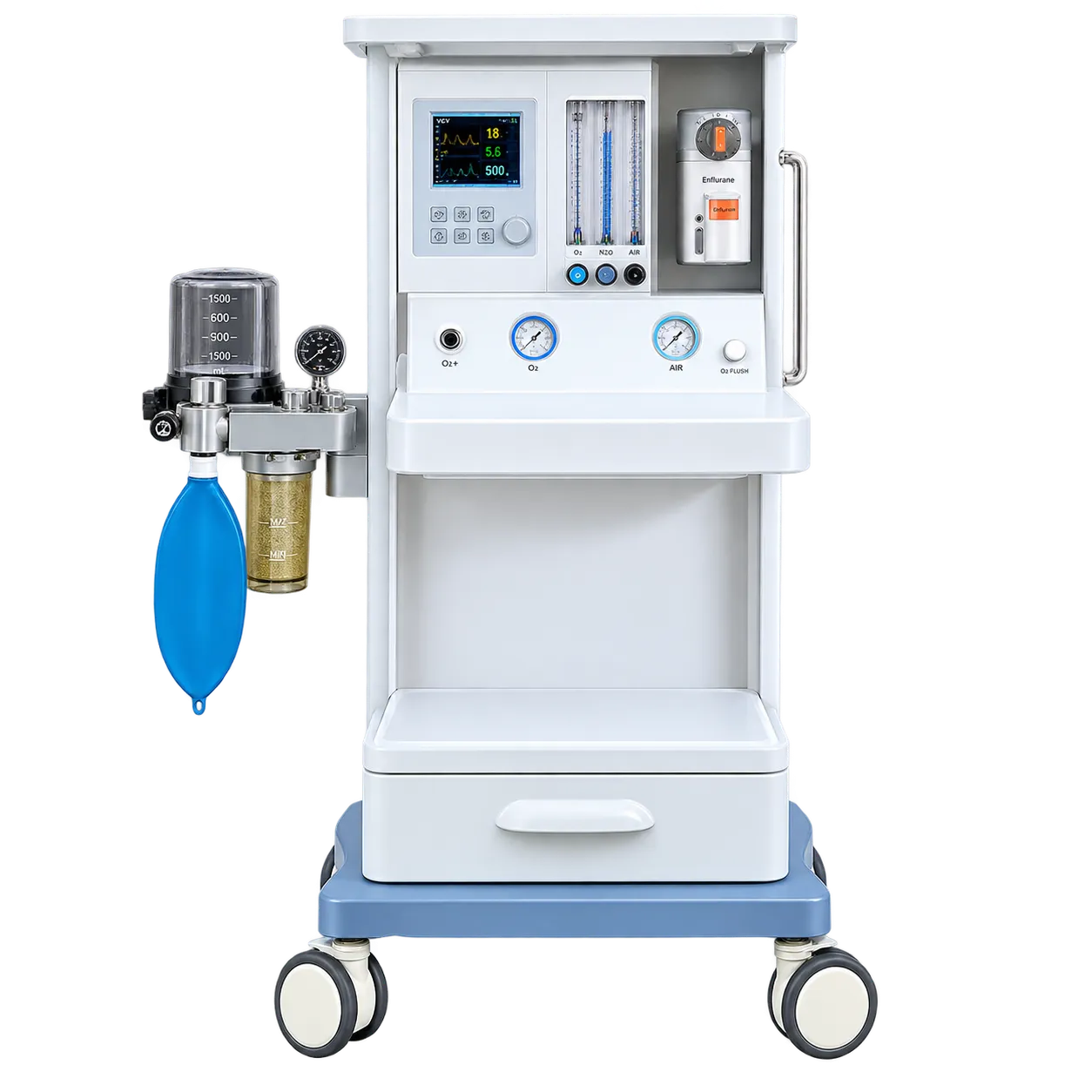
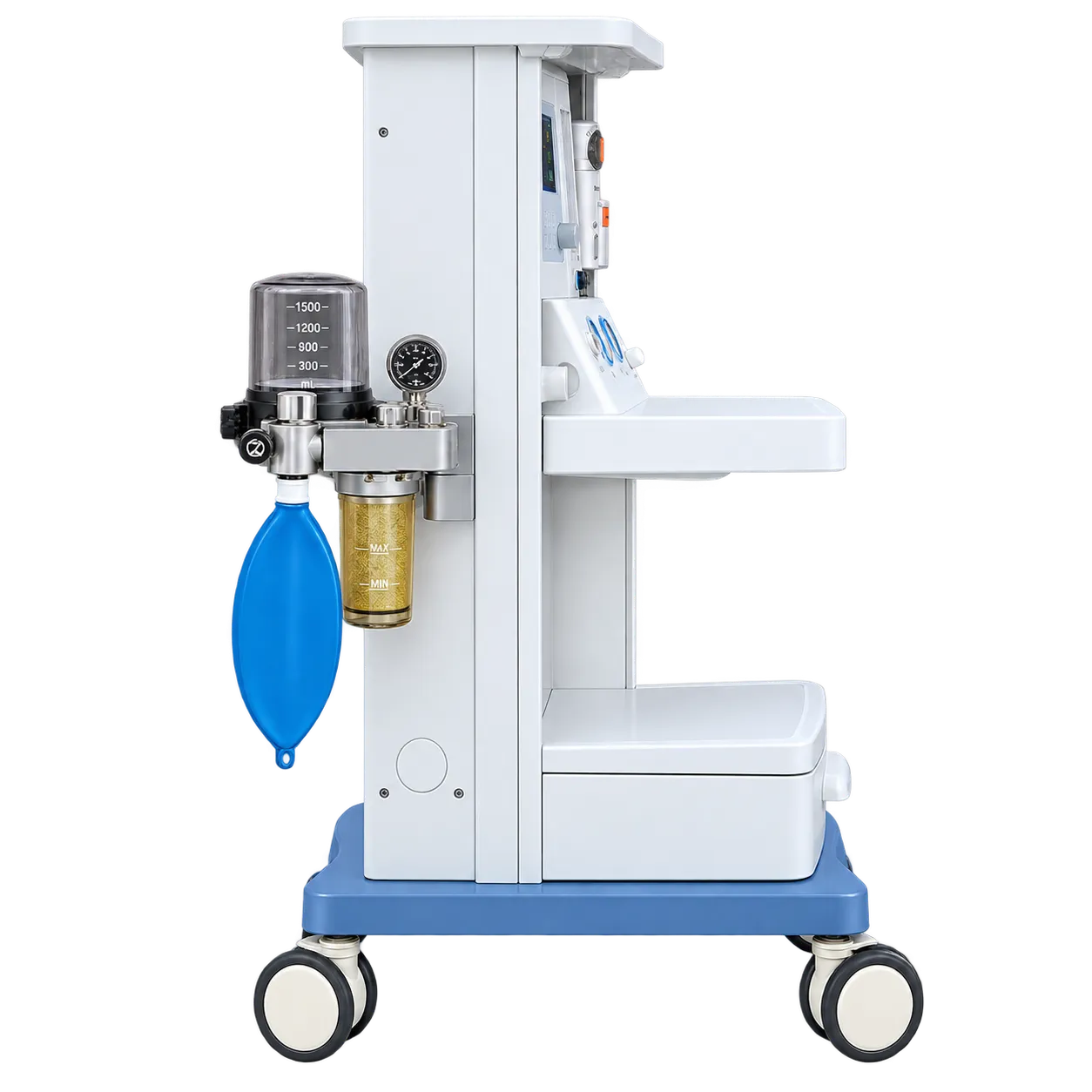
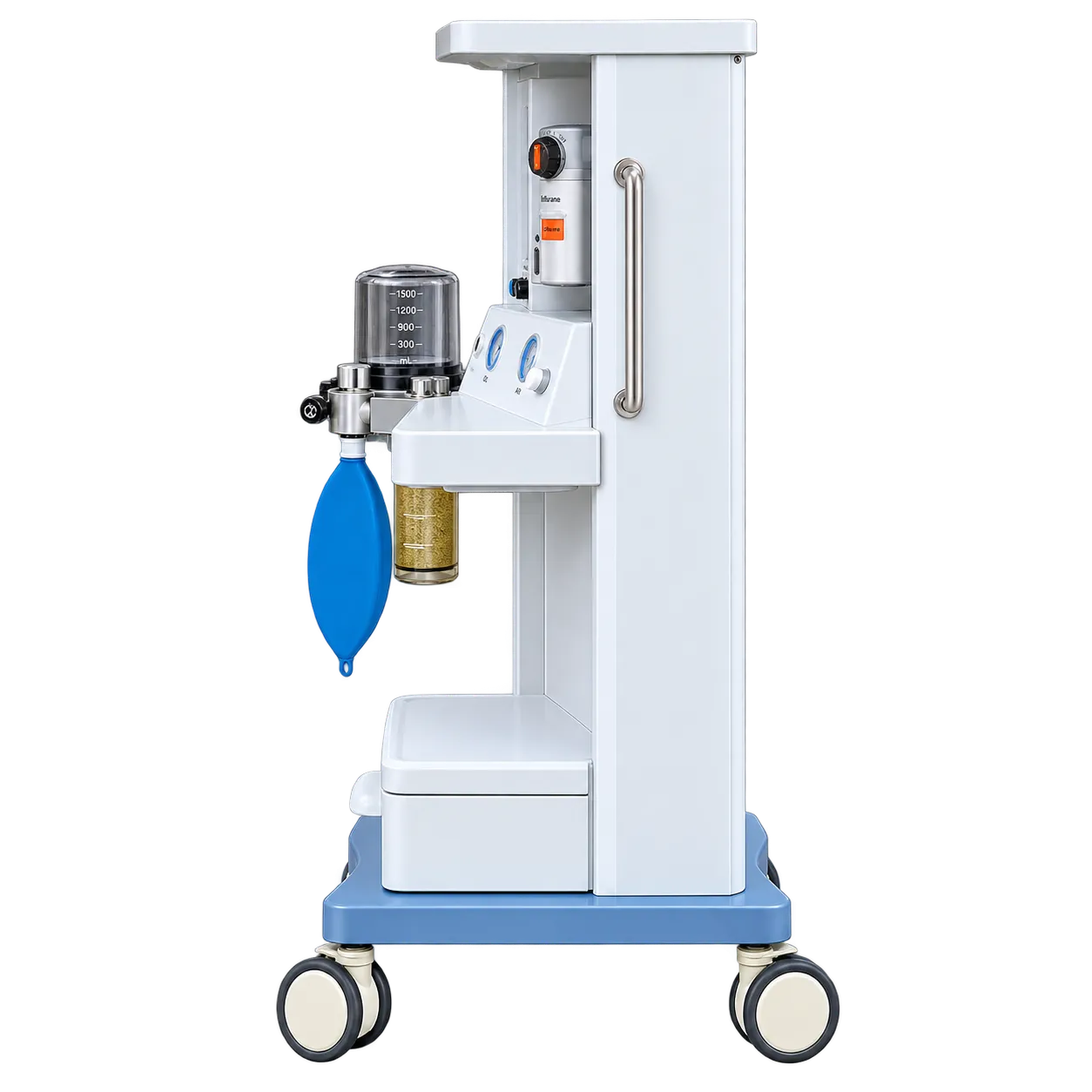
Where nitrous oxide remains in routine use and cases are adult and straightforward, this anaesthetic workstation covers the work. Eight modes, including SIMV and PEEP, handle most general lists. A single vaporiser is sufficient where a department has standardised on one agent, and many have. A 5.7-inch display is adequate for an anaesthetist working at the machine rather than reading it from across the table.
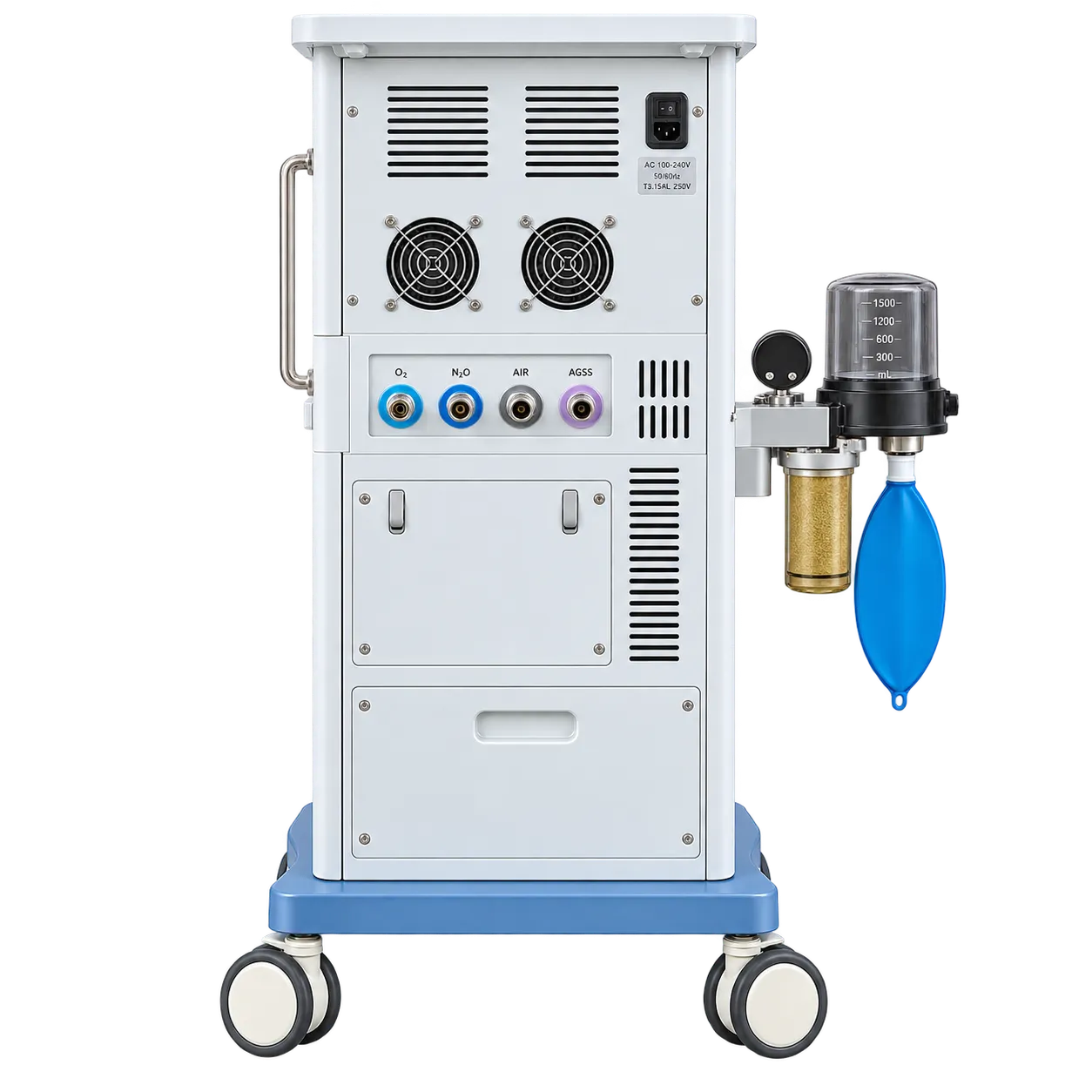
Its limitations are defined by the gas supply rather than the ventilator. Without air, oxygen and nitrous oxide is the only mixture available, which rules out every case where nitrous oxide is contraindicated or simply unwanted, and there are many of those: bowel surgery, middle ear procedures, a suspected pneumothorax, prolonged cases, and any department that has taken a policy decision against the agent entirely. The absence of an anti-hypoxic interlock matters more on this machine than on one offering air. Nitrous oxide is the only thing being turned up as oxygen comes down, so nothing else dilutes the consequence.
Paediatric work is the other boundary. A tidal volume floor of 50 ml is not small enough for infants, where the HS-850 reaches down to 20 ml. This anaesthetic workstation therefore belongs on adult lists and should be specified as such. Capnography is not mentioned in any form, as on the standard HS-850, and it is required continuously in British anaesthesia.
Medigear.uk establishes the capnography arrangement, the hypoxic guard, whether air can be piped in at all, and the regulatory position before this machine reaches a theatre.