
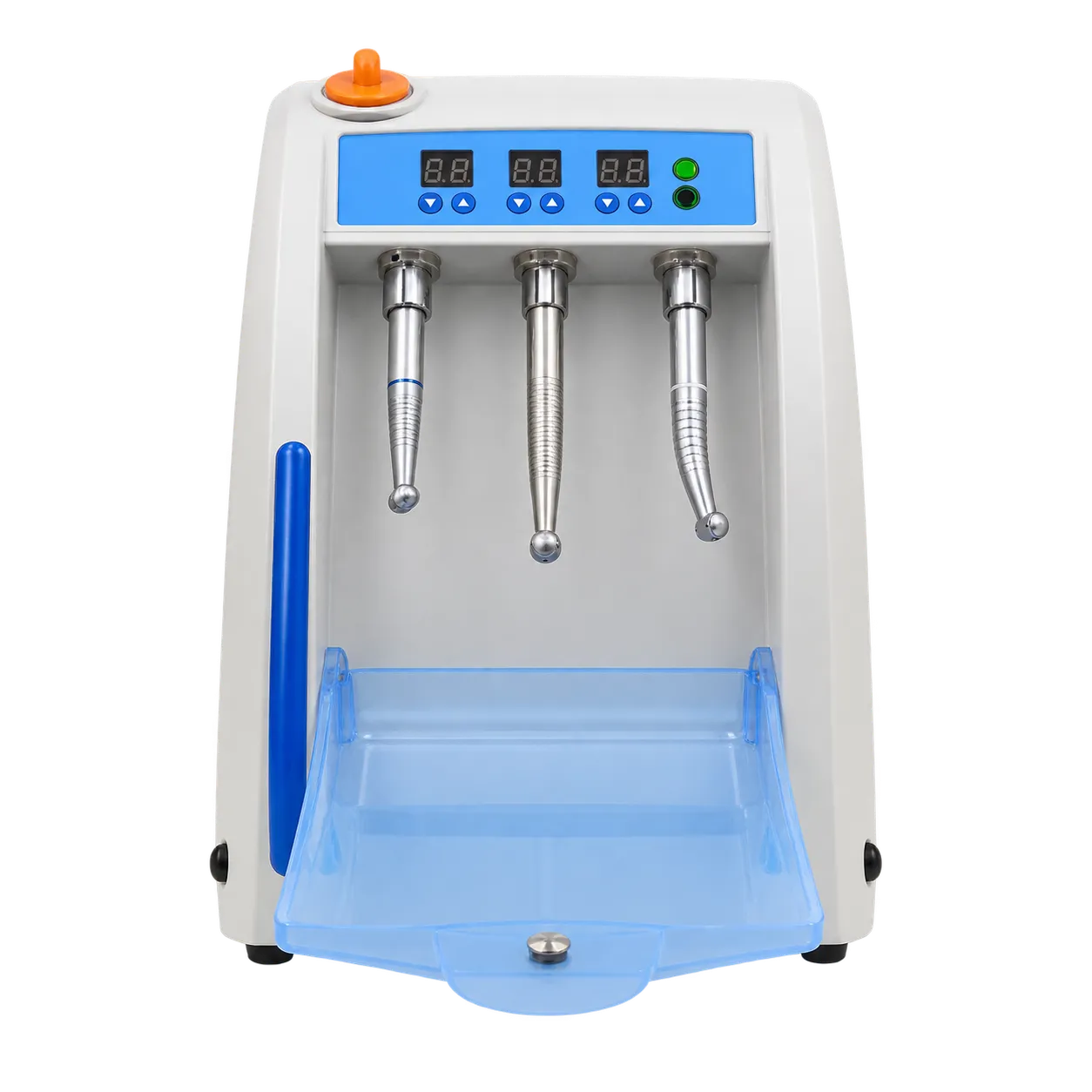
General dental practices use the HS-817 at the decontamination bench, between cleaning and sterilisation. After a session, a dental nurse fits two turbines and a contra-angle or motor to the connectors, closes the clear cover and starts a short, medium or long fill. The air button then clears the surplus before the handpieces are pouched.
Upkeep is the reason practices build it into that routine. Handpieces work hard through every session, and their bearings and gears keep running only with regular oil. A timed fill on every pass gives each handpiece the same care, no matter who is on shift, and the level indicator shows when the 350 ml reservoir needs topping up.
Multi-chair practices and dental hospitals run several handpieces per chair, and three positions per cycle keep pace with a busy decontamination room. Teaching clinics use it to make lubrication a fixed step that students learn alongside cleaning and sterilisation. Veterinary practices with dental units service their turbines and low-speed handpieces the same way.
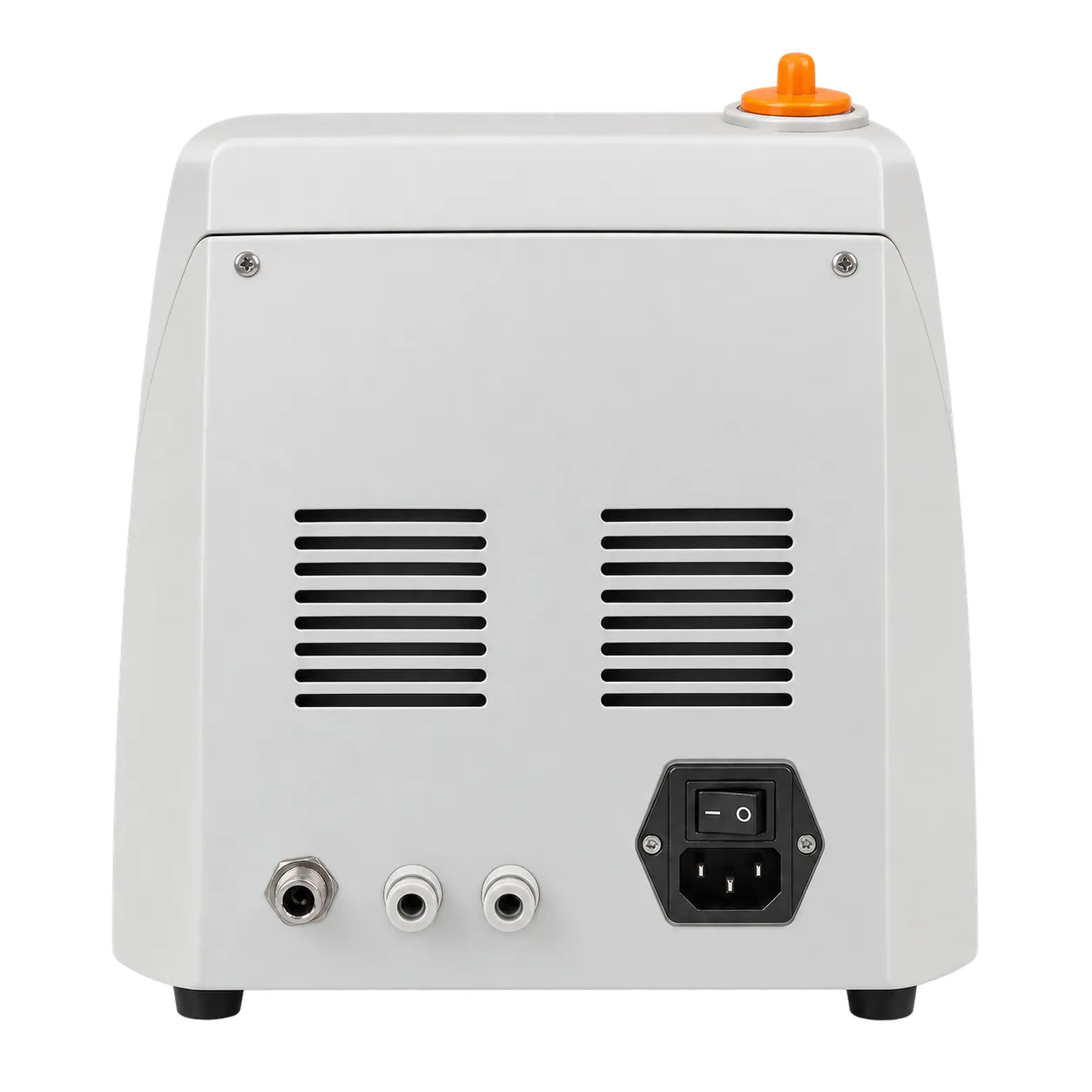
Mobile dental clinics with an onboard compressor can run it at their decontamination station, as long as the air supply reaches 0.35 to 0.60 MPa. Community dental services working across several sites benefit from a cycle that every visiting nurse runs the same way.
The cotton filter matters in compact rooms, where fine oil mist could otherwise settle on nearby surfaces and sterilisation packaging.
Sites without compressed air, or with 110 V or 60 Hz mains, need a different set-up. In every setting, each handpiece still goes on to the steriliser after lubrication.