
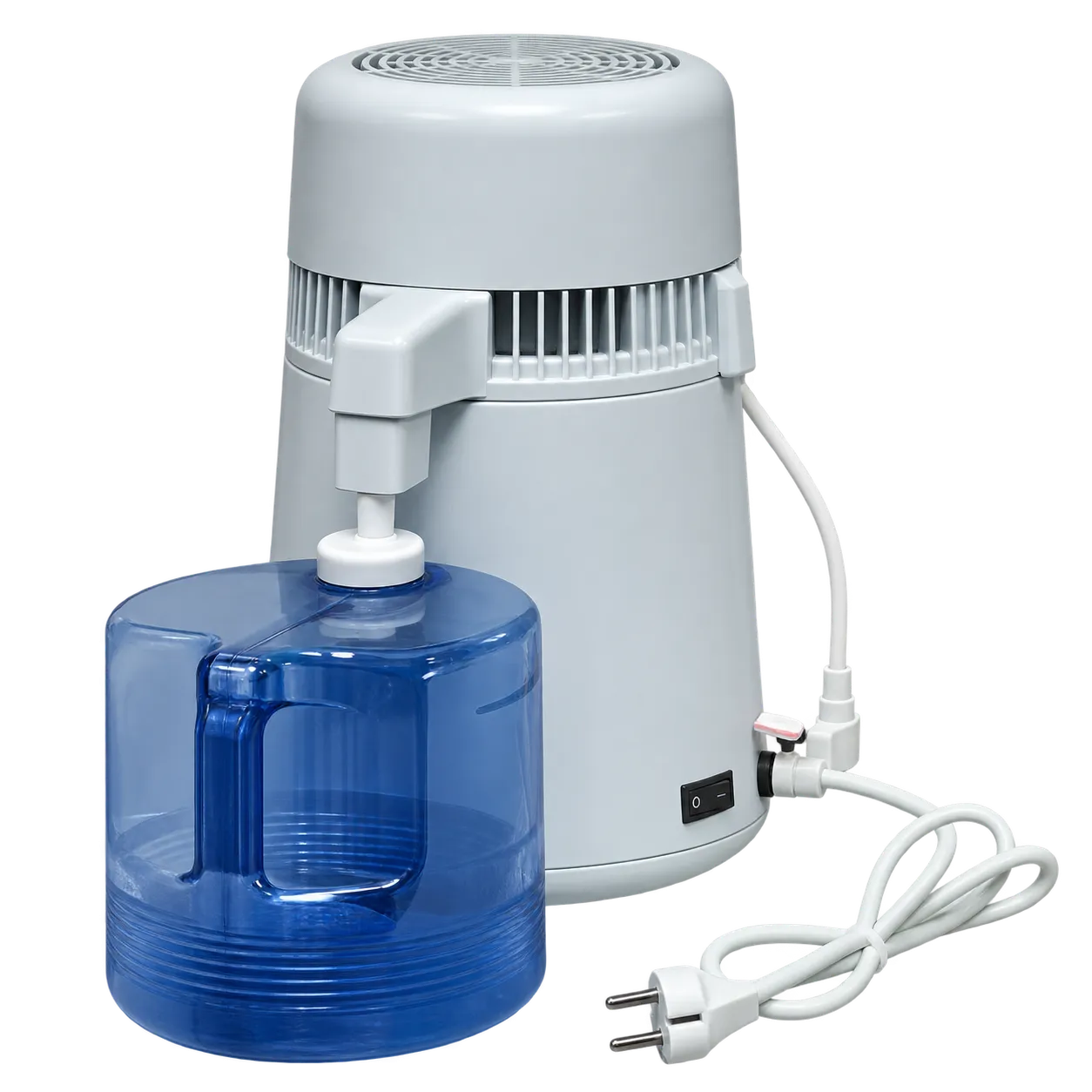
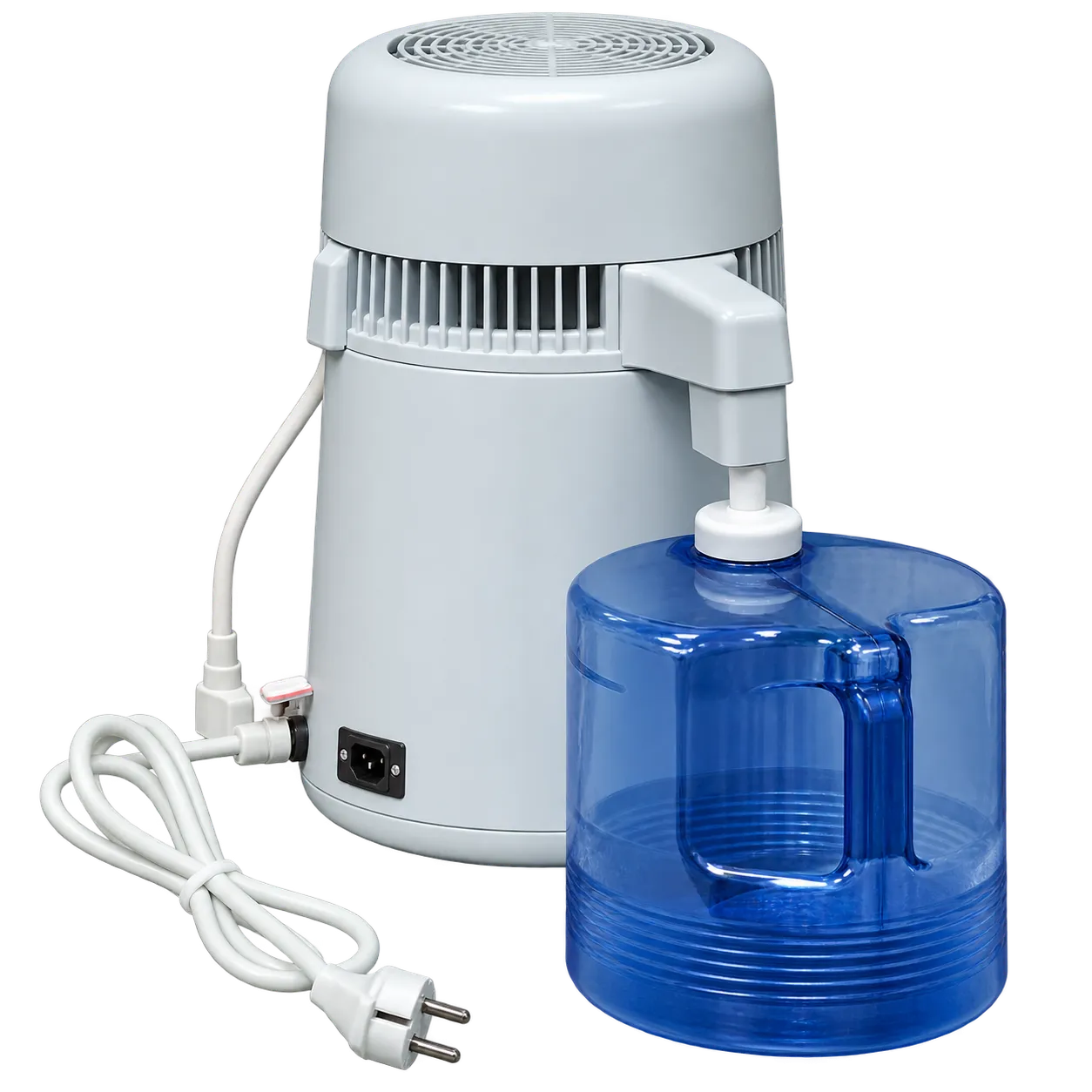
Dental practices are the main users because benchtop steam sterilisers and dental unit water bottles both run on distilled water. A dental nurse fills the tank from the tap first thing, switches the HS-812 on, and has four litres of distillate collected by mid-morning, ready for the steriliser reservoir and the unit bottles.
Making the water on site changes the supply routine. Nobody has to order, store and lift cartons of bottled distilled water, and the practice never runs out on a busy day so long as a batch is started in time. The clear jug shows at a glance how much is ready. Practices with more than one steriliser run a batch first thing and a second at lunchtime, keeping every reservoir topped up through the day.
Podiatry clinics, beauty and tattoo studios, and veterinary practices that run their own benchtop sterilisers use it the same way, filling each steriliser with distillate from the jug. Small laboratories use the output for rinsing glassware after washing, where tap water would leave mineral spots.
The mechanism matters most where tap water is hard. In those areas, scale builds quickly inside a steriliser's steam generator, and distilled feed water keeps those deposits from forming in the first place.
Upkeep stays at the bench: the residue left in the boiling chamber is cleaned out as it builds, and the jug is rinsed between batches.
Sites that need tens of litres a day, or water to a defined laboratory purity grade, need a larger or more specialised purification system.