
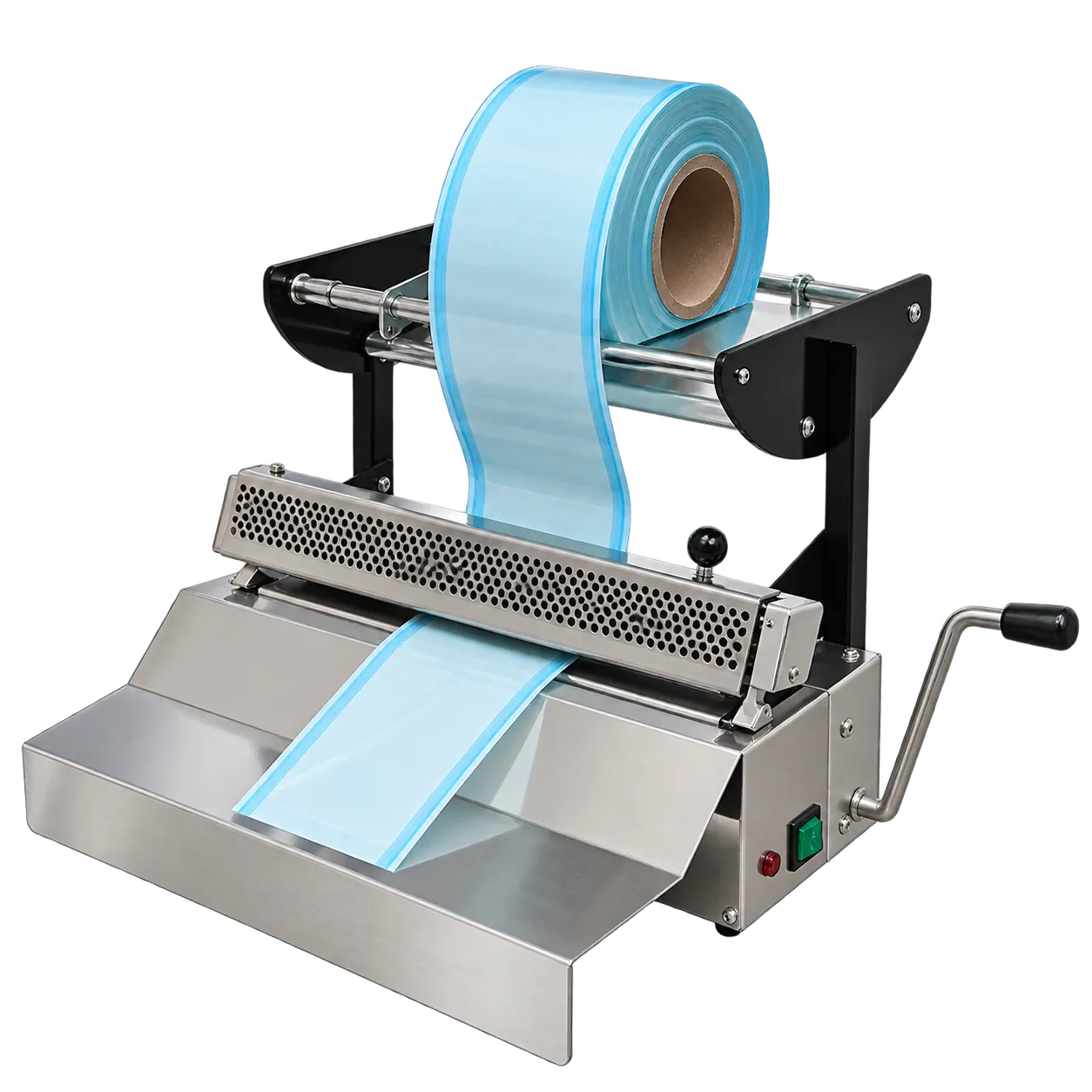
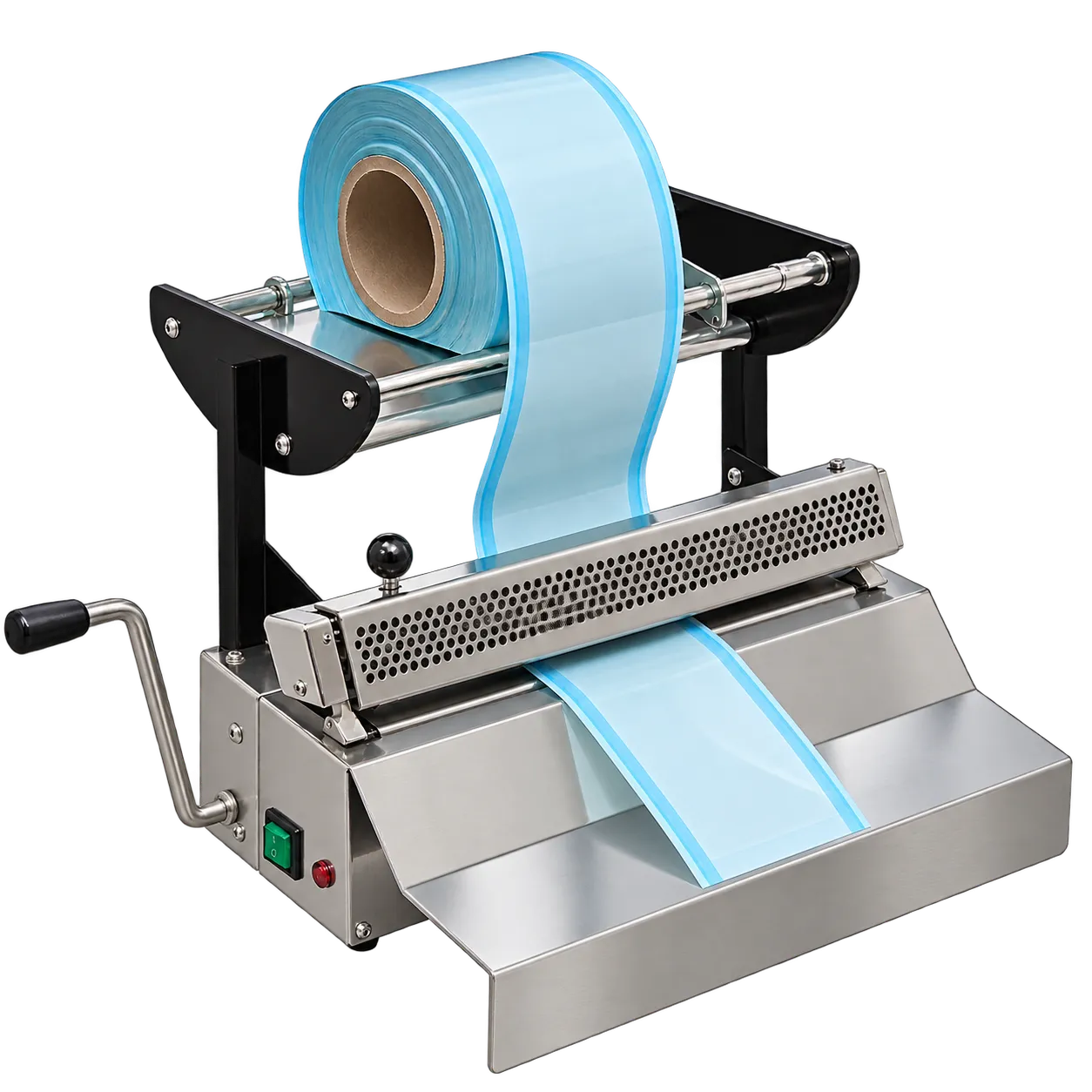
Dental practices put the HS-811 at the packing end of the decontamination bench, between the cleaning sink and the autoclave. A dental nurse draws a length of reel stock across the tray, cuts it to fit an extraction set or a handpiece, loads it, and closes the open end with one stroke of the lever.
Reel-and-cutter working suits practices that pack instruments of many lengths, because a single reel width replaces a shelf of pouch sizes. Practice managers who order consumables see the difference in fewer stock lines to track, and nurses stop hunting for the right pouch mid-session.
Podiatry clinics pouch nippers, burrs and scalpel handles in short lengths, and GP surgeries cut longer lengths for minor surgery sets. Veterinary practices seal surgical instrument kits before sterilisation. Studios in beauty, nails and tattooing seal their reusable steel instruments the same way between clients.
Decontamination rooms are wet places, and the stainless steel body suits a bench where water, detergents and disinfectant wipes are in constant use. The front tray keeps sealed packs together and off the wet worktop until they go into the steriliser. Shared decontamination rooms serving two or three surgeries use one sealer at the packing station, with reel lengths cut for each surgery's sets.
Small laboratories that sterilise heat-tolerant tools in pouches use the same routine, sealing packs up to 250 mm wide. Training clinics use it to teach pouching, since every seal is a single, visible lever stroke.
Departments sealing continuously through a shift, or handling packs wider than 250 mm, need a different class of sealer.