
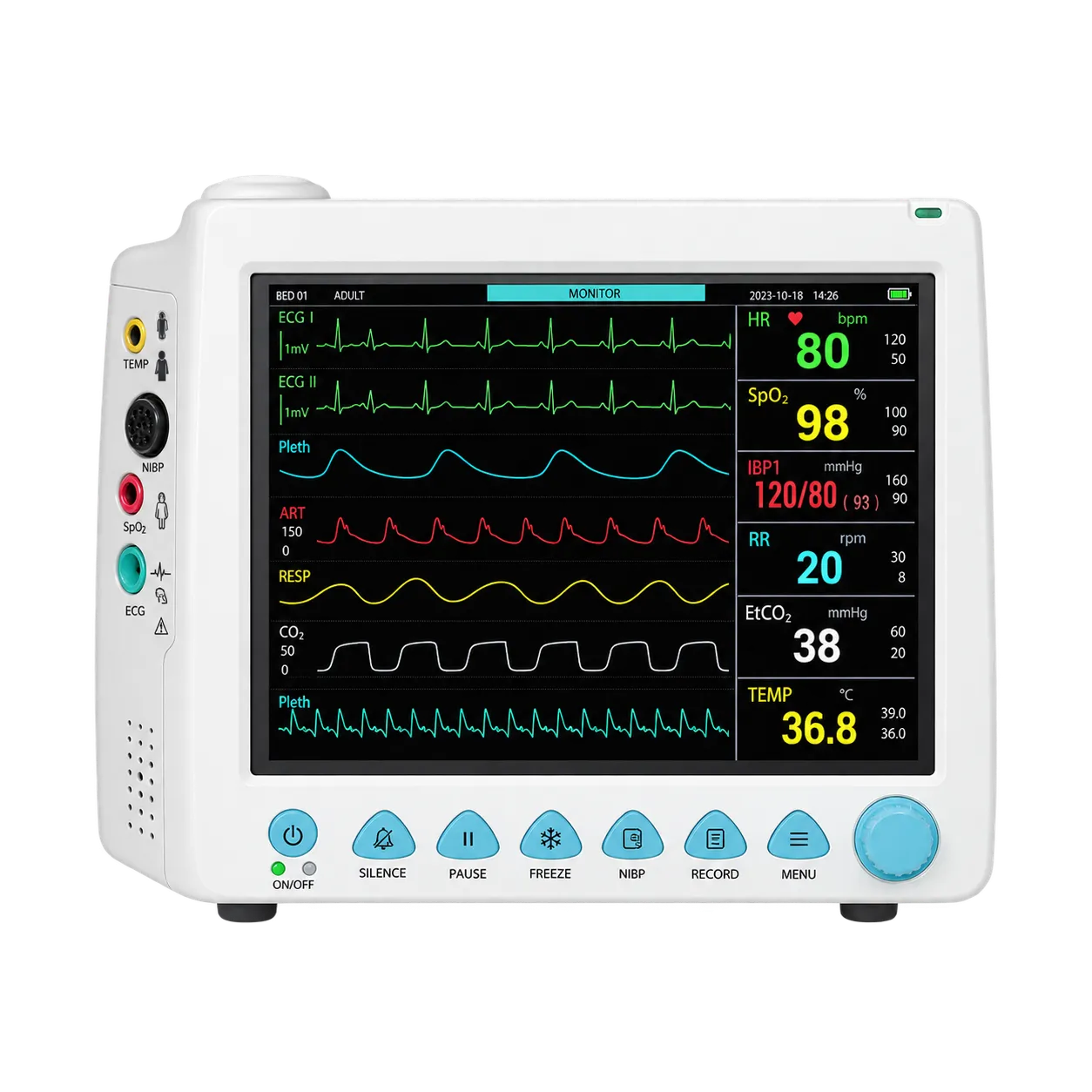
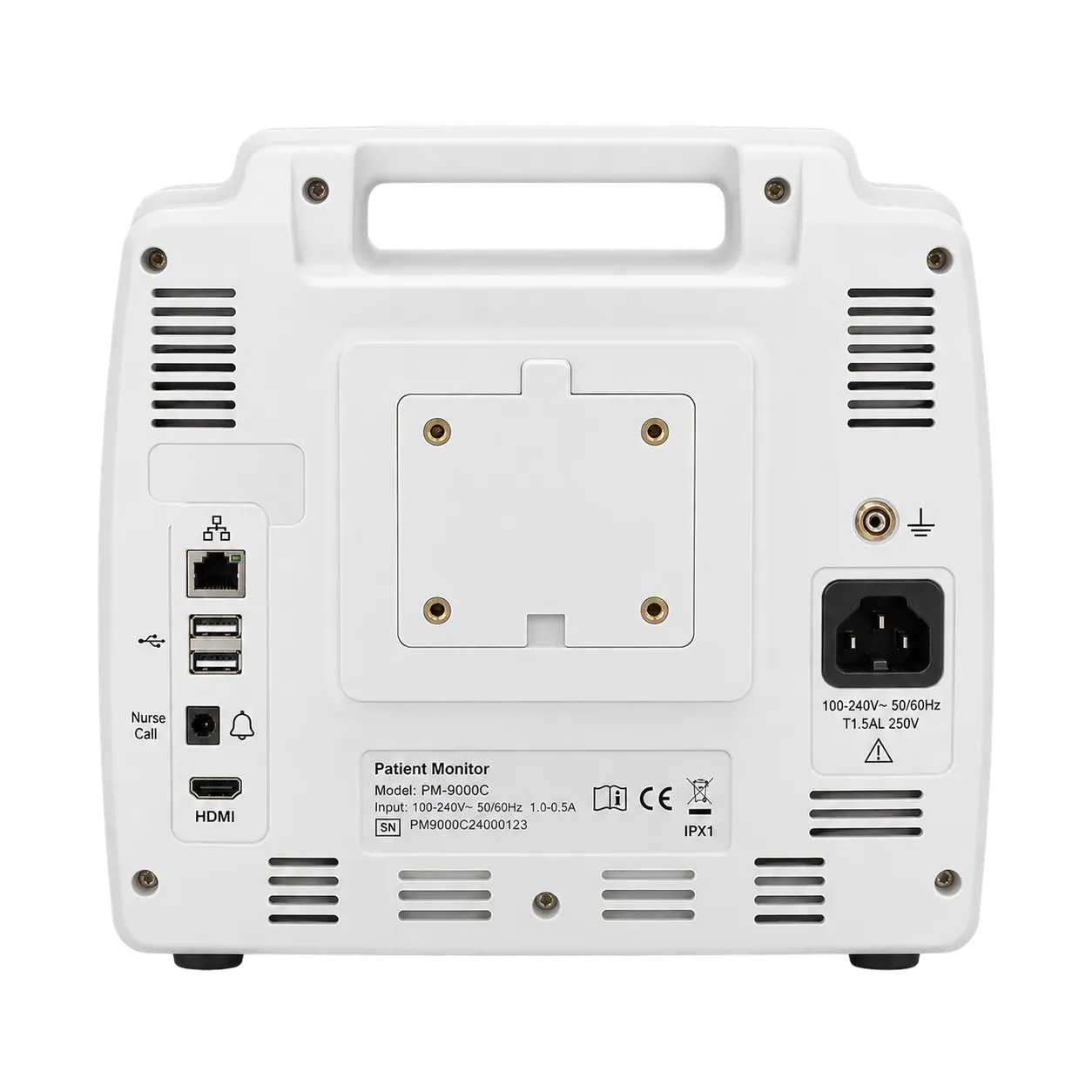
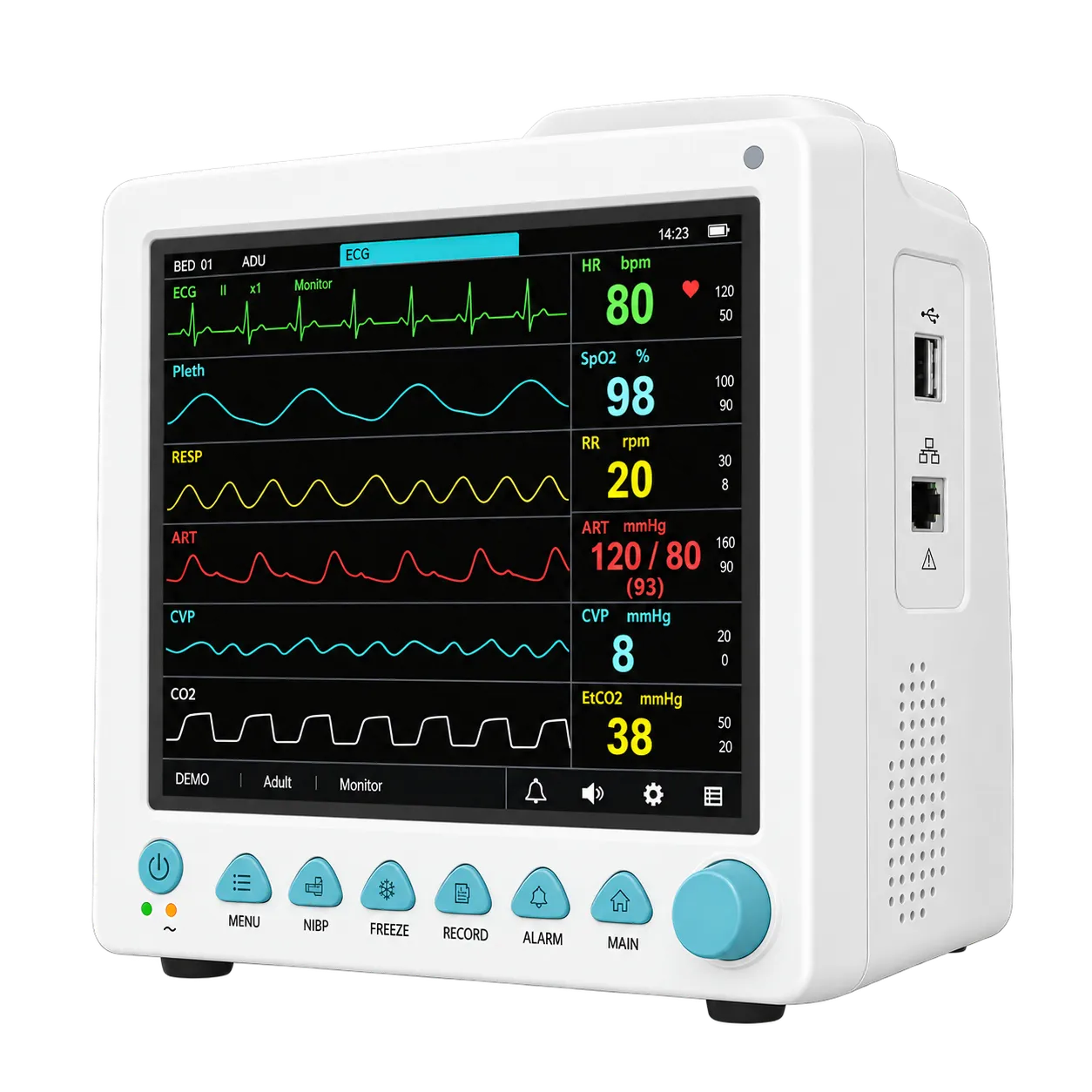
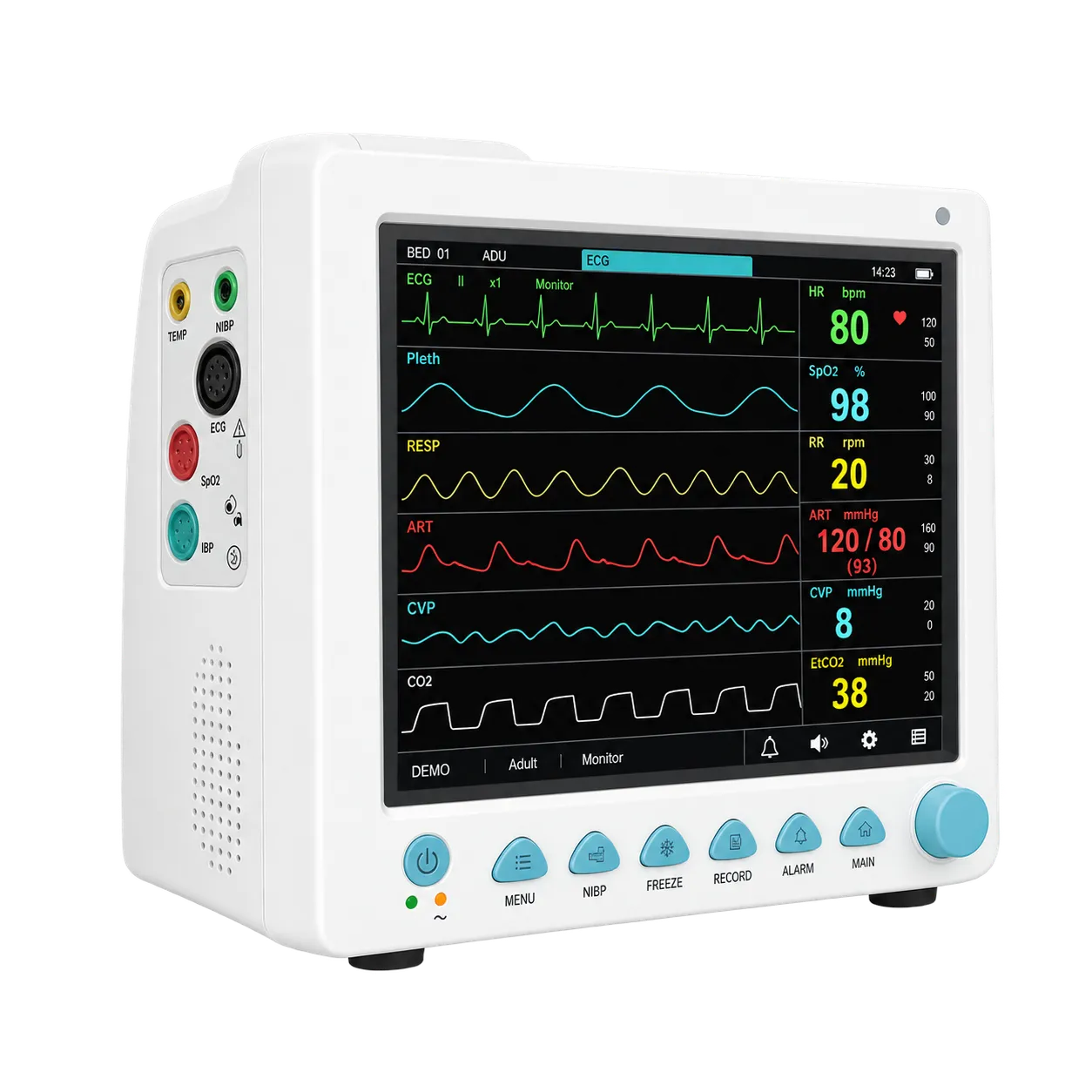
The lead condition on this critical care monitor is the first thing to act on. Defibrillation protection lets a monitor survive a shock delivered to the patient it is attached to, and it depends on the correct leads being fitted. Ordinary leads leave the monitor unprotected, which means a department could own a defibrillation-proof monitor and still damage it, or worse, through a consumable choice made months after purchase. Leads are specified at order and their part numbers recorded.
The oximetry specification is worth weighing against what a unit actually sees. Critical care patients are frequently cold, peripherally shut down and either shivering or being moved, and those are exactly the conditions that produce dropout on a basic oximeter. A monitor claiming measurement at weak filling is claiming to work when it is most needed, and it is a claim worth testing rather than assuming, since no accuracy figures accompany it.
Drug concentration calculation with titration tables belongs in the same category of quietly useful. Infusions in critical care are calculated by weight and concentration, and doing that arithmetic on the monitor where the observations already are removes one transcription step from a process where errors have consequences. What the sheet does not describe is which drugs are held, whether the tables are editable and whether they can be locked, and those decide how the feature is governed.
Medigear.uk establishes the lead specification, the drug table arrangement and the conformity position before this critical care monitor reaches a unit.