
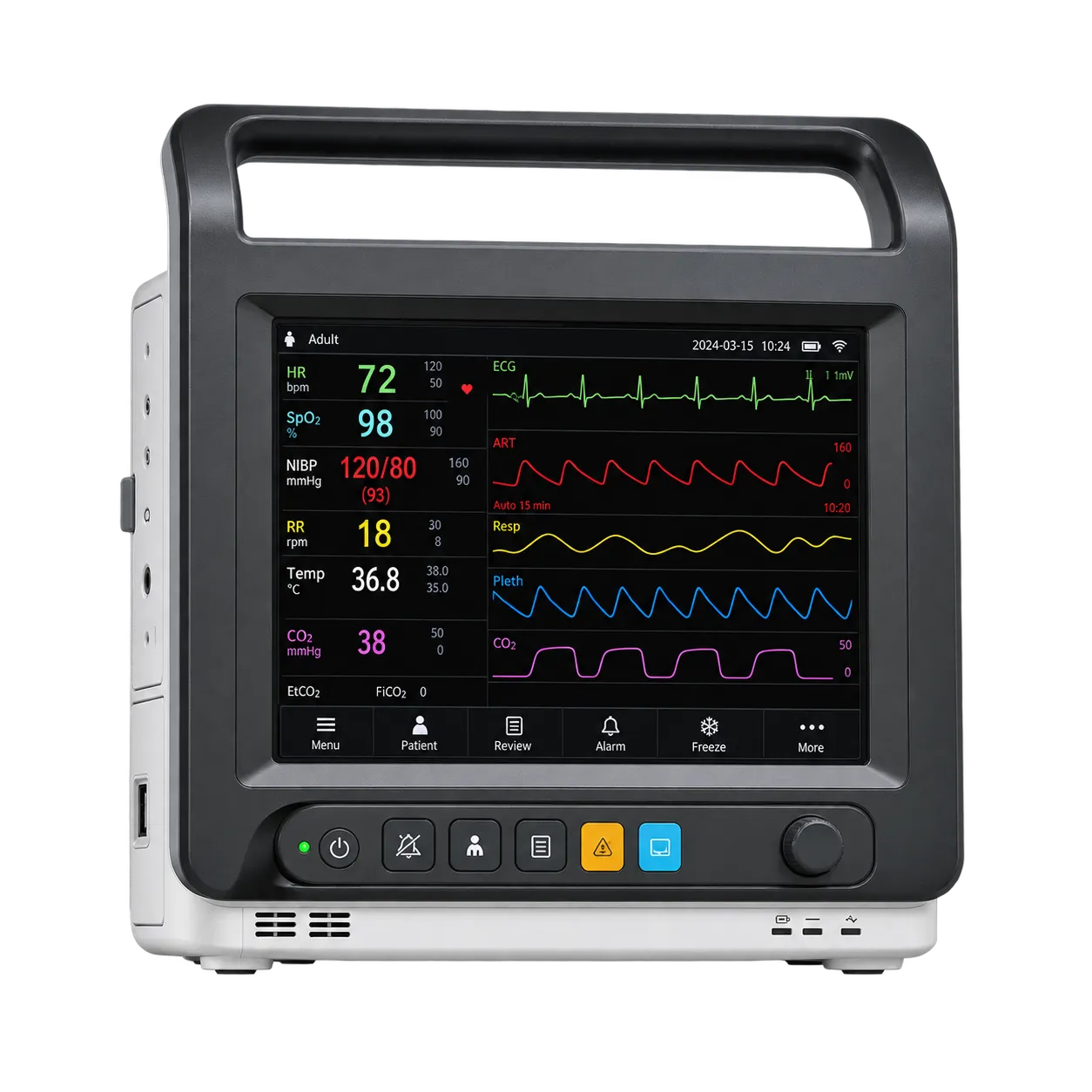
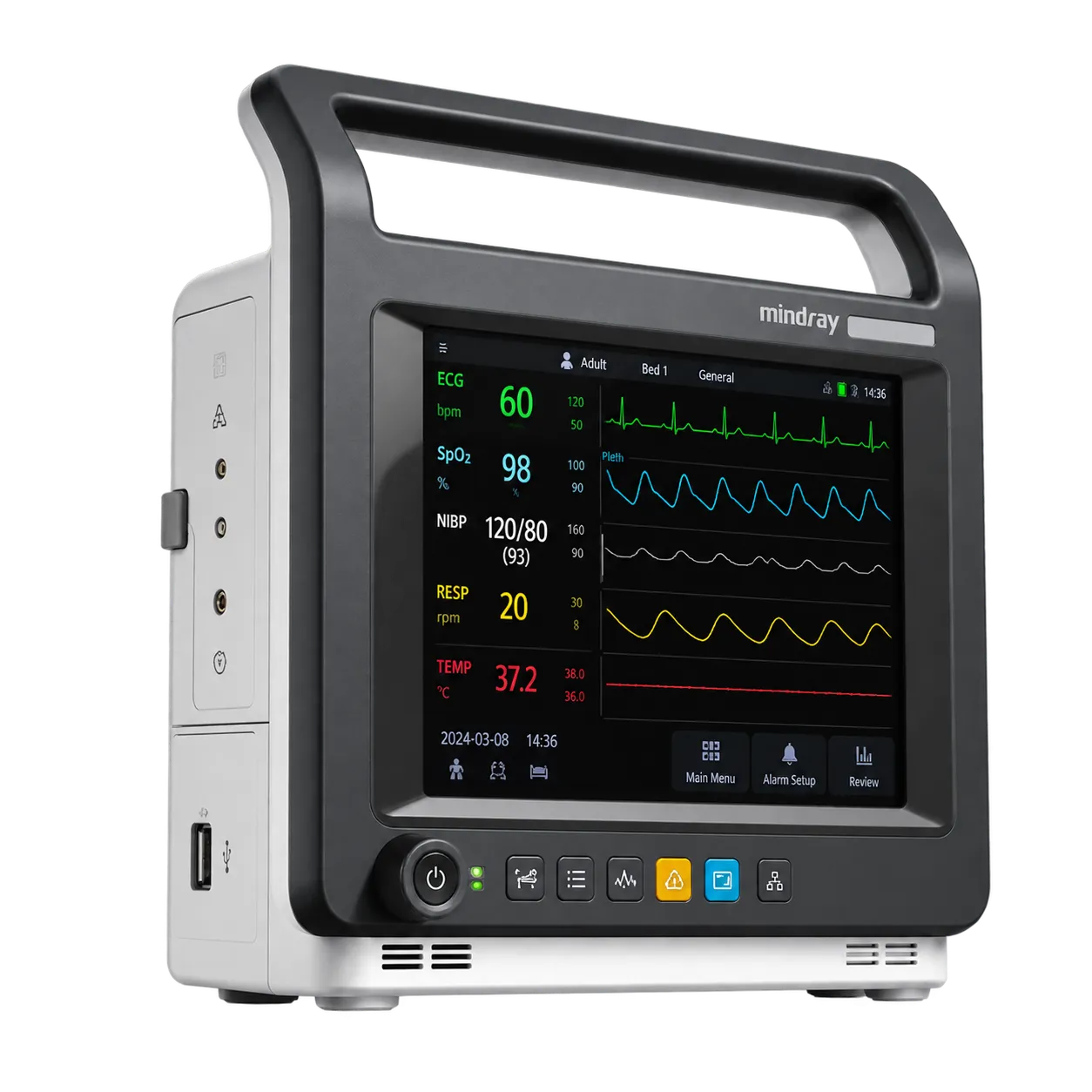
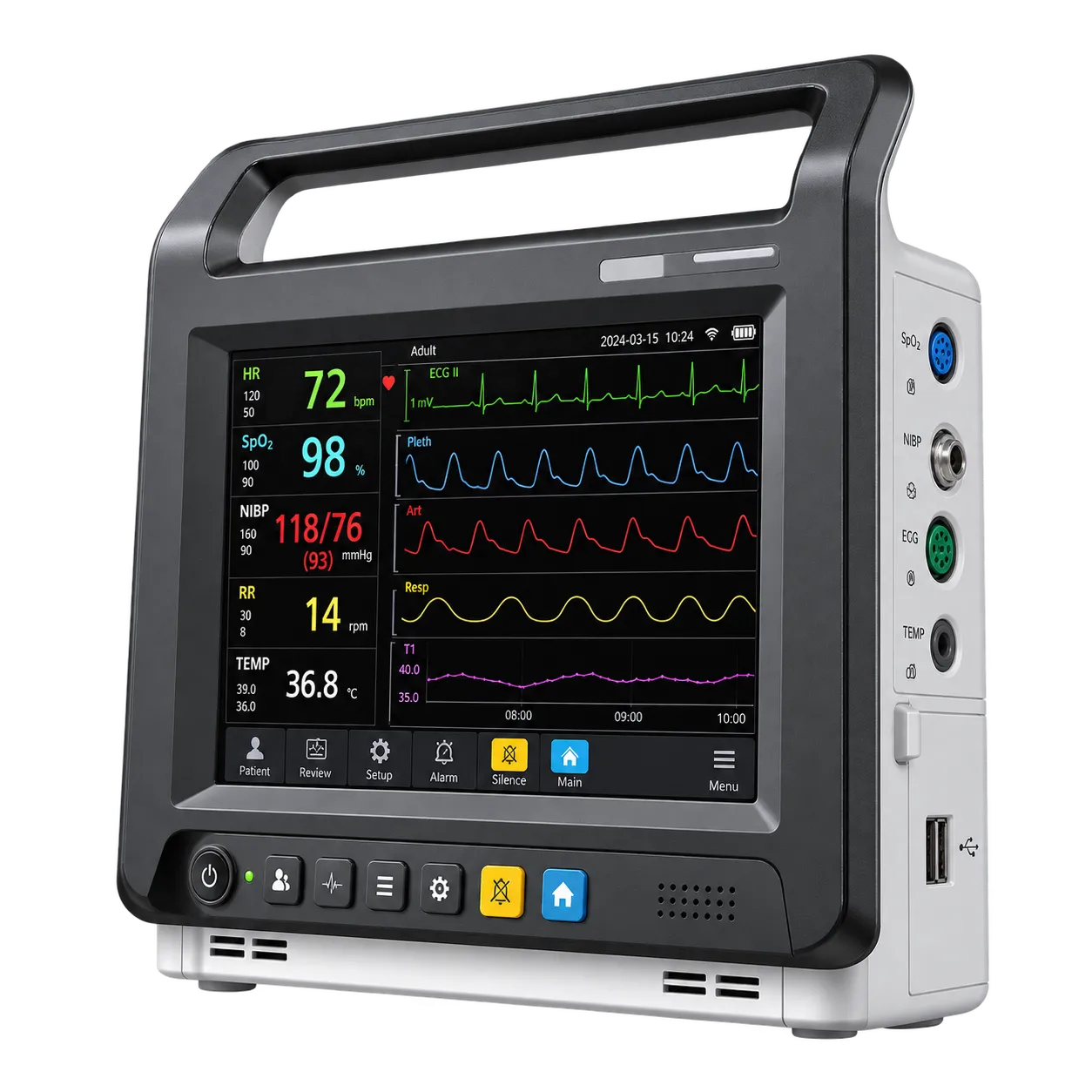
ST analysis distinguishes this intensive care monitor from the rest of the range, and it is worth understanding what it provides. The ST segment sits between depolarisation and repolarisation, and it shifts from baseline when the myocardium isn't getting the blood it needs. A monitor measuring that continuously will flag ischaemia developing in a sedated or ventilated patient who cannot report chest pain, which is precisely the population an intensive care unit holds. The sheet does not say which leads it analyses or where the measurement point sits, and both determine what the reported number actually means.
Arrhythmia analysis works alongside it. A unit watching several patients cannot have someone reading every trace continuously, so automated classification and alarming make rhythm monitoring practical rather than nominal. Again, the detail is missing. No list of arrhythmia classes appears anywhere, and a monitor detecting three rhythm types is a different machine from one detecting twenty of them.
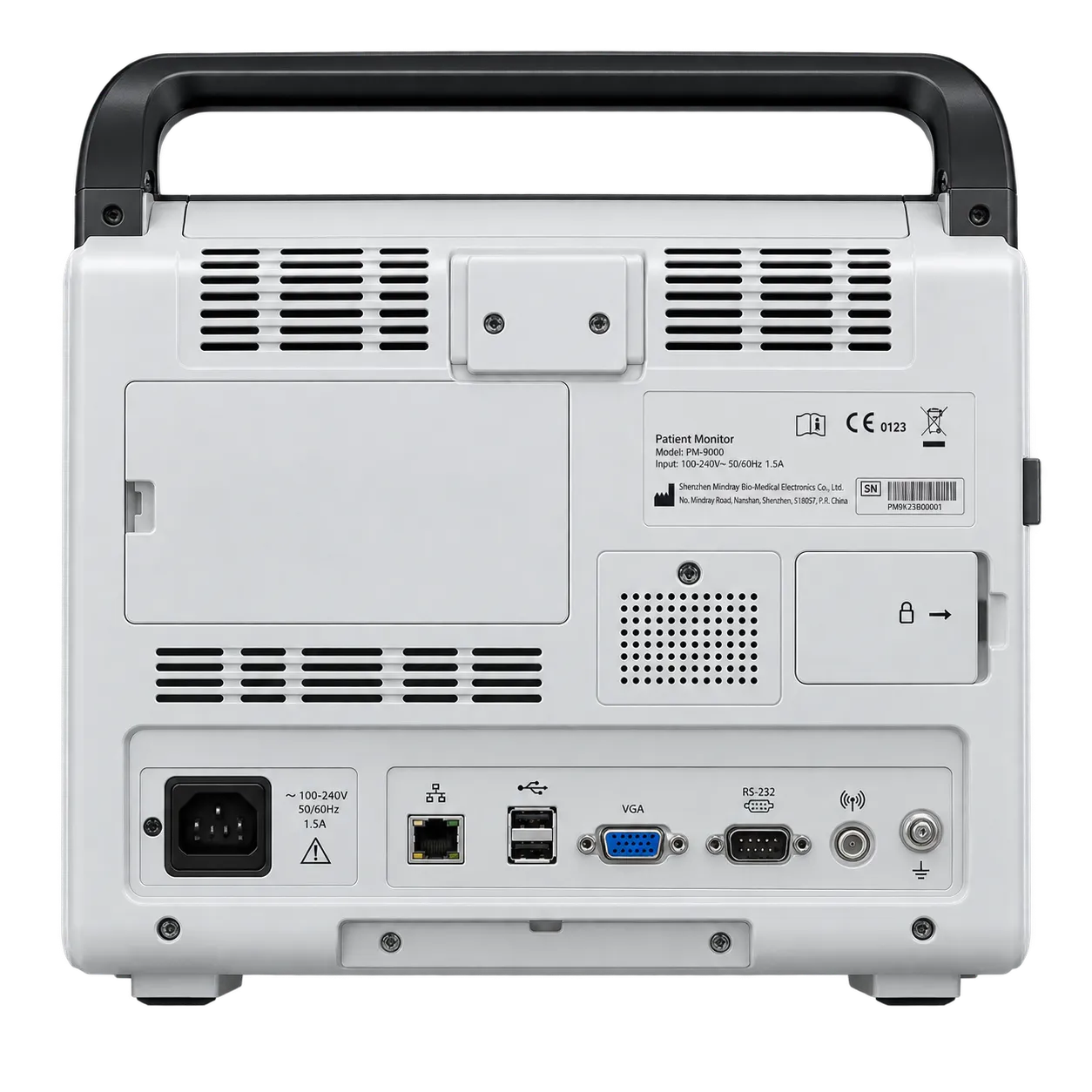
The fanless design deserves more credit than it usually gets. Fans pull dust and airborne particles through a chassis; they fail, and they move air around a bed space. In an intensive care unit, and particularly in an isolation room, a monitor that circulates nothing is preferable on infection-control grounds alone, apart from the reliability gained by removing the one moving part most monitors still contain.
Medigear.uk establishes the analysis specification, defibrillation protection, and patient range before this intensive care monitor reaches a unit.