
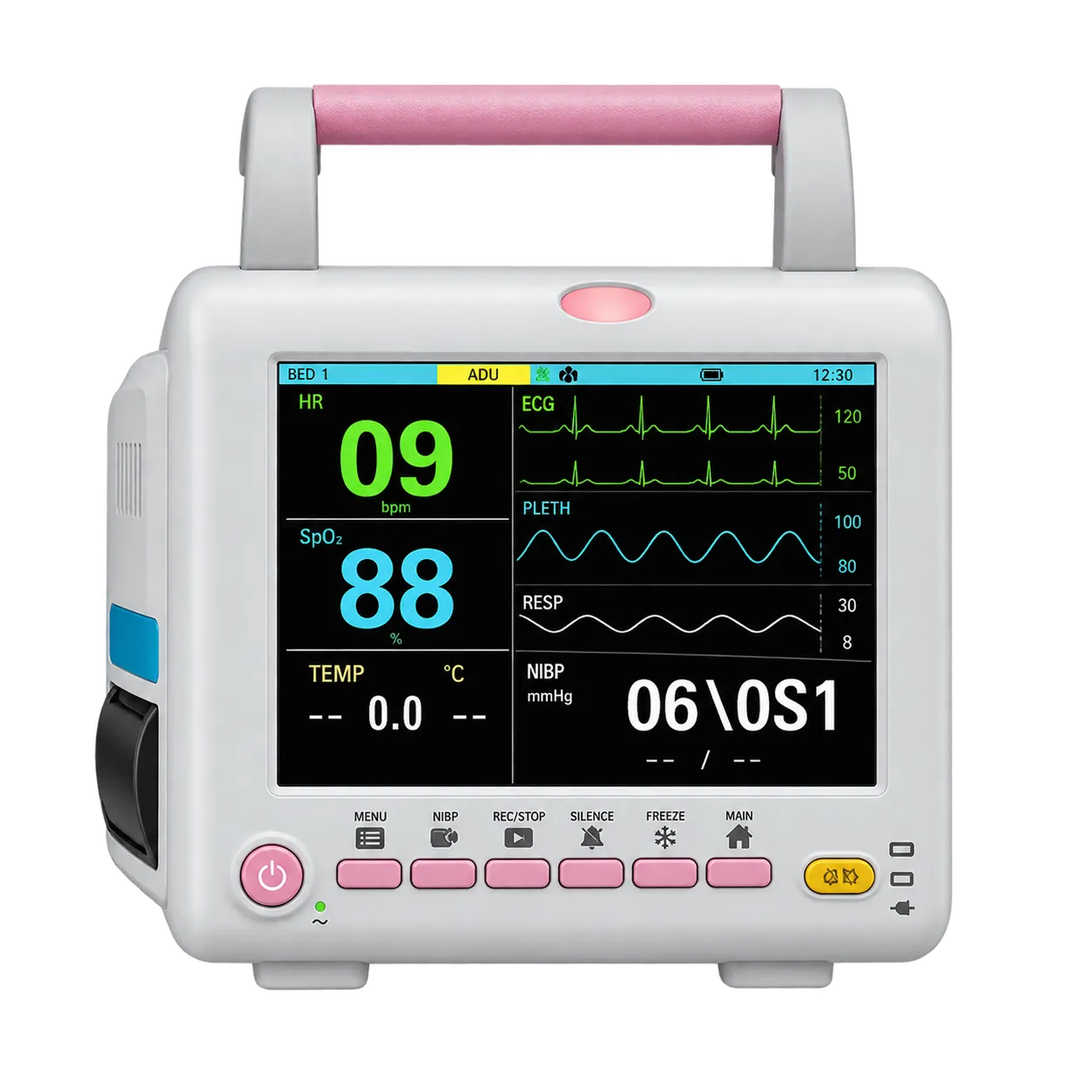
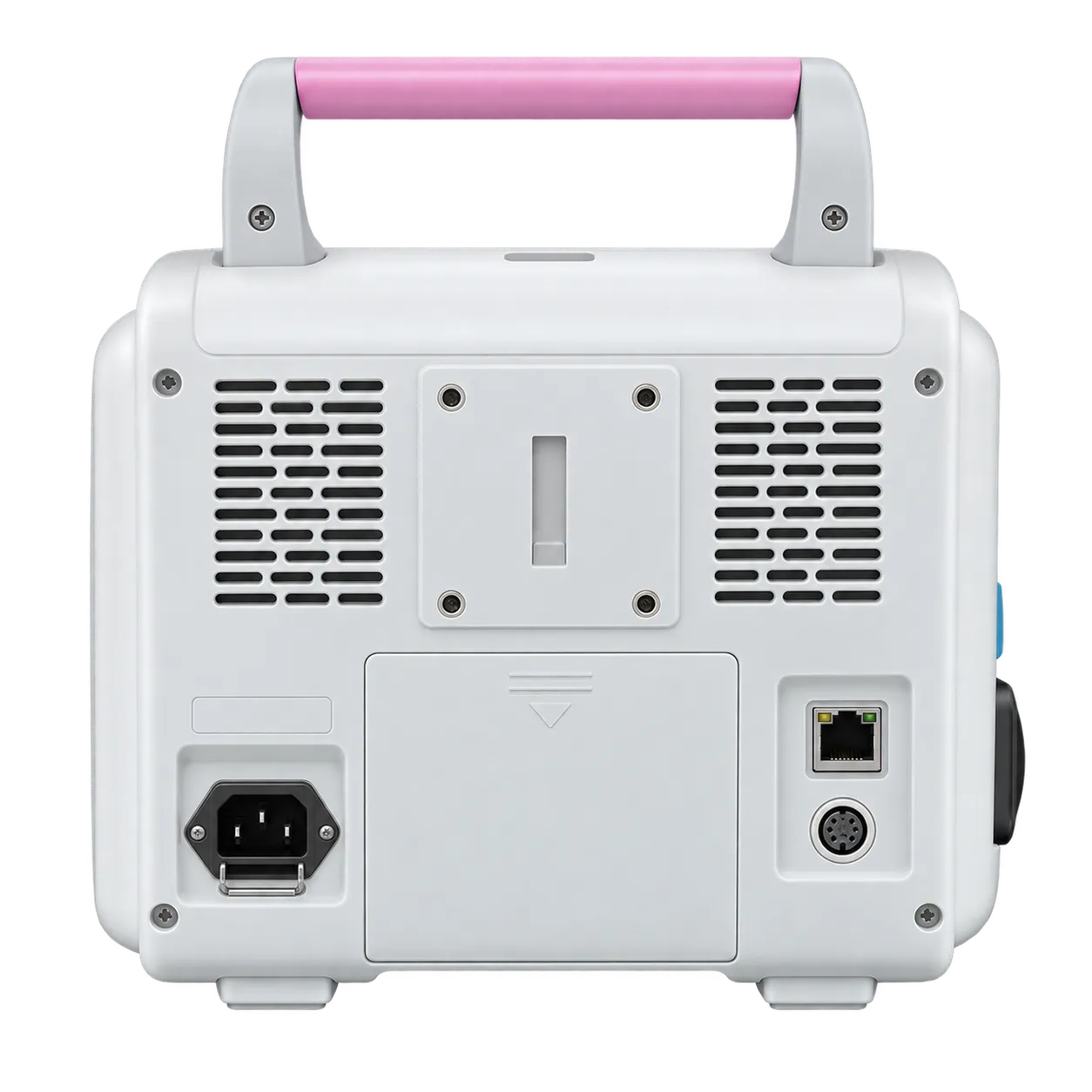
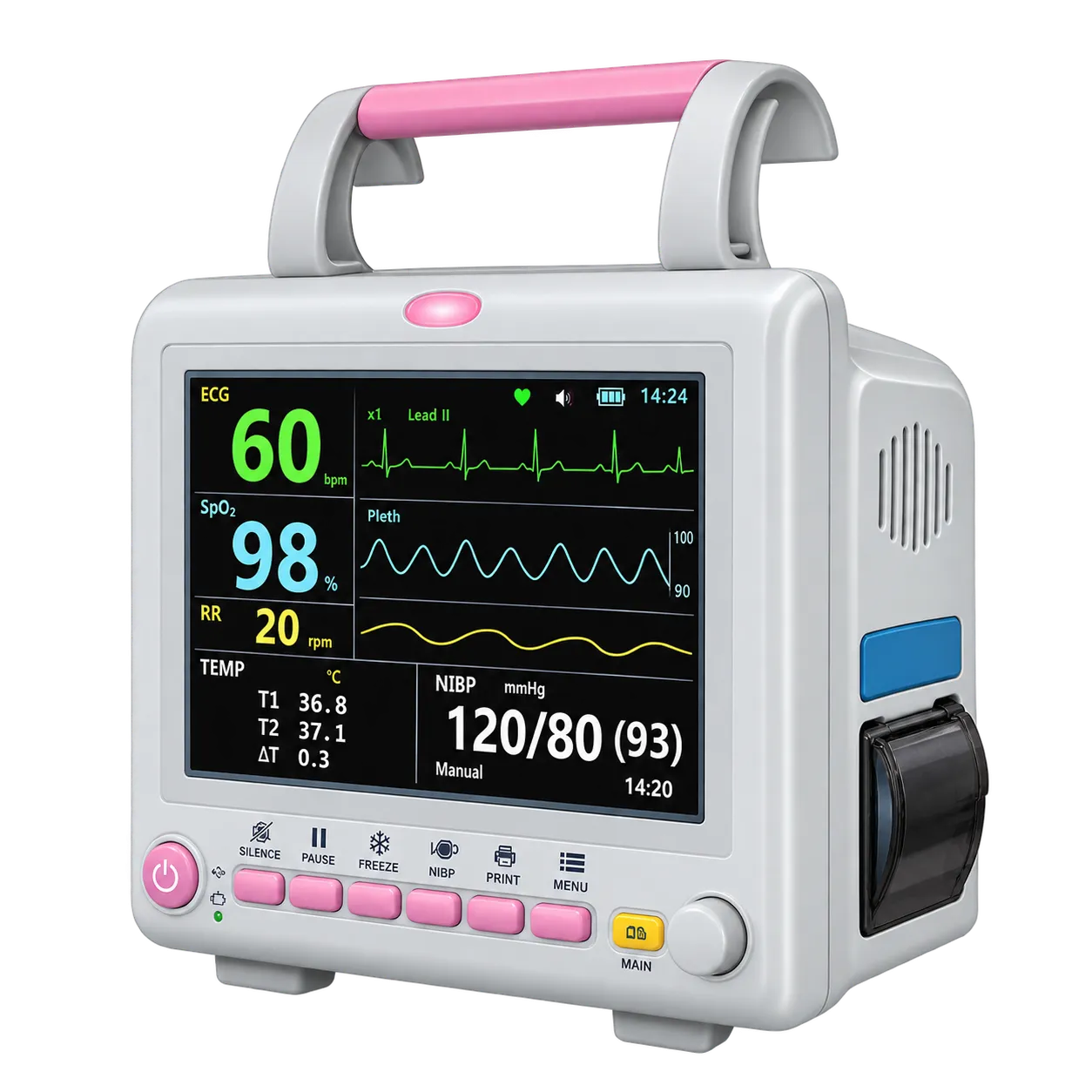
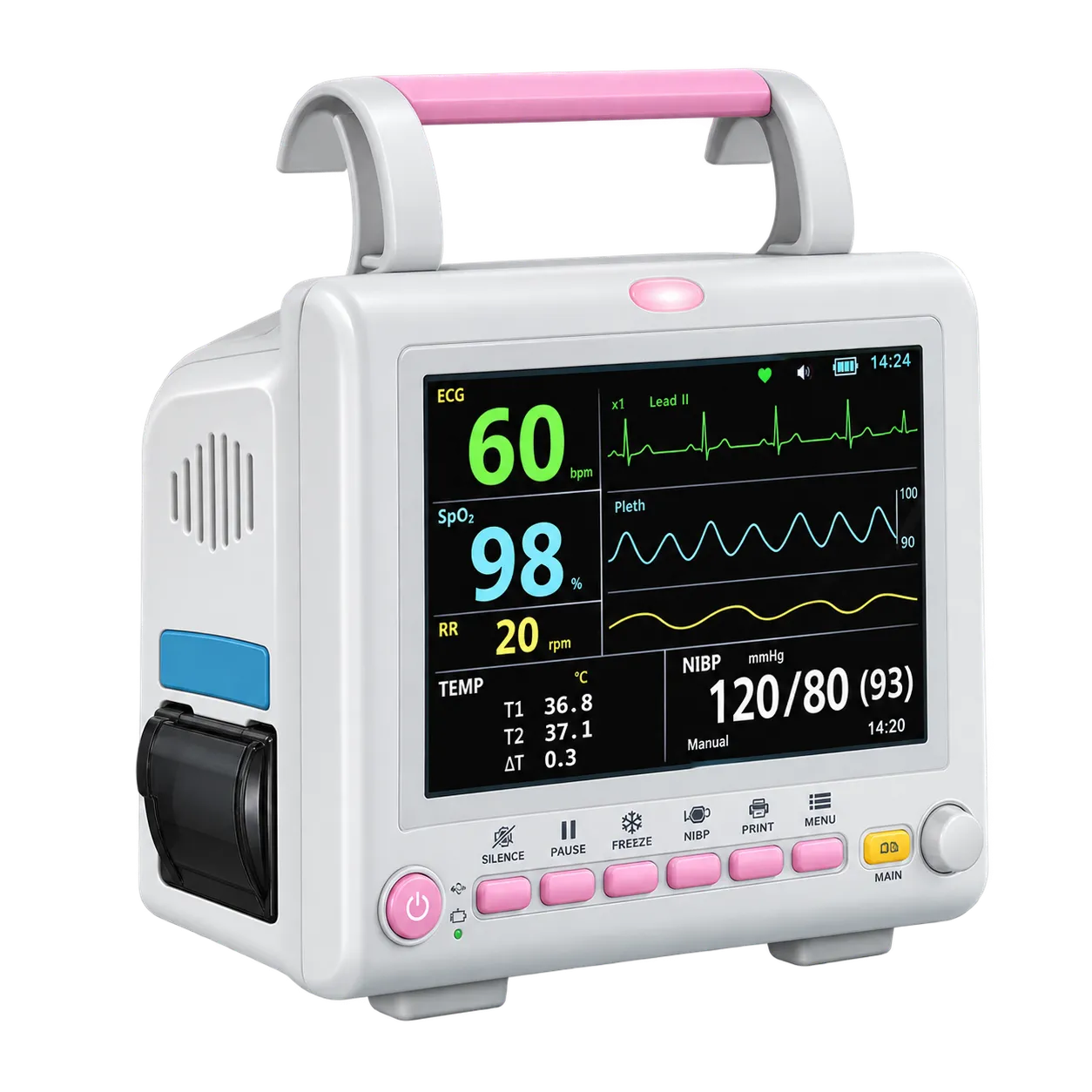
Transport is where this emergency patient monitor's physical specifications matter. Under three kilograms, it's carryable; six hours of battery covers a transfer with margin, and in-vehicle power means an ambulance run won't drain it. Defibrillation protection is not optional on any monitor used where a shock might be given, and diathermy protection matters wherever electrosurgery is in the same room, so both belong here rather than being selling points.
The three filter modes deserve more attention than a specification line usually gets. Diagnostic mode passes the widest band and shows the ECG in most detail, which is what a clinician wants when assessing the trace itself. Monitor mode narrows it to reject baseline wander and movement. Operation mode narrows it further still to keep a diathermy pencil from washing the trace out. Choosing the wrong one produces either a noisy trace or a smoothed one that hides the detail you're looking for, so it is worth knowing the three and what each is for.
Pacemaker handling is the other feature worth understanding. Pacing spikes are narrow and tall, and a monitor that treats each one as a heartbeat will display a rate the patient does not have. Stating pacemaker compatibility means the monitor identifies those spikes rather than counting them.
The sheet doesn't provide any measurement accuracy for pressure, saturation, or temperature, and those figures determine whether readings can be relied on. Medigear.uk obtains them before supplying this emergency patient monitor.