
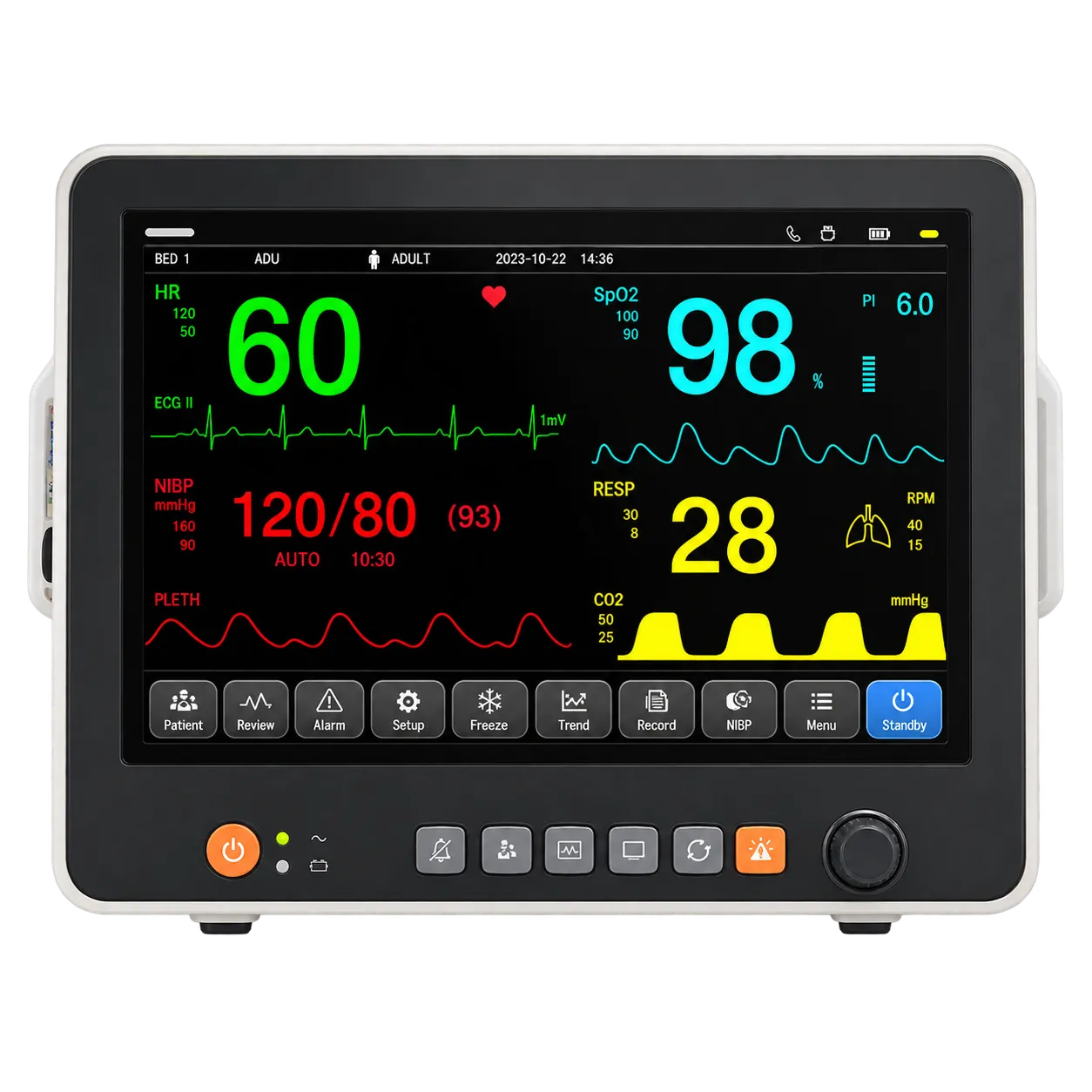
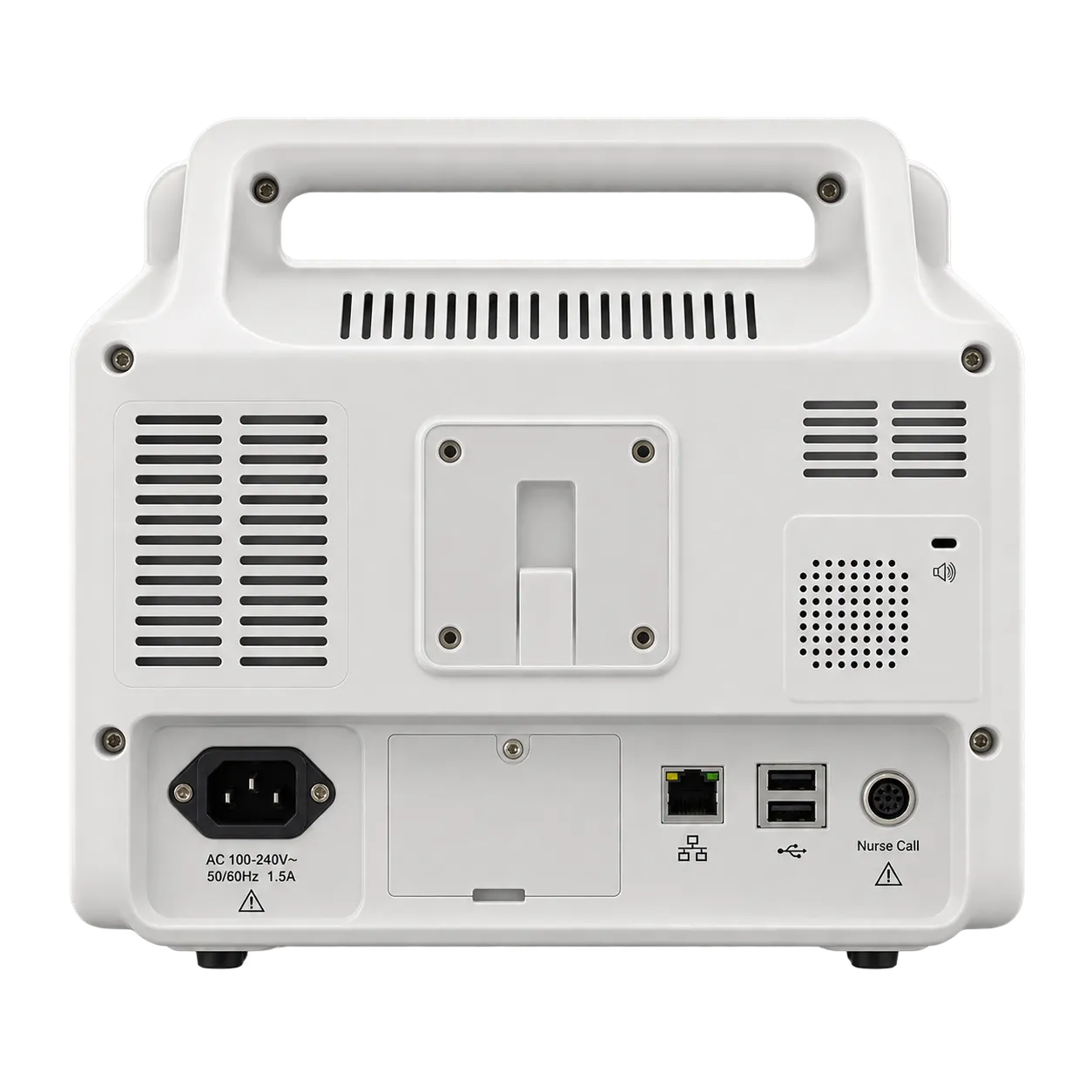
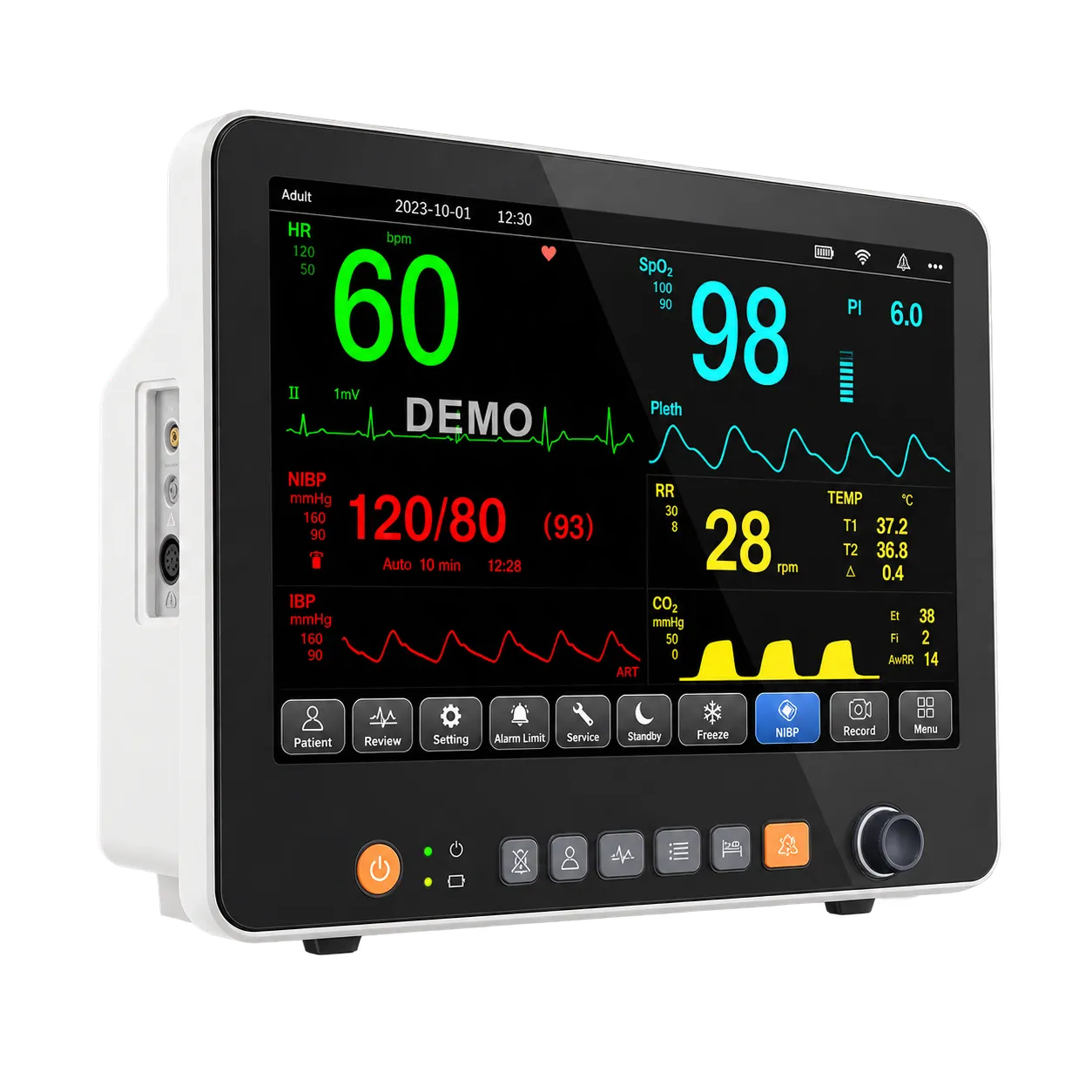
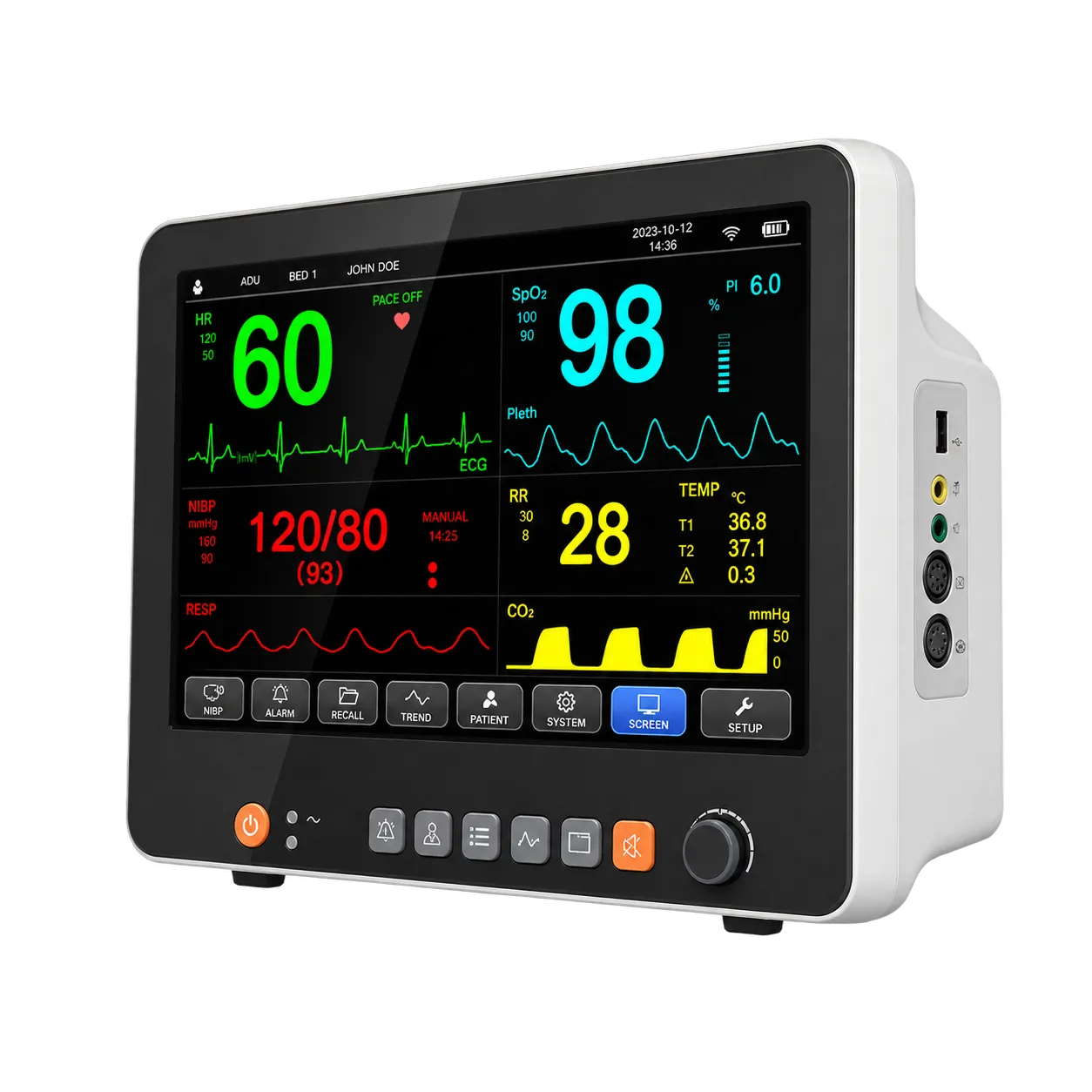
Twelve-lead capability is what sets this monitor apart from the others. Continuous three- or five-lead monitoring tells a unit that a rhythm has changed or that ST has moved. It does not tell anyone which coronary territory is involved, because the precordial leads that answer that question are not being recorded. A monitor that can take a twelve-lead recording at the bedside removes a step from a pathway where time matters, and it does so without moving the patient to a separate machine.
The VGA output has a quieter use worth mentioning. A second display driven from the monitor puts the same information somewhere else, which suits a theatre where the anaesthetist and the surgeon need different sightlines, or a bed space where the monitor sits behind the patient. No other monitor across this range offers anything of the kind. The sheet omits a longer list than usual. No defibrillation protection, no diathermy protection and no pacemaker handling, where the HS-400B states the first two and the HS-300H states all three. It also lacks arrhythmia or ST analysis, though both HS-400 monitors provide some form of it. No patient range is given, no cooling arrangement is described, and no weight is listed. The three-hour battery is also the shortest published anywhere across these six monitors.
Medigear.uk establishes the protection features, analysis provision, module arrangement, and patient range before this large-screen patient monitor reaches a bed space.