
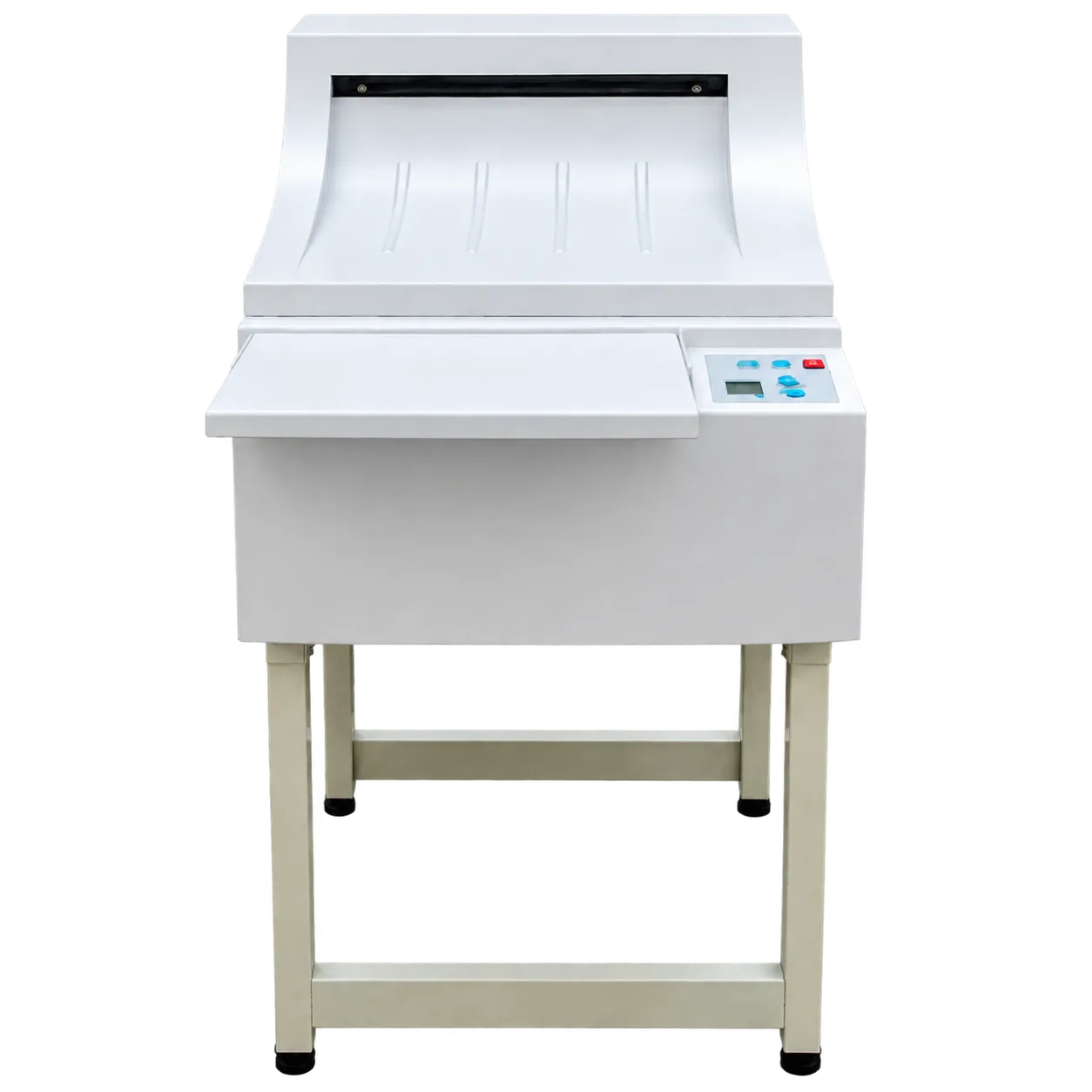
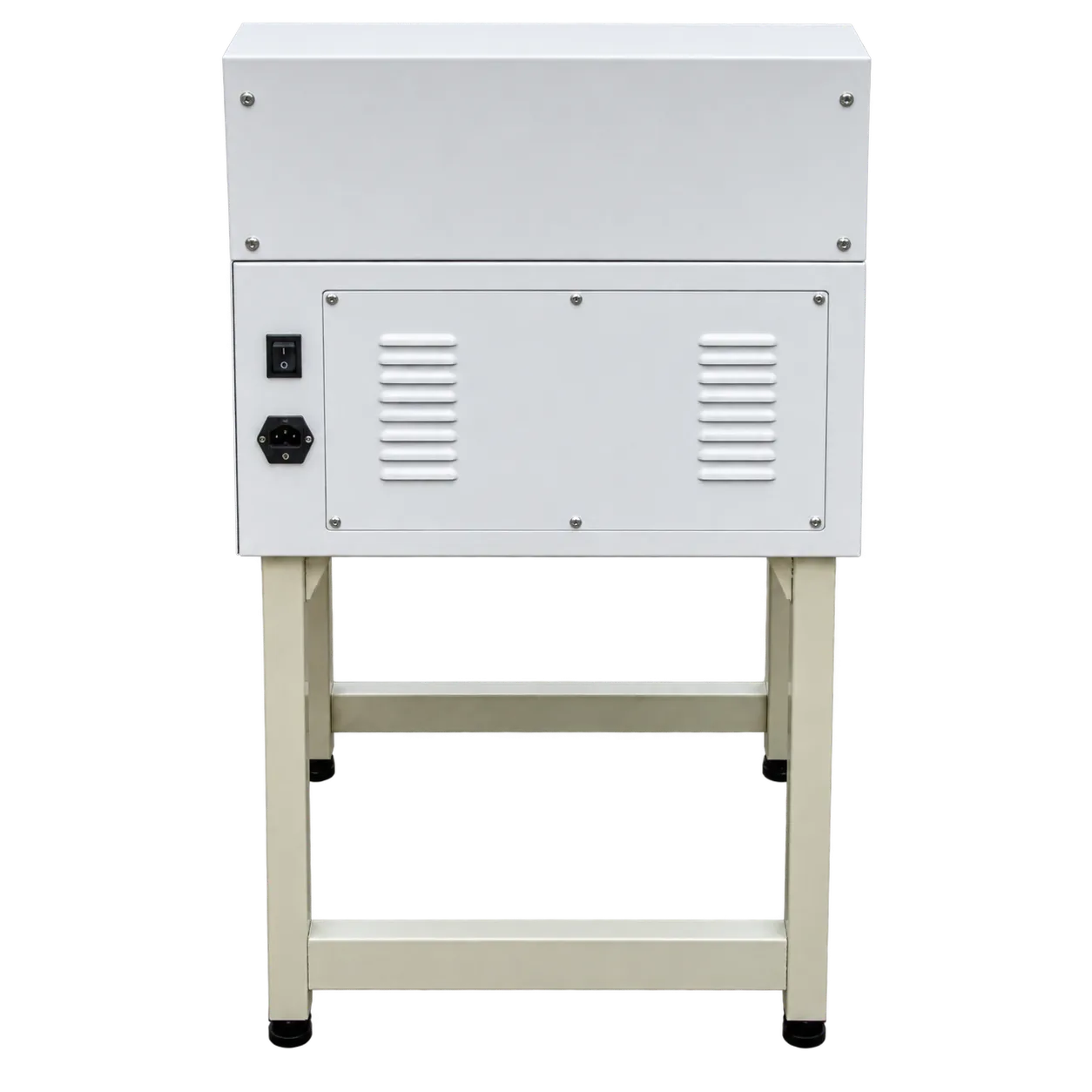
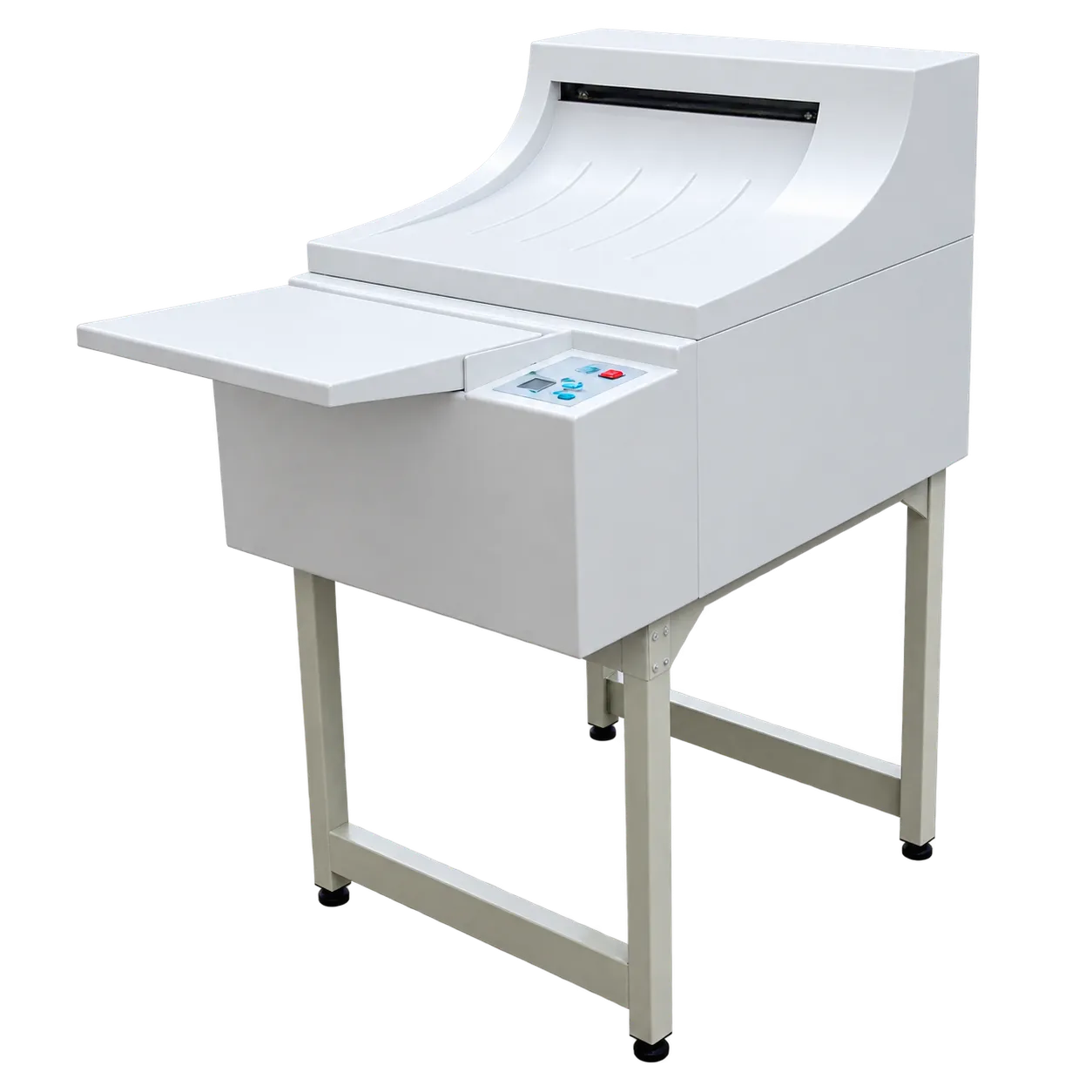
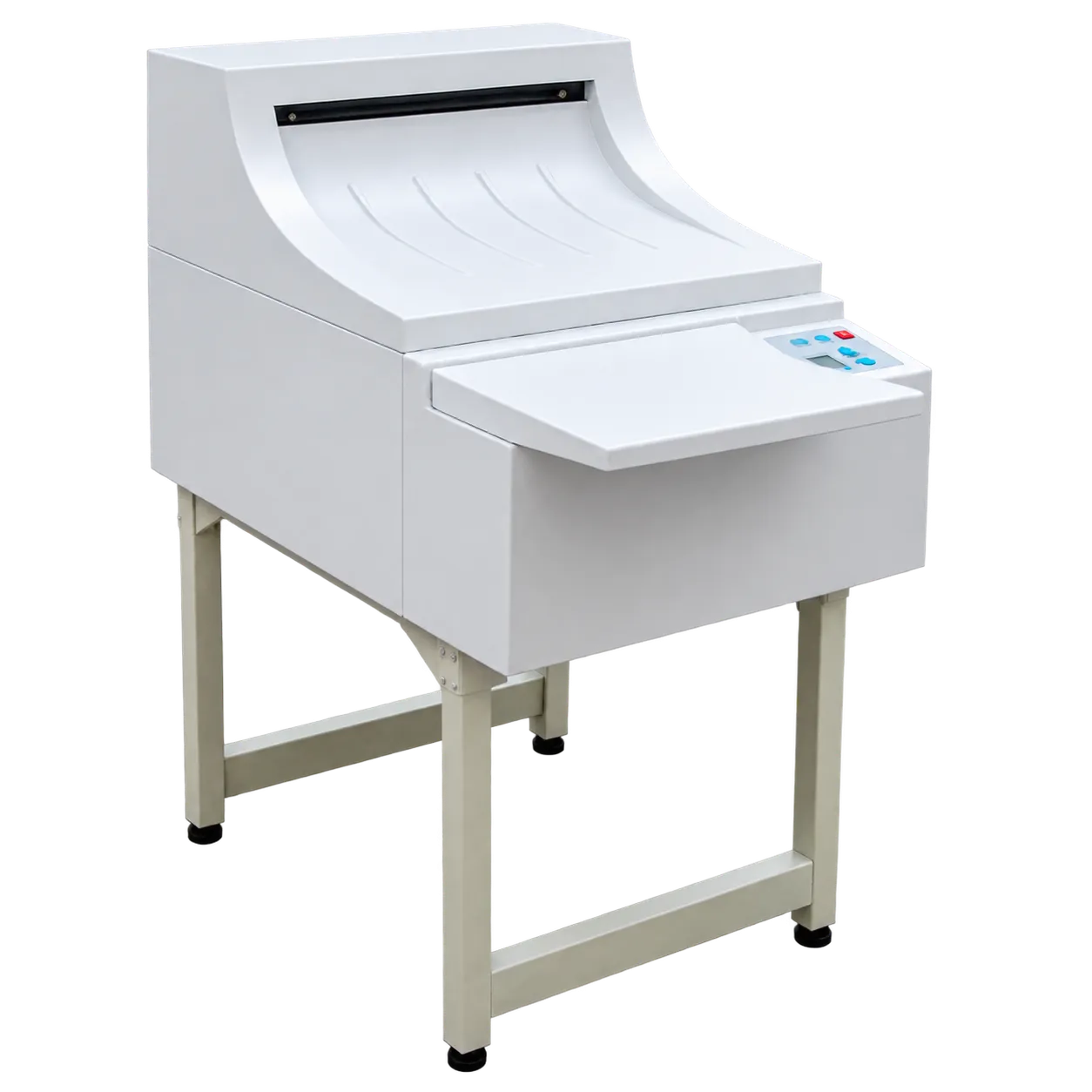
Film processing has largely moved out of UK imaging. Departments have moved from computed radiography to flat panels. So an X-ray film processor now serves services elsewhere that still use film, along with veterinary practices and other users outside mainstream radiology. Anyone in Britain considering one should weigh that against the consumables and darkroom space and staff time it demands, and against how long film will remain available.
Where film remains the medium, the adjustable settings matter;tter, temperature and time pairing sets the density and contrast of every radiograph, so consistency is what a department is really buying. The sheet gives the ranges but not the stability held at a chosen setting, and a drift of a degree or two changes results visibly on the light box. Sensitometry strips are the usual way of watching for that, run at the start of each day and plotted over the week.
Chemistry brings obligations the sheet does not touch. Spent fixer carries dissolved silver, which makes it hazardous waste in the UK, so it leaves the building through a licensed route or a recovery unit rather than a drain. The developer needs similar handling, and both need ventilation where they are mixed. Staff also need a darkroom with a safelight, unless daylight loading is available, and that room has to be found somewhere.
Medigear.uk obtains the plumbing, replenishment and loading details from Blackstone so that a buyer can plan the room, the services and the waste route as one job.