
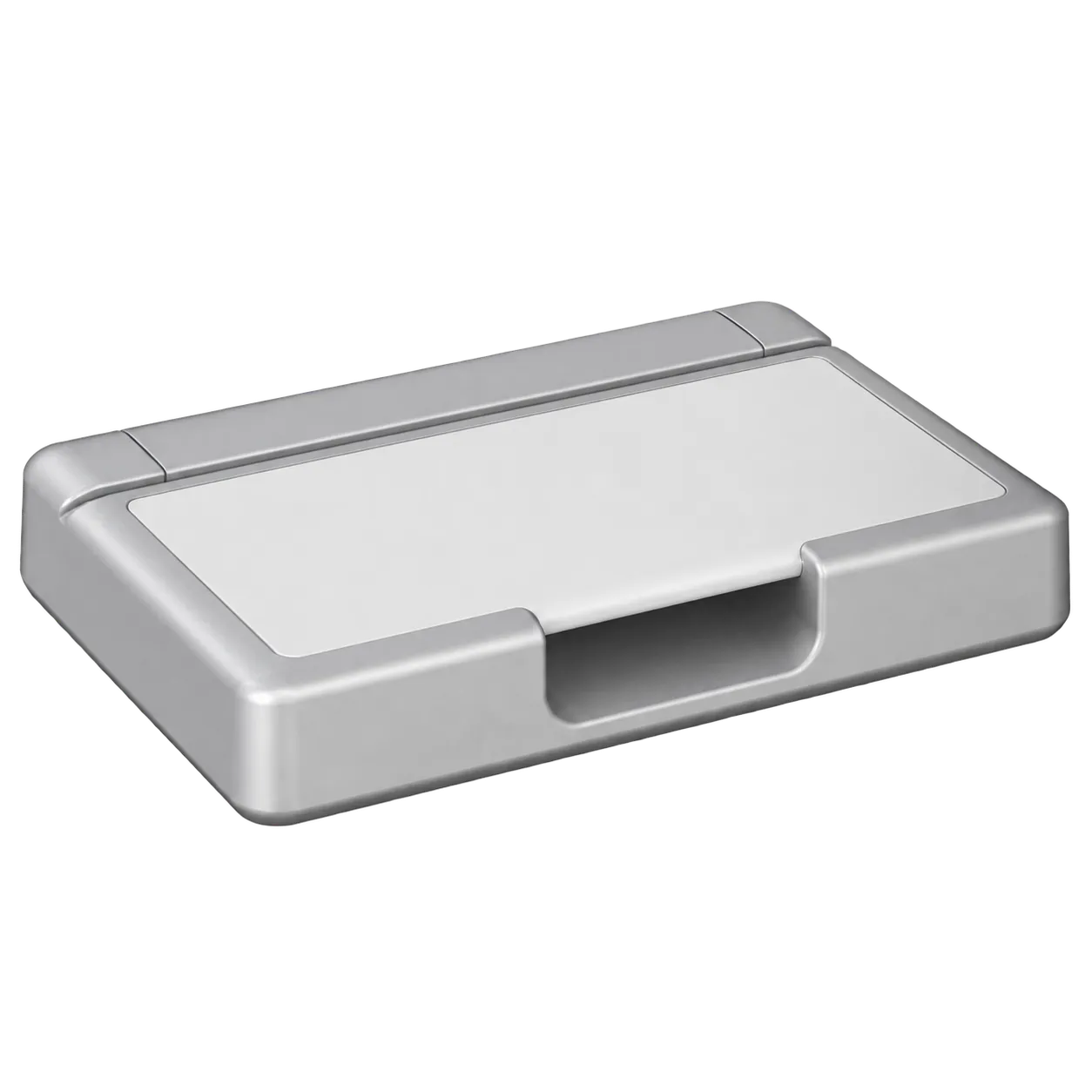
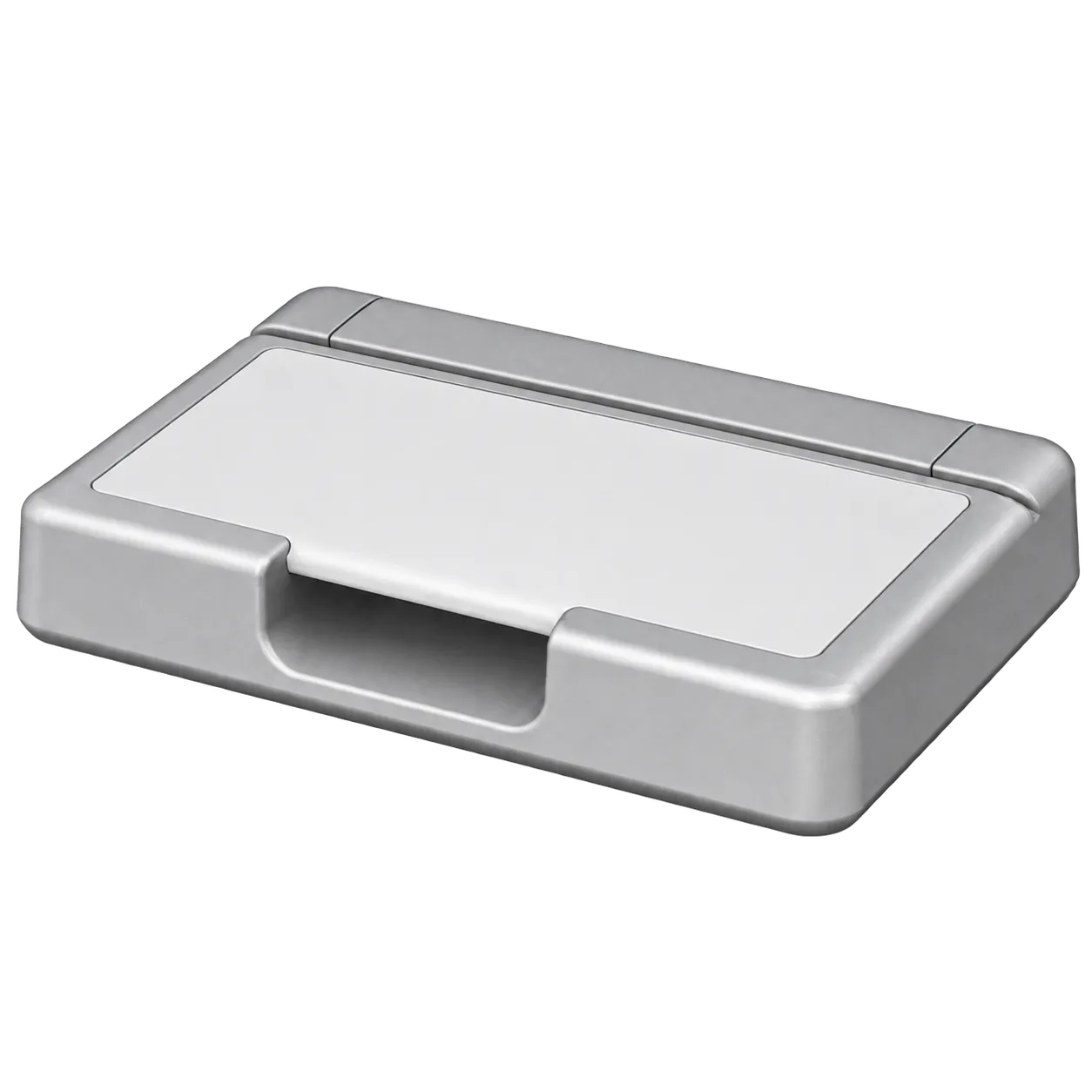
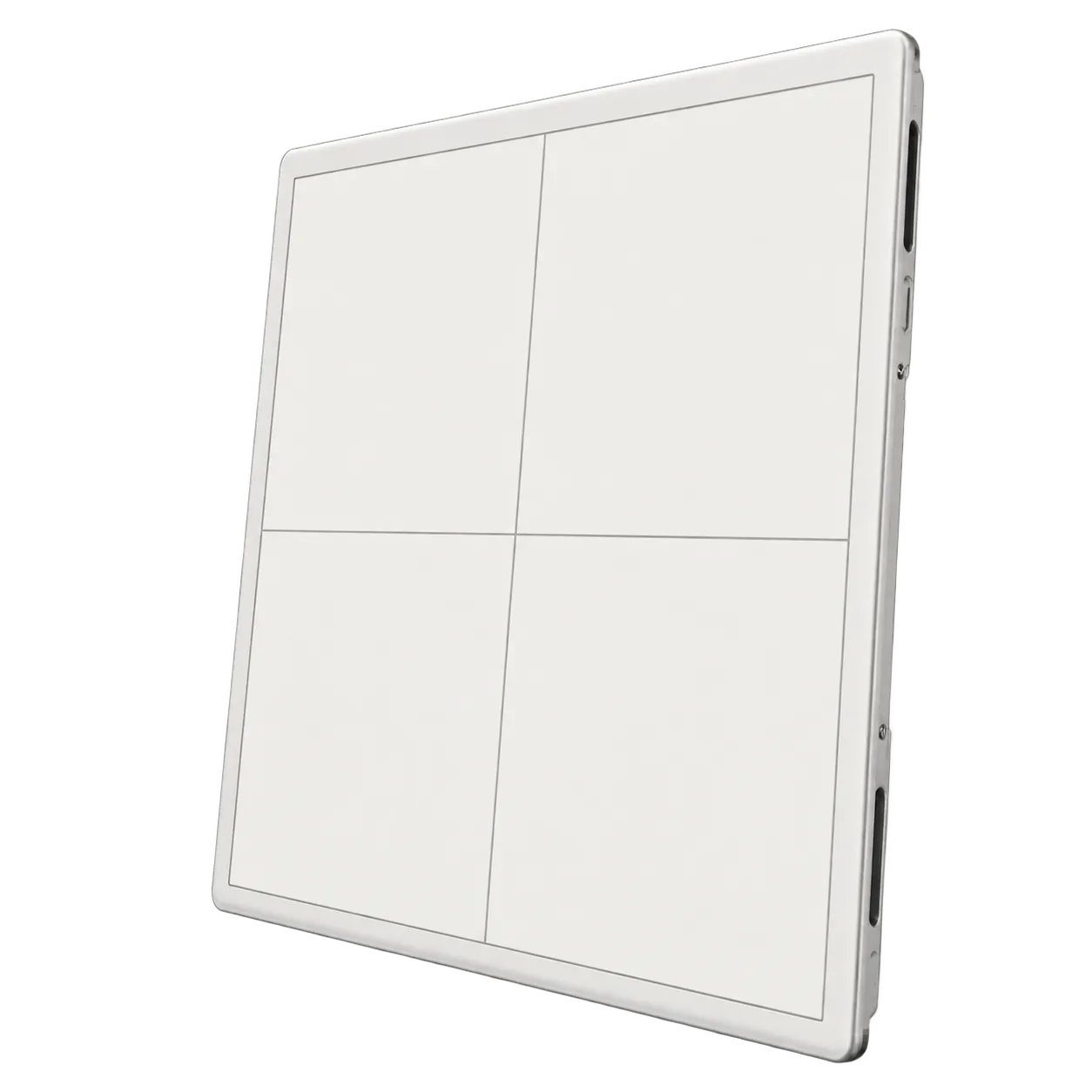
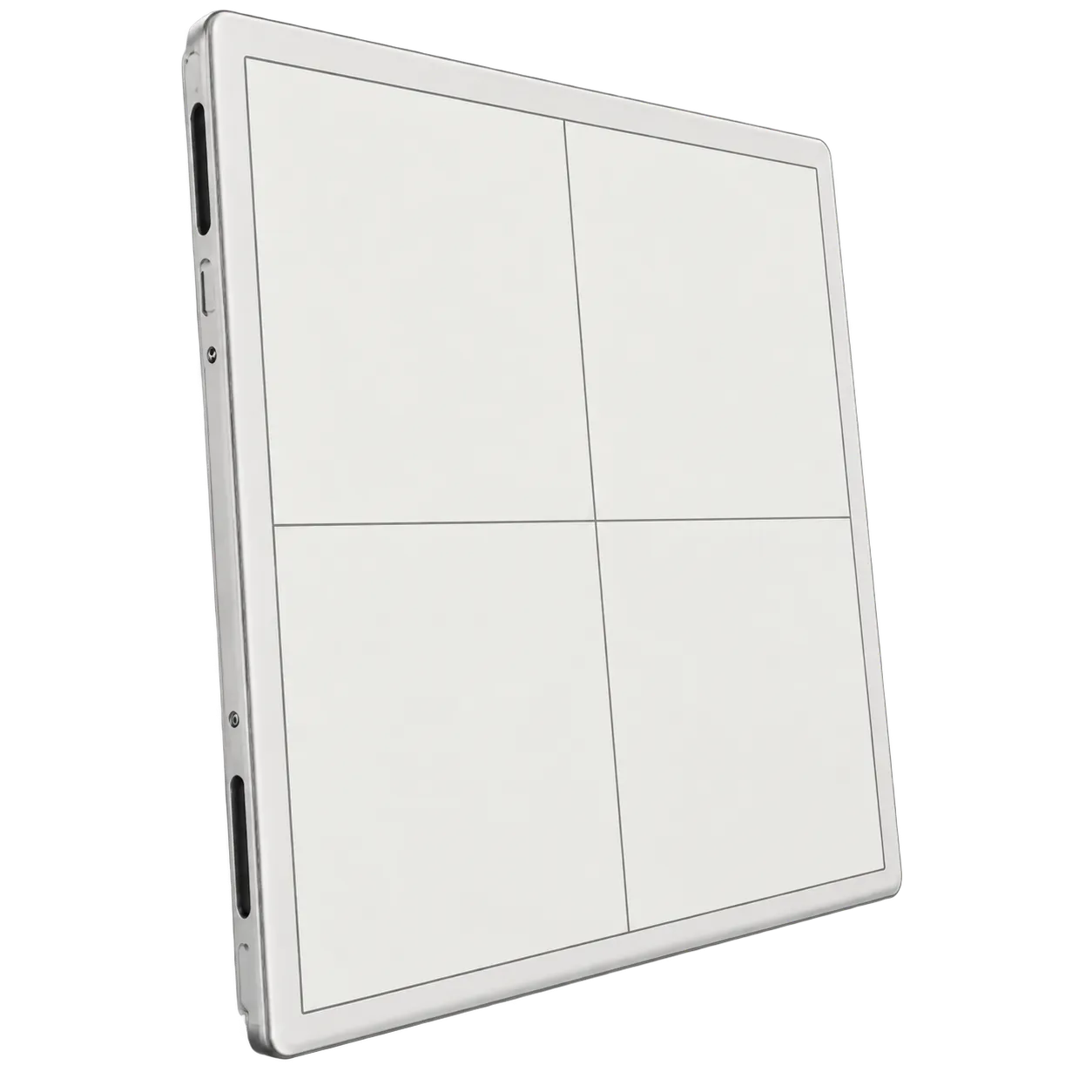
The appeal of a cordless panel is that the detector goes to the patient. A wireless flat panel detector slides under someone on a trolley or a bed, sits in a table bucky for routine work, or stands behind a chest board, with no tether to manage. For wards, theatres, and emergency departments, flexibility is the whole point, and it is why panels of this size have replaced cassettes across most UK services. The cradle keeps a spare charged between cases.
Image quality rests on the scintillator and the pitch, and both are stated here. A caesium iodide layer needs less exposure than an older screen type for the same image, which matters for dose. Elements of 139 micrometres resolve fine trabecular detail and hairline fractures well across a 17-inch field. The square shape avoids the orientation decision a rectangular panel forces on a radiographer at the trolley, saving a step in a hurry.
What governs daily use is missing. Battery life decides how long a panel stays in service before a swap. Transfer time decides how quickly the next exposure can follow. Load capacity determines whether a heavy patient can lie on it safely, and an ingress rating tells staff what cleaning it can withstand. UK services also watch the exposure index to keep dose under review, which depends on the panel reporting one.
Medigear.uk collects those figures from Blackstone, so radiographers and physics teams can judge it on more than the array alone. Those answers usually decide between one panel and another.